Artwork
名繪集珍 冊 五代胡瓌出獵圖
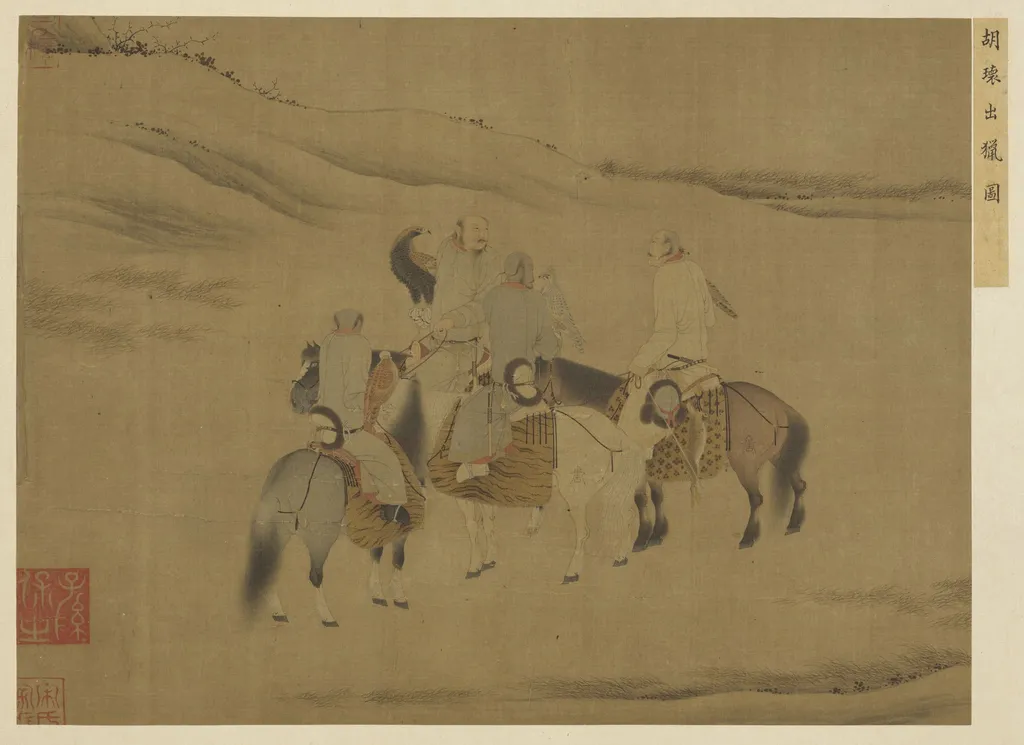
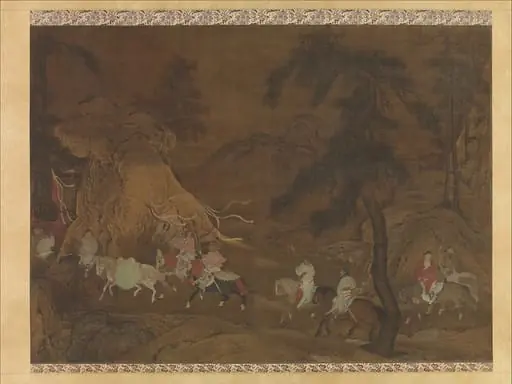
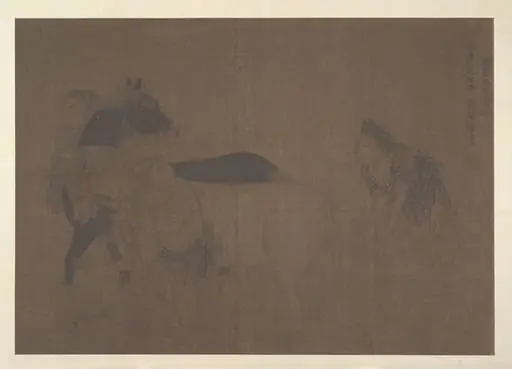
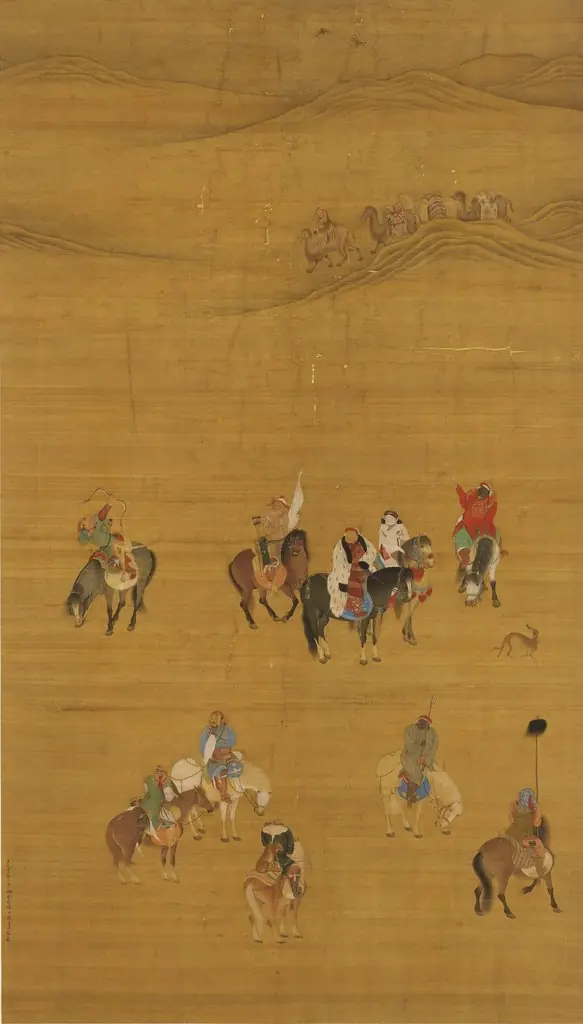
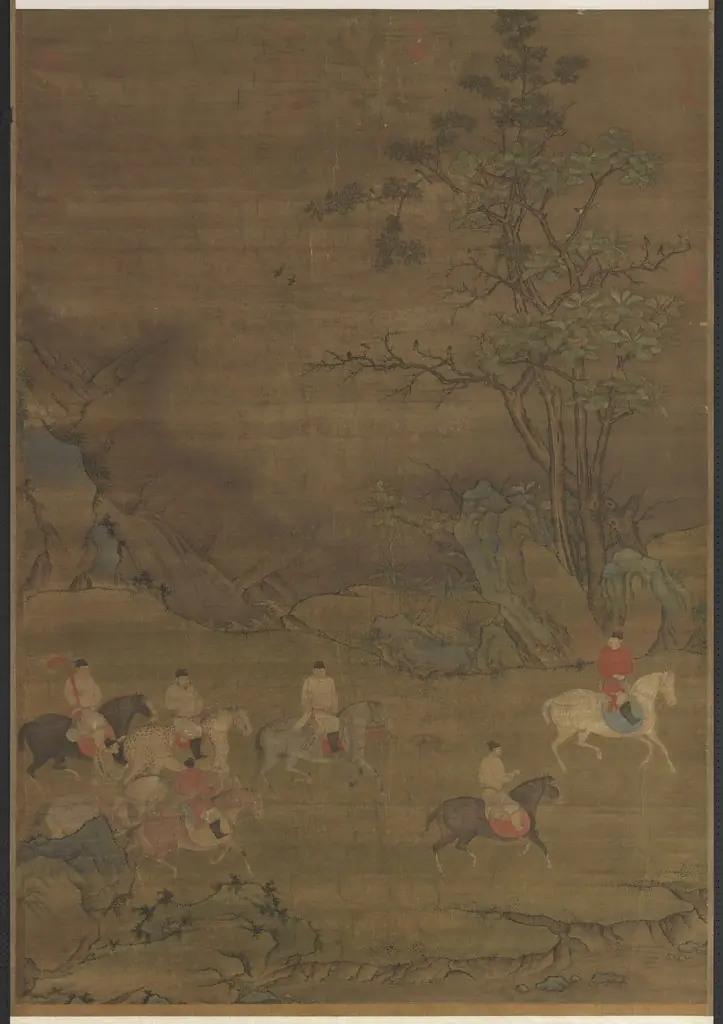
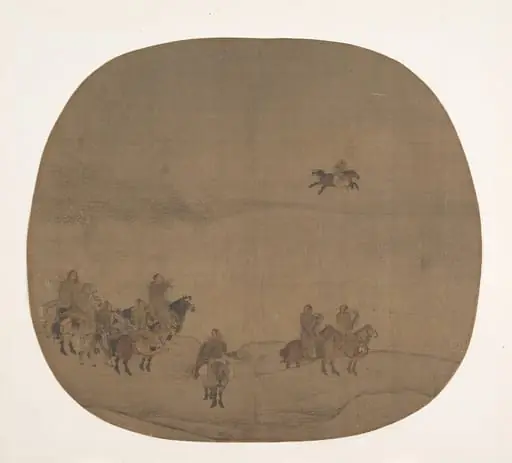
名繪集珍 冊 五代胡瓌出獵圖 is an unspecified painting by Unknown. It dates from 1850 and is held in the collection of the National Palace Museum. This silk painting, attributed to the Five Dynasties period artist Hu Gui, depicts a hunting party traversing a windswept plain.
About this work
Overview
This silk painting, attributed to the Five Dynasties period artist Hu Gui, depicts a hunting party traversing a windswept plain.
This silk painting, attributed to the Five Dynasties period artist Hu Gui, depicts a hunting party traversing a windswept plain. The scene is composed with restrained elegance, emphasizing quiet motion rather than dramatic action. Figures and animals are rendered with precision, their forms integrated into a landscape that feels both expansive and serene. The work belongs to a tradition of nomadic-themed court paintings from northern China during a time of political fragmentation.
Subject & Meaning
The painting portrays a group of mounted hunters, dressed in loose robes and riding horses adorned with detailed saddles, suggesting elite or military status. The activity reflects the cultural importance of hunting among northern nomadic elites, who influenced courtly life during the Five Dynasties. The calm demeanor of the riders and the uneventful landscape imply a ritualized or ceremonial outing, rather than a violent chase, underscoring themes of order and control.
Technique & Style
Hu Gui employs fine, controlled brushwork to define the contours of horses and riders, with delicate strokes suggesting the flow of manes and tails. Colors are subdued—earthy browns, muted greens, and soft grays—creating a tranquil atmosphere. The composition avoids depth through layered planes rather than perspective, a hallmark of early Chinese landscape painting. Silk as a support allows for fine detail, enhancing the tactile quality of fabric and fur.
History & Provenance
The painting is part of a larger album series known as 'Collection of Masterpieces,' compiled during the Qing dynasty. It was likely acquired by imperial collectors who valued early northern Chinese works for their historical authenticity. Its attribution to Hu Gui, a known painter of nomadic scenes, is based on stylistic parallels with other surviving works. The piece entered the National Palace Museum’s collection following the relocation of imperial artifacts in the 20th century.
Context
Created during the turbulent Five Dynasties era (907–960 CE), the painting reflects the persistence of steppe cultural motifs in northern Chinese courts. Despite political instability, elite patrons continued to commission scenes of horsemanship and hunting, linking themselves to the martial traditions of earlier nomadic dynasties. This work stands alongside other silk paintings from the period that blend realism with symbolic restraint, offering insight into cross-cultural artistic exchange.
Legacy
Hu Gui’s approach to depicting equestrian life influenced later court painters in the Song dynasty, particularly in the treatment of animal anatomy and landscape integration. The album’s preservation in imperial collections ensured its transmission through centuries. Today, it remains a key reference for understanding how northern Chinese artists adapted nomadic themes into refined pictorial language, bridging regional traditions within broader Chinese art history.
Artist & collection

 Domestic Scene
 Giacomo and Cardinal Marco, investing Andrea, Abbot of San Zeno, with his Benefice
 The Nymph of Fontainebleau
 Portrait of a Woman
 Madonna and Child with Saints in the Enclosed Garden
 Venus and Minerva
 Family Group of Four on Sofa
 Wall painting from Room H of the Villa of P. Fannius Synistor at Boscoreale