Artwork
Coeur Meurtri
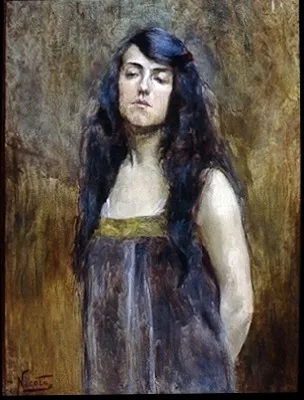
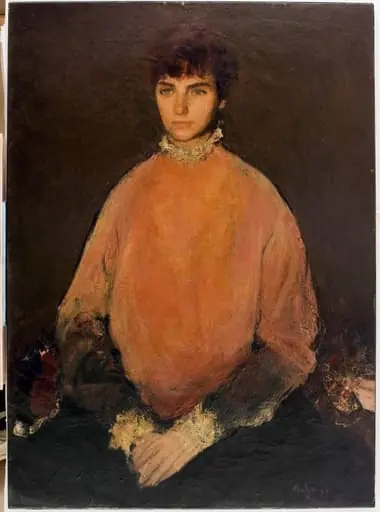
Coeur Meurtri is an oil painting by Unknown. It dates from 1850 and is held in the collection of the Pinacoteca de São Paulo.
About this work
Overview
A narrow gold band encircles the upper edge of her sleeveless dress, providing a subtle point of contrast against the darker fabric.
This oil painting, titled Coeur Meurtri, depicts a solitary female figure against a muted, tonal background of brown and gray. The composition emphasizes texture and atmosphere over narrative clarity, with the subject’s face rendered in soft focus while her hair is meticulously detailed. A narrow gold band encircles the upper edge of her sleeveless dress, providing a subtle point of contrast against the darker fabric.
Subject & Meaning
The figure’s obscured face invites contemplation rather than identification, suggesting an internal state rather than a specific identity. The title, meaning 'wounded heart,' implies emotional vulnerability, though no explicit symbols or gestures confirm this reading. The ambiguity of expression and the quiet intensity of the pose leave interpretation open, aligning with symbolic tendencies of the period.
Technique & Style
The artist employs layered oil paint to create a sense of depth in the background, with darker tones receding toward the lower edge. The woman’s hair is rendered with fine, deliberate strokes, contrasting with the blurred facial features achieved through soft blending. The gold band on the dress is applied with minimal detail, drawing attention without disrupting the overall somber palette.
History & Provenance
The painting resides in the collection of the Pinacoteca do Estado de São Paulo, where it has been held since at least the mid-20th century. Its acquisition history prior to this is not publicly documented, and little is known about its exhibition record or the circumstances of its creation.
Context
Created during a period when Latin American artists were exploring psychological and emotional themes through figurative work, Coeur Meurtri reflects broader regional interests in interiority and mood. Its restrained palette and focus on the human form align with contemporary movements that favored introspection over overt symbolism or social commentary.
Legacy
Though not widely reproduced or critically analyzed, the painting remains a quiet example of early 20th-century Brazilian figurative painting. Its preservation in a major public collection underscores its value as a representative work of its time, offering insight into understated approaches to emotional expression in regional art.
Artist & collection

 Domestic Scene
 Giacomo and Cardinal Marco, investing Andrea, Abbot of San Zeno, with his Benefice
 The Nymph of Fontainebleau
 Portrait of a Woman
 Madonna and Child with Saints in the Enclosed Garden
 Venus and Minerva
 Family Group of Four on Sofa
 Wall painting from Room H of the Villa of P. Fannius Synistor at Boscoreale
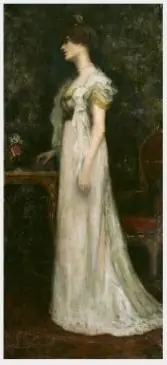 The Artist's Wife, Constance, Comtesse de Markievicz (1868-1927), Irish Painter and Revolutionary
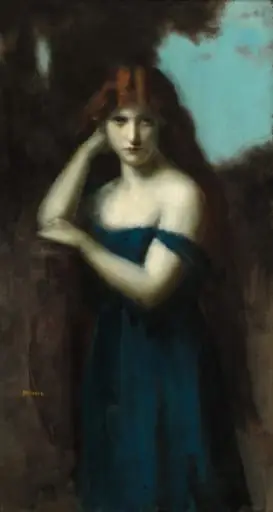 Standing Woman
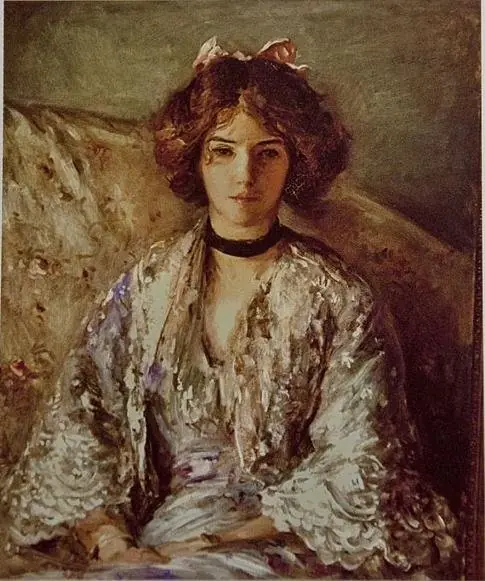 Portrait of Miss Ethel Warwick
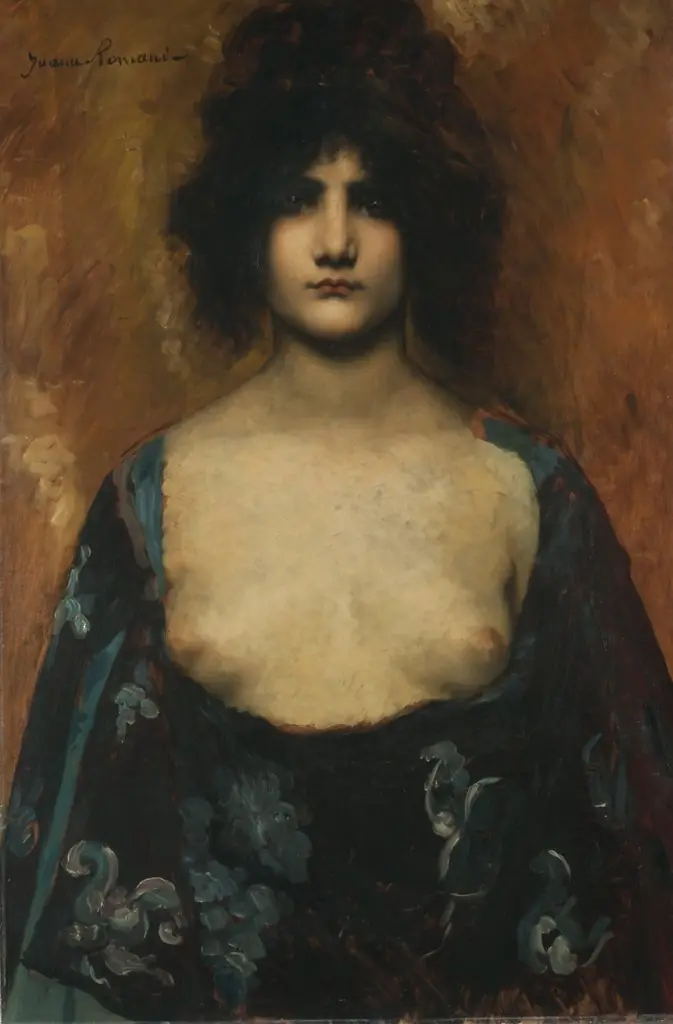 Young oriental
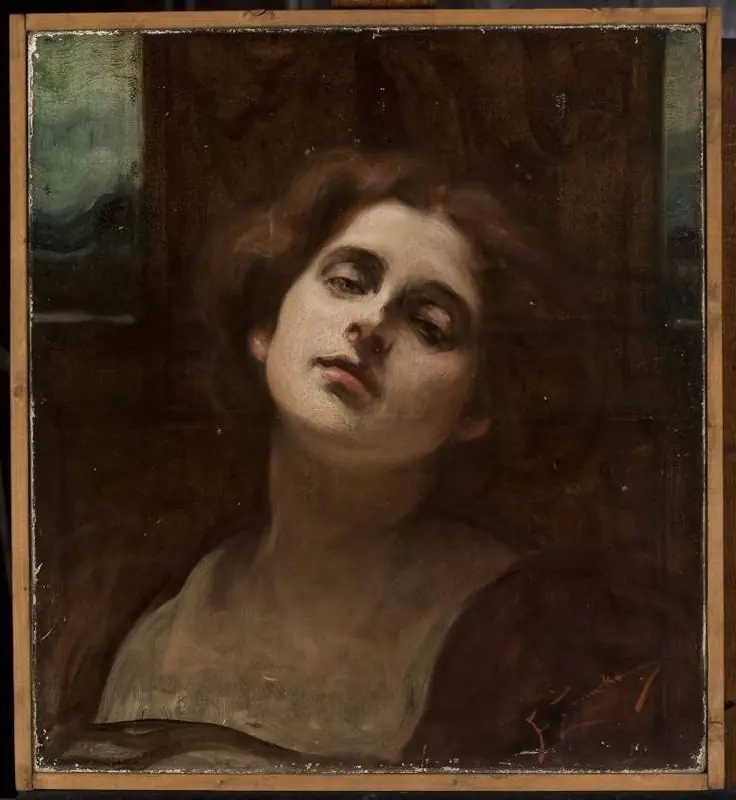 Head of a woman
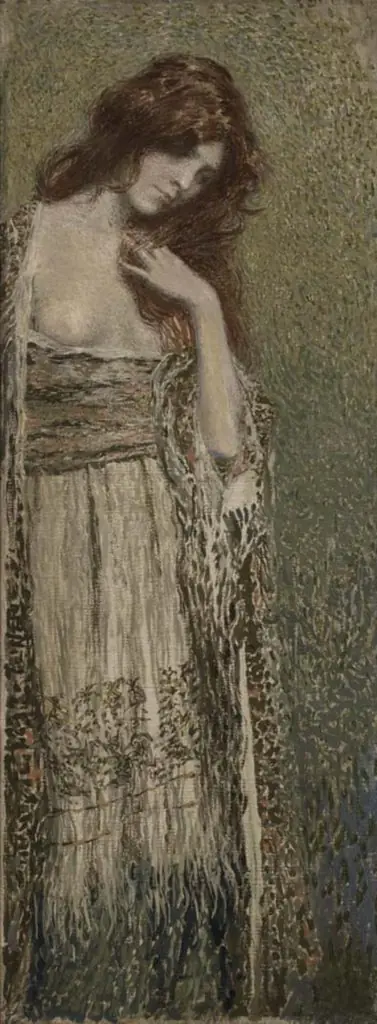 Woman figure. Sadness
 O clipă de răgaz
 Profil de femeie
 Head of a Girl
 Standing lady
 Portret de fată (E. H. Marinescu)
 Portret de fată în roz