Artwork
五代人丹楓呦鹿 軸
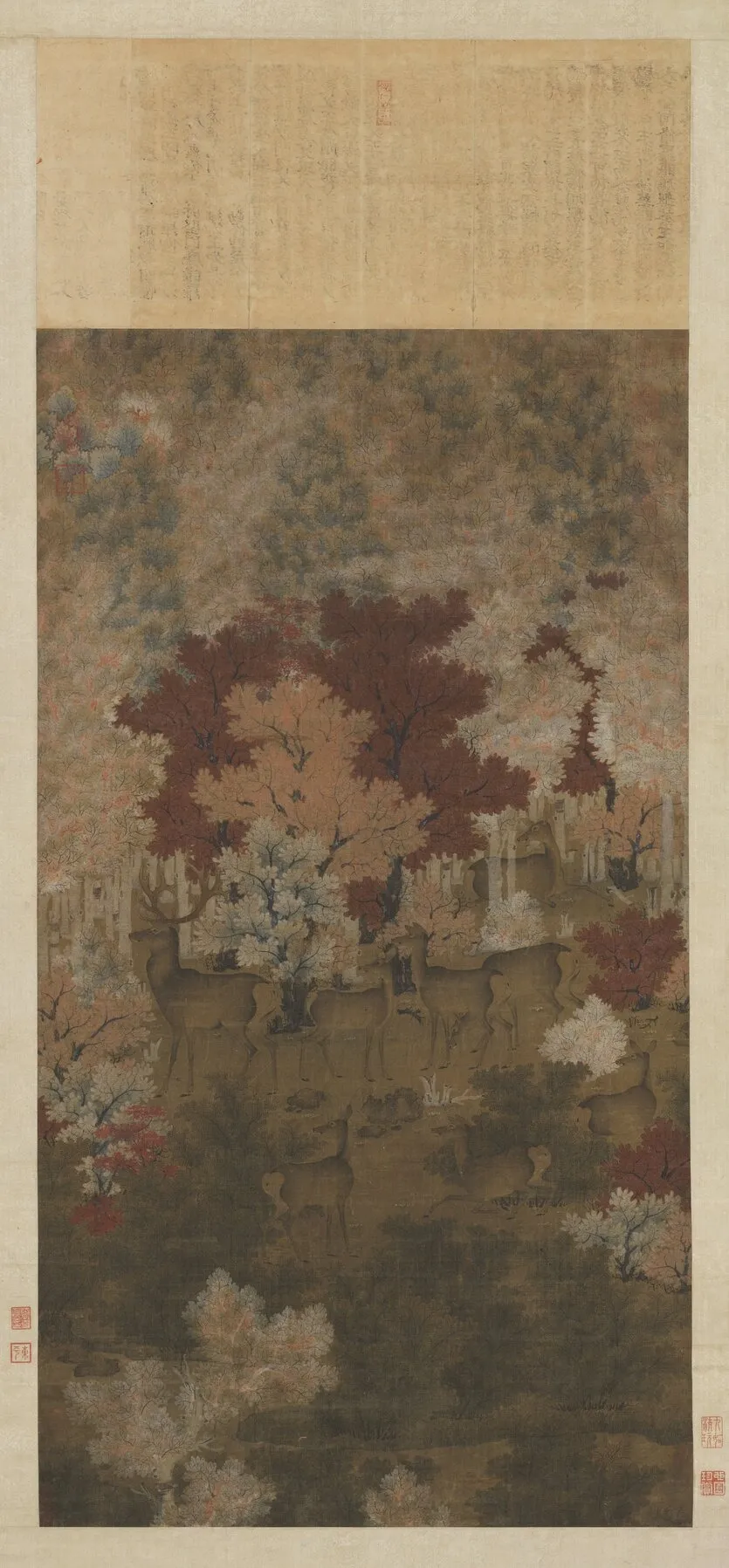
五代人丹楓呦鹿 軸 is an unspecified painting by Unknown. It dates from 1850 and is held in the collection of the National Palace Museum. This silk painting from the Five Dynasties period portrays a quiet woodland scene centered on a group of deer.
About this work
Overview
The composition avoids dramatic action, instead emphasizing balance and quiet coexistence between animals and their environment.
This silk painting from the Five Dynasties period portrays a quiet woodland scene centered on a group of deer. Rendered in subtle earth tones—browns, beiges, and whites—it evokes stillness through restrained color and soft brushwork. The composition avoids dramatic action, instead emphasizing balance and quiet coexistence between animals and their environment. The work reflects a tradition of nature-focused imagery in early Chinese court painting.
Subject & Meaning
The deer, depicted in a calm, grouped formation, symbolize harmony and gentleness in Chinese cultural thought. Their placement at the center of the composition invites contemplation, reinforcing themes of natural order and peace. The surrounding trees and foliage, carefully arranged but not overly detailed, suggest a timeless forest untouched by human intrusion. The scene may reflect Daoist ideals of simplicity and alignment with the natural world.
Technique & Style
The artist employed fine, controlled brushstrokes to render the deer’s fur and the bark of trees with delicate precision. Silk, as a support, allowed for subtle ink washes and layered pigments, enhancing the muted tonal range. There is no use of bold outlines or vivid color; instead, texture emerges through gradations of light and shadow. The style aligns with courtly traditions that valued restraint and atmospheric suggestion over dramatic expression.
History & Provenance
Attributed to the Five Dynasties period (10th century), the painting entered the imperial collection during the Song dynasty and remained in royal hands through subsequent dynasties. It was later transferred to the National Palace Museum in Taipei following the relocation of artifacts in the mid-20th century. Its continuous presence in imperial collections underscores its recognized value within the tradition of Chinese ink and color painting.
Context
Created during a time of political fragmentation after the Tang collapse, this work reflects a cultural turn toward introspection and naturalism. While court artists elsewhere pursued grand narratives, this painting exemplifies a quieter aesthetic favored in southern courts, where landscape and wildlife became vehicles for philosophical expression. It stands alongside other early examples of nature-centered painting that prioritized mood over narrative.
Legacy
The painting influenced later Song dynasty artists who refined the depiction of animals within landscape settings. Its emphasis on tranquility and subtle detail became a model for scholarly painting traditions. Though not widely reproduced, it remains a key reference in studies of early Chinese nature painting, illustrating how restraint and observation could convey deep cultural values without overt symbolism.
Artist & collection

 Domestic Scene
 Giacomo and Cardinal Marco, investing Andrea, Abbot of San Zeno, with his Benefice
 The Nymph of Fontainebleau
 Portrait of a Woman
 Madonna and Child with Saints in the Enclosed Garden
 Venus and Minerva
 Family Group of Four on Sofa
 Wall painting from Room H of the Villa of P. Fannius Synistor at Boscoreale
 Herd of Deer in a Maple Grove
 Herd of Deer in an Autumnal Grove
 White Clouds and Red Trees
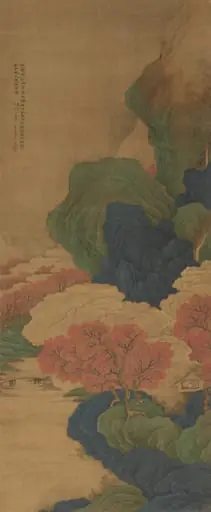 White Clouds and Red Trees
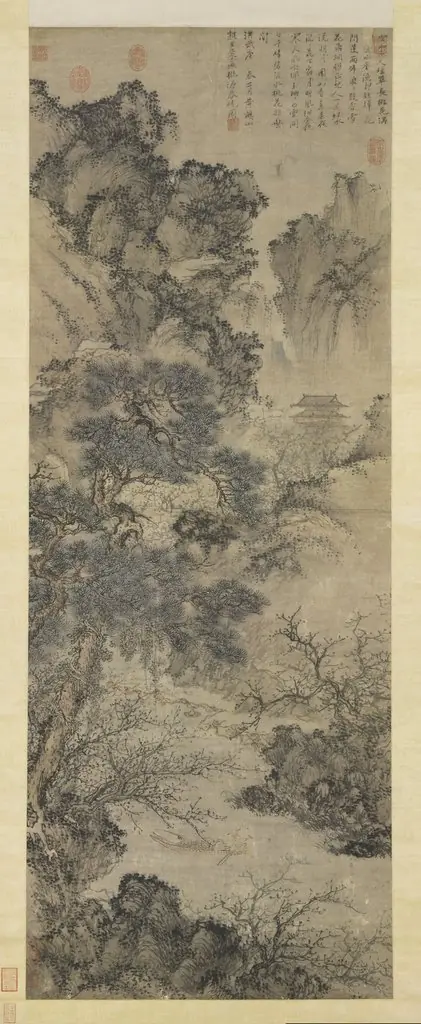 Vernal Dawn at the Peach Blossom Spring
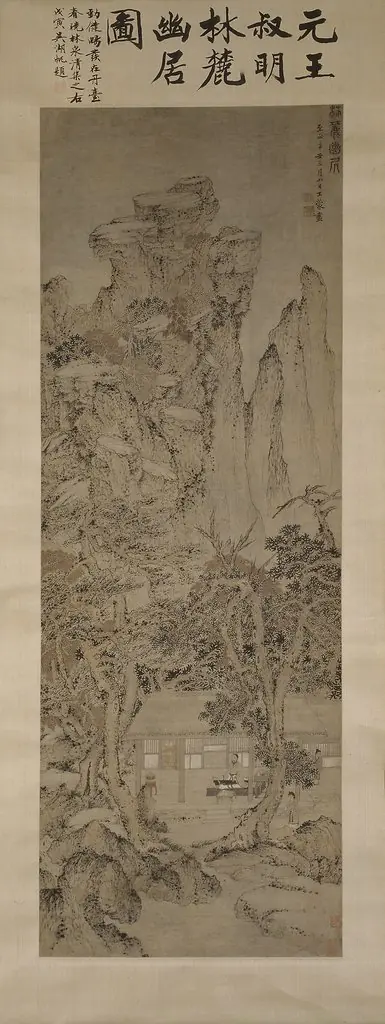 Quiet Life in a Wooded Glen
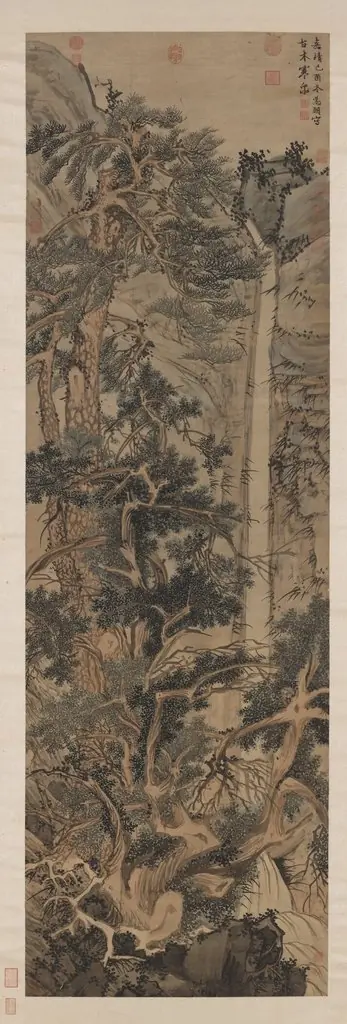 明文徵明古木寒泉 軸
 清 佚名 舊傳范寬 煙嵐秋曉圖 卷|Autumn Landscape
 Untitled
 Playing the Qin in a Secluded Valley
 Pulling Oars under Clearing Autumn Skies (Distant Mountains)
 Autumn Landscape