Artwork
Anbetung der Hl. Drei Könige
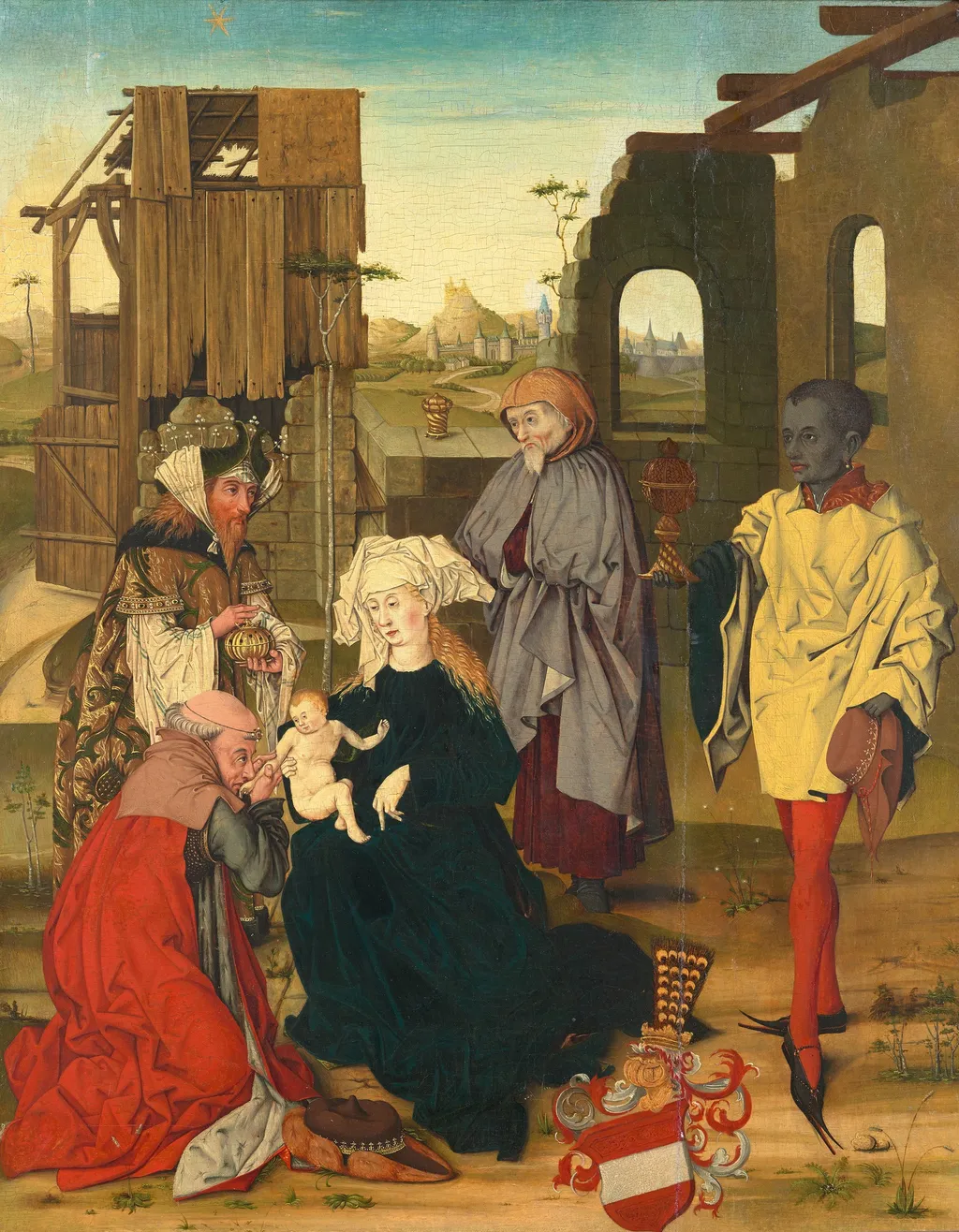
Anbetung der Hl. Drei Könige is an unspecified painting by the Early Renaissance artist Unknown. It dates from 1496 and is held in the collection of the Kunsthistorisches Museum. The work titled Anbetung der Hl.
About this work
Overview
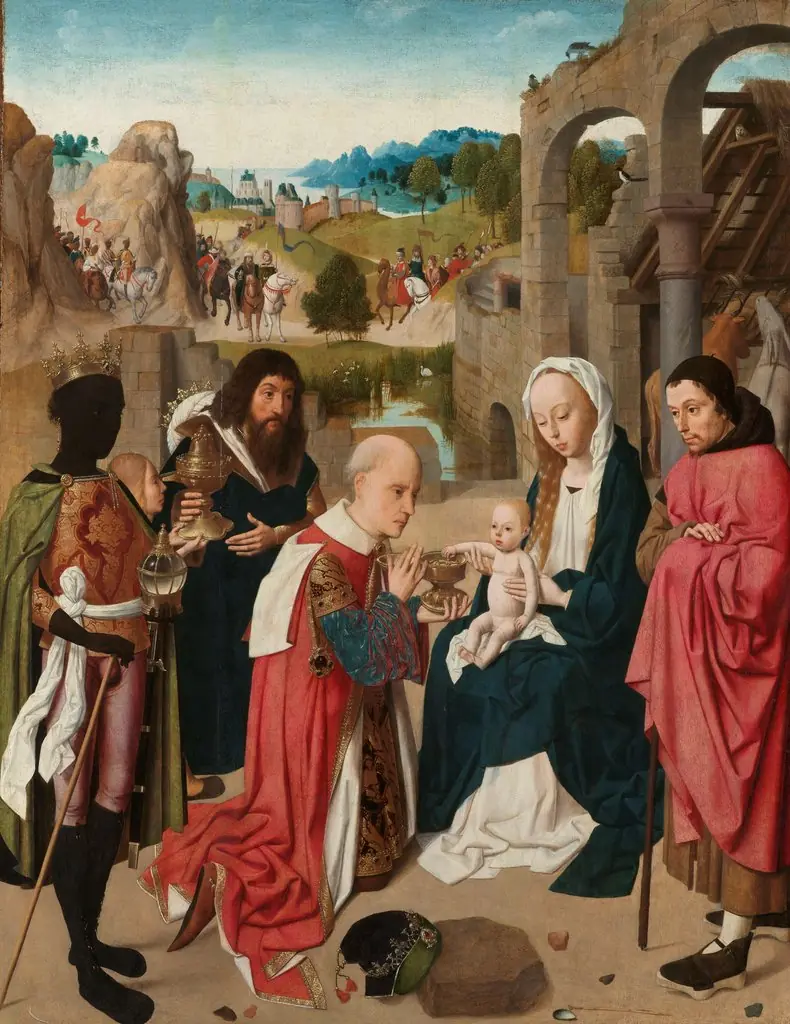
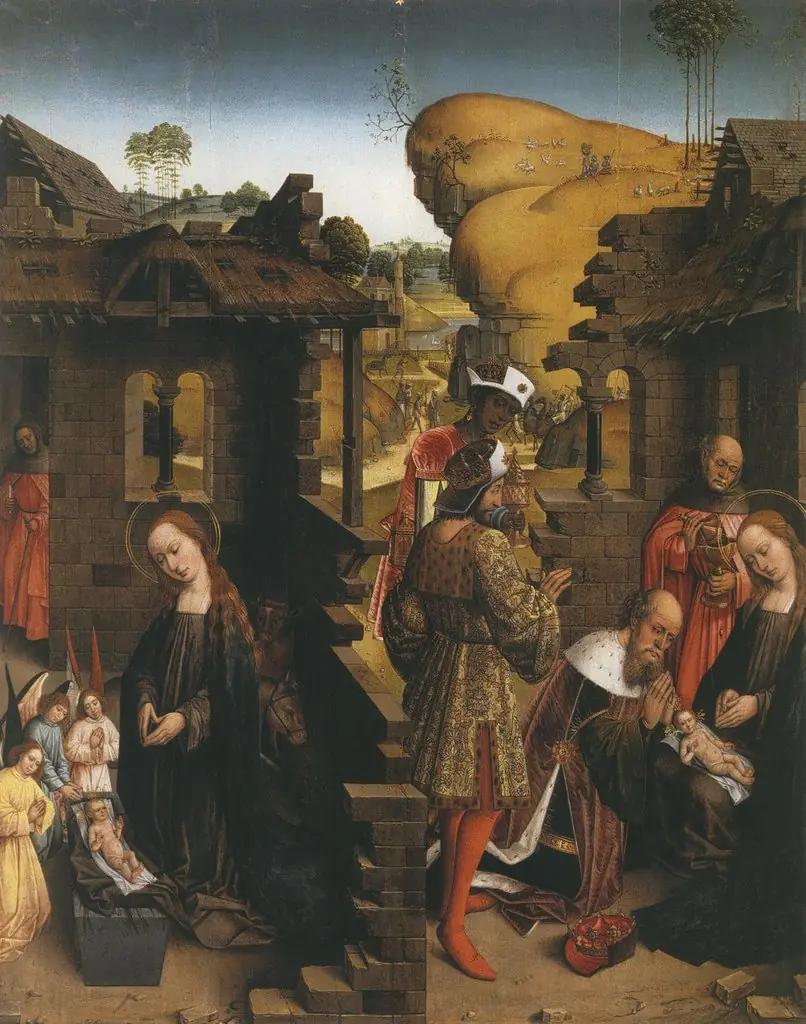
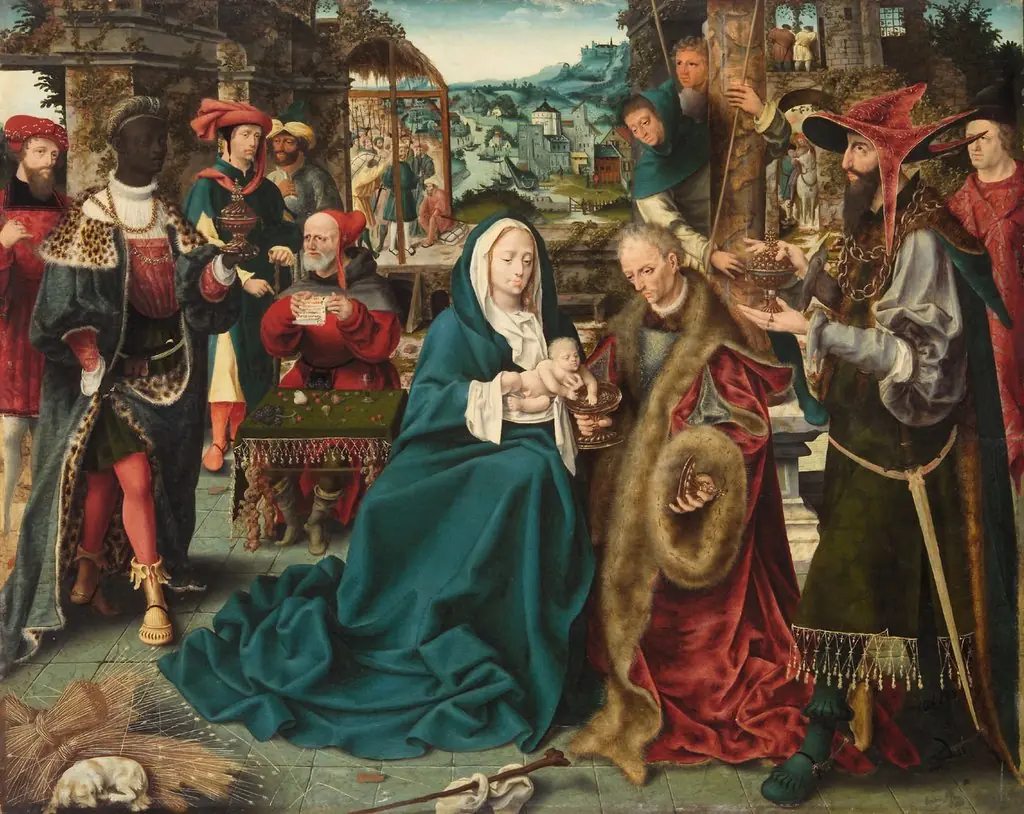
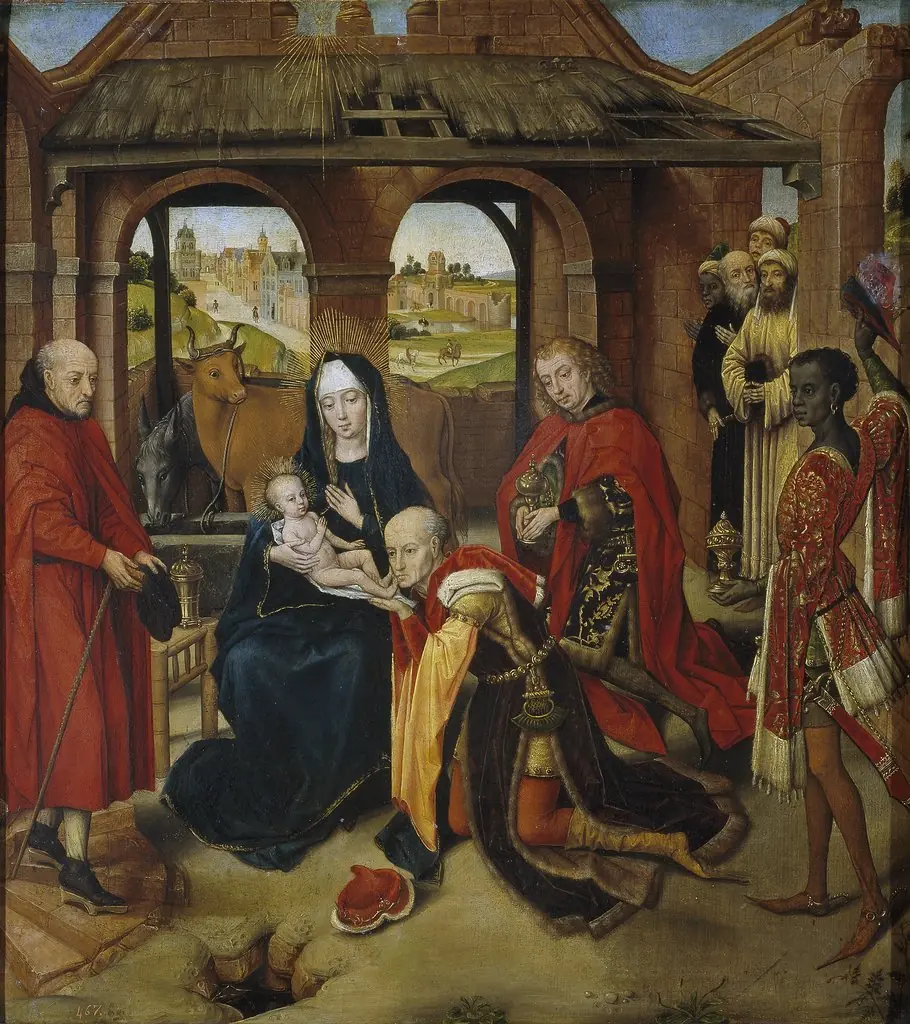
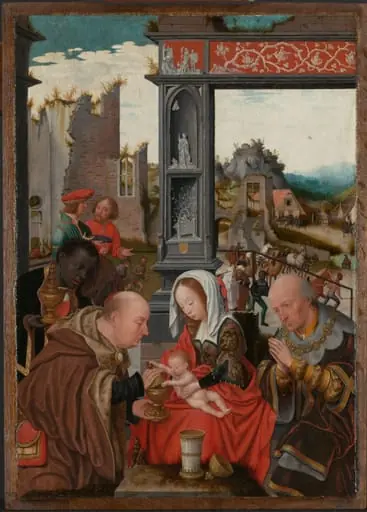
Drei Könige is a painted composition that gathers six figures around a central woman cradling an infant.
The work titled Anbetung der Hl. Drei Könige is a painted composition that gathers six figures around a central woman cradling an infant. The woman is clothed in a dark dress and a white headscarf, while the surrounding figures are dressed in vivid reds, golds and yellows, some bearing staffs or canes. A partially ruined structure and a wooden scaffold frame the scene, with a distant town visible beyond.
Subject & Meaning
The central motif appears to be a domestic or devotional scene in which the woman and child receive the attention of a small group, possibly representing the Magi or other attendants. The calm expressions and lack of overt emotion suggest a contemplative reverence rather than a dramatic narrative, inviting viewers to consider the spiritual significance of the infant’s presence.
Technique & Style
The painting employs bold, saturated colors and simplifies facial features into geometric shapes, giving the figures a stylized appearance. The use of strong contrasts between the dark garment of the mother and the bright attire of the attendants highlights the central group, while the background architecture is rendered with less detail, emphasizing depth through atmospheric perspective.
History & Provenance
No specific documentation regarding the artist, date of execution, or original ownership is provided. The title, rendered in German, indicates a likely Central European origin, and the subject matter aligns with traditional Christian iconography common in devotional paintings of the early modern period.
Context
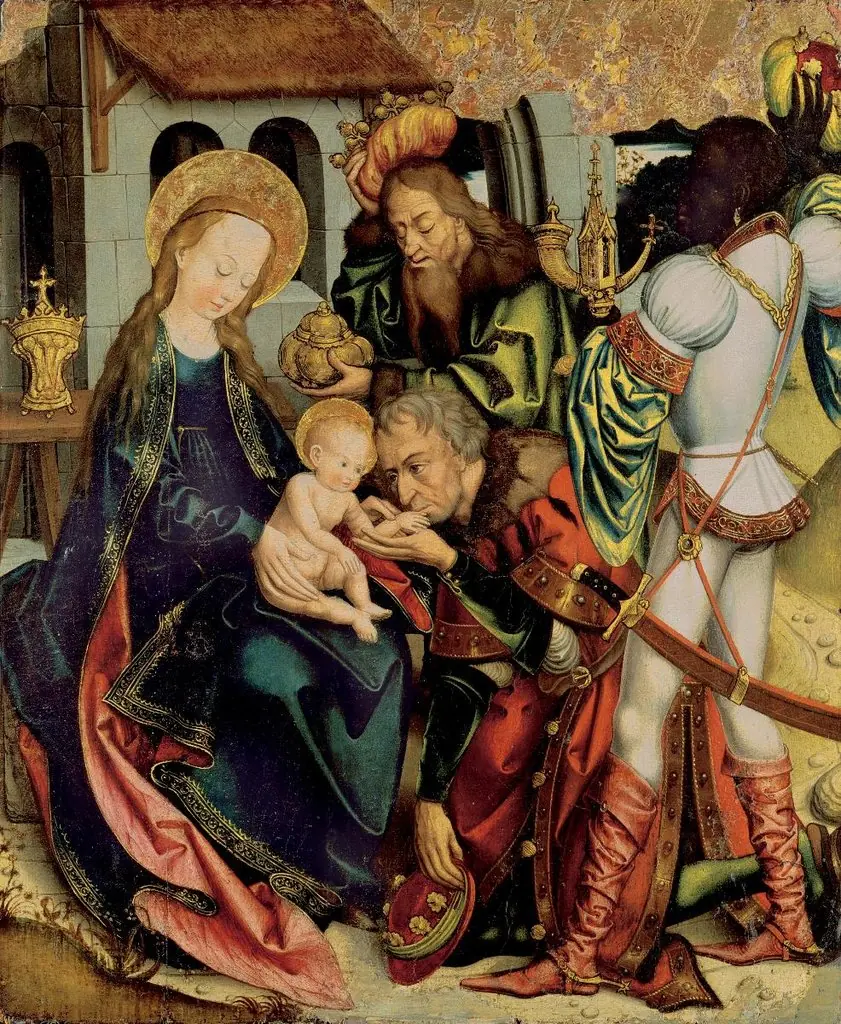
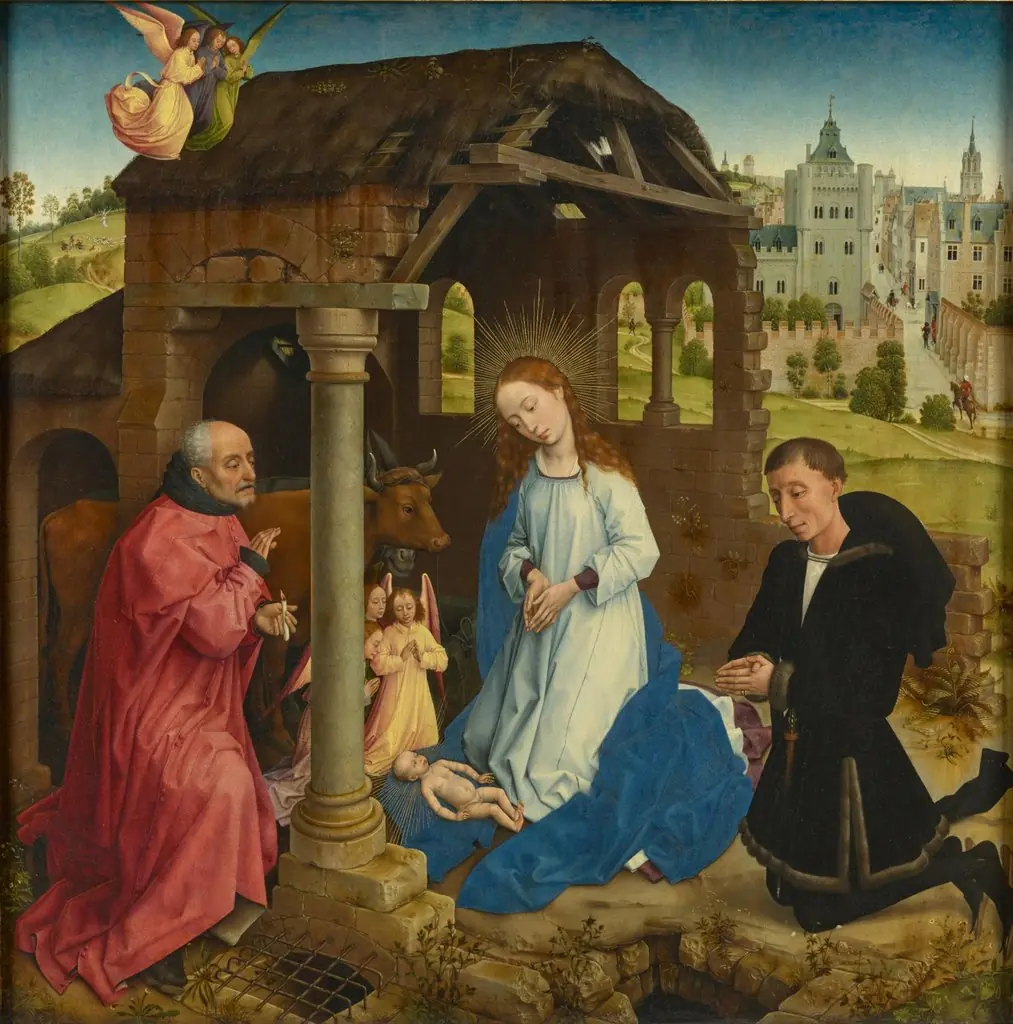
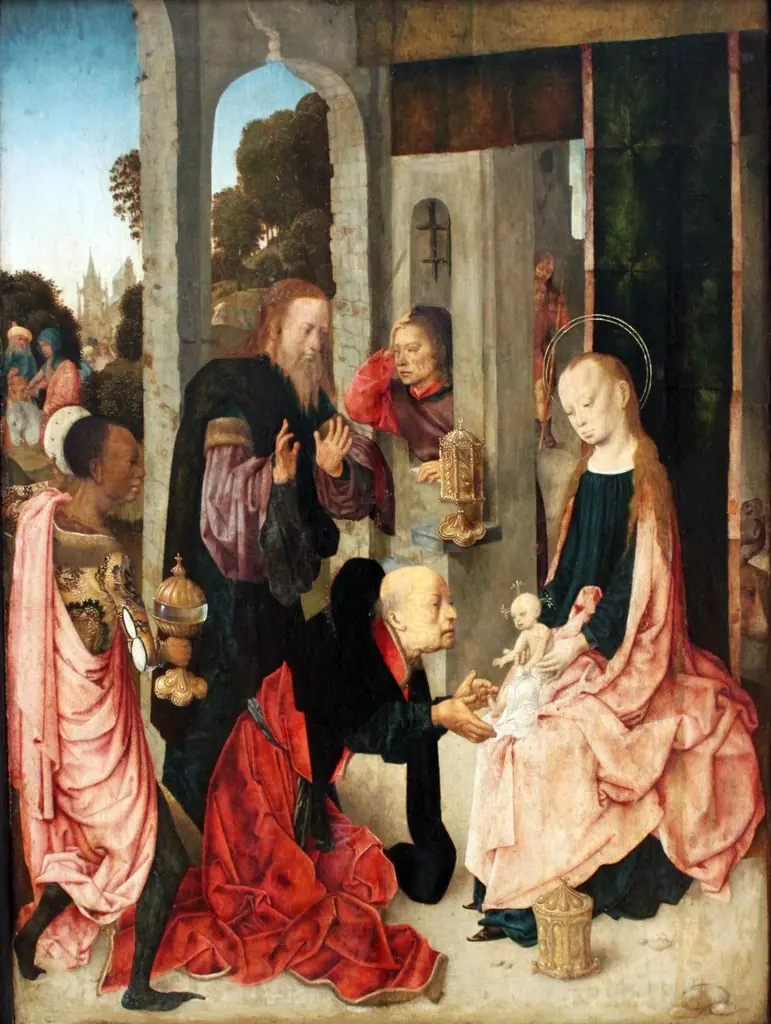
The depiction of a holy child surrounded by admirers reflects a longstanding visual tradition in Christian art, where the infant Jesus is presented as the focus of veneration. The inclusion of a partially ruined building may allude to the transition from the old world to a new spiritual order, a motif frequently employed in religious works of the era.
Legacy
While the painting’s precise influence on later artists is not recorded, its stylistic choices—particularly the vivid palette and simplified facial modeling—anticipate later developments in folk and naïve painting traditions that emphasize narrative clarity over naturalistic detail.
Artist & collection

 Domestic Scene
 Giacomo and Cardinal Marco, investing Andrea, Abbot of San Zeno, with his Benefice
 The Nymph of Fontainebleau
 Portrait of a Woman
 Madonna and Child with Saints in the Enclosed Garden
 Venus and Minerva
 Family Group of Four on Sofa
 Wall painting from Room H of the Villa of P. Fannius Synistor at Boscoreale