Artwork
Radha and Krishna
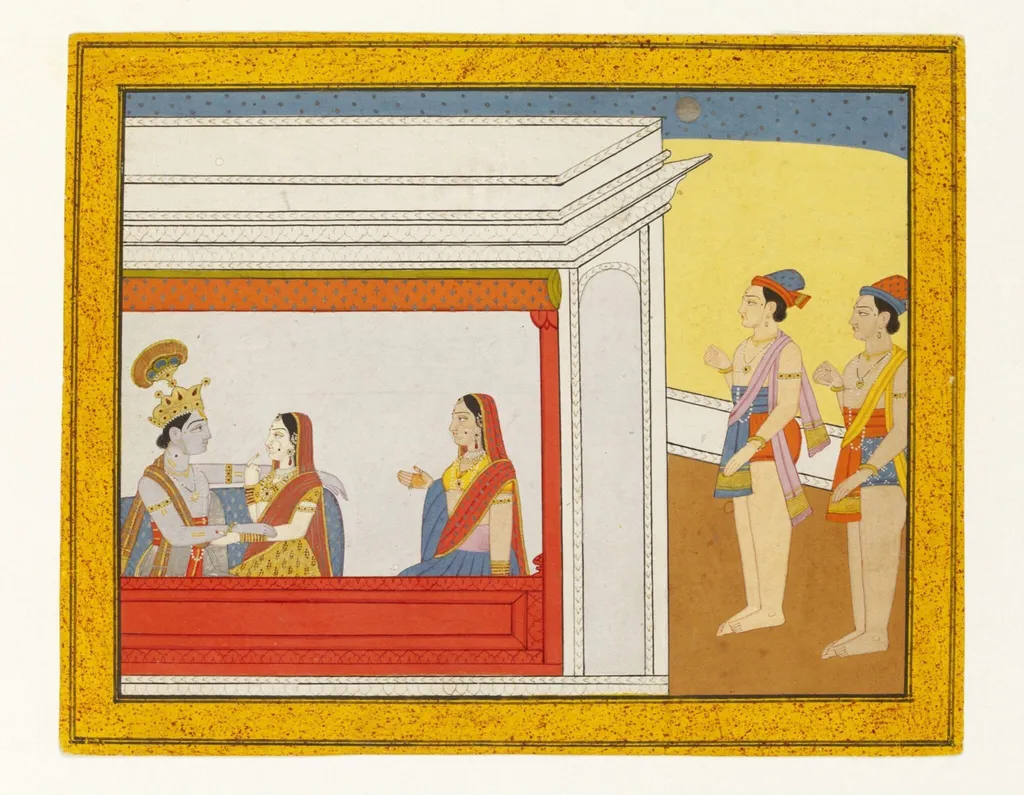
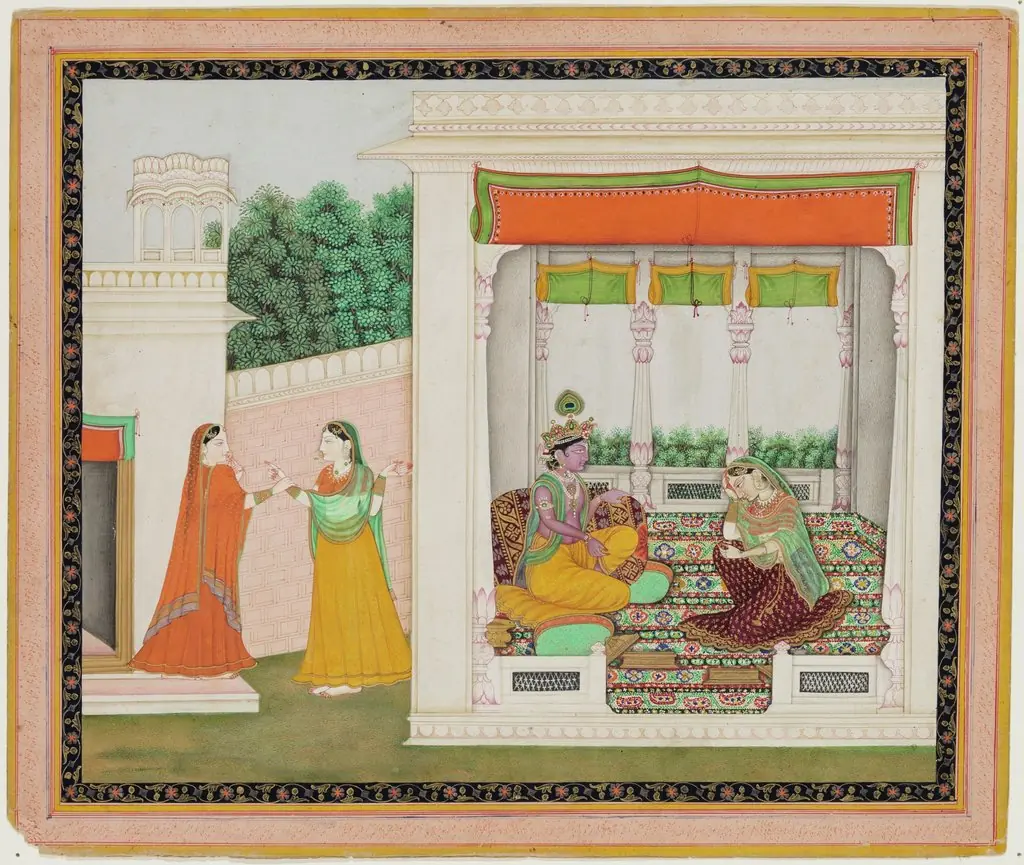
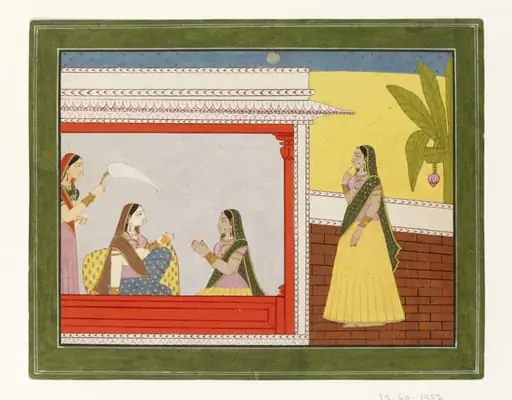
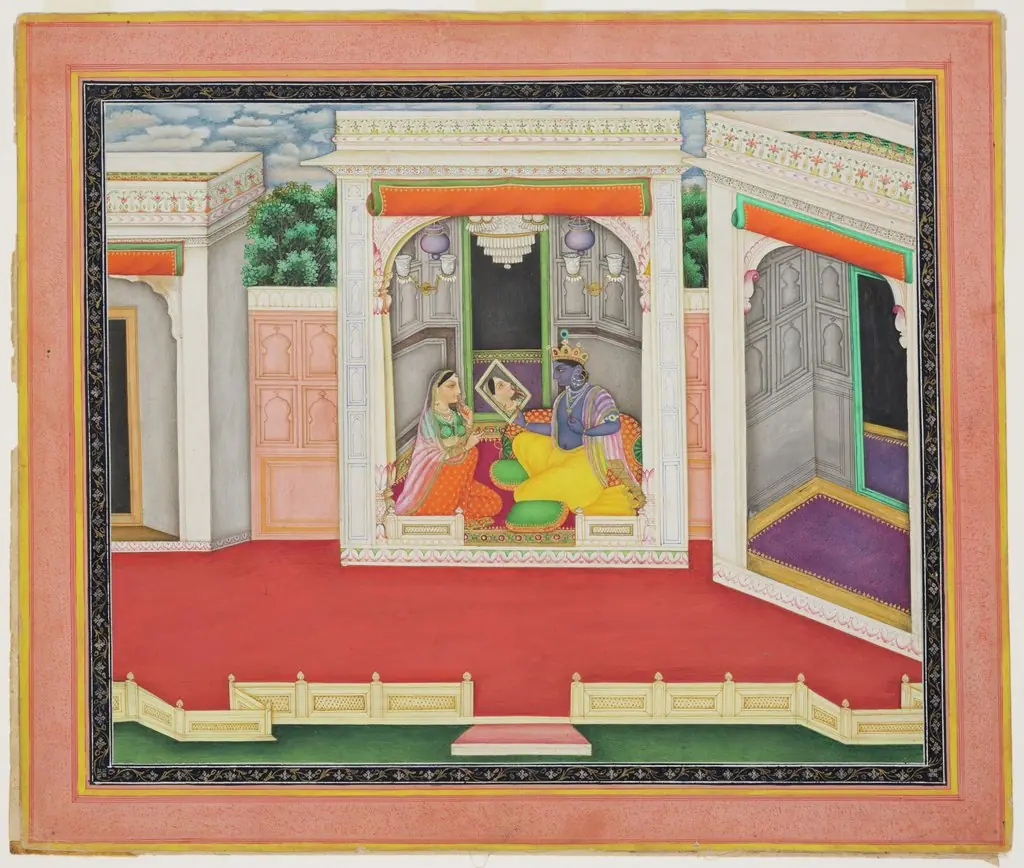
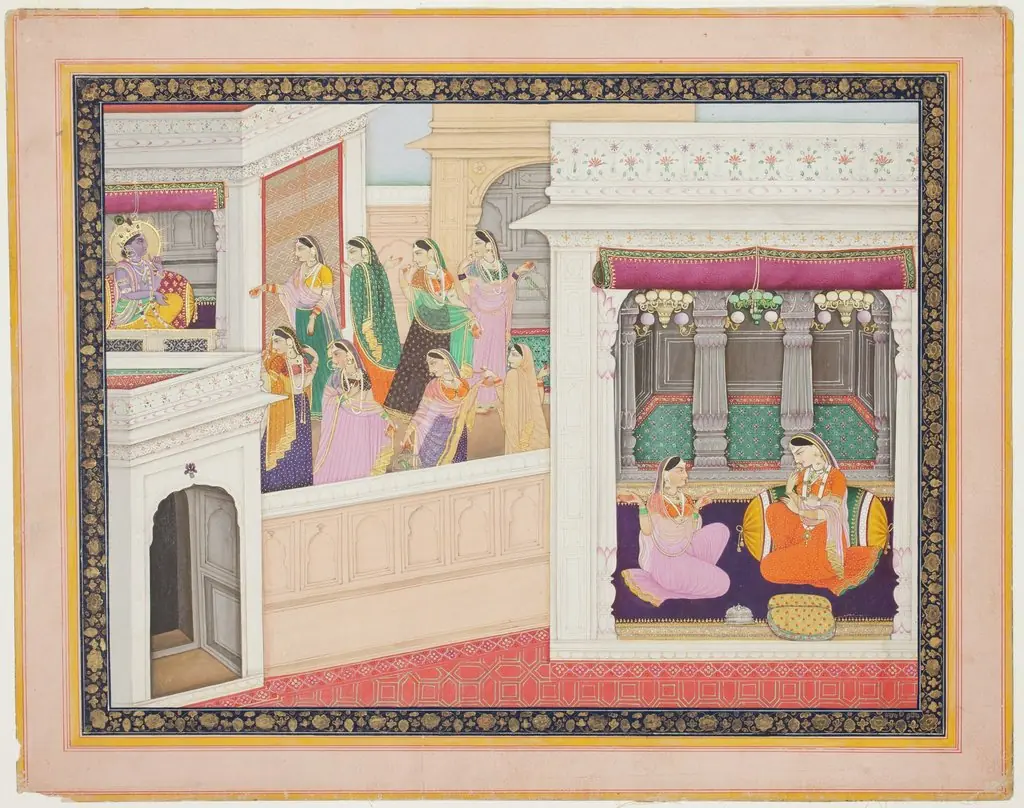
Radha and Krishna is a paint painting by the Mughal Painting artist Unknown. It dates from 1790 and is held in the collection of the Victoria and Albert Museum.
About this work
Overview
The work is cataloged as item 39 in the sequence and is held in the Victoria and Albert Museum’s collection under the accession number IS.
This opaque watercolor on paper, dated to 1790, depicts a scene from the Gita Govinda, part of a larger illustrated manuscript series known as the Rasa Panchadhyayi. The work is cataloged as item 39 in the sequence and is held in the Victoria and Albert Museum’s collection under the accession number IS.58-1952. Its composition divides the space between an interior setting and an outdoor courtyard, emphasizing narrative clarity through spatial separation and vivid color contrasts.
Subject & Meaning
The painting illustrates Radha and Krishna in intimate company, surrounded by a confidante, capturing a moment of divine love central to the Gita Govinda’s devotional poetry. The presence of two cowherds in the courtyard reinforces the pastoral setting of Krishna’s youth and his connection to the natural world. The figures’ gestures and spatial arrangement suggest emotional intimacy and ritualized companionship, reflecting themes of longing and union in Vaishnavite tradition.
Technique & Style
Executed in opaque watercolor, the painting employs flat planes of saturated color and strong outlines to define forms, typical of Pahari school aesthetics. The red balcony and blue roof create a stylized architectural frame, while the figures are rendered with minimal modeling, emphasizing patterned textiles and symbolic postures. The lack of perspective and the decorative use of color enhance the scene’s ceremonial tone, prioritizing spiritual narrative over naturalistic depth.
History & Provenance
The painting originates from a manuscript commissioned as part of a devotional series illustrating Jayadeva’s Gita Govinda, likely produced in a Pahari court workshop during the late 18th century. It entered the Victoria and Albert Museum’s collection as part of a documented acquisition, preserving its association with the Rasa Panchadhyayi sequence. Its survival in near-complete condition reflects its continued value within institutional and religious contexts.
Context
This work belongs to a tradition of illustrated Hindu devotional texts that flourished in northern Indian courts between the 17th and 19th centuries. The Gita Govinda’s verses on divine love were frequently visualized in miniature painting, particularly in regions like Kangra and Basohli. The inclusion of attendants and cowherds aligns with established iconographic conventions, reinforcing the text’s themes through visual symbolism rather than literal realism.
Legacy
As a surviving fragment of a larger illustrated manuscript, this painting contributes to the understanding of how sacred poetry was rendered visually in pre-modern India. Its stylistic consistency with other works in the Rasa Panchadhyayi series helps scholars trace regional artistic lineages and patronage networks. It remains a reference point for studies on the intersection of literature, devotion, and visual culture in South Asian art.
Artist & collection

 Domestic Scene
 Giacomo and Cardinal Marco, investing Andrea, Abbot of San Zeno, with his Benefice
 The Nymph of Fontainebleau
 Portrait of a Woman
 Madonna and Child with Saints in the Enclosed Garden
 Venus and Minerva
 Family Group of Four on Sofa
 Wall painting from Room H of the Villa of P. Fannius Synistor at Boscoreale