Artwork
Krishna and Radha
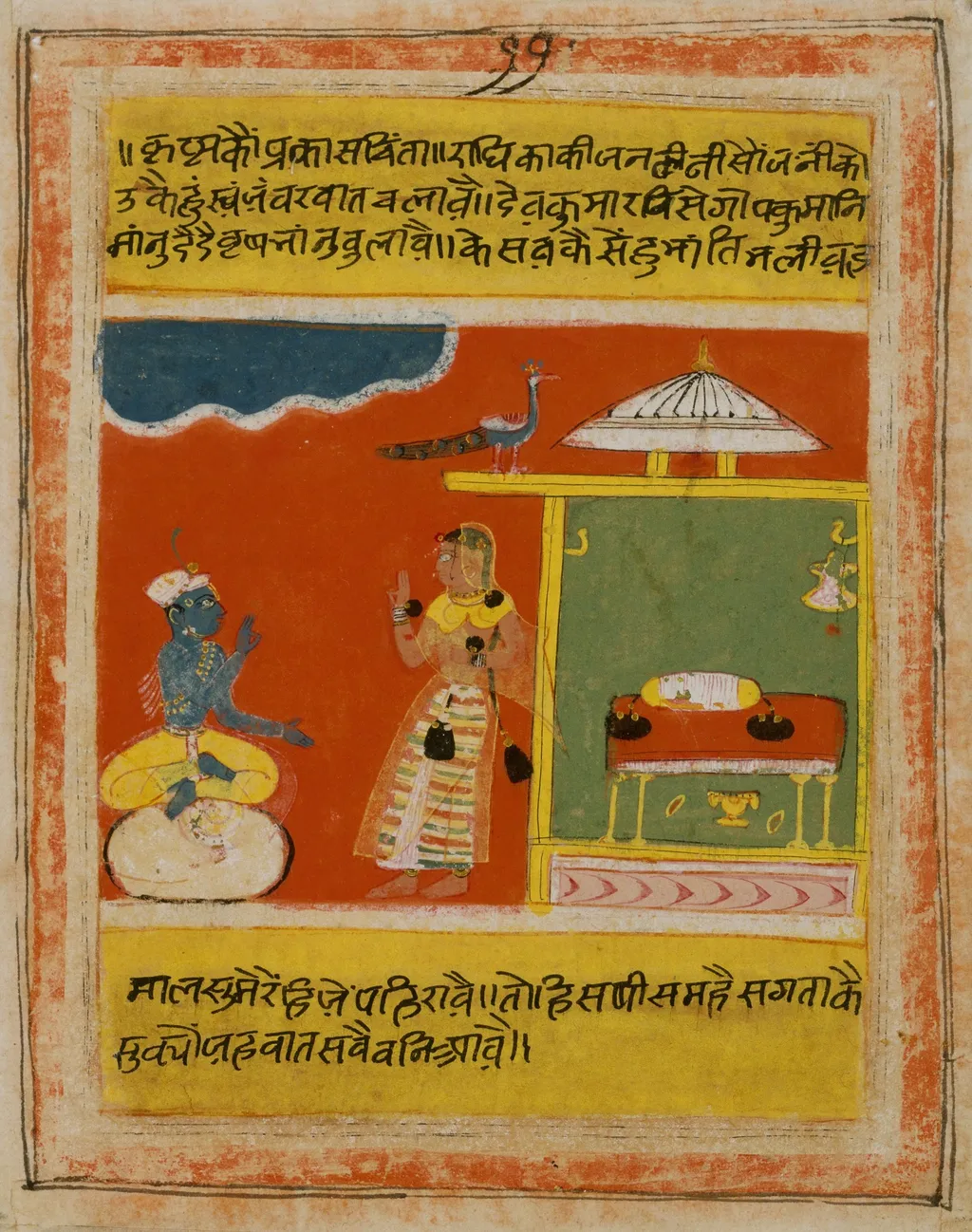
Krishna and Radha is an unspecified painting by the Mughal Painting artist Unknown. It dates from 1634 and is held in the collection of the Museum of Fine Arts, Houston. The work depicts an interior scene in which a seated male figure and a standing female figure dominate the composition.
About this work
Overview
The work depicts an interior scene in which a seated male figure and a standing female figure dominate the composition. The room is rendered in vivid hues: a green wall, a red floor, and a richly colored bed with a crimson cover and a white canopy. A peacock perched on a table behind the woman adds ornamental detail, while the surrounding furnishings contribute to the overall decorative richness.
Subject & Meaning
The intimate setting and the presence of the peacock, an animal associated with Krishna, reinforce themes of romantic devotion and spiritual union.
The two central figures are identified as Krishna and Radha, iconic deities from Hindu mythology who symbolize divine love. Krishna, shown with his characteristic dark blue skin, sits attentively, while Radha, dressed in a striped garment with a yellow top, raises her hand in a gesture that suggests invitation or reverence. The intimate setting and the presence of the peacock, an animal associated with Krishna, reinforce themes of romantic devotion and spiritual union.
Technique & Style
Executed in a highly chromatic palette, the painting employs flat areas of color and decorative patterning reminiscent of traditional Indian miniature and folk styles. The figures are outlined with clear contours, and the interior elements—walls, floor, bed, and table—are rendered with meticulous attention to surface detail, creating a layered visual texture that balances narrative focus with ornamental richness.
Context
Krishna and Radha motifs have been a recurring subject in Indian visual culture, appearing across media from temple reliefs to court paintings. This particular rendition reflects a synthesis of devotional iconography and domestic interiorization, a trend observed in later periods when sacred narratives were adapted for private, contemplative spaces rather than public worship.
Artist & collection

 Domestic Scene
 Giacomo and Cardinal Marco, investing Andrea, Abbot of San Zeno, with his Benefice
 The Nymph of Fontainebleau
 Portrait of a Woman
 Madonna and Child with Saints in the Enclosed Garden
 Venus and Minerva
 Family Group of Four on Sofa
 Wall painting from Room H of the Villa of P. Fannius Synistor at Boscoreale
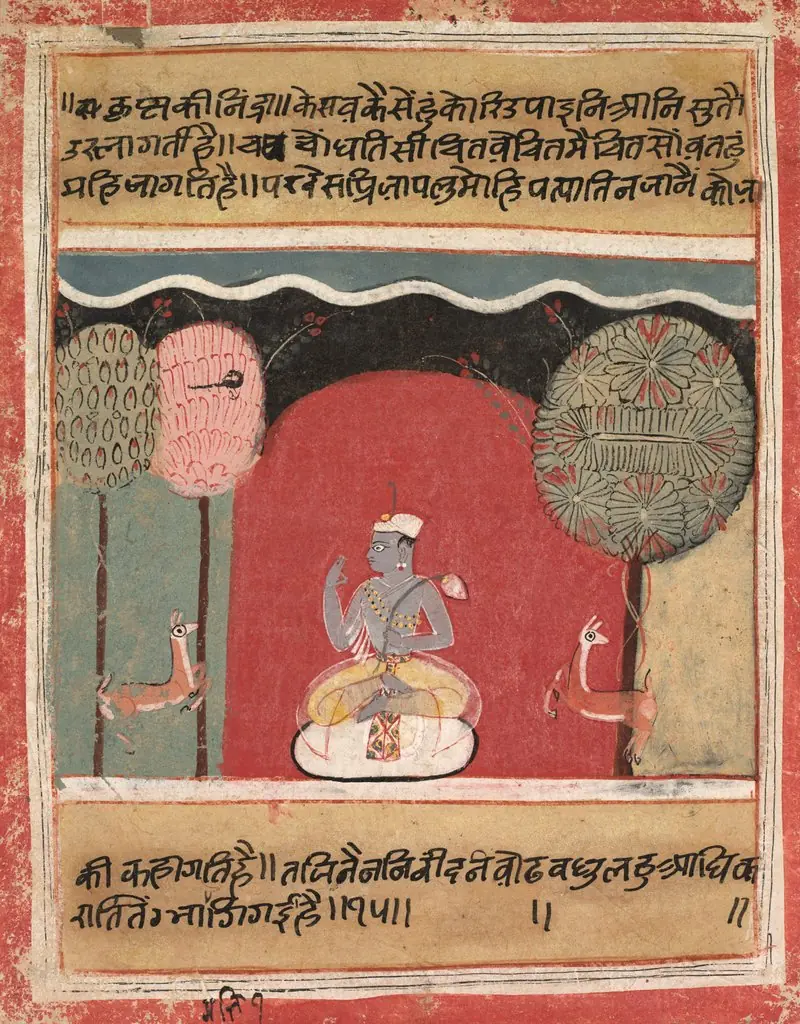 Krishna's Insomnia, Page from a Rasikapriya
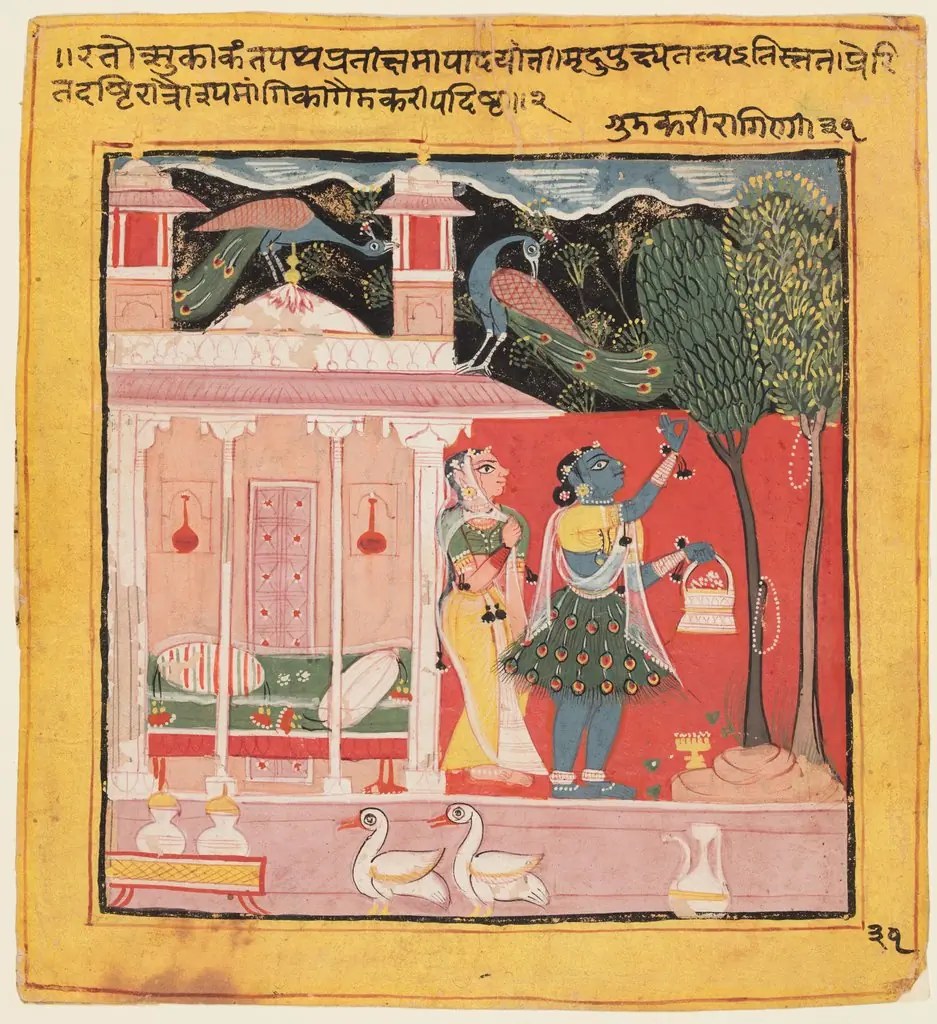 A Woman Plucks Leaves While Awaiting Her Lover: Gunakali Ragini of Malkos, from the “Chawand Ragamala”
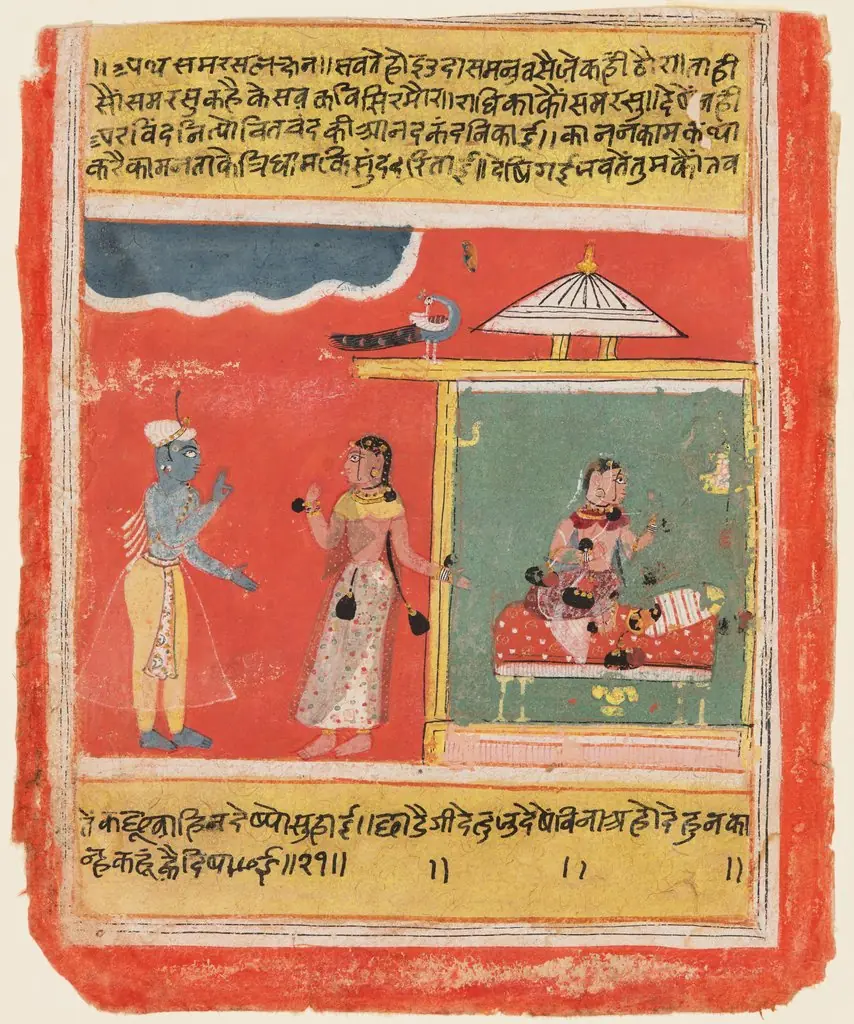 The Sentiment of Peace: Sama Rasa, from a Rasikapriya
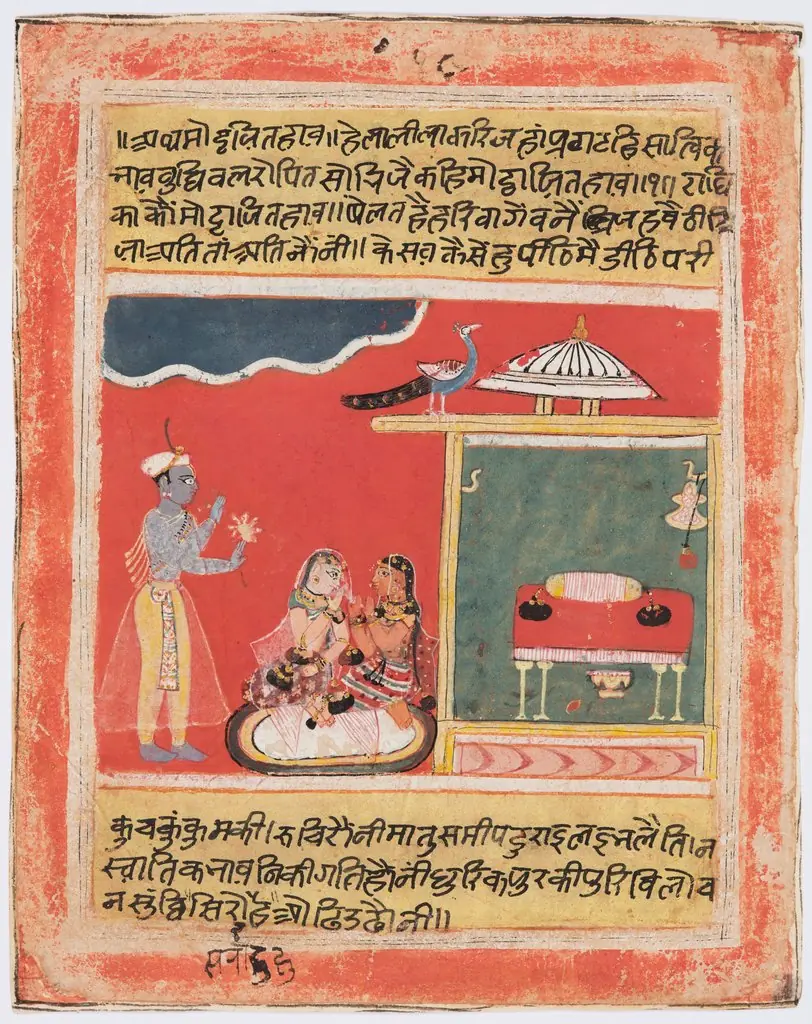 Krishna and Radha Avoid Embarrassment: Mottaita Bhava, from a Rasikapriya
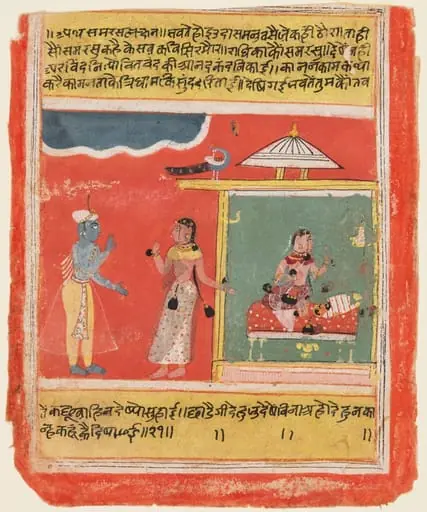 The Sentiment of Peace: Sama Rasa, from a Rasikapriya
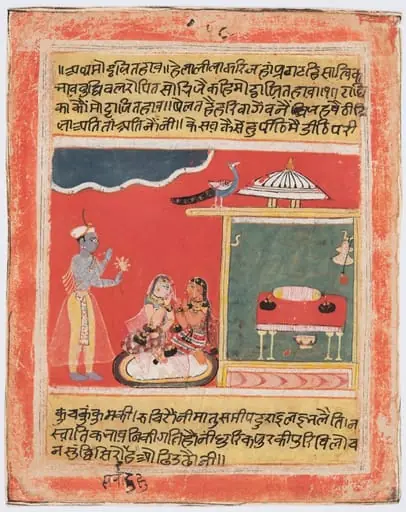 Krishna and Radha Avoid Embarrassment: Mottaita Bhava, from a Rasikapriya
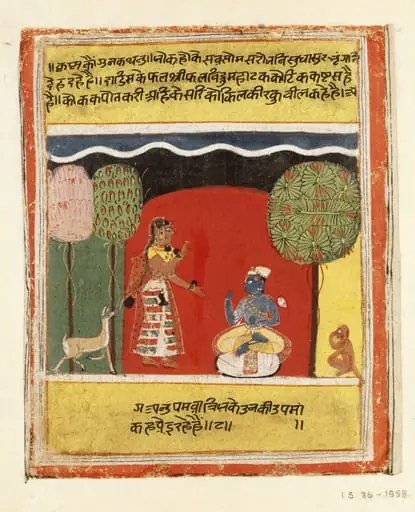 Radha and Krishna
 Untitled
 A Young, Angry Heroine, Folio 28 from a Rasamanjari
 Untitled
 Krishna's Insomnia, Page from a Rasikapriya
 Krishna and Radha