Artwork
Raja Anand Dev
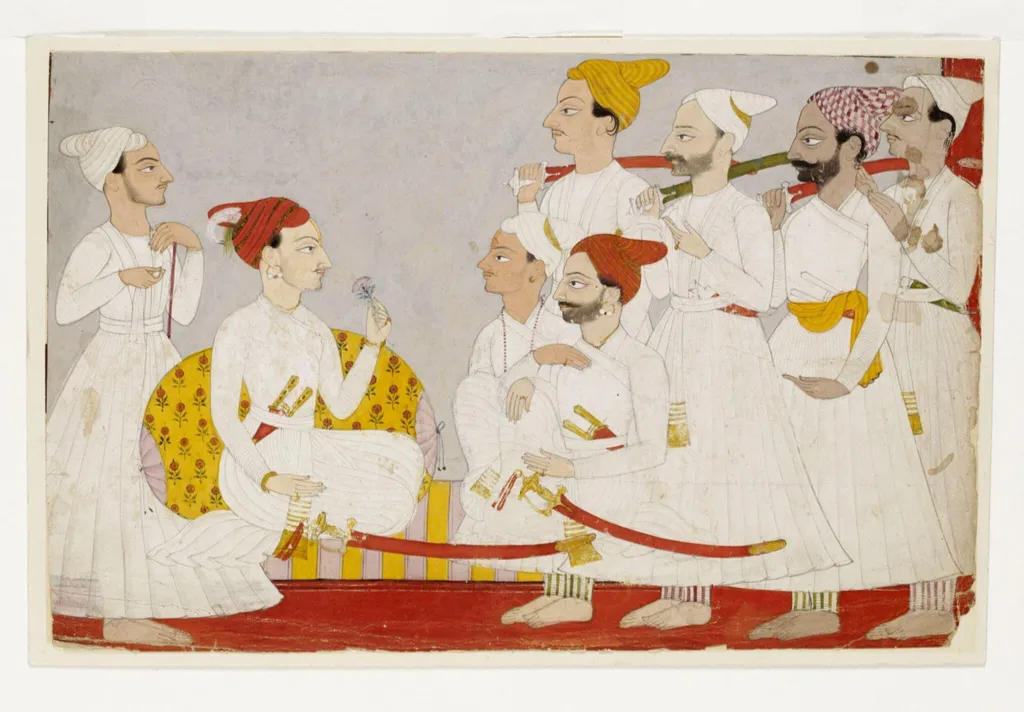
Raja Anand Dev is a paint painting by the Baroque artist Unknown. It dates from 1690 and is held in the collection of the Victoria and Albert Museum.
About this work
Overview
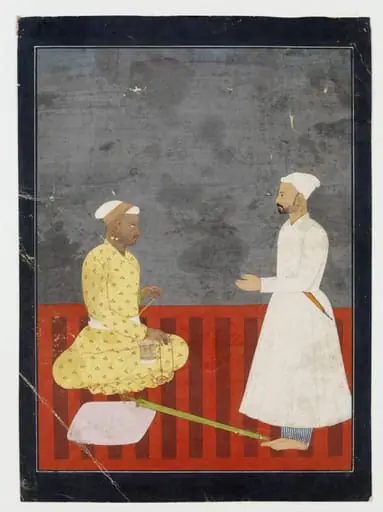
This opaque watercolour on paper portrays Raja Anand Dev, ruler of Bahu between roughly 1690 and 1715, in a courtly setting.
This opaque watercolour on paper portrays Raja Anand Dev, ruler of Bahu between roughly 1690 and 1715, in a courtly setting. He is depicted among attendants on a red carpet, arranged in a static, hierarchical composition. The scene lacks depth, emphasizing pattern and colour over spatial realism. The figures are rendered with clear outlines and flat planes, typical of regional Indian painting traditions of the period.
Subject & Meaning
Raja Anand Dev is centrally positioned, holding a flower and a fan—symbols of authority and refinement. Surrounding courtiers, some holding scrolls or weapons, reinforce his status through proximity and posture. The calm expressions and formal arrangement suggest a moment of dignified stillness, not action. The image functions as a visual affirmation of royal presence and order, common in court portraiture of the time.
Technique & Style
The painting employs opaque watercolour with bold, unmodulated colours—whites, reds, and yellows—applied in flat areas separated by sharp outlines. There is no attempt at chiaroscuro or perspective; forms are defined by contour and hue. The background is left pale, heightening the vibrancy of the figures. This stylistic approach reflects local conventions prioritizing symbolic clarity and decorative richness over naturalistic illusion.
History & Provenance
Created during Raja Anand Dev’s reign, the work likely originated in the hill kingdom of Bahu, part of the broader Pahari painting tradition. It may have been commissioned to commemorate his rule or displayed in a royal residence. Its survival suggests it was valued within the court, though its specific provenance prior to modern collections remains undocumented.
Context
This painting belongs to a regional school of Indian art that flourished in the Himalayan foothills during the late 17th and early 18th centuries. Unlike contemporaneous European Baroque works, which emphasized drama and movement, Pahari art favoured stillness, symmetry, and vivid colour. Such portraits served to affirm lineage and power within small, independent courts rather than large imperial centers.
Legacy
The work contributes to the understanding of how regional rulers in northern India visualized authority through art. Its stylistic consistency with other Pahari miniatures highlights the endurance of local conventions even as Mughal influences spread. Today, it stands as a quiet testament to the visual culture of smaller princely states, distinct from both imperial and Western traditions.
Artist & collection

 Domestic Scene
 Giacomo and Cardinal Marco, investing Andrea, Abbot of San Zeno, with his Benefice
 The Nymph of Fontainebleau
 Portrait of a Woman
 Madonna and Child with Saints in the Enclosed Garden
 Venus and Minerva
 Family Group of Four on Sofa
 Wall painting from Room H of the Villa of P. Fannius Synistor at Boscoreale
 Thakur Padam Singh
 Untitled
 Raja Ajit Singh of Bundi
 Untitled
 Prince Kanju Ram
 Raja Sansar Chand of Kangra and courtiers
 Raja Bhupal Dev of Jasrota, Raja Dalip Singh and Raja Daya Dhat
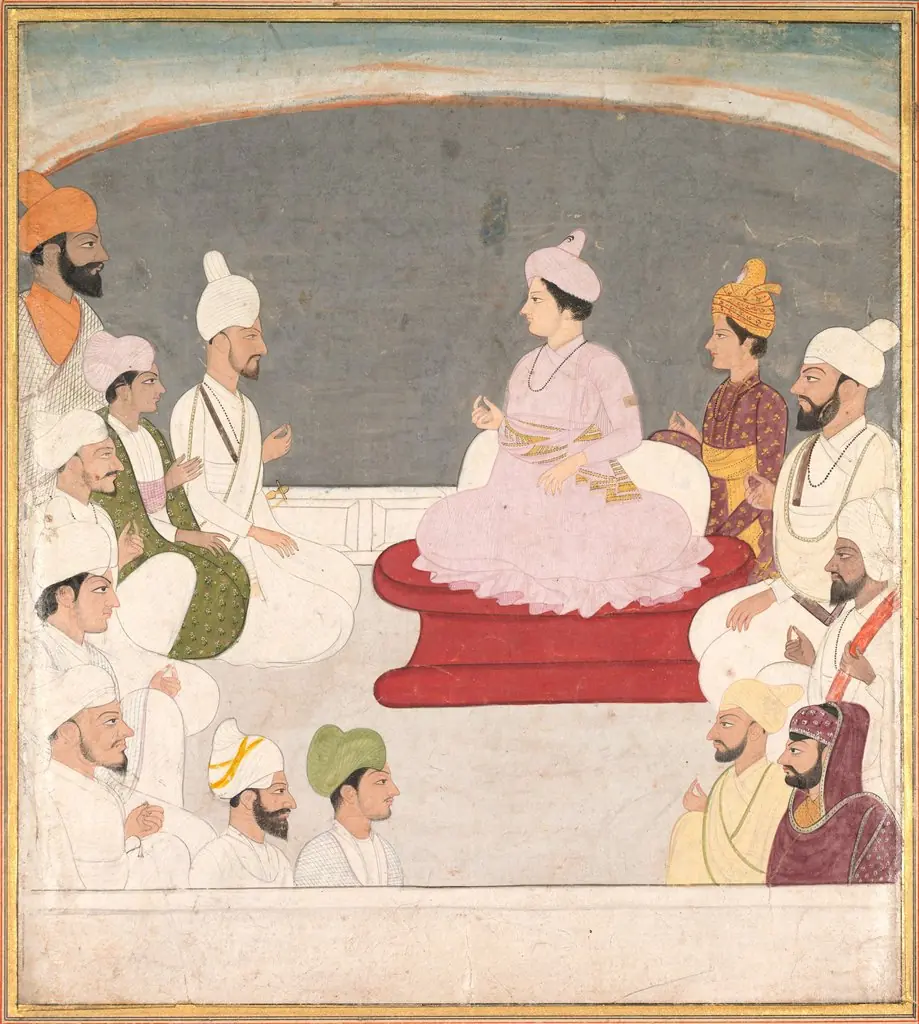 Raja Sansar Chand of Kangra and Courtiers
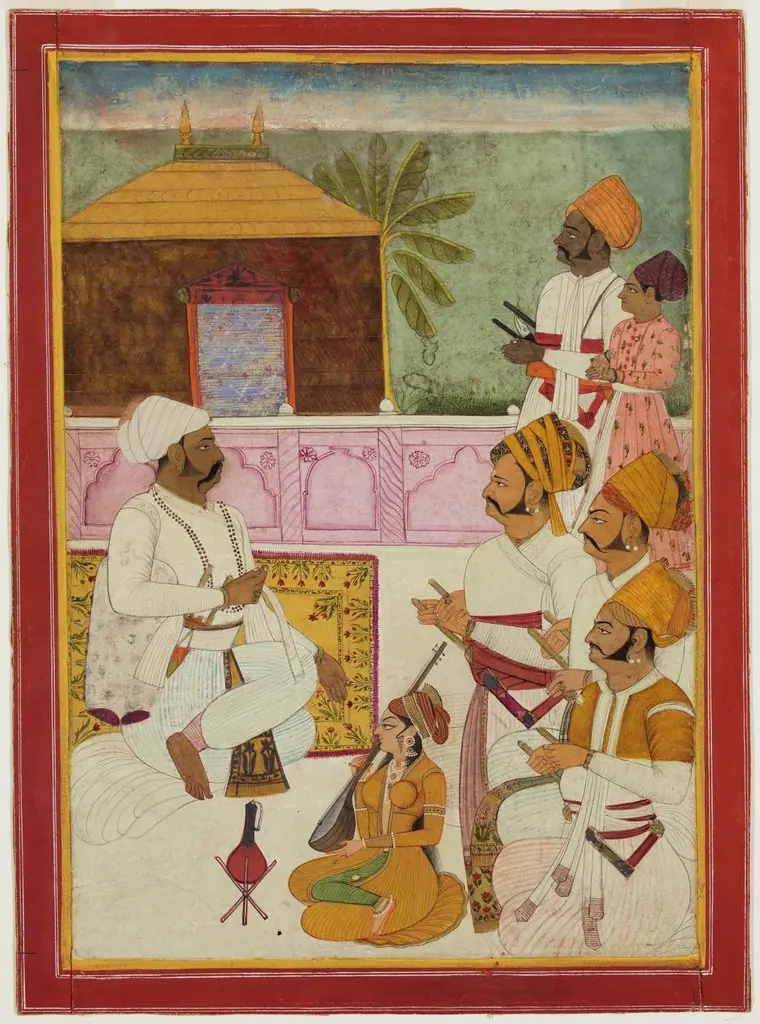 Portrait of Raja with Nobles (probably Raja Jaswant Singh)
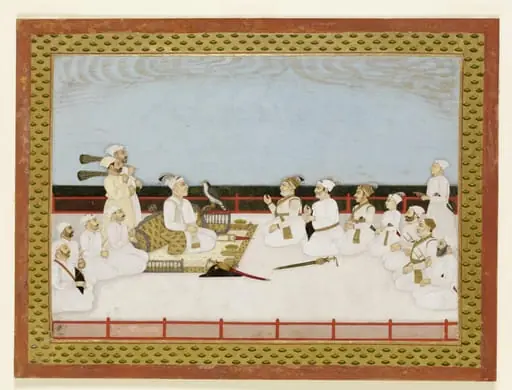 Alivardi Khan and Siraj ud-Daula
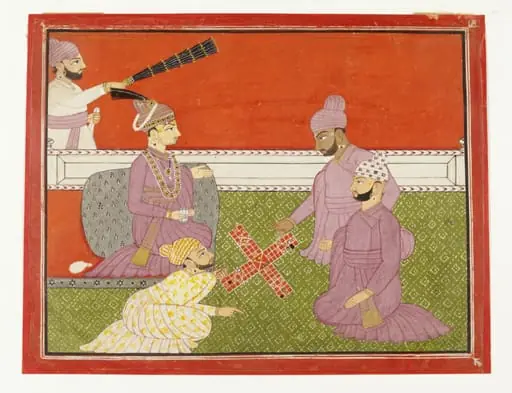 Untitled
 Raja Dalip Singh