Artwork
Raja Bhupal Dev of Jasrota, Raja Dalip Singh and Raja Daya Dhat
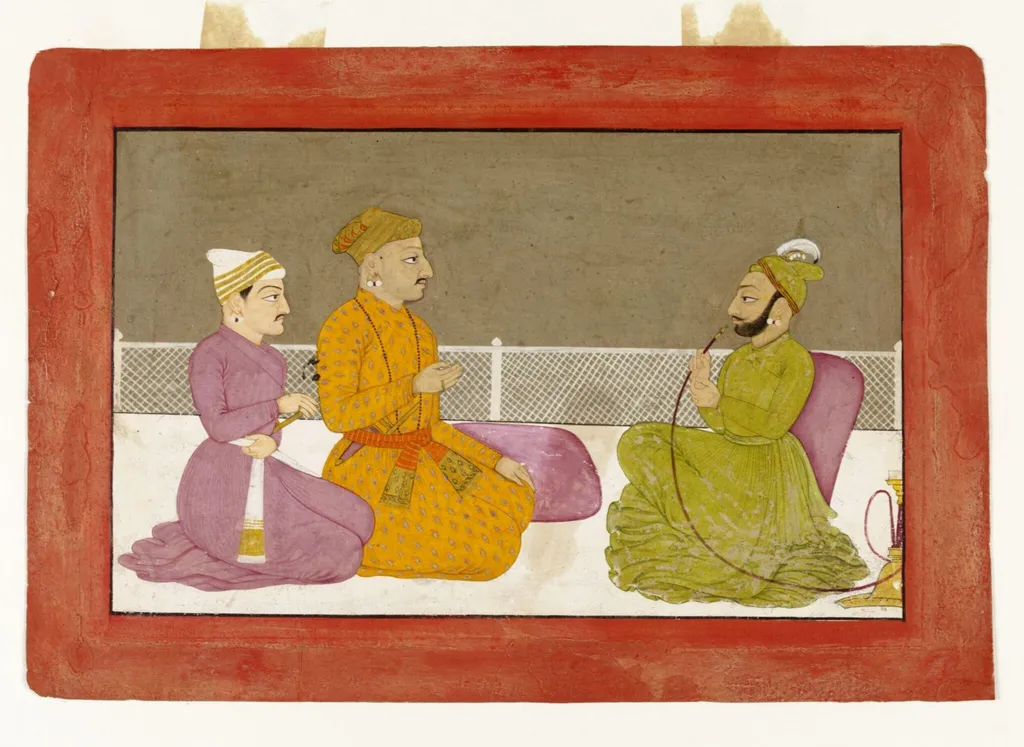
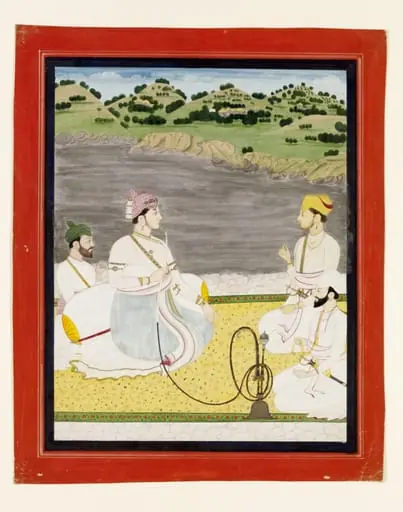
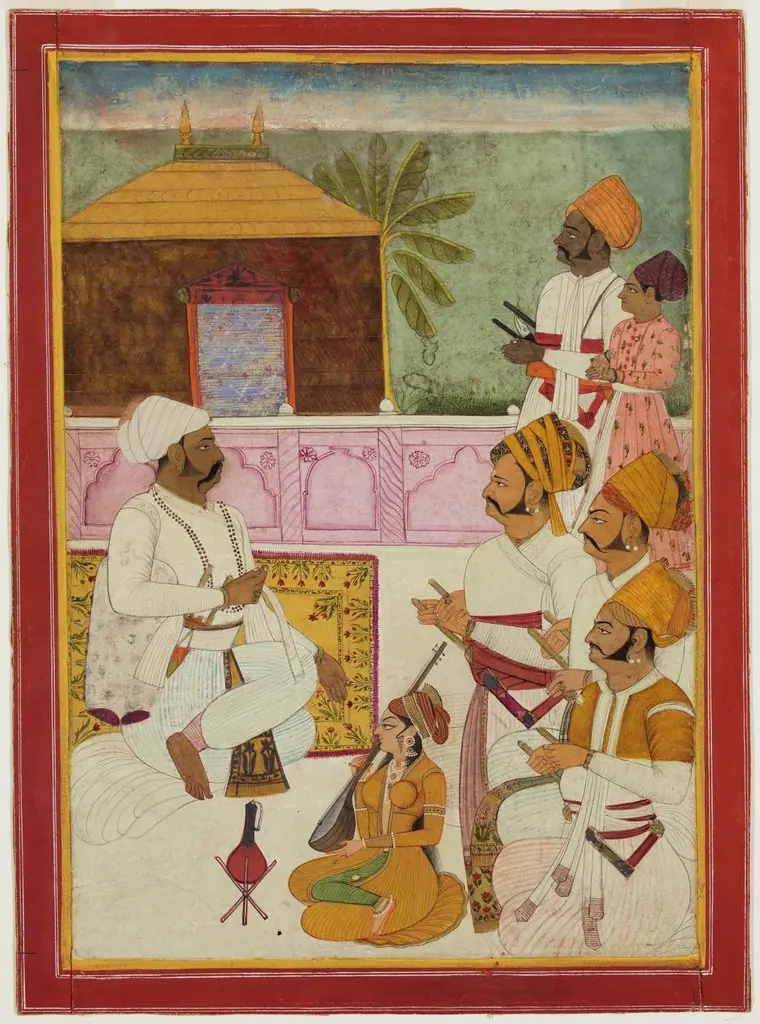
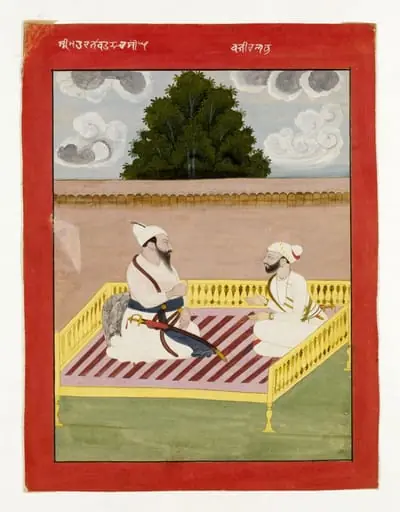
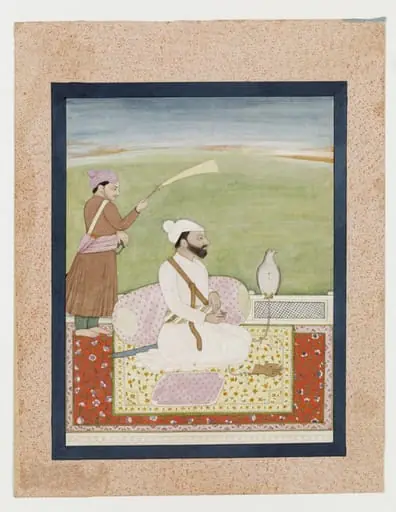
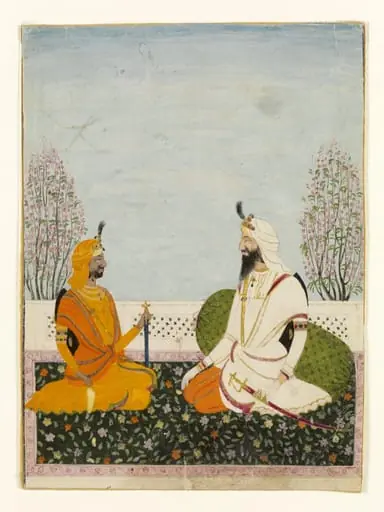
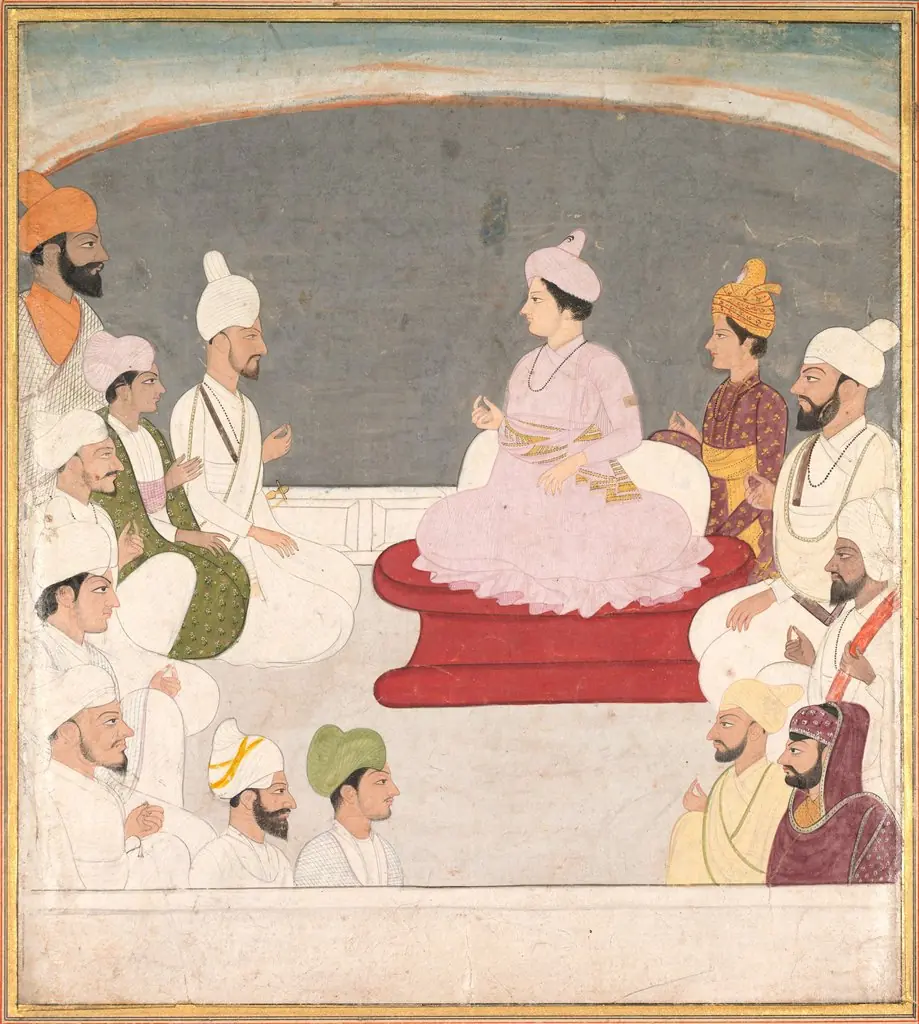
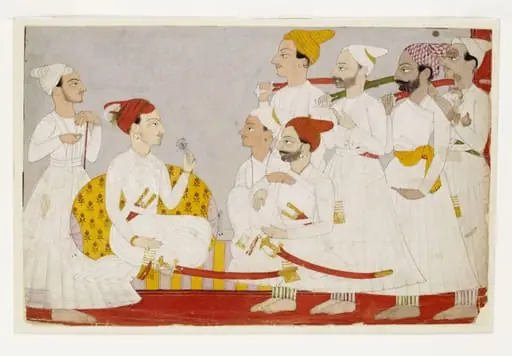
Raja Bhupal Dev of Jasrota, Raja Dalip Singh and Raja Daya Dhat is a paint painting by the Baroque artist Unknown. It dates from 1705 and is held in the collection of the Victoria and Albert Museum. An opaque watercolour on paper from 1705 depicts three Punjabi hill-state rulers in a formal indoor setting.
About this work
Overview
An opaque watercolour on paper from 1705 depicts three Punjabi hill-state rulers in a formal indoor setting.
An opaque watercolour on paper from 1705 depicts three Punjabi hill-state rulers in a formal indoor setting. The painting belongs to a documented series of works, catalogued as IS. 90–128-1954, acquired by Maggs Bros. in the 20th century. Rendered with flat, saturated hues and clear outlines, it reflects the stylistic conventions of early Pahari court painting, emphasizing symbolic presence over naturalistic depth.
Subject & Meaning
The figures represent Raja Bhupal Dev of Jasrota, Raja Dalip Singh of Guler, and Raja Daya Dhat of Nurpur, engaged in a diplomatic encounter. The kneeling posture of the figure on the left suggests deference, while the seated rulers convey authority. The composition underscores political hierarchy and alliance among regional powers, with each ruler distinguished by costume and gesture rather than individualized portraiture.
Technique & Style
The artist employed bold, unmodulated colours—purple, orange, and green—against a plain, muted background to heighten visual focus. Flat planes, sharp contours, and minimal shading define the figures, consistent with Pahari miniature traditions. The simple railing and lack of architectural detail direct attention to the figures’ interaction, emphasizing ritualized posture over spatial realism.
History & Provenance
The painting was acquired by the London dealers Maggs Bros. for £150 and later entered the Victoria and Albert Museum’s collection as part of a larger group of Pahari works. Its inclusion in the IS. 90–128-1954 series indicates it was once part of a curated album, likely assembled for a royal patron. Its survival and cataloguing reflect 20th-century efforts to preserve regional Indian art.
Context
Created during the early 18th century, this work emerged from the hill kingdoms of the Punjab foothills, where local rulers patronized artists to document courtly life and alliances. These paintings often served as visual records of political relationships, blending regional aesthetics with influences from Mughal and Deccan traditions, while retaining distinct local character in colour and composition.
Legacy
The painting remains a representative example of Pahari court art, studied for its formal clarity and symbolic language. It contributes to broader scholarly understanding of how regional rulers used visual culture to assert status and diplomacy. Its preservation in a major museum ensures continued access for research and public engagement with pre-colonial Indian artistic practices.
Artist & collection

 Domestic Scene
 Giacomo and Cardinal Marco, investing Andrea, Abbot of San Zeno, with his Benefice
 The Nymph of Fontainebleau
 Portrait of a Woman
 Madonna and Child with Saints in the Enclosed Garden
 Venus and Minerva
 Family Group of Four on Sofa
 Wall painting from Room H of the Villa of P. Fannius Synistor at Boscoreale