Artwork
Untitled
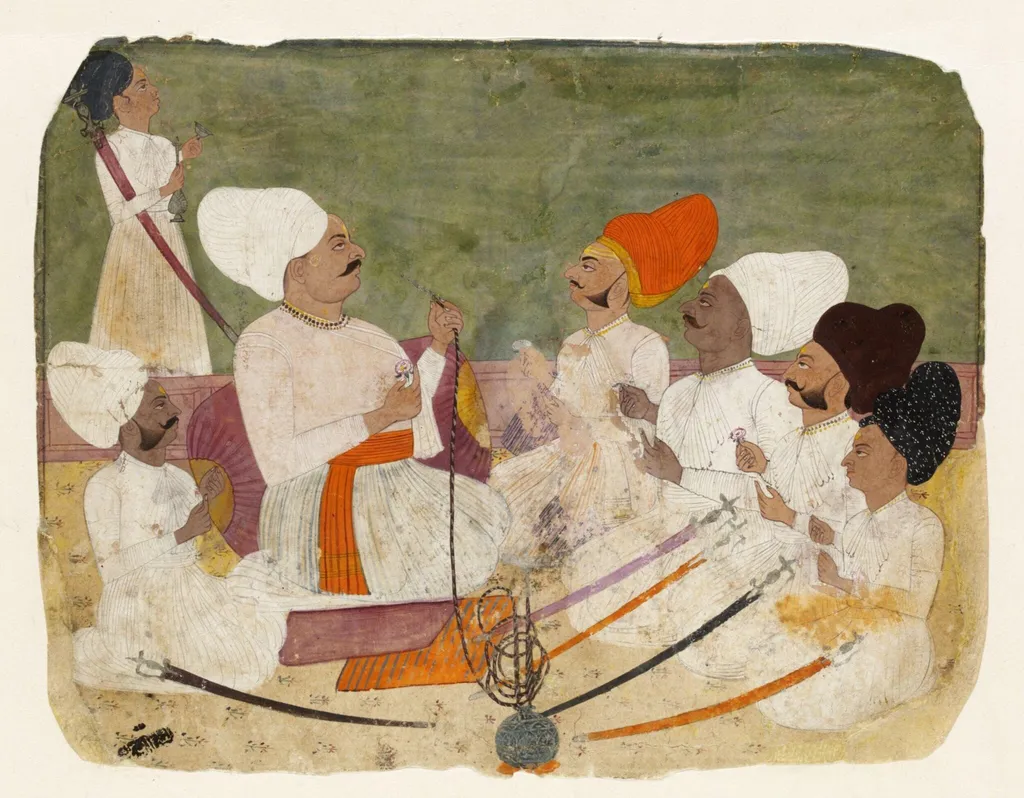
Untitled is a paint painting by the Baroque artist Unknown. It dates from 1720 and is held in the collection of the Victoria and Albert Museum.
About this work
Overview
Its restrained composition, muted earth tones, and deliberate lack of ornamental excess align with artistic practices in Jodhpur and surrounding areas.
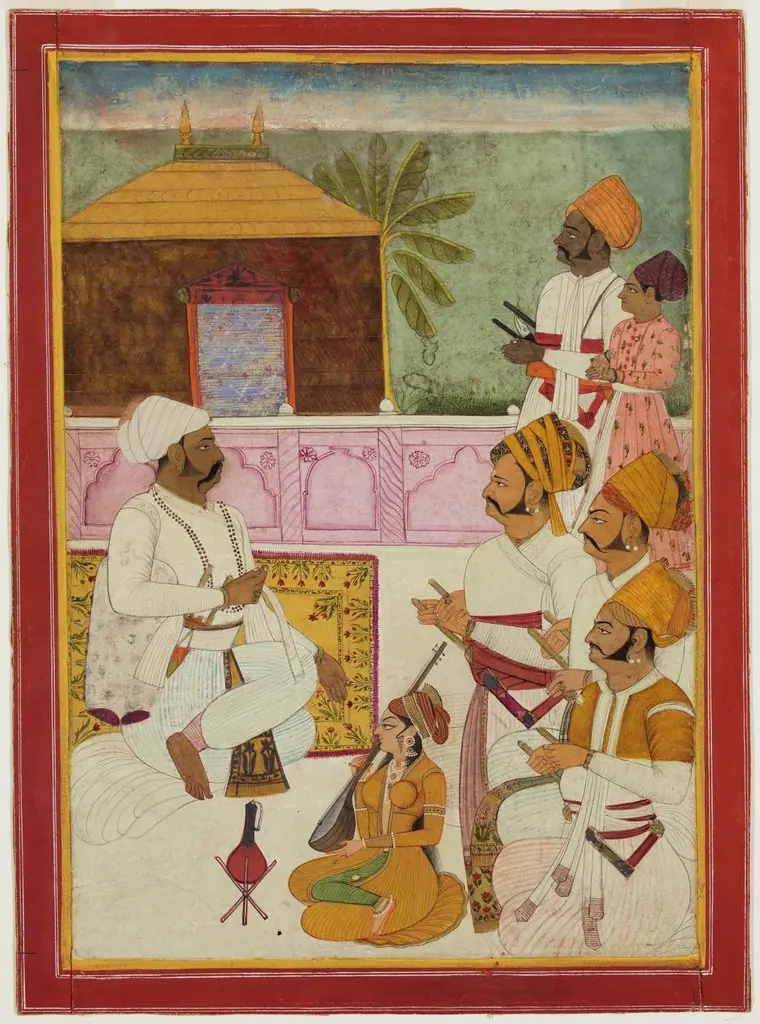
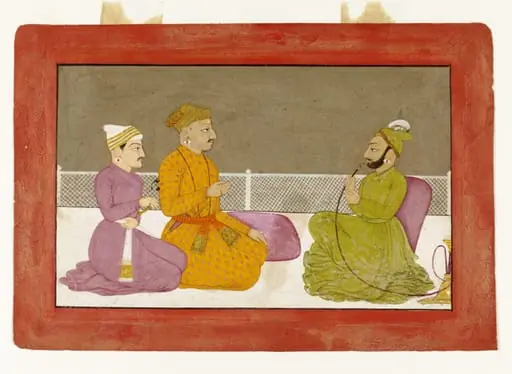
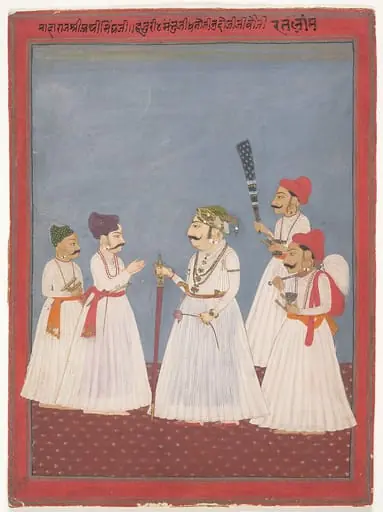
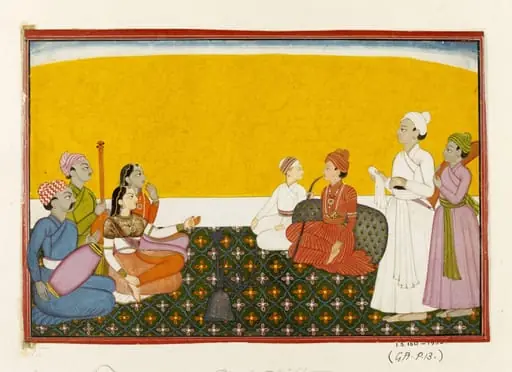
This painting, untitled and executed in traditional pigments on paper, reflects the regional style of western Rajasthan in the early 1700s. Its restrained composition, muted earth tones, and deliberate lack of ornamental excess align with artistic practices in Jodhpur and surrounding areas. The figure seated on a throne is rendered with quiet dignity, characteristic of portraiture emerging beyond royal courts during this period.
Subject & Meaning
The central figure, seated on a throne and dressed in regional attire, likely represents a local noble or minor ruler rather than a major monarch like Maharaja Ajit Singh. While some have speculated his identity, the absence of definitive insignia or inscriptions leaves his status ambiguous. The painting serves less as a personal likeness than as a symbol of authority within a decentralized political landscape.
Technique & Style
The artist employed flat planes of color with subtle gradations, avoiding dramatic chiaroscuro in favor of a soft, even light. Details such as fabric folds and facial features are rendered with fine brushwork, while backgrounds remain minimal. The palette—ochres, umbers, and muted greens—reflects locally sourced pigments and a preference for naturalistic, grounded tones over decorative brilliance.
History & Provenance
The work originates from a period when portraiture expanded from royal patronage to include regional landholders and minor nobility. Likely produced in a provincial workshop, it was probably commissioned by the subject or a close associate. No documented provenance survives, but its stylistic consistency with other works from the region suggests a local origin, possibly outside Jodhpur’s immediate court.
Context
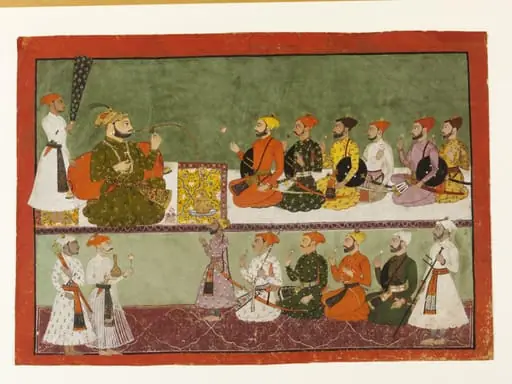
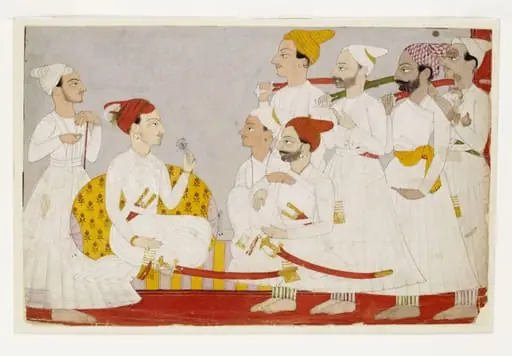
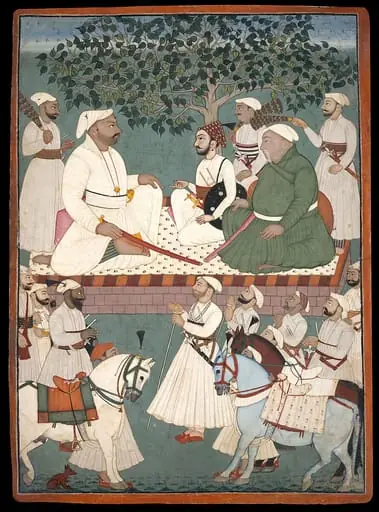
In the early 18th century, the decline of centralized Mughal authority allowed regional powers to assert cultural autonomy. In western Rajasthan, painting became a tool for local elites to affirm status. Portraits of rulers seated on thrones, often accompanied by attendants, emerged as a common motif, reflecting both political fragmentation and the growing influence of regional aesthetics.
Legacy
This painting exemplifies the democratization of portraiture in Rajasthan, where artistic conventions once reserved for royalty were adopted by lesser nobles. Its quiet formalism influenced later regional styles and remains a reference point for understanding how visual culture adapted to shifting power structures. It stands as a testament to the diversity of artistic expression beyond major courts.
Artist & collection

 Domestic Scene
 Giacomo and Cardinal Marco, investing Andrea, Abbot of San Zeno, with his Benefice
 The Nymph of Fontainebleau
 Portrait of a Woman
 Madonna and Child with Saints in the Enclosed Garden
 Venus and Minerva
 Family Group of Four on Sofa
 Wall painting from Room H of the Villa of P. Fannius Synistor at Boscoreale