Artwork
Raja Bhim Singh
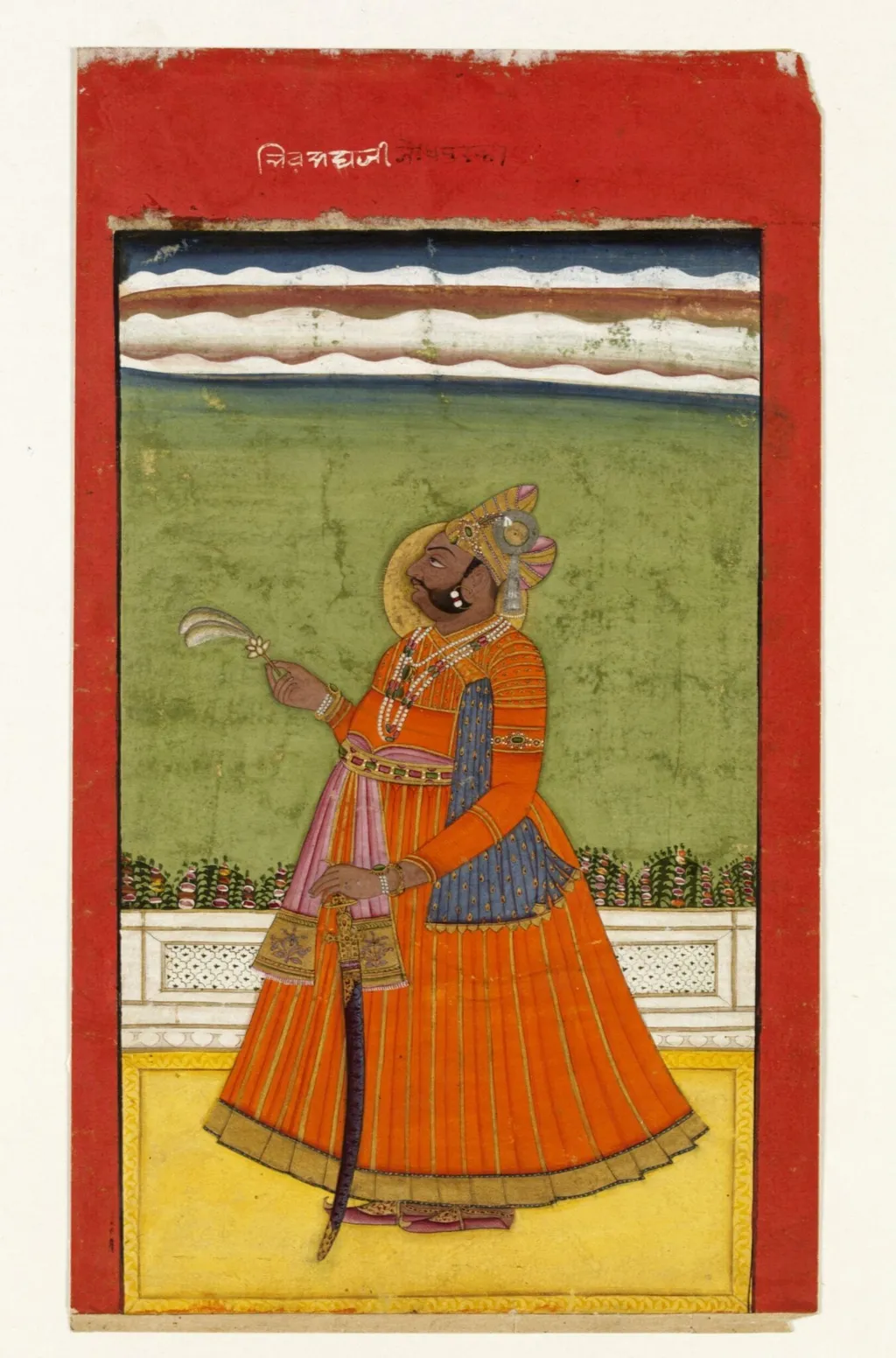
Raja Bhim Singh is a paint painting by the Romanticist artist Unknown. It dates from 1800 and is held in the collection of the Victoria and Albert Museum.
About this work
Overview
The use of rich pigments and metallic accents reflects the aesthetic priorities of Rajput court painting at the turn of the nineteenth century.
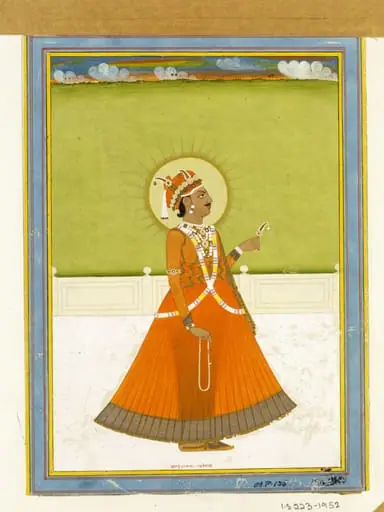
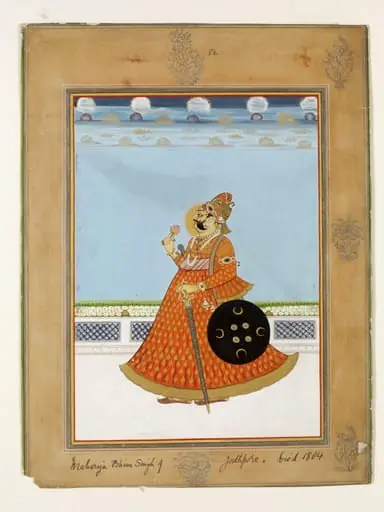
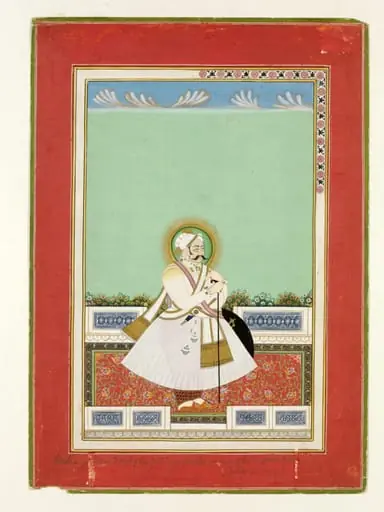
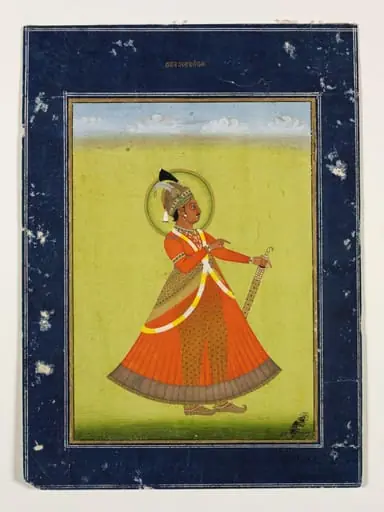
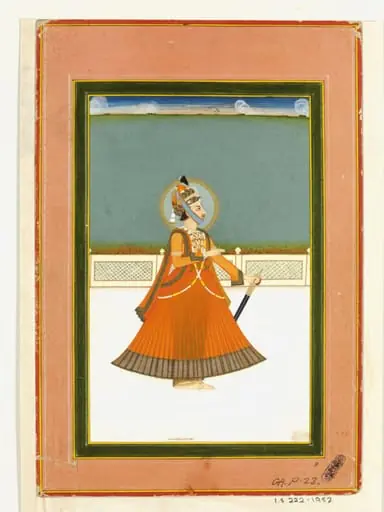
A portrait in opaque watercolor and gold on paper, created around 1800, portrays Raja Bhim Singh of Jodhpur in formal attire. The work is attributed to an anonymous artist of the Marwar court tradition. It captures the ruler in a static, frontal stance against a simplified landscape, emphasizing regal presence over narrative detail. The use of rich pigments and metallic accents reflects the aesthetic priorities of Rajput court painting at the turn of the nineteenth century.
Subject & Meaning
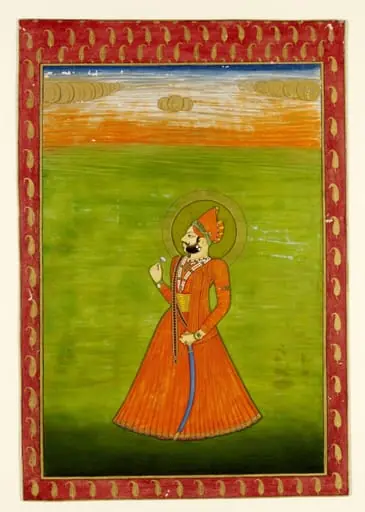
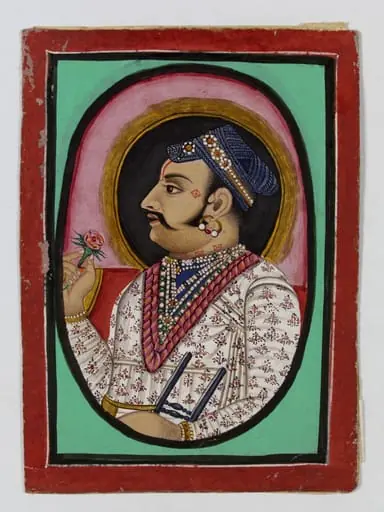
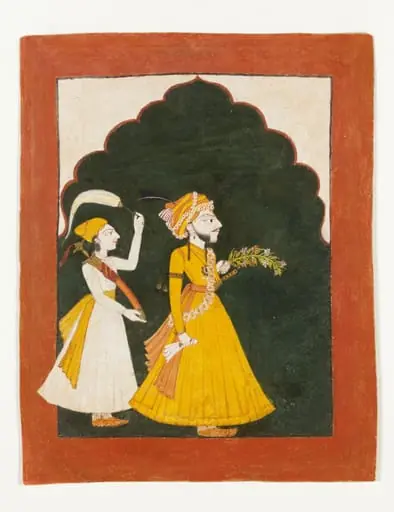
Raja Bhim Singh is depicted with symbols of authority: a curved sword, a ceremonial fan, and ornate jewelry. His stance suggests readiness and composure, aligning with ideals of Rajput leadership. The turban ornament and layered garments signify status, while the absence of courtiers or action focuses attention on the ruler as an emblem of sovereignty. The image functions as a visual assertion of identity and power within a localized political context.
Technique & Style
The painting employs opaque watercolor with gold leaf accents to create luminous surfaces and sharp contrasts. Bold hues of orange, red, and gold dominate the figure, set against a muted green field and white architectural element. Lines are precise, forms are flattened, and perspective is schematic—hallmarks of regional Rajput painting. The decorative border frames the scene like a reliquary, reinforcing the subject’s elevated status.
History & Provenance
The work originates from the Jodhpur court, likely commissioned during Bhim Singh’s reign (1793–1803). Its survival suggests it was preserved within royal collections, possibly used in private chambers or ceremonial contexts. No documented provenance exists prior to modern museum acquisition, but its style aligns with other known works from Marwar workshops of the period, indicating a local artistic lineage.
Context
Created during a time of shifting political power in Rajasthan, the portrait reflects the persistence of traditional courtly imagery despite increasing British influence. Rajput rulers continued to commission such portraits to affirm lineage and legitimacy. The emphasis on personal adornment and symbolic objects, rather than landscape or event, connects this work to earlier Mughal and regional traditions that prioritized the ruler’s presence over historical narrative.
Legacy
This painting contributes to a broader corpus of early 19th-century Rajput portraiture that values symbolic representation over naturalism. It remains a reference for understanding how local elites sustained visual traditions amid colonial encroachment. Though unsigned, its stylistic consistency with other Marwar works allows scholars to situate it within a regional artistic network, preserving the aesthetic values of a fading courtly culture.
Artist & collection

 Domestic Scene
 Giacomo and Cardinal Marco, investing Andrea, Abbot of San Zeno, with his Benefice
 The Nymph of Fontainebleau
 Portrait of a Woman
 Madonna and Child with Saints in the Enclosed Garden
 Venus and Minerva
 Family Group of Four on Sofa
 Wall painting from Room H of the Villa of P. Fannius Synistor at Boscoreale