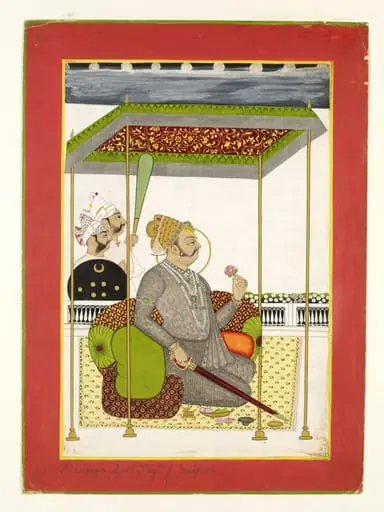
Artwork
Maharaja Bhim Singh
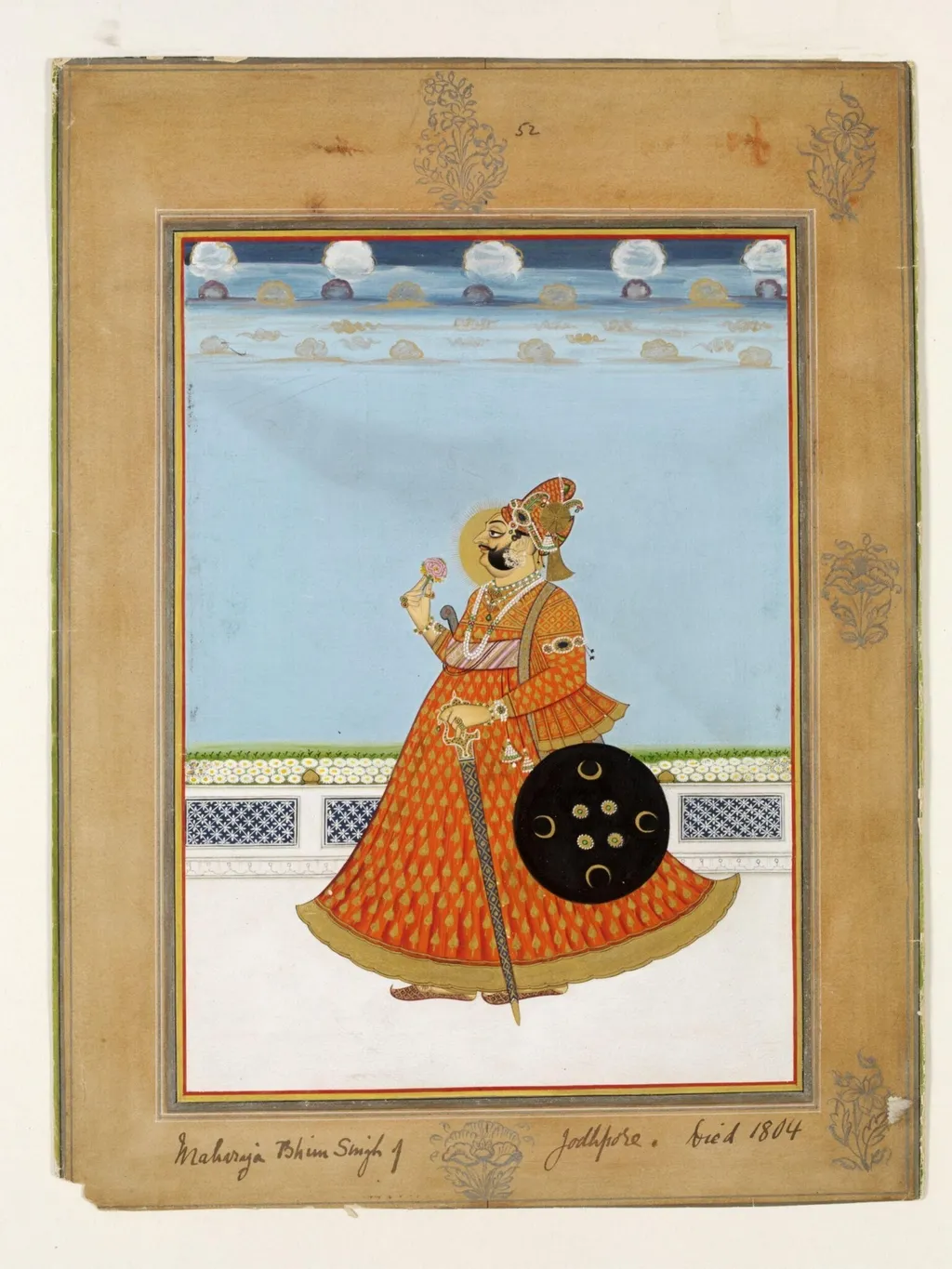
Maharaja Bhim Singh is a paint painting by the Impressionist artist Nandalal. It dates from 1890 and is held in the collection of the Victoria and Albert Museum.
About this work
Overview
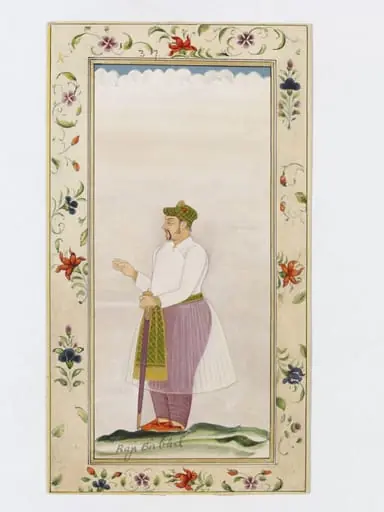
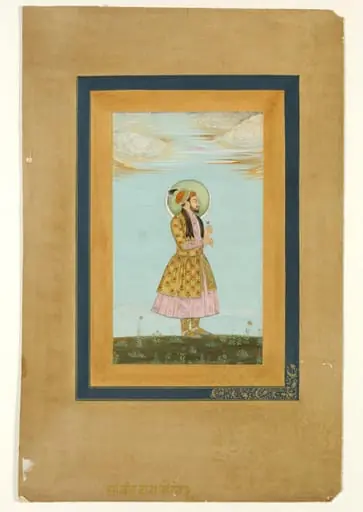
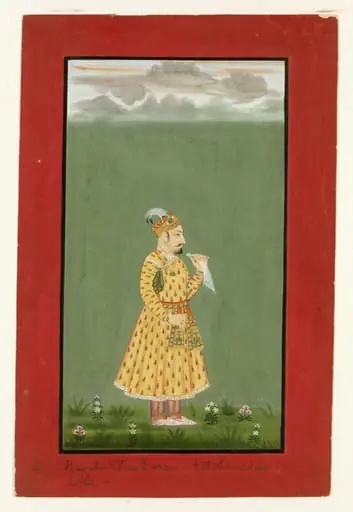
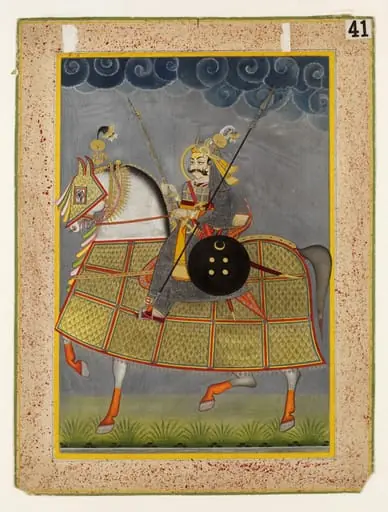
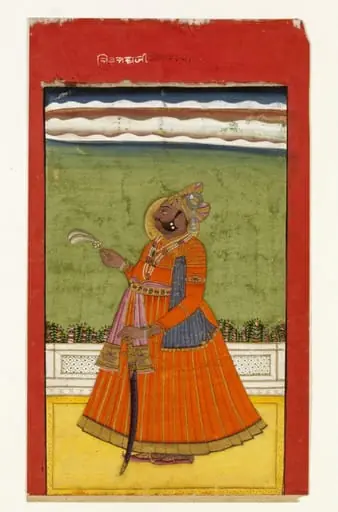
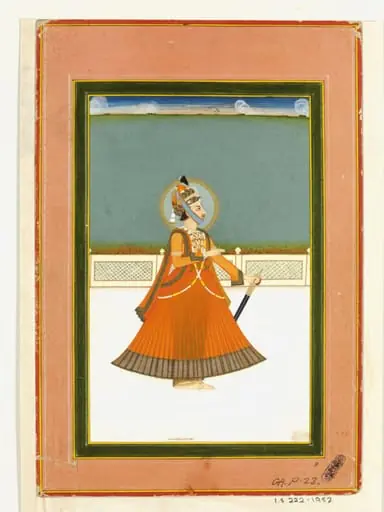
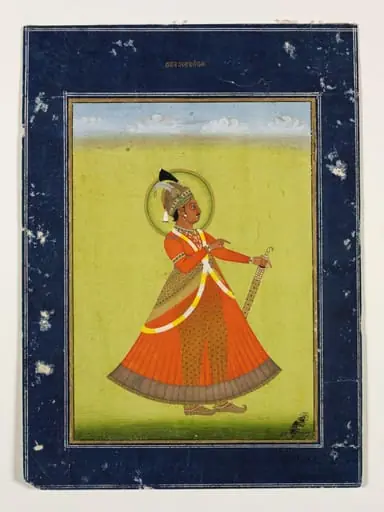
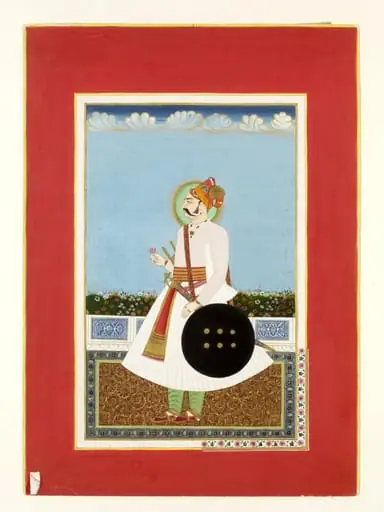
This opaque watercolour and gold painting on paper portrays Maharaja Bhim Singh, ruler of the Sikh state of Jammu, in a formal portrait.
This opaque watercolour and gold painting on paper portrays Maharaja Bhim Singh, ruler of the Sikh state of Jammu, in a formal portrait. He stands facing left, dressed in ornate robes with gold detailing, holding a rose near his face. The background features a stylized sky with clouds and a tiled structure, suggesting a palace setting. A symbolic black disc with white crescents adorns his garment, reflecting regional iconography.
Subject & Meaning
Maharaja Bhim Singh is depicted not in action but in contemplative stillness, emphasizing dignity and refinement. The rose he holds may signify beauty, transient power, or personal devotion. The elaborate attire and elevated stance affirm his royal status, while the celestial motifs on his clothing could reference spiritual authority or cosmological beliefs tied to his lineage and rule.
Technique & Style
Executed in opaque watercolour with gold leaf accents, the painting reflects the Pahari school’s refined aesthetic. Fine brushwork defines the texture of fabric and the delicate petals of the rose, while the flat, patterned background contrasts with the three-dimensionality of the figure. Gold highlights on the robe and hat enhance luminosity, typical of courtly portraiture in early 19th-century northern India.
History & Provenance
The portrait likely dates to the early 1800s, during Bhim Singh’s reign over Jammu. It was probably commissioned for royal use or as a diplomatic gift. The painting entered the Victoria and Albert Museum’s collection through British colonial acquisitions, where it remains part of a broader archive of Indian court art from the period.
Context
This work emerged during a time when regional courts in northern India maintained distinct artistic traditions despite increasing British influence. Pahari painting, known for its lyrical detail and symbolic richness, flourished in hill states like Jammu. Portraits such as this served to legitimize authority through visual grandeur, blending local aesthetics with Mughal-derived conventions.
Legacy
The portrait endures as a representative example of early 19th-century Sikh court art. It contributes to scholarly understanding of how regional rulers used visual culture to assert identity and continuity. Its preservation in a major museum ensures ongoing access for study, though its original ceremonial or personal function remains partially obscured by time.
Artist & collection
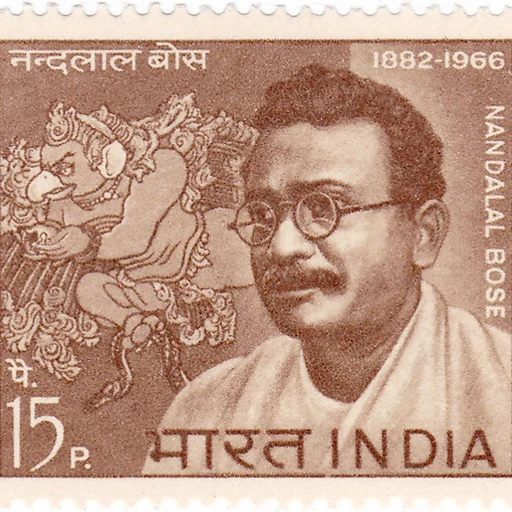
Artist
Nandalal Bose (3 December 1882 – 16 April 1966) was one of the pioneers of modern Indian art and a key figure of Contextual Modernism.