Artwork
Raja Suchet Singh and Raja Dhian Singh
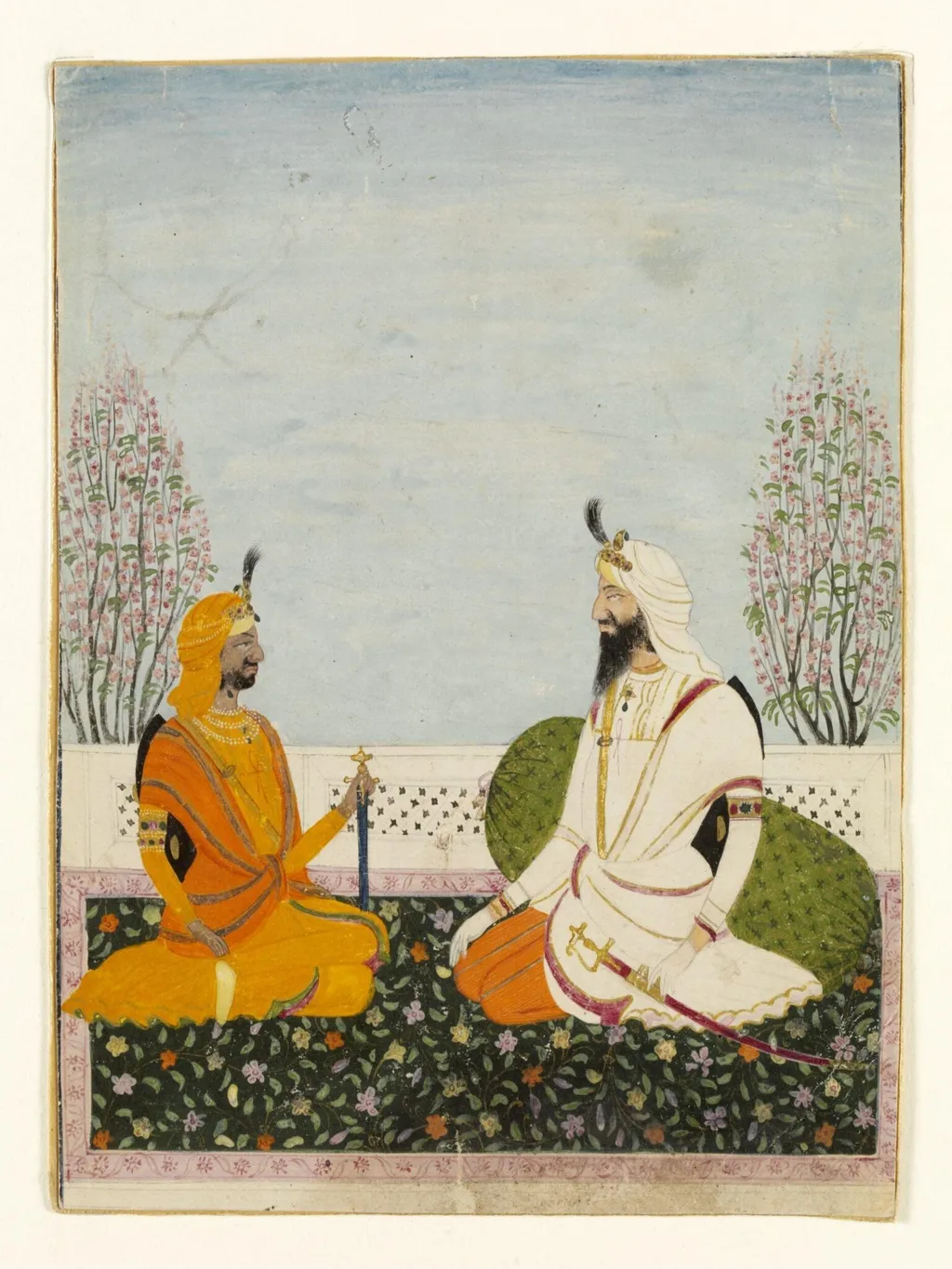
Raja Suchet Singh and Raja Dhian Singh is a paint painting by the Patna School of Painting artist Unknown. It dates from 1840 and is held in the collection of the Victoria and Albert Museum.
About this work
Overview
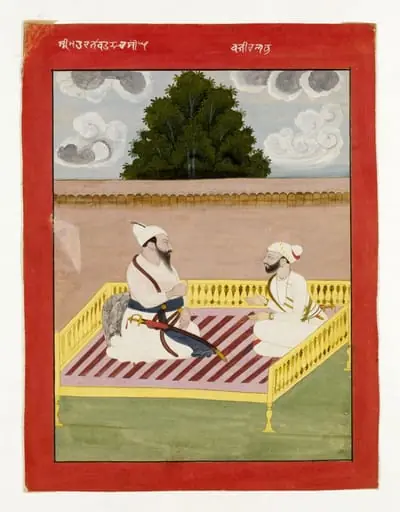
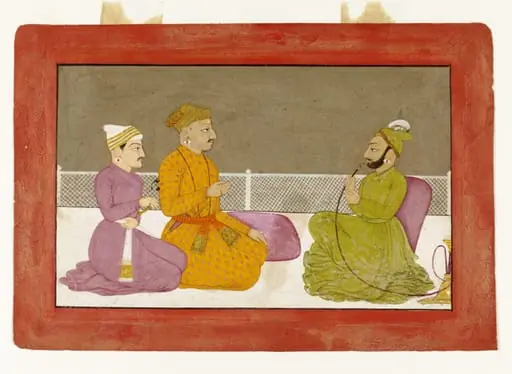
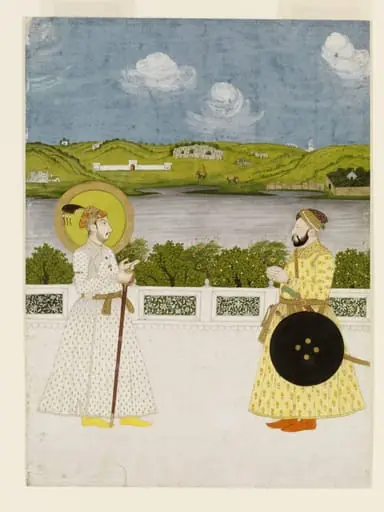
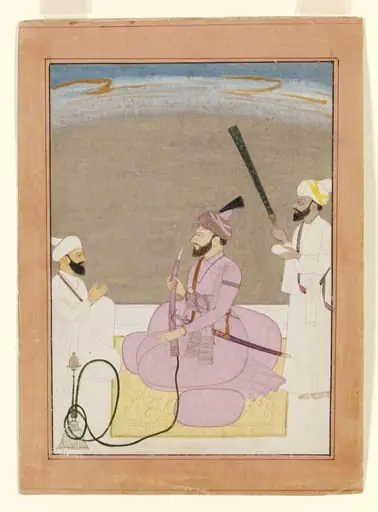
This painting depicts Raja Suchet Singh and Raja Dhian Singh, two influential brothers of the Dogra family, seated together on a terrace.
This painting depicts Raja Suchet Singh and Raja Dhian Singh, two influential brothers of the Dogra family, seated together on a terrace. Created around 1838–1840, it captures them in a moment of quiet interaction, reflecting their close kinship and shared political stature under Maharaja Ranjit Singh. The work originates from the Punjab Hills artistic tradition and was later acquired by the Victoria and Albert Museum in 1953 through the donation of Robert Skelton.
Subject & Meaning
The two brothers, both key figures in Ranjit Singh’s court, are portrayed facing each other, emphasizing their personal and political bond. As members of the Hindu Dogra lineage, they held significant administrative roles, yet their ambitions after the Maharaja’s death contributed to instability in the Sikh Empire. The composition suggests intimacy, but also hints at the tensions underlying their alliance.
Technique & Style
Executed in the regional style of the Punjab Hills, the painting features delicate brushwork, rich textile patterns, and a flattened spatial perspective typical of late Mughal-influenced Sikh court art. The terrace setting, bolstered seating, and carpeted floor reflect aristocratic norms, while the restrained palette and attention to detail align with the aesthetic preferences of early 19th-century Punjab elites.
History & Provenance
The painting was likely produced during the final years of Ranjit Singh’s reign, possibly by an artist transitioning from a hill state court to the more stable environment of Lahore. It remained in private hands until 1953, when it was donated to the Victoria and Albert Museum by Robert Skelton, a noted scholar and former curator of Indian art, ensuring its preservation within a major institutional collection.
Context
During Ranjit Singh’s rule, the Dogra brothers rose to prominence through administrative skill and loyalty, benefiting from his policy of integrating capable non-Sikh elites into his court. Their influence extended beyond governance, shaping regional politics. After his death, rivalries among the Dogras and other factions destabilized the empire, making this portrait a quiet prelude to the upheavals that followed.
Legacy
The painting endures as a visual record of a pivotal moment in Sikh court history, capturing the dynamics of power and kinship among its ruling elite. It illustrates how regional artistic traditions adapted under centralized patronage, and remains a key artifact for understanding the complex interplay of loyalty, ambition, and decline in early 19th-century Punjab.
Artist & collection

 Domestic Scene
 Giacomo and Cardinal Marco, investing Andrea, Abbot of San Zeno, with his Benefice
 The Nymph of Fontainebleau
 Portrait of a Woman
 Madonna and Child with Saints in the Enclosed Garden
 Venus and Minerva
 Family Group of Four on Sofa
 Wall painting from Room H of the Villa of P. Fannius Synistor at Boscoreale