Artwork
Raja Tulsaji of Tanjore
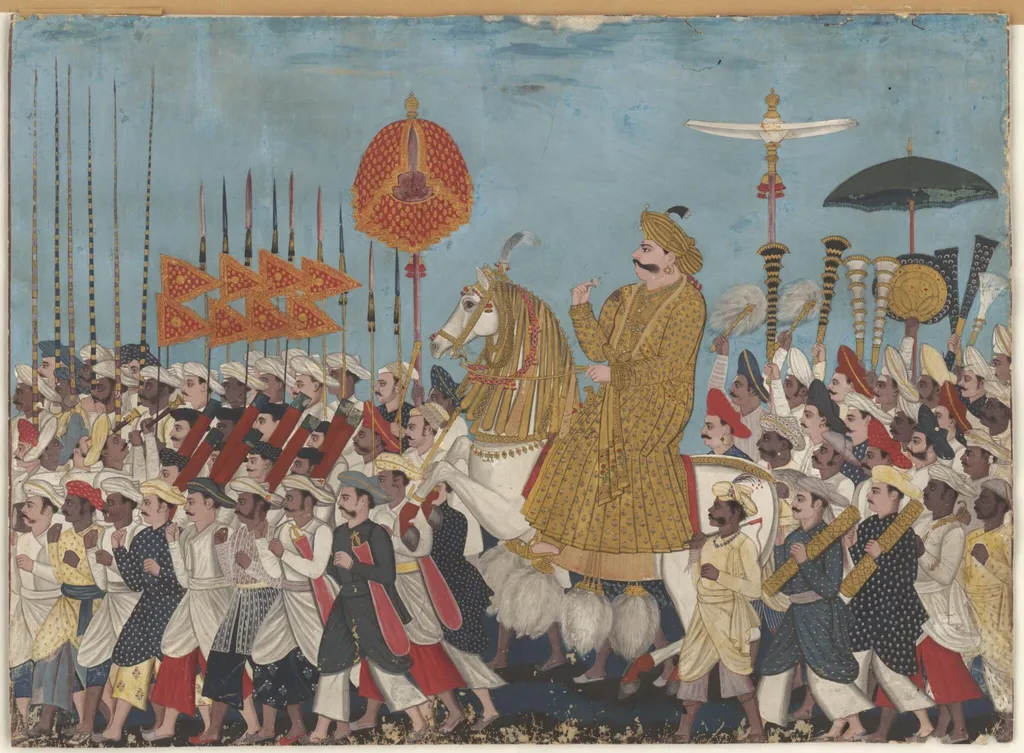
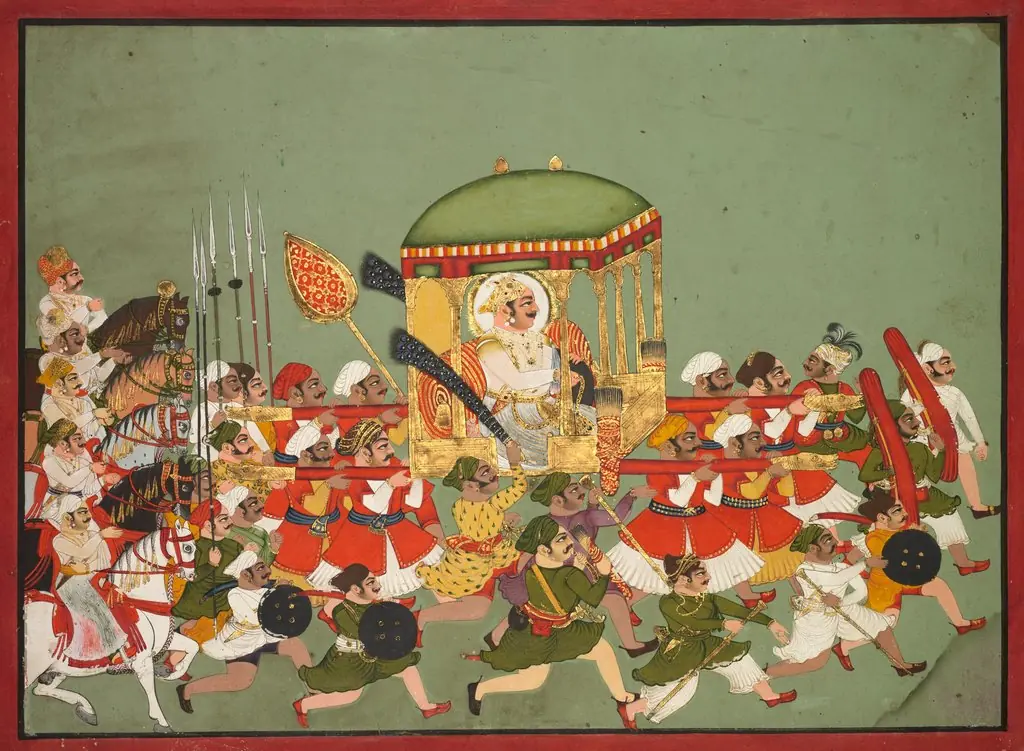
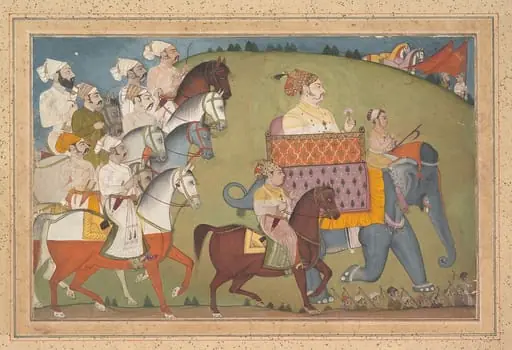
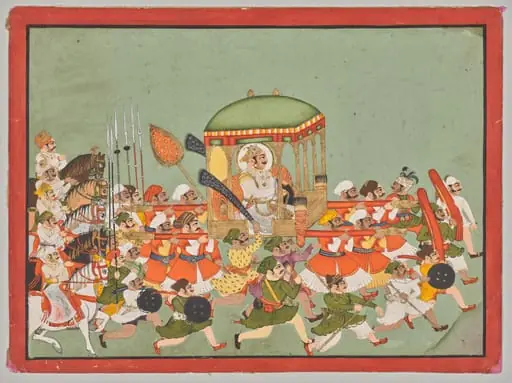
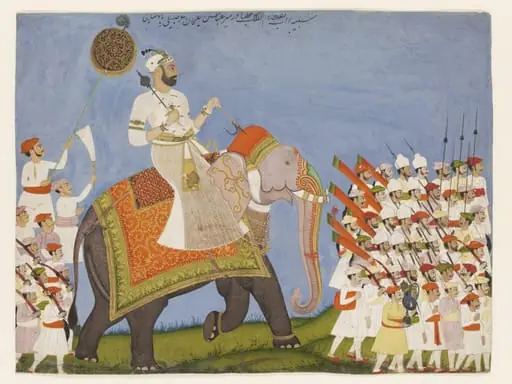
Raja Tulsaji of Tanjore is a paint painting by the Patna School of Painting artist Unknown. It dates from 1770 and is held in the collection of the Victoria and Albert Museum.
About this work
Overview
The work is a late‑eighteenth‑century Company painting portraying Raja Tulsaji of Tanjore seated upon an elevated throne. Executed in oil on canvas, the composition combines Indian courtly iconography with visual conventions introduced by European artists employed by the British East India Company.
Subject & Meaning
The central figure is a South Indian ruler dressed in opulent attire, his head crowned by an elaborate turban that emphasizes status. The regal pose and sumptuous garments convey authority and wealth, reflecting the political significance of the Tanjore court within the colonial framework of the period.
Technique & Style
The artist employs a vivid palette, using saturated reds, golds, and blues to draw attention to the sitter while rendering the surrounding drapery in softer tones. Subtle chiaroscuro modelling creates a sense of three‑dimensionality, a technique introduced by European painters and adapted by Indian hands to suit local subjects.
History & Provenance
Commissioned by British officials in India, the painting exemplifies the cross‑cultural production of Company art, where Indian craftsmen created works for colonial patrons. Its provenance traces back to the East India Company’s administrative circles before entering the museum collection in the early twentieth century.
Artist & collection

 Domestic Scene
 Giacomo and Cardinal Marco, investing Andrea, Abbot of San Zeno, with his Benefice
 The Nymph of Fontainebleau
 Portrait of a Woman
 Madonna and Child with Saints in the Enclosed Garden
 Venus and Minerva
 Family Group of Four on Sofa
 Wall painting from Room H of the Villa of P. Fannius Synistor at Boscoreale