Artwork
Rama, Lava, Kusha and Hanuman
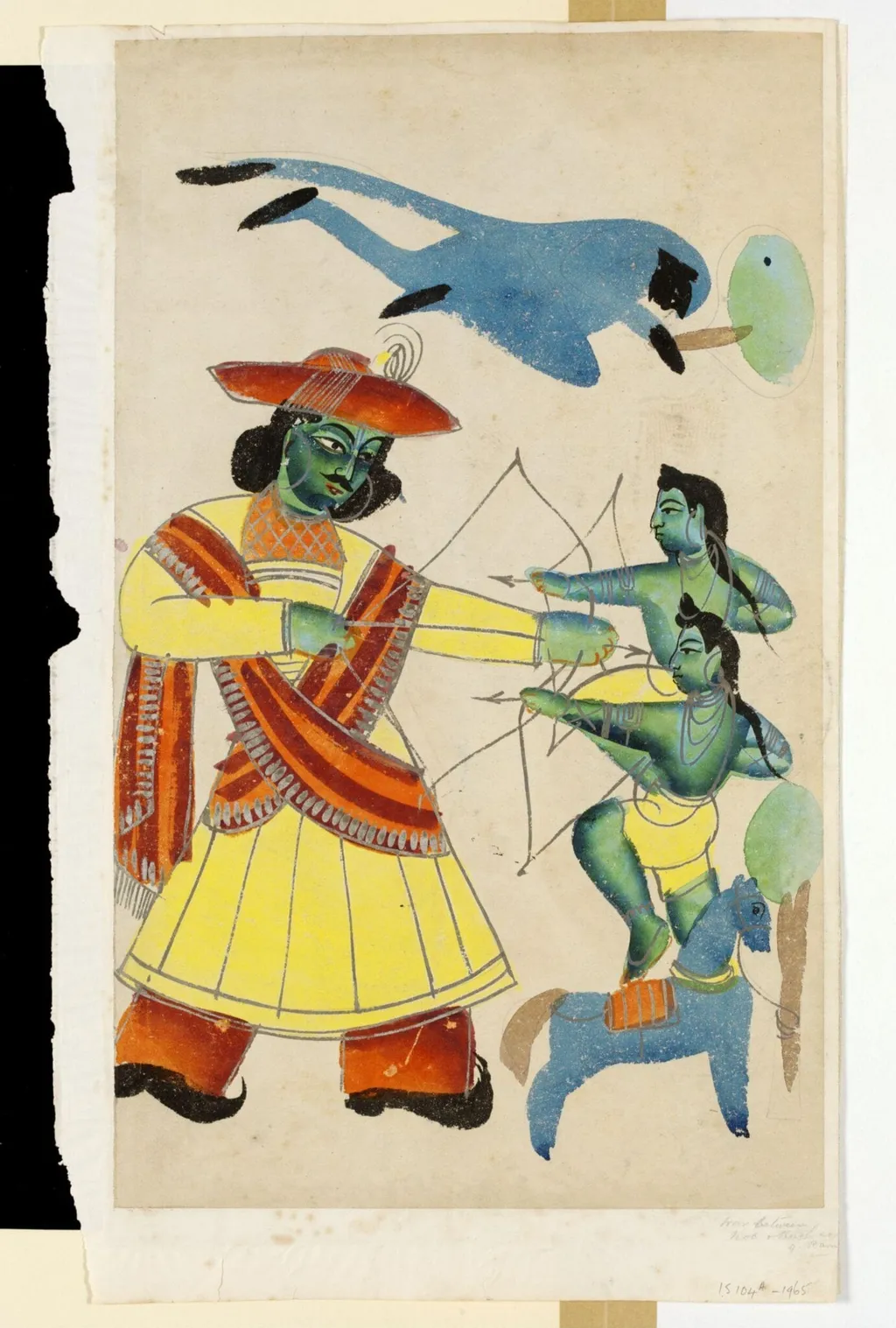
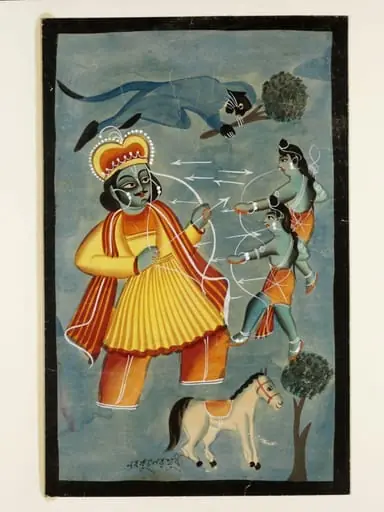
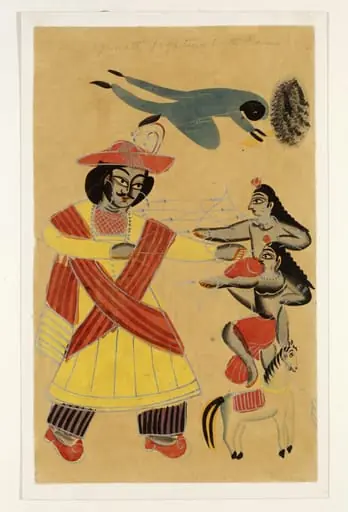
Rama, Lava, Kusha and Hanuman is a paint painting by the Impressionist artist Unknown. It dates from 1880 and is held in the collection of the Victoria and Albert Museum. Created in 1880, this watercolour and tin‑alloy work on paper presents a dynamic episode from the Ramayana.
About this work
Overview
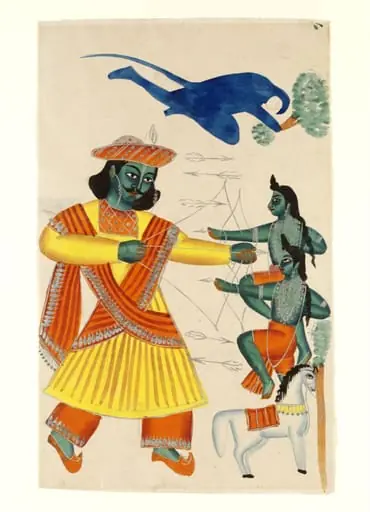
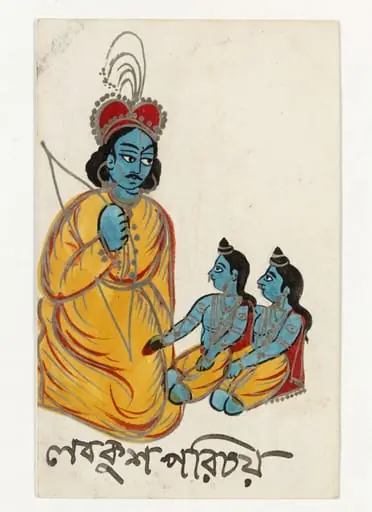
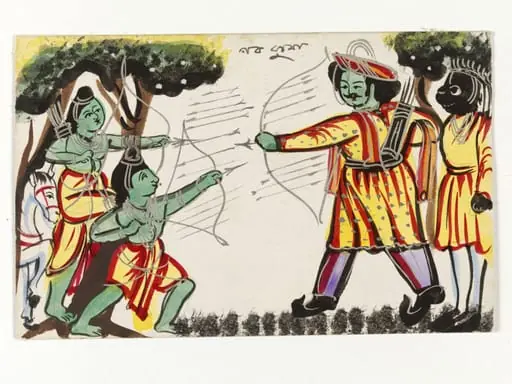
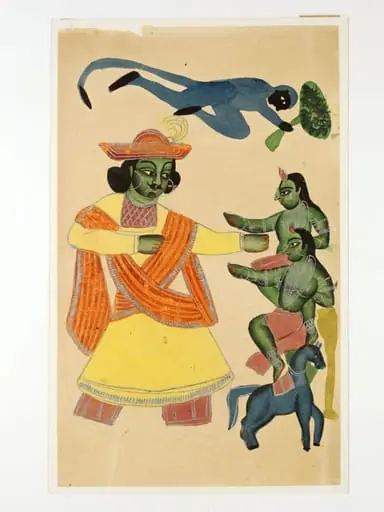
Created in 1880, this watercolour and tin‑alloy work on paper presents a dynamic episode from the Ramayana. Rama, armed with bow and arrow, confronts his sons Lava and Kusha, while the monkey‑god Hanuman soars above them. The composition is set against a light beige ground punctuated by darker specks, giving the scene a sense of depth and movement.
Subject & Meaning
The painting captures a moment of familial conflict in the epic narrative, where Rama, unaware of his lineage, battles the twins born of his union with Sita. The inclusion of Hanuman, depicted in mid‑air, underscores his role as protector and divine witness, linking the earthly struggle to a larger spiritual context.
Technique & Style
Executed in watercolour combined with tin‑alloy accents, the artist employs bold, impressionistic brushstrokes and a vivid palette. Rama is distinguished by a red hat, yellow garment and red sash; the two central figures are rendered in green, one with a bow, the other with a sword; Hanuman appears in blue, emphasizing his supernatural nature.
History & Provenance
The work entered the collection of the Victoria and Albert Museum, where it remains a representative example of late‑19th‑century Indian narrative painting. Its acquisition reflects the museum’s interest in cross‑cultural artistic exchanges during the colonial period.
Context
Produced at a time when Indian artists were engaging with European techniques, the painting merges traditional mythological content with impressionistic visual language. The use of tin‑alloy highlights a experimental approach to material, aligning the piece with broader trends of artistic hybridity in the late Victorian era.
Artist & collection

 Domestic Scene
 Giacomo and Cardinal Marco, investing Andrea, Abbot of San Zeno, with his Benefice
 The Nymph of Fontainebleau
 Portrait of a Woman
 Madonna and Child with Saints in the Enclosed Garden
 Venus and Minerva
 Family Group of Four on Sofa
 Wall painting from Room H of the Villa of P. Fannius Synistor at Boscoreale