Artwork
Țăran și doi călugări ; pandant: La malul mării
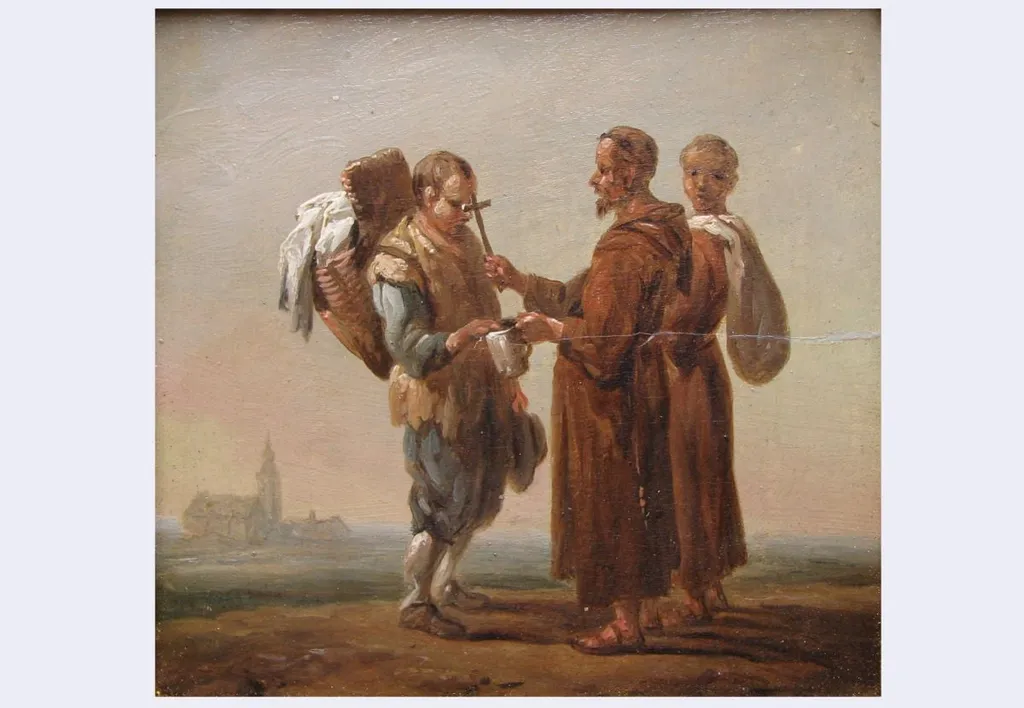
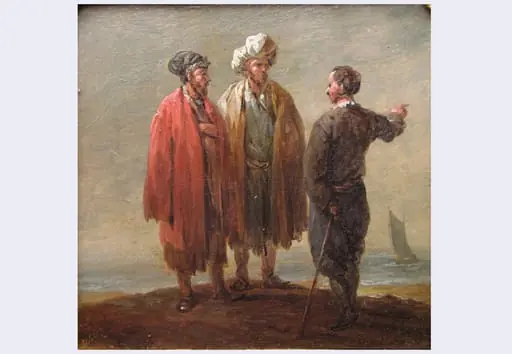
Țăran și doi călugări ; pandant: La malul mării is a print by the Baroque artist Unknown. It dates from 1699 and is held in the collection of the Brukenthal National Museum. This painting depicts three male figures gathered near a body of water, their postures and attire suggesting a quiet, unscripted encounter.
About this work
Overview
This painting depicts three male figures gathered near a body of water, their postures and attire suggesting a quiet, unscripted encounter.
This painting depicts three male figures gathered near a body of water, their postures and attire suggesting a quiet, unscripted encounter. The central focus lies in the contrast between a laborer and two religious figures, all rendered with restrained detail. The background fades into soft ambiguity, hinting at distant architecture without anchoring the scene to a specific location. The composition emphasizes stillness and subtle interaction over narrative drama.
Subject & Meaning
The figures represent distinct social spheres: a peasant in worn clothing, burdened by a bundle, and two clerics in long robes, one holding a small object possibly of ritual significance. Their proximity implies a moment of contact—perhaps a request, a blessing, or an exchange. The absence of overt emotion or gesture invites interpretation of quiet, everyday encounters between secular and spiritual worlds in rural life.
Technique & Style
The artist employs a muted palette and soft focus to unify the scene, with the figures rendered in clearer detail than the background. Light falls evenly, avoiding dramatic contrasts, and brushwork remains loose in the landscape, suggesting atmosphere rather than precision. The lack of strong chiaroscuro or exaggerated perspective reinforces the painting’s quiet realism and emphasis on mood over spectacle.
History & Provenance
The work’s origin is tied to late 19th-century Romanian artistic circles, where rural life and religious figures were common subjects. It was likely created during a period of national cultural consolidation, when artists sought to document everyday existence beyond urban or aristocratic themes. Its current location and ownership history remain undocumented in public records.
Context
This painting emerged amid a broader movement in Eastern European art that turned toward the lives of peasants and clergy as worthy subjects. It reflects a shift away from idealized historical or mythological scenes toward intimate, unadorned observations of ordinary people. Similar themes appear in the works of contemporaries who valued authenticity over ornamentation.
Legacy
Though not widely exhibited or reproduced, the painting contributes to a regional tradition of quiet realism that valued emotional restraint and social observation. It remains a modest but representative example of how artists in this period used composition and tone to convey dignity in the mundane, influencing later generations focused on vernacular life.
Artist & collection

 Domestic Scene
 Giacomo and Cardinal Marco, investing Andrea, Abbot of San Zeno, with his Benefice
 The Nymph of Fontainebleau
 Portrait of a Woman
 Madonna and Child with Saints in the Enclosed Garden
 Venus and Minerva
 Family Group of Four on Sofa
 Wall painting from Room H of the Villa of P. Fannius Synistor at Boscoreale
 Halt zweier Reiter
 Christ with his Disciples on the Road to Emmaus
 Smoker
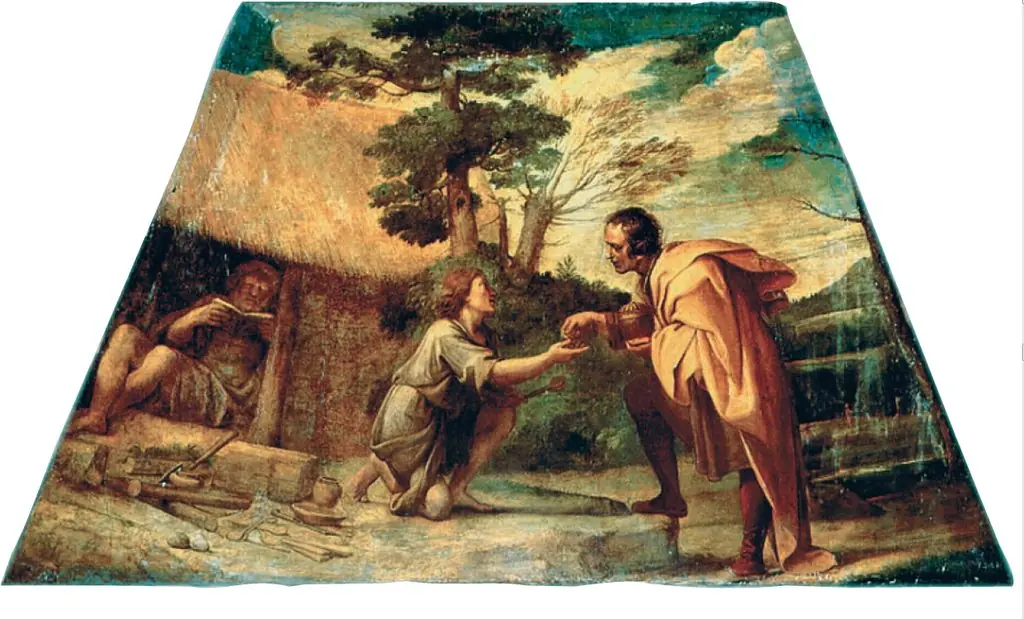 Saint Didacus of Alcalá receiving alms
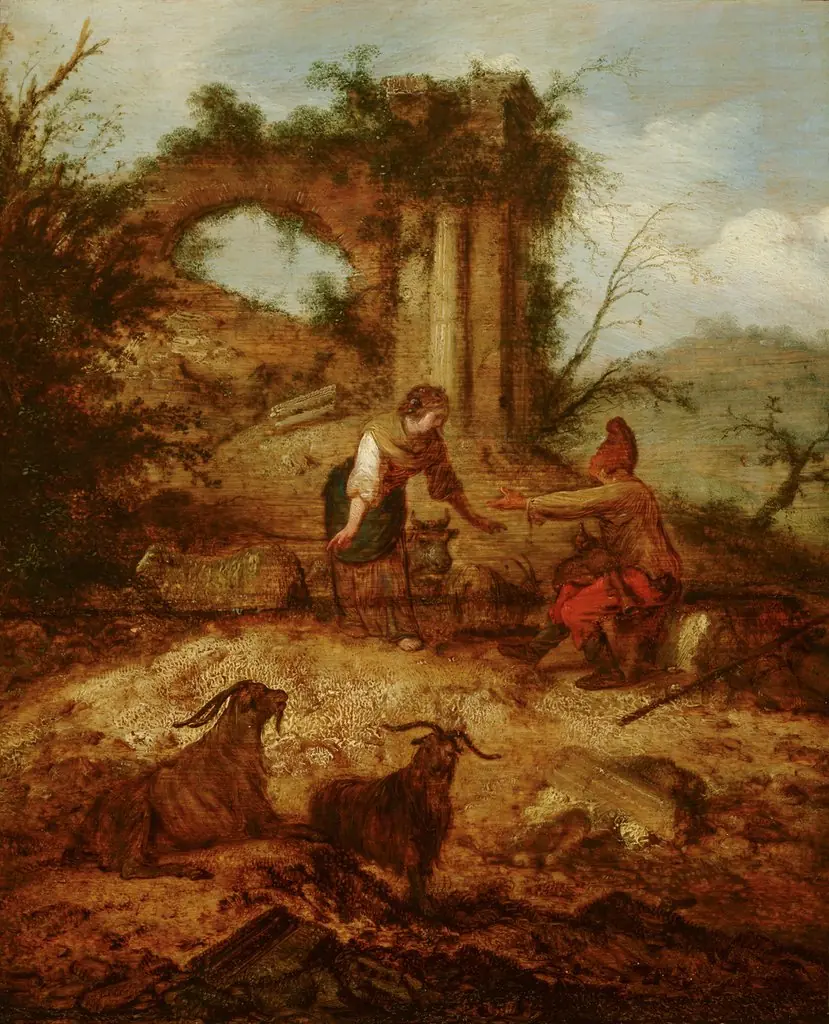 Landscape with Shepherd and Shepherdess
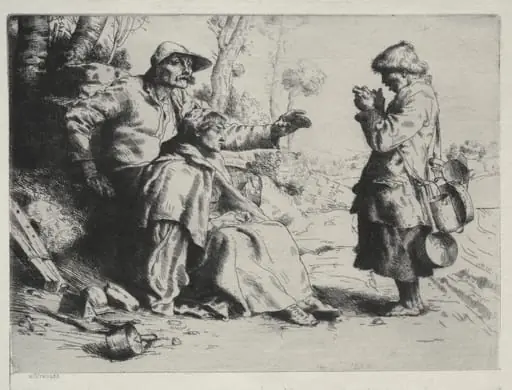 Tinkers
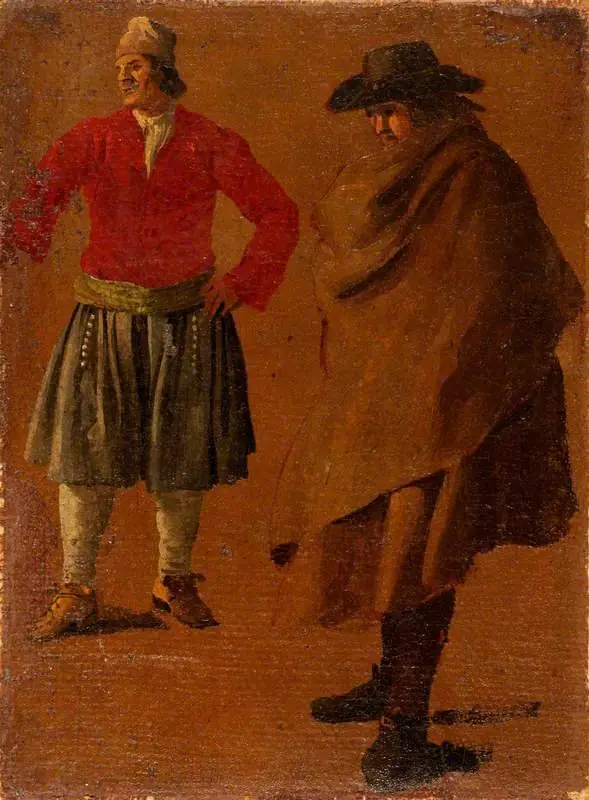 Two Studies of Men
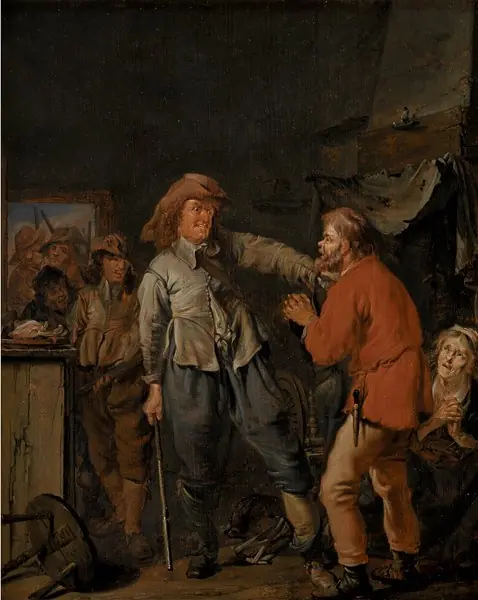 Soldiers Breaking into a Peasant's Cottage
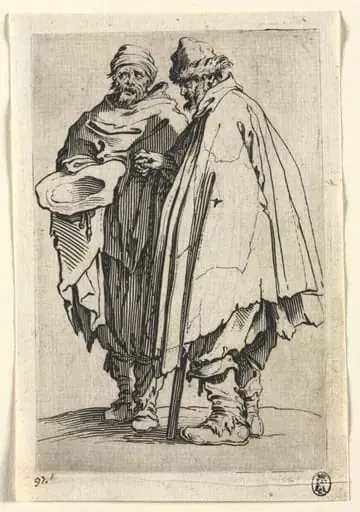 The Beggars: The Blind Man and His Companion
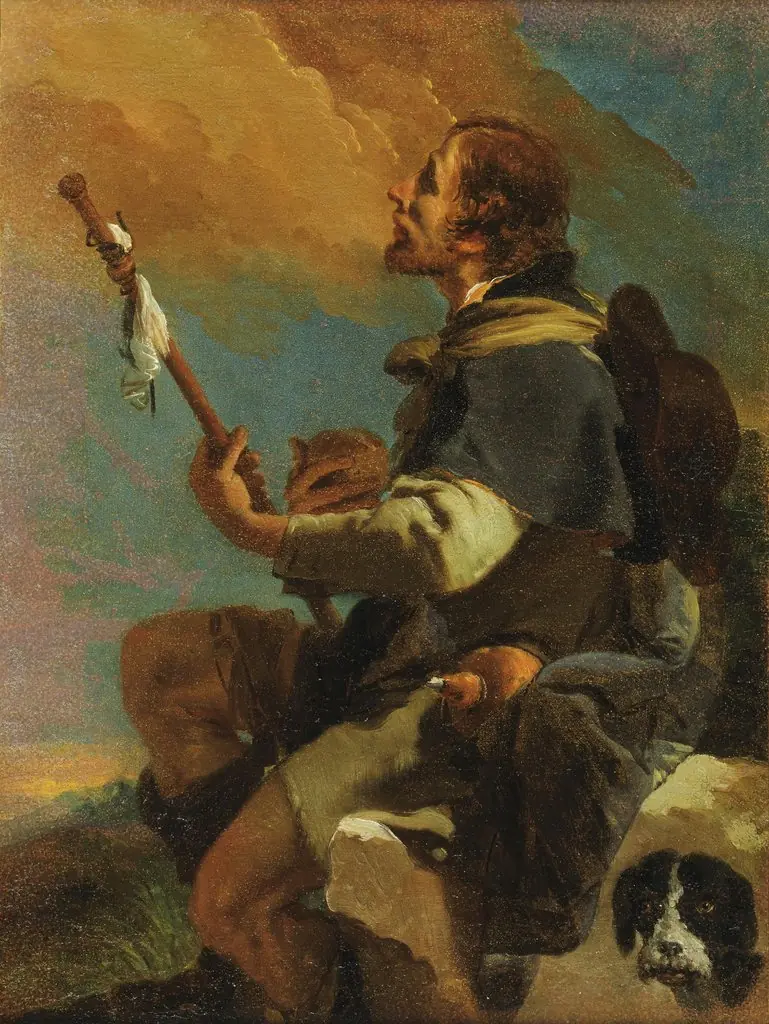 Saint Roch
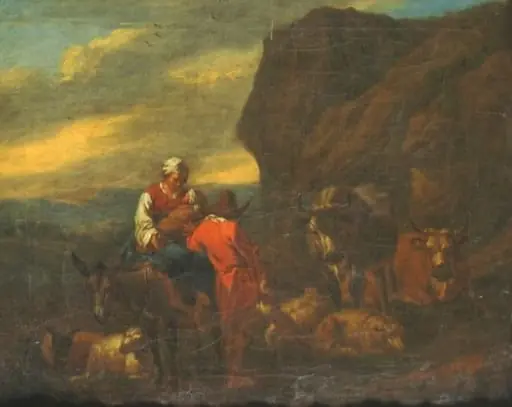 Peisaj stâncos cu vite
 La malul mării ; pandant: Țăran și doi călugări