Artwork
Ranjit Singh
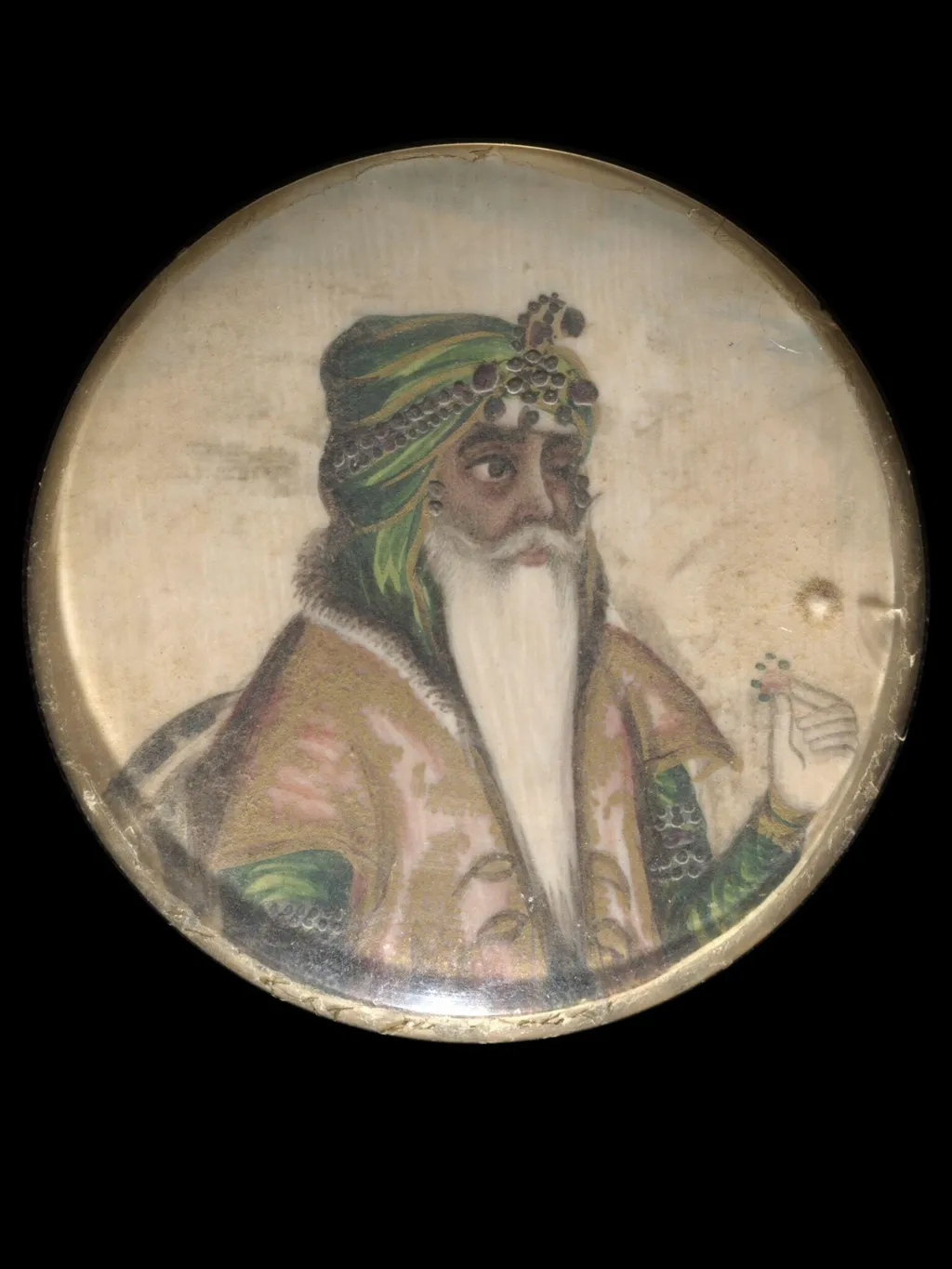
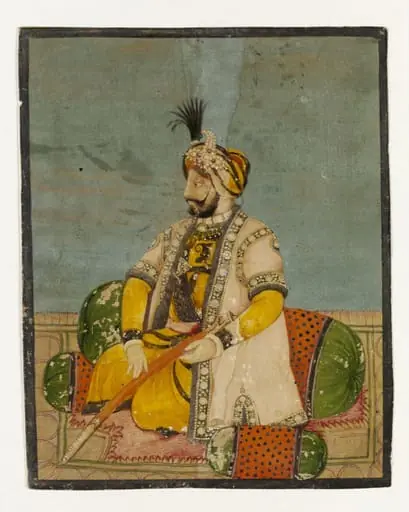
Ranjit Singh is a paint painting by the Patna School of Painting artist Unknown. It dates from 1850 and is held in the collection of the Victoria and Albert Museum.
About this work
Overview
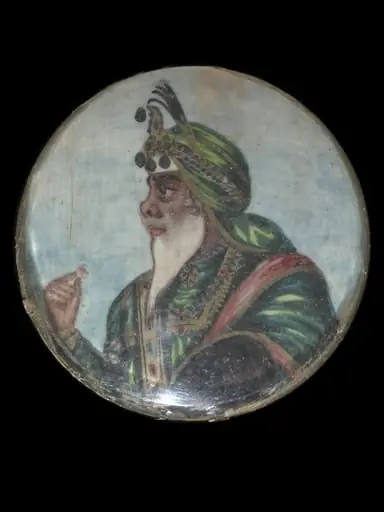
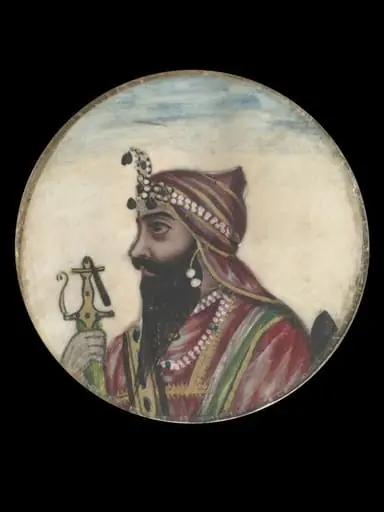
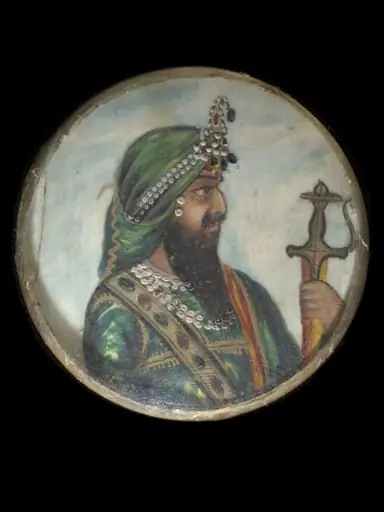
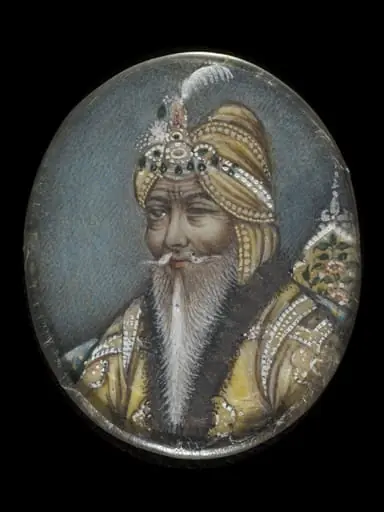
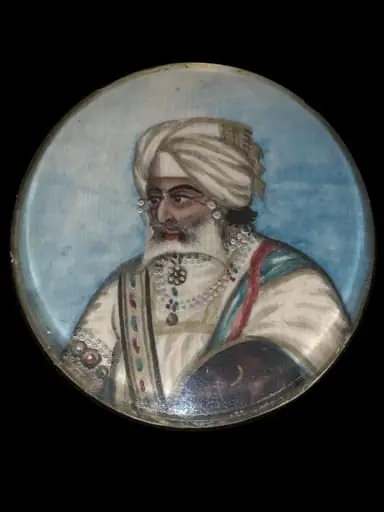
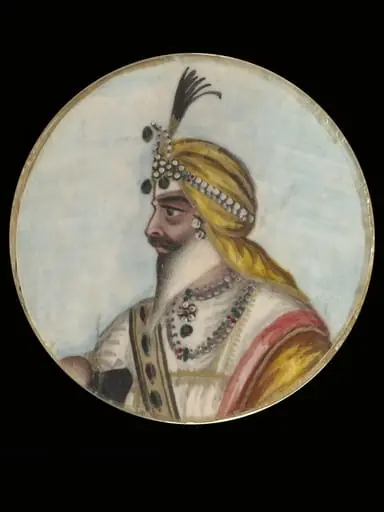
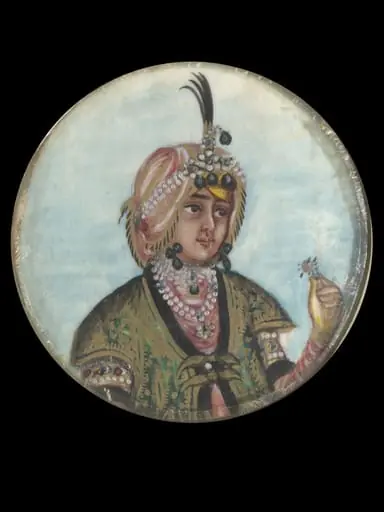
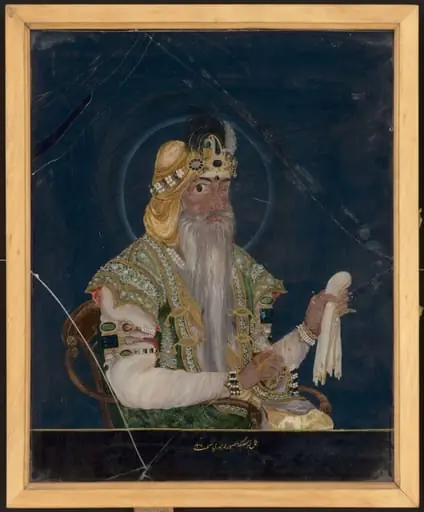
This small portrait depicts Maharajah Ranjit Singh, the 19th-century ruler of the Sikh Empire in Punjab, painted on ivory with fine brushwork.
This small portrait depicts Maharajah Ranjit Singh, the 19th-century ruler of the Sikh Empire in Punjab, painted on ivory with fine brushwork. The work was donated to the Victoria and Albert Museum in 1954 by the Central Council for the Care of Churches. Its precise origin and date are unknown, though stylistic elements suggest it was created during or shortly after Ranjit Singh’s lifetime, likely by an artist trained in the Pahari or Sikh court tradition.
Subject & Meaning
The portrait presents Ranjit Singh in formal regalia, his white beard and mustache signaling age and authority. His raised right hand, palm outward, may indicate a gesture of blessing or sovereignty. The jeweled green turban and gold robe reflect his status as a sovereign ruler, while the absence of weapons or symbols of war suggests an emphasis on dignified rule rather than military might. The composition prioritizes presence over narrative, aligning with courtly portraiture conventions of the era.
Technique & Style
Executed in delicate brushstrokes on ivory, the painting demonstrates meticulous attention to texture and detail, particularly in the rendering of facial features, fabric folds, and jewel settings. The light beige background isolates the figure, focusing attention on his attire and expression. The style blends naturalistic observation with stylized elements typical of North Indian court painting, avoiding Western perspective while maintaining a lifelike likeness through subtle shading and fine line work.
History & Provenance
The painting entered the Victoria and Albert Museum’s collection in 1954 through donation by the Central Council for the Care of Churches, an organization with no known prior connection to Sikh royal artifacts. No documentation accompanies its arrival, leaving its journey from Punjab to Britain unclear. It may have been acquired during the colonial period, possibly as a gift or through private collection, but its early ownership remains unrecorded.
Context
During Ranjit Singh’s reign (1801–1839), Sikh court artists produced portraits that fused Mughal refinement with regional Punjabi aesthetics. These works often emphasized the ruler’s spiritual and temporal authority through symbolic dress and composed demeanor. While European influences were present in Punjab’s art scene, this portrait retains a distinctly indigenous character, reflecting the cultural confidence of the Sikh Empire at its height.
Legacy
As one of few surviving ivory portraits of Ranjit Singh, this work contributes to the visual record of Sikh royalty during a period of political transformation. Though not widely exhibited, it remains a significant artifact for understanding how power was visually articulated in 19th-century North India. Its preservation in a major British museum underscores its role in cross-cultural historical documentation, despite gaps in its provenance.
Artist & collection

 Domestic Scene
 Giacomo and Cardinal Marco, investing Andrea, Abbot of San Zeno, with his Benefice
 The Nymph of Fontainebleau
 Portrait of a Woman
 Madonna and Child with Saints in the Enclosed Garden
 Venus and Minerva
 Family Group of Four on Sofa
 Wall painting from Room H of the Villa of P. Fannius Synistor at Boscoreale