Artwork
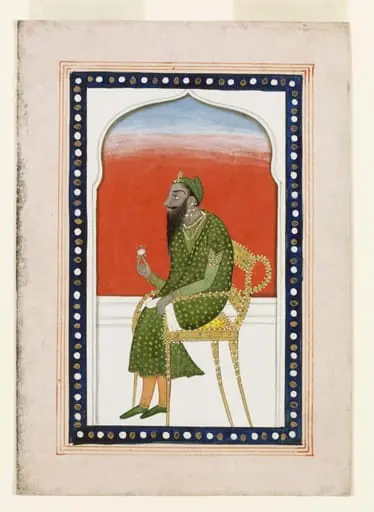
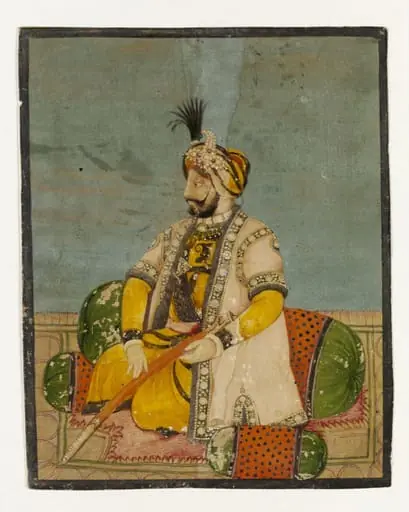
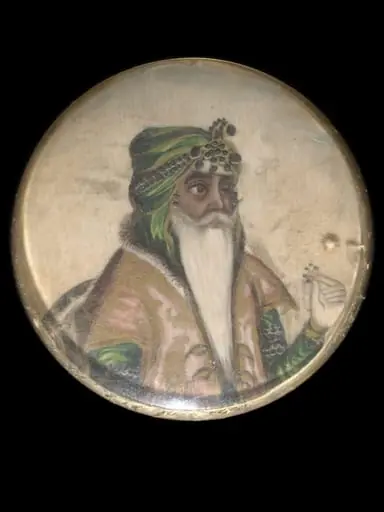
One of two portraits of Maharaja Ranjit Singh (1780-1839)
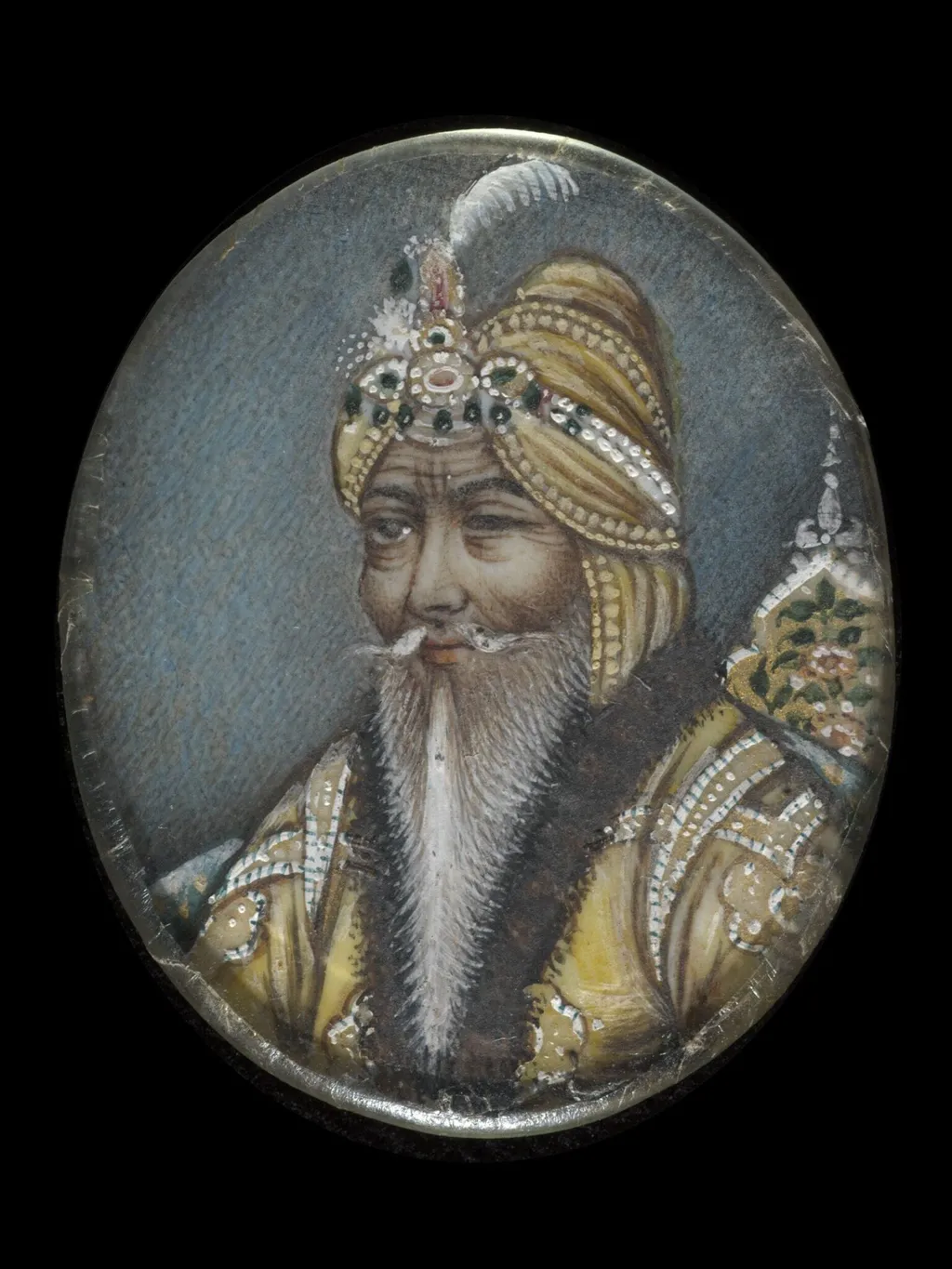
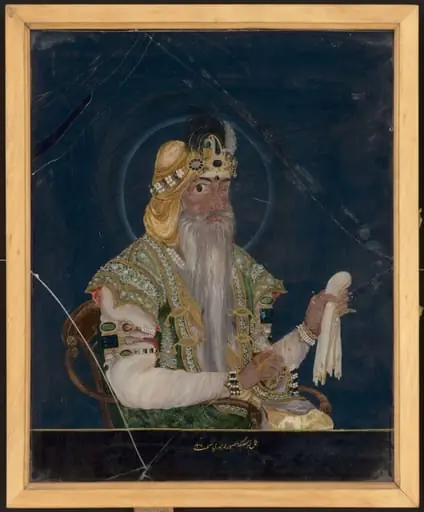
One of two portraits of Maharaja Ranjit Singh (1780-1839) is a paint painting by Unknown. It dates from 1900 and is held in the collection of the Victoria and Albert Museum. This portrait presents Maharaja Ranjit Singh, ruler of the Sikh Empire, in a formal half-length composition.
About this work
Overview
Painted circa 1900 by an unidentified artist, it captures the sovereign in ceremonial attire against a dark, unadorned background.
This portrait presents Maharaja Ranjit Singh, ruler of the Sikh Empire, in a formal half-length composition. Painted circa 1900 by an unidentified artist, it captures the sovereign in ceremonial attire against a dark, unadorned background. The work emphasizes his presence through controlled lighting and detailed textile rendering, aligning with late 19th-century conventions of imperial portraiture in South Asia.
Subject & Meaning
Ranjit Singh is depicted with a long white beard and a solemn gaze, conveying authority and gravitas. His elaborate turban, adorned with jewels and gold embroidery, signals his royal status and adherence to Sikh sovereign traditions. The absence of symbolic objects or setting directs attention to his person as the embodiment of power, reflecting a shift toward individualized portraiture in post-colonial artistic practice.
Technique & Style
The artist employs chiaroscuro to model the face and highlight the luminous texture of the beard and turban against a deep, shadowed background. Brushwork is precise in rendering metallic threads and gemstone reflections, while the skin tones remain muted, enhancing the contrast. The flat, non-narrative space and frontal pose suggest influence from both Pahari miniature traditions and European academic portraiture.
History & Provenance
Created around 1900, the painting was likely commissioned to commemorate Ranjit Singh’s legacy decades after his death in 1839. It may have been produced for a British colonial institution or a Sikh noble family seeking to preserve his image. The work entered the Victoria and Albert Museum’s collection through documented acquisitions of South Asian art during the early 20th century.
Context
In the late 19th century, Indian rulers were increasingly portrayed in Western-style portraiture as part of broader cultural negotiations under colonial rule. This image reflects a hybrid aesthetic: traditional Sikh regalia rendered with European lighting techniques. Such portraits served both commemorative and diplomatic functions, reinforcing identity amid shifting political realities.
Legacy
As one of two known portraits of Ranjit Singh from this period, it contributes to the visual record of Sikh sovereignty beyond military or religious iconography. Its preservation in a major museum underscores its role in shaping modern perceptions of 19th-century Indian leadership. The work remains a reference for studies on colonial-era representation and regional artistic adaptation.
Artist & collection

 Domestic Scene
 Giacomo and Cardinal Marco, investing Andrea, Abbot of San Zeno, with his Benefice
 The Nymph of Fontainebleau
 Portrait of a Woman
 Madonna and Child with Saints in the Enclosed Garden
 Venus and Minerva
 Family Group of Four on Sofa
 Wall painting from Room H of the Villa of P. Fannius Synistor at Boscoreale