Artwork
Rao Raja Aniruddha Singh
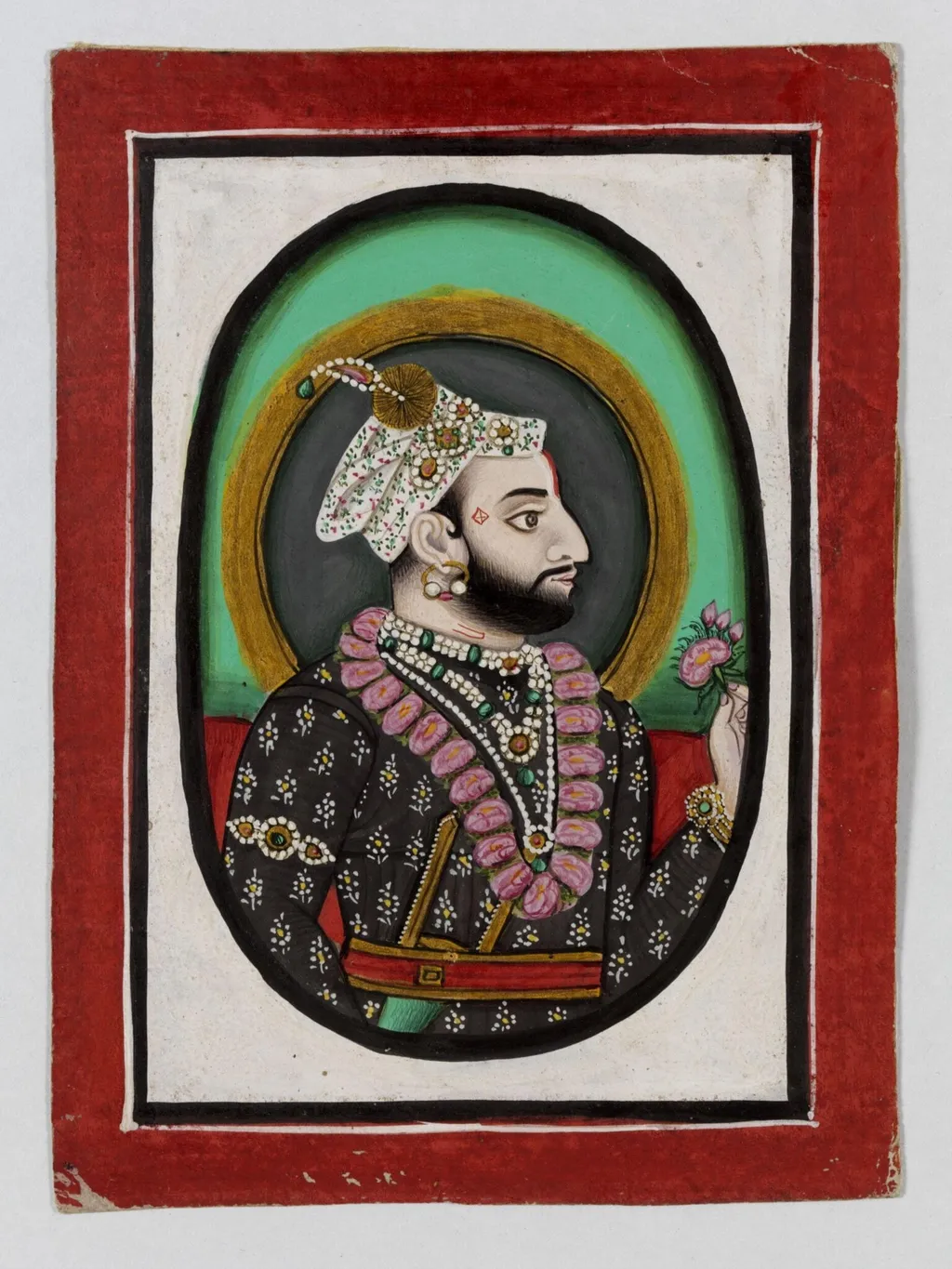
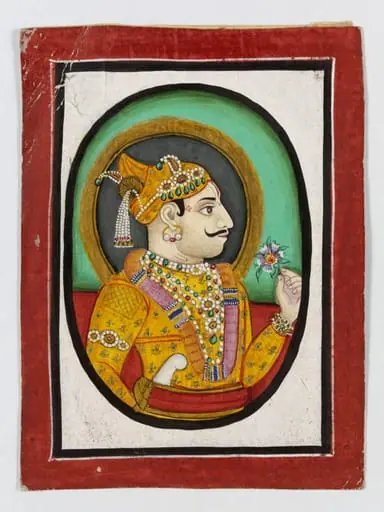
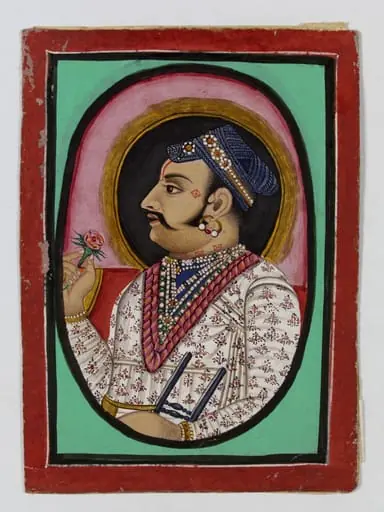
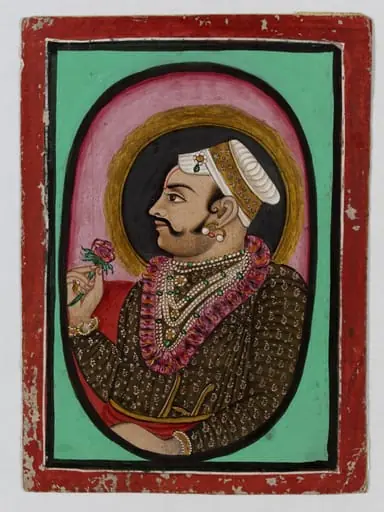
Rao Raja Aniruddha Singh is a paint painting by Unknown. It dates from 1850 and is held in the collection of the Victoria and Albert Museum.
About this work
Overview
Painted in opaque watercolour with gold detailing on paper, it reflects the refined aesthetic of late Mughal-influenced Rajput court art.
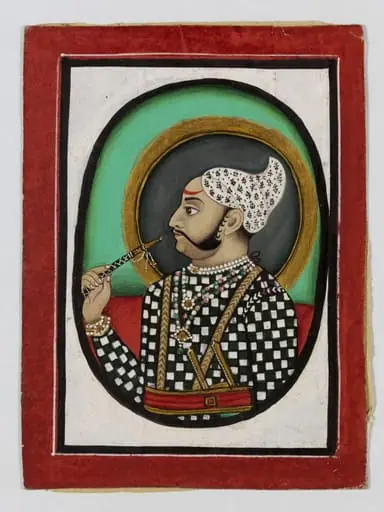
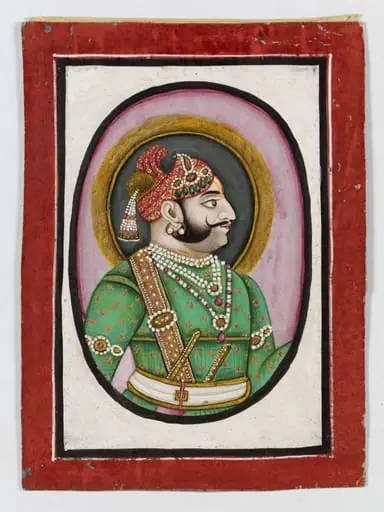
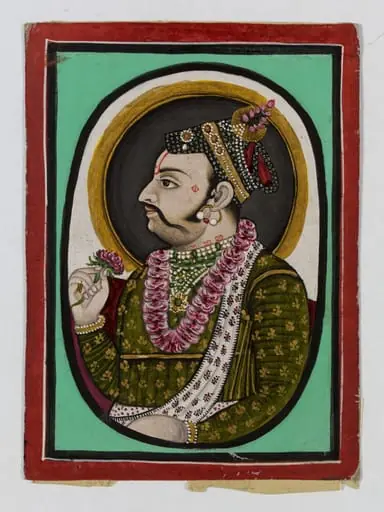
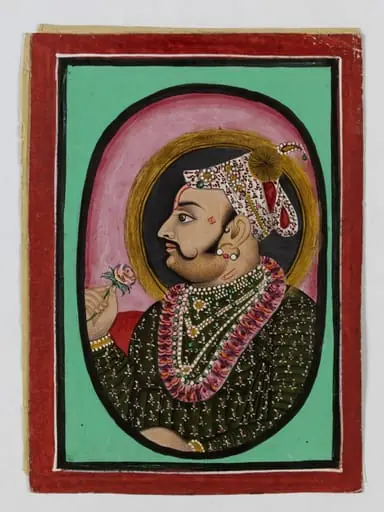
This portrait depicts Rao Raja Aniruddha Singh, a Rajput nobleman, in a formal bust composition executed around 1850. Painted in opaque watercolour with gold detailing on paper, it reflects the refined aesthetic of late Mughal-influenced Rajput court art. The work is part of the Victoria and Albert Museum’s collection, where it serves as an example of regional portraiture from northern India during the mid-nineteenth century.
Subject & Meaning
Rao Raja Aniruddha Singh is portrayed with dignified stillness, his serious gaze and composed posture conveying authority and composure. The pink garland and flower symbolize ceremonial status, while the jewelled turban and fine attire signal his noble rank. The absence of landscape or context focuses attention on the individual, emphasizing personal presence over narrative, typical of courtly portraiture in this period.
Technique & Style
The artist employed fine brushwork in opaque watercolour, layering pigments to achieve rich textures in fabric and skin. Gold leaf accents highlight the turban’s ornamentation and the garland’s details, adding luminosity without overt grandeur. The flat, shallow space and precise outlines reflect a blend of Mughal precision and regional Rajput conventions, prioritizing symbolic clarity over naturalistic depth.
History & Provenance
Created in the mid-nineteenth century, the portrait likely originated in a Rajput court, possibly in Rajasthan, where such commissions were common among ruling elites. It entered the Victoria and Albert Museum’s collection through British colonial-era acquisitions, likely during the period when Indian artworks were systematically gathered for British institutional holdings.
Context
During the 1850s, Rajput courts maintained artistic traditions despite increasing British political influence. Portraits like this one served to affirm lineage and status, often displayed in palace chambers or used in ritual contexts. The continued use of traditional materials and iconography signals cultural resilience amid shifting power structures in colonial India.
Legacy
This portrait remains a representative example of how Rajput elites preserved indigenous artistic forms during colonial rule. Its preservation in a major Western museum underscores its role in shaping early global perceptions of Indian court culture. It continues to inform scholarly study of regional identity, patronage, and the visual language of power in pre-modern India.
Artist & collection

 Domestic Scene
 Giacomo and Cardinal Marco, investing Andrea, Abbot of San Zeno, with his Benefice
 The Nymph of Fontainebleau
 Portrait of a Woman
 Madonna and Child with Saints in the Enclosed Garden
 Venus and Minerva
 Family Group of Four on Sofa
 Wall painting from Room H of the Villa of P. Fannius Synistor at Boscoreale