Artwork
Ravana battles the great vulture Jatayu and defeats him by throwing stones in his mouth, folio 18 (recto) from a Chandana Malayagiri Varta (Story of King Chandana and Queen Malayagiri) of Karamachand
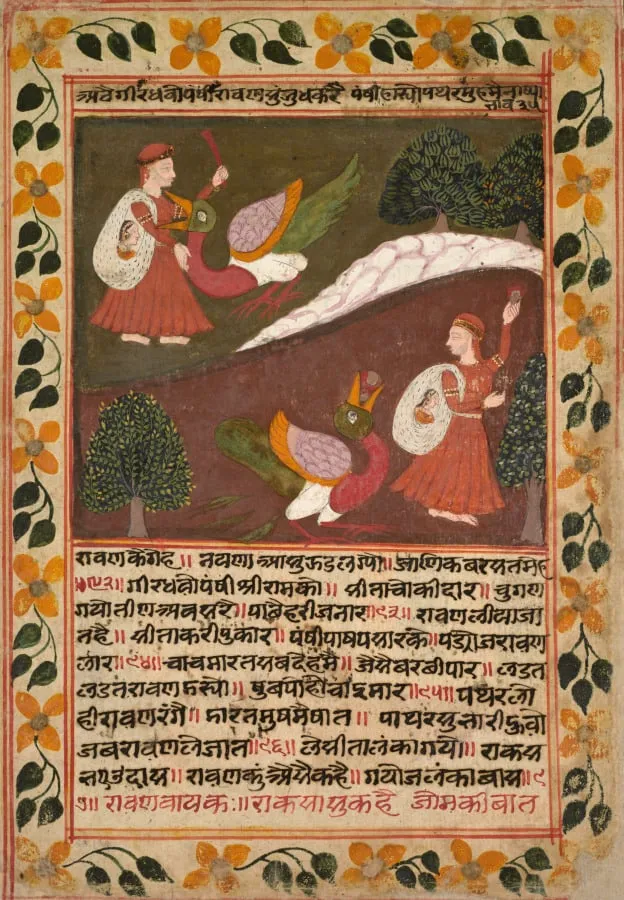
Ravana battles the great vulture Jatayu and defeats him by throwing stones in his mouth, folio 18 (recto) from a Chandana Malayagiri Varta (Story of King Chandana and Queen Malayagiri) of Karamachand is an unspecified painting by the Baroque artist Unknown. It dates from 1744 and is held in the collection of the Cleveland Museum of Art. This folio comes from a 17th-century illustrated manuscript composed in a regional Gujarati-Rajasthani dialect by the poet Karamachand.
About this work
Overview
This folio comes from a 17th-century illustrated manuscript composed in a regional Gujarati-Rajasthani dialect by the poet Karamachand.
This folio comes from a 17th-century illustrated manuscript composed in a regional Gujarati-Rajasthani dialect by the poet Karamachand. Unlike the classical Ramayana, this version reimagines key episodes through local narrative traditions. The scene depicts Ravana’s confrontation with Jatayu, rendered with distinctive stylistic choices that diverge from mainstream iconography, reflecting the artistic priorities of the Kishangarh school.
Subject & Meaning
Ravana, portrayed not as a mythic demon but as a traveling merchant, carries Sita in a white sack slung across his shoulder. As Jatayu, the loyal vulture, swoops to intervene, Ravana strikes him with a sword and forces stones into his open beak—stones deliberately painted with blood to deceive the bird into swallowing them. This version emphasizes cunning over brute force, altering the moral and physical dynamics of the original tale.
Technique & Style
The painting employs bold, flat areas of color with minimal shading, creating a graphic intensity reminiscent of folk illustration. Figures are rendered with sharp outlines and exaggerated gestures, enhancing narrative clarity. The composition is densely packed, with no background to distract from the violent interaction, reinforcing the immediacy of the moment through stylized, almost theatrical form.
History & Provenance
The manuscript originates from the Kishangarh court, likely produced between 1630 and 1650 under the patronage of local rulers. It belongs to the Chandana Malayagiri Varta, a lesser-known retelling of Rama’s story adapted by Karamachand. Its survival suggests regional interest in vernacular epics, distinct from the more widely circulated Sanskrit and North Indian versions of the Ramayana.
Context
In the Kishangarh tradition, Hindu narratives were often localized, blending devotional themes with contemporary social imagery. Ravana’s merchant guise reflects this tendency, transforming a celestial antagonist into a recognizable figure of the road. Such reinterpretations reveal how regional artists adapted classical stories to resonate with local audiences, embedding them in familiar cultural frameworks.
Legacy
This folio exemplifies how regional Rajput schools reworked canonical tales to suit local aesthetics and values. While the Valmiki Ramayana remained authoritative elsewhere, Kishangarh artists developed their own visual lexicon, influencing later manuscript traditions in western India. The work stands as evidence of a vibrant, decentralized literary and artistic culture beyond the imperial centers.
Artist & collection

 Domestic Scene
 Giacomo and Cardinal Marco, investing Andrea, Abbot of San Zeno, with his Benefice
 The Nymph of Fontainebleau
 Portrait of a Woman
 Madonna and Child with Saints in the Enclosed Garden
 Venus and Minerva
 Family Group of Four on Sofa
 Wall painting from Room H of the Villa of P. Fannius Synistor at Boscoreale
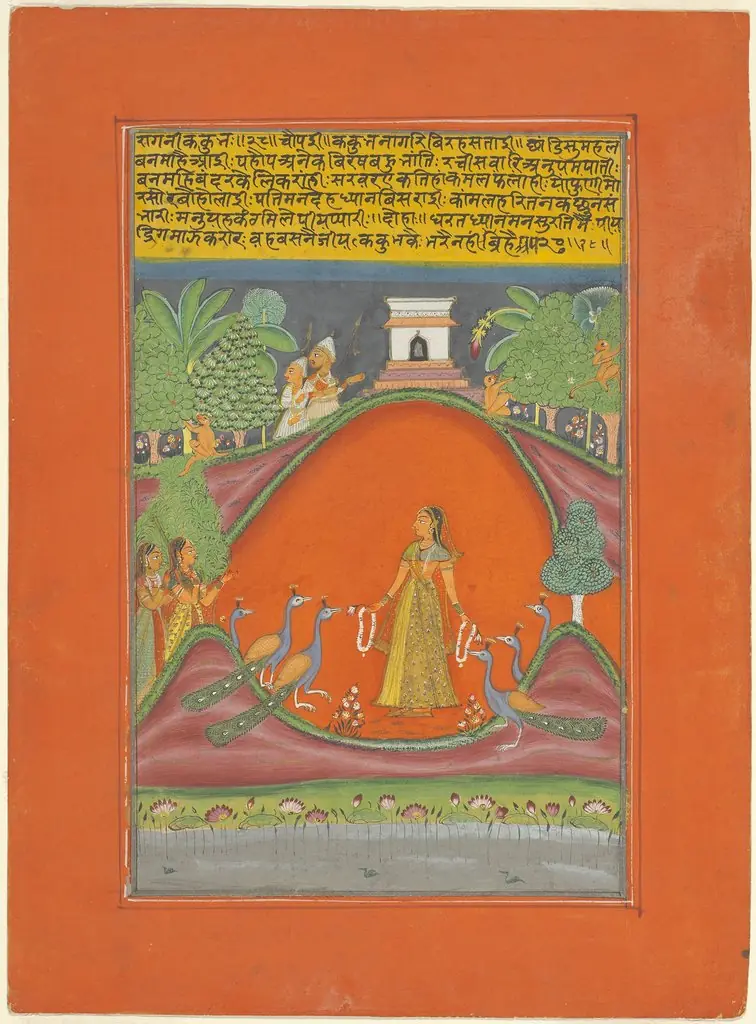 Ragini Kakubha, Page from a Jaipur Ragamala Set
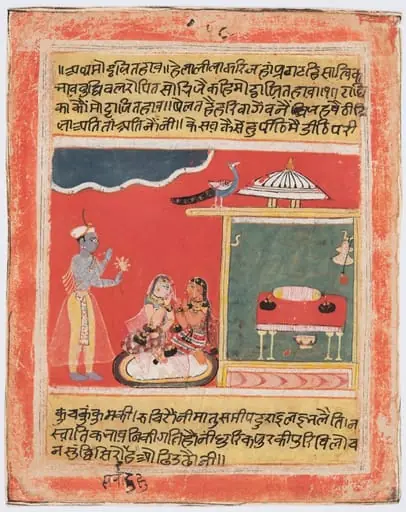 Krishna and Radha Avoid Embarrassment: Mottaita Bhava, from a Rasikapriya
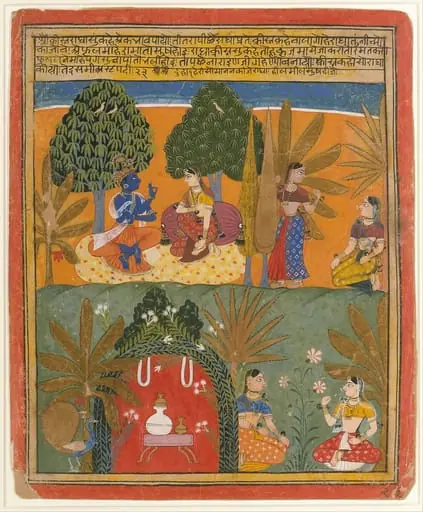 Untitled
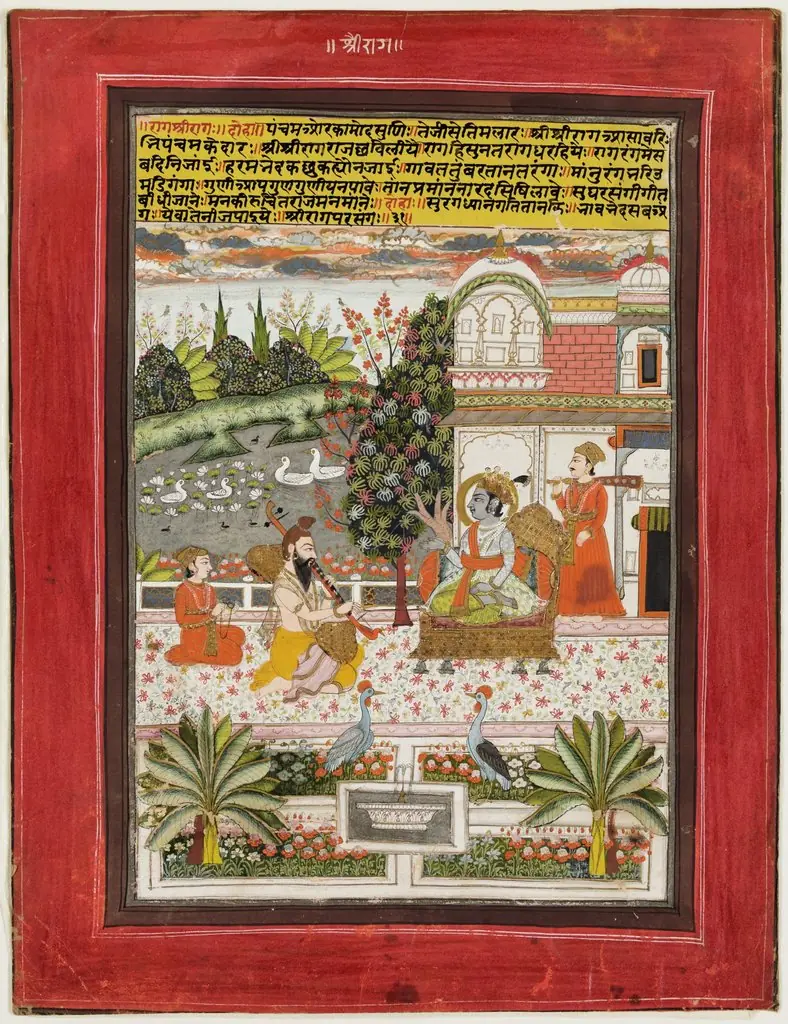 Krishna with Guru in Palace Scene
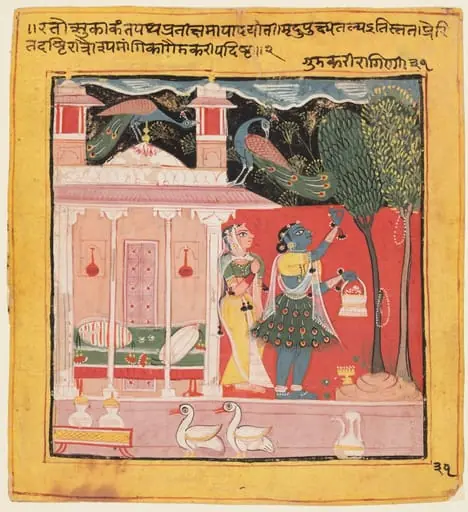 A Woman Plucks Leaves While Awaiting Her Lover: Gunakali Ragini of Malkos, from the “Chawand Ragamala”
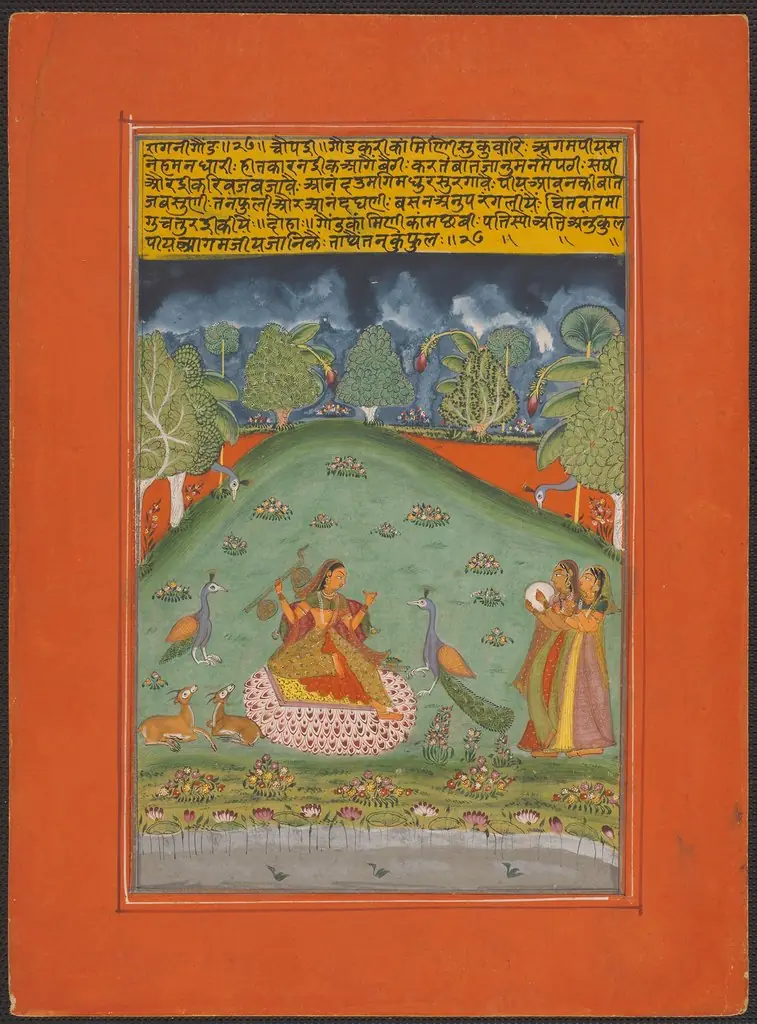 Ragini Gaund, Page from a Jaipur Ragamala Set
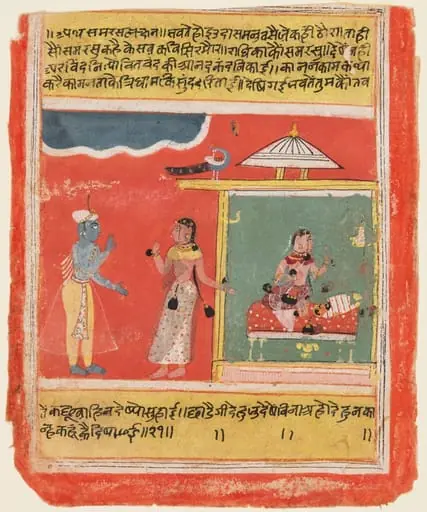 The Sentiment of Peace: Sama Rasa, from a Rasikapriya
 Krishna's Insomnia, Page from a Rasikapriya
 Untitled