Artwork
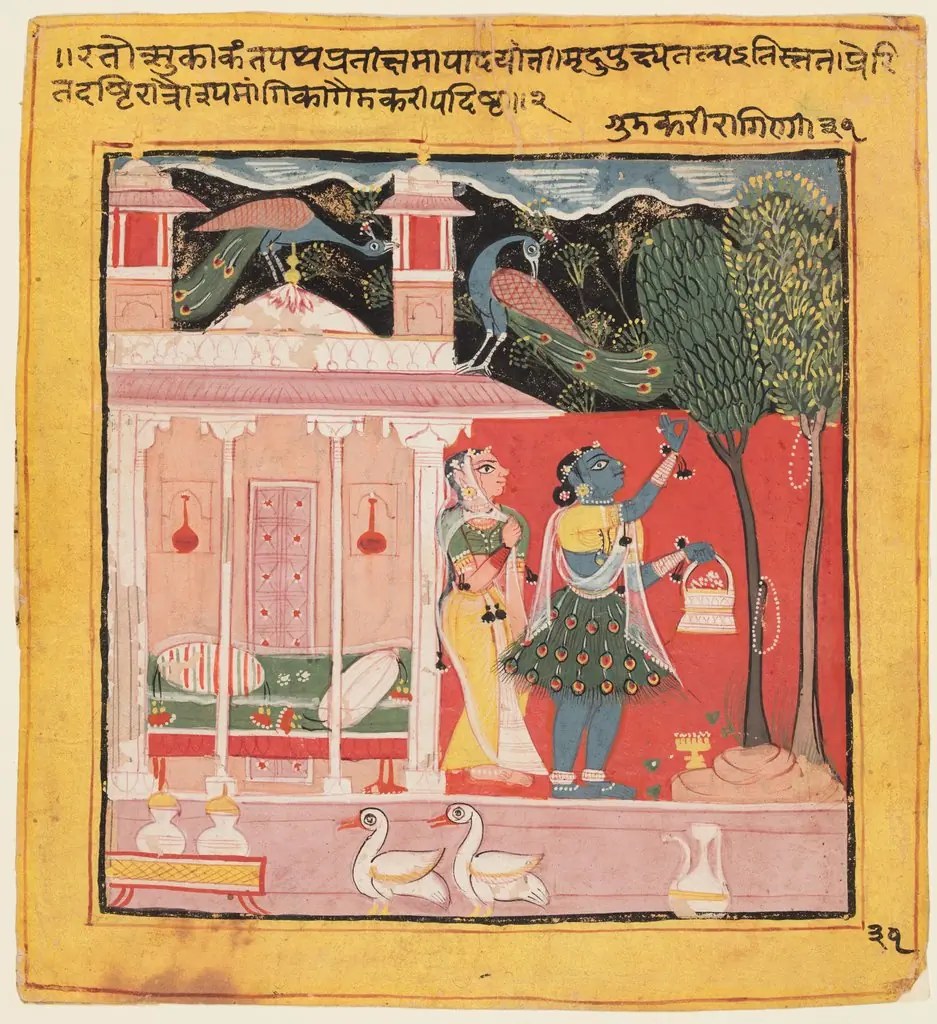
A Woman Plucks Leaves While Awaiting Her Lover: Gunakali Ragini of Malkos, from the “Chawand Ragamala”
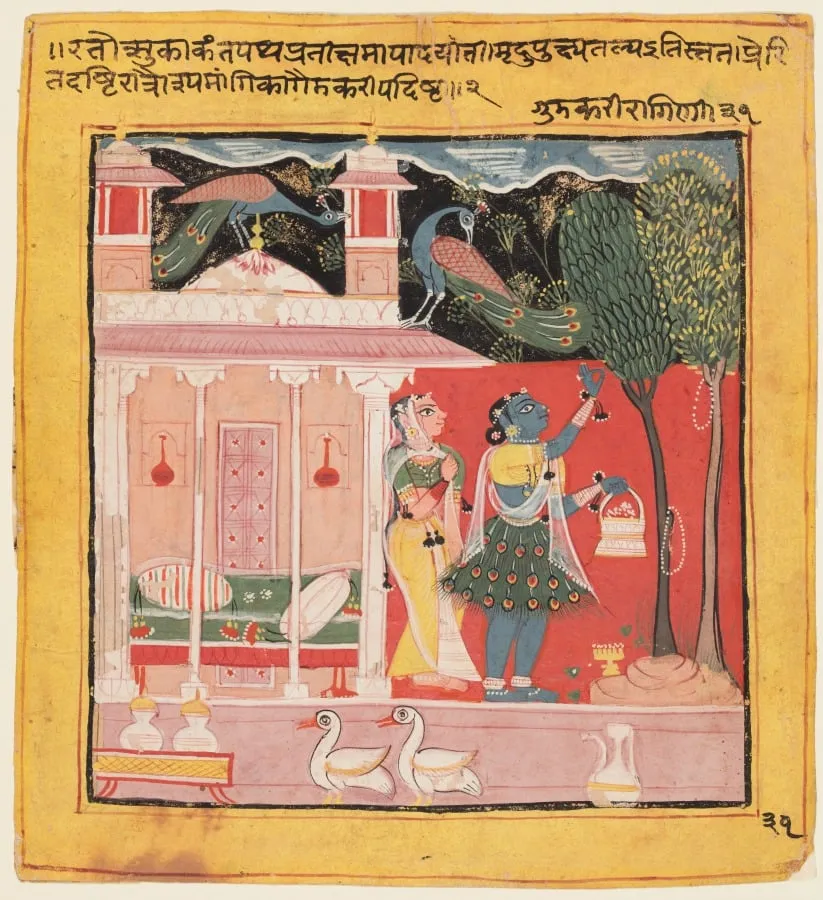
A Woman Plucks Leaves While Awaiting Her Lover: Gunakali Ragini of Malkos, from the “Chawand Ragamala” is an unspecified painting by the Baroque artist Unknown. It dates from 1605 and is held in the collection of the Cleveland Museum of Art. This painting is part of the Chawand Ragamala, a series illustrating musical modes through poetic scenes of love and longing.
About this work
Overview
This painting is part of the Chawand Ragamala, a series illustrating musical modes through poetic scenes of love and longing.
This painting is part of the Chawand Ragamala, a series illustrating musical modes through poetic scenes of love and longing. It depicts a woman in a moment of quiet ritual, engaged in a solitary act of devotion. The setting—a terrace adjacent to an open chamber—suggests both intimacy and isolation. Her actions are tied to a specific raga, Malkos, traditionally associated with the melancholy of separation.
Subject & Meaning
The woman, dark-skinned and adorned in a skirt of peacock feathers, gathers leaves and arranges flowers into garlands, likely fulfilling a vow to summon her absent lover. The act of weaving and hanging blossoms is not decorative but devotional, rooted in folk traditions where such rituals were believed to influence fate. The presence of two peacocks, perched above, reinforces the emotional tone, as their cry in Indian poetry often signals the pangs of separation.
Technique & Style
The composition balances stillness with symbolic detail: the woman’s posture is restrained, her movements deliberate. The peacock-feather skirt and floral garlands are rendered with fine brushwork, emphasizing texture and color. Background elements are minimal, focusing attention on her solitude. The palette is rich but subdued, using natural pigments to evoke a hushed, contemplative atmosphere consistent with the raga’s mood.
History & Provenance
Created in the late 16th or early 17th century in the Rajput kingdom of Mewar, this work belongs to a broader tradition of Ragamala painting that emerged in North Indian courts. The Chawand series, named after a village near Udaipur, was commissioned by local nobility to visualize the emotional resonance of classical ragas. Such albums were收藏 in royal libraries and used for private contemplation or musical performance.
Context
Ragamala paintings linked musical modes to human emotions, often drawing from medieval Sanskrit and vernacular poetry. The theme of a woman waiting for her lover was common, reflecting both literary tropes and social realities of separation due to travel, war, or duty. These works were not mere illustrations but meditative tools, inviting viewers to inhabit the emotional landscape of the raga through visual narrative.
Legacy
The Chawand Ragamala influenced later Rajput and Pahari painting traditions, establishing a visual vocabulary for emotional expression in Indian art. While many such albums were dispersed or lost, surviving examples like this one remain key to understanding how music, poetry, and painting converged in pre-modern Indian court culture. They offer insight into the interior lives of women as depicted through ritual, symbolism, and quiet endurance.
Artist & collection

 Domestic Scene
 Giacomo and Cardinal Marco, investing Andrea, Abbot of San Zeno, with his Benefice
 The Nymph of Fontainebleau
 Portrait of a Woman
 Madonna and Child with Saints in the Enclosed Garden
 Venus and Minerva
 Family Group of Four on Sofa
 Wall painting from Room H of the Villa of P. Fannius Synistor at Boscoreale
 A deceitful lady
 Lovers on a Terrace: Ramakali Ragini of Hindol, from a Bundi Ragamala
 Untitled
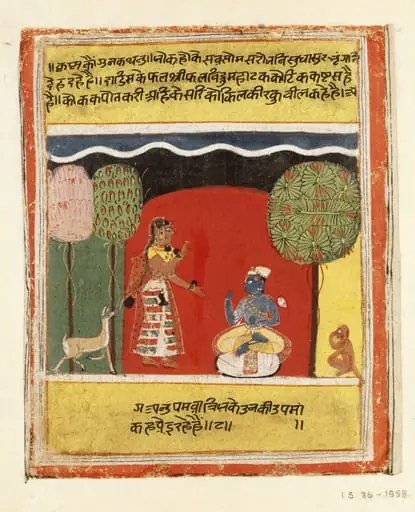 Radha and Krishna
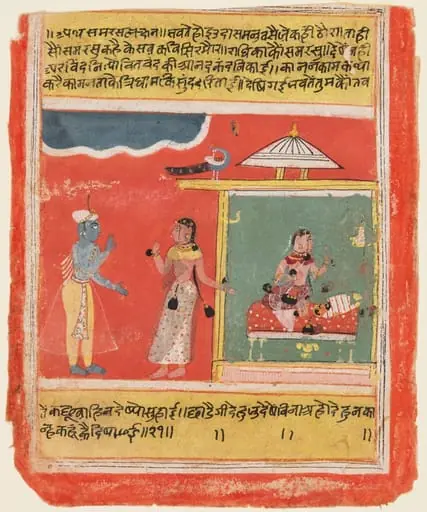 The Sentiment of Peace: Sama Rasa, from a Rasikapriya
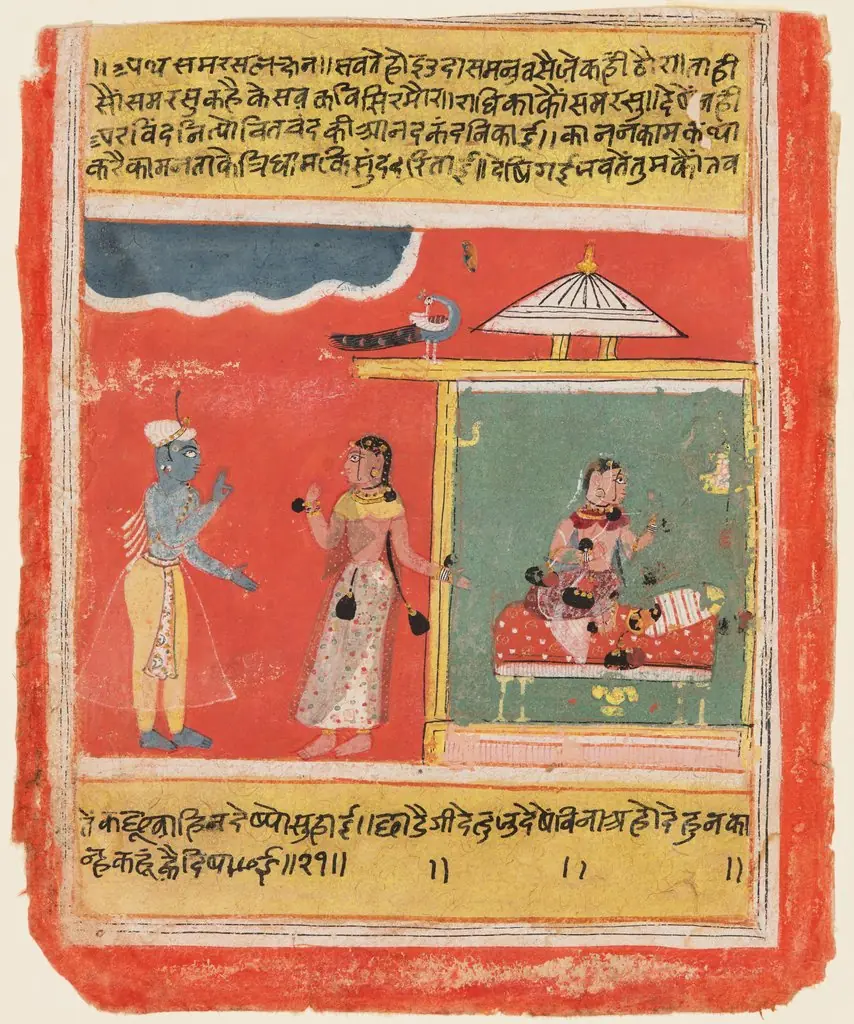 The Sentiment of Peace: Sama Rasa, from a Rasikapriya
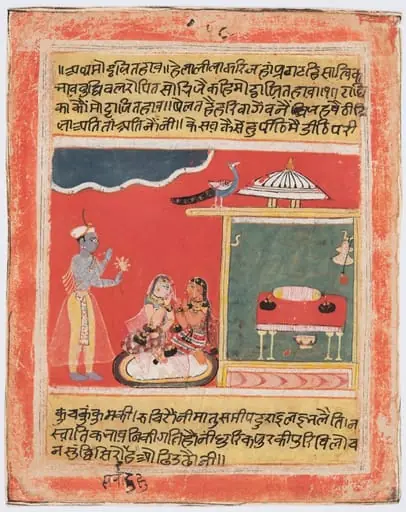 Krishna and Radha Avoid Embarrassment: Mottaita Bhava, from a Rasikapriya
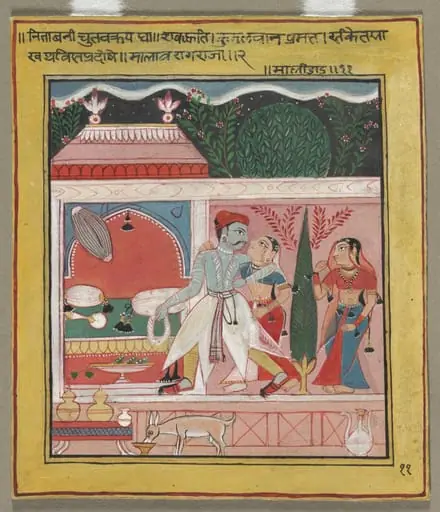 Ragini
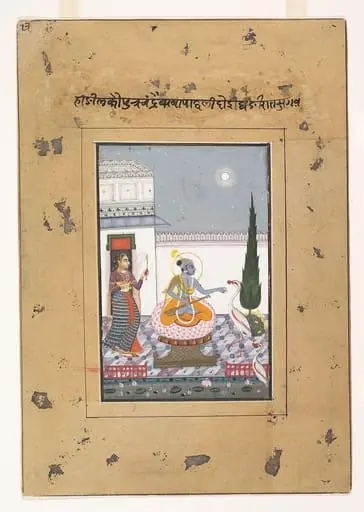 Untitled
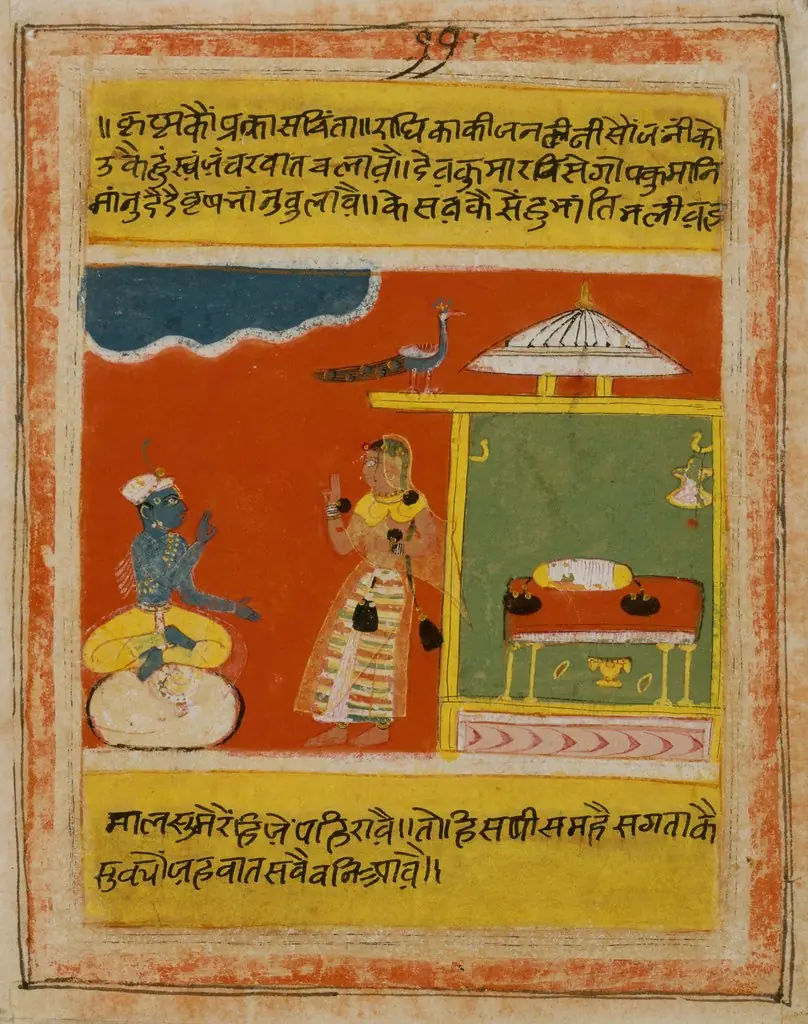 Krishna and Radha
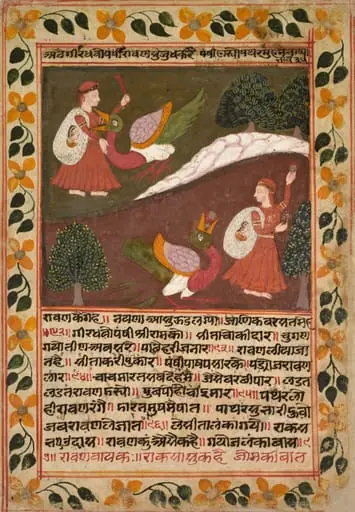 Ravana battles the great vulture Jatayu and defeats him by throwing stones in his mouth, folio 18 (recto) from a Chandana Malayagiri Varta (Story of King Chandana and Queen Malayagiri) of Karamachand
 A Woman Plucks Leaves While Awaiting Her Lover: Gunakali Ragini of Malkos, from the “Chawand Ragamala”