Artwork
Pair of Cranes in the Shade of Flowers
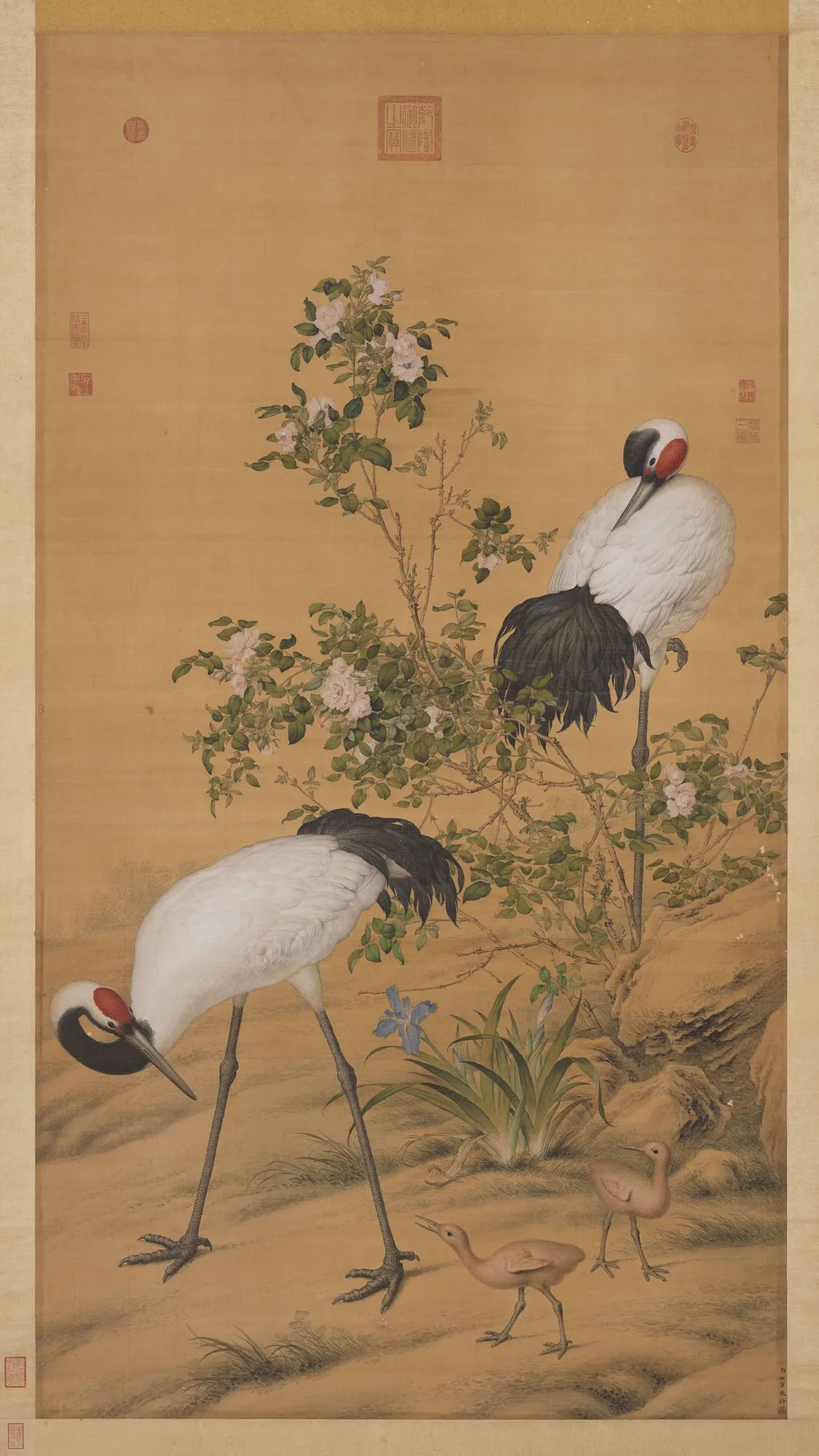
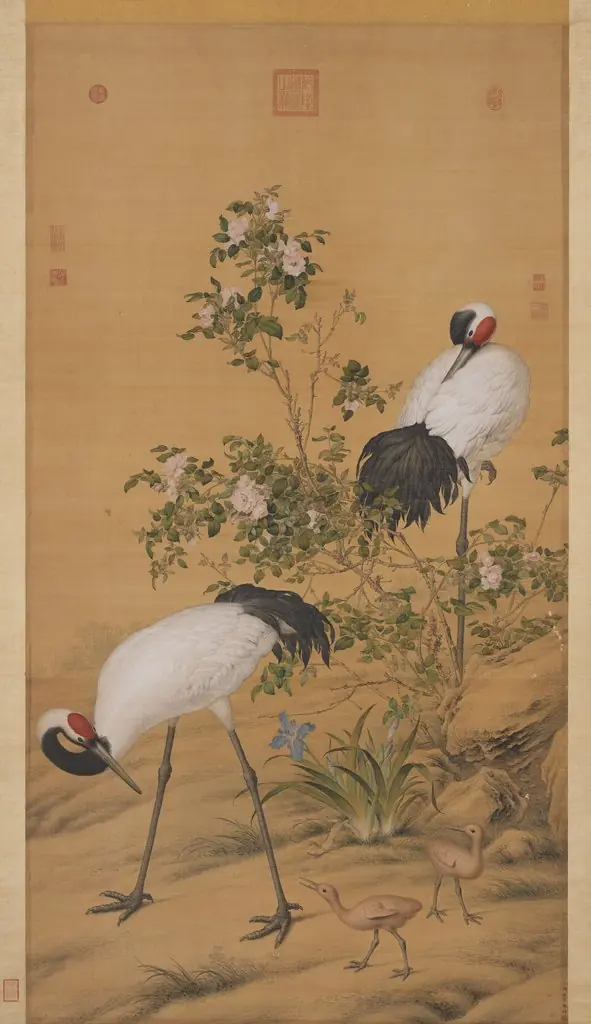
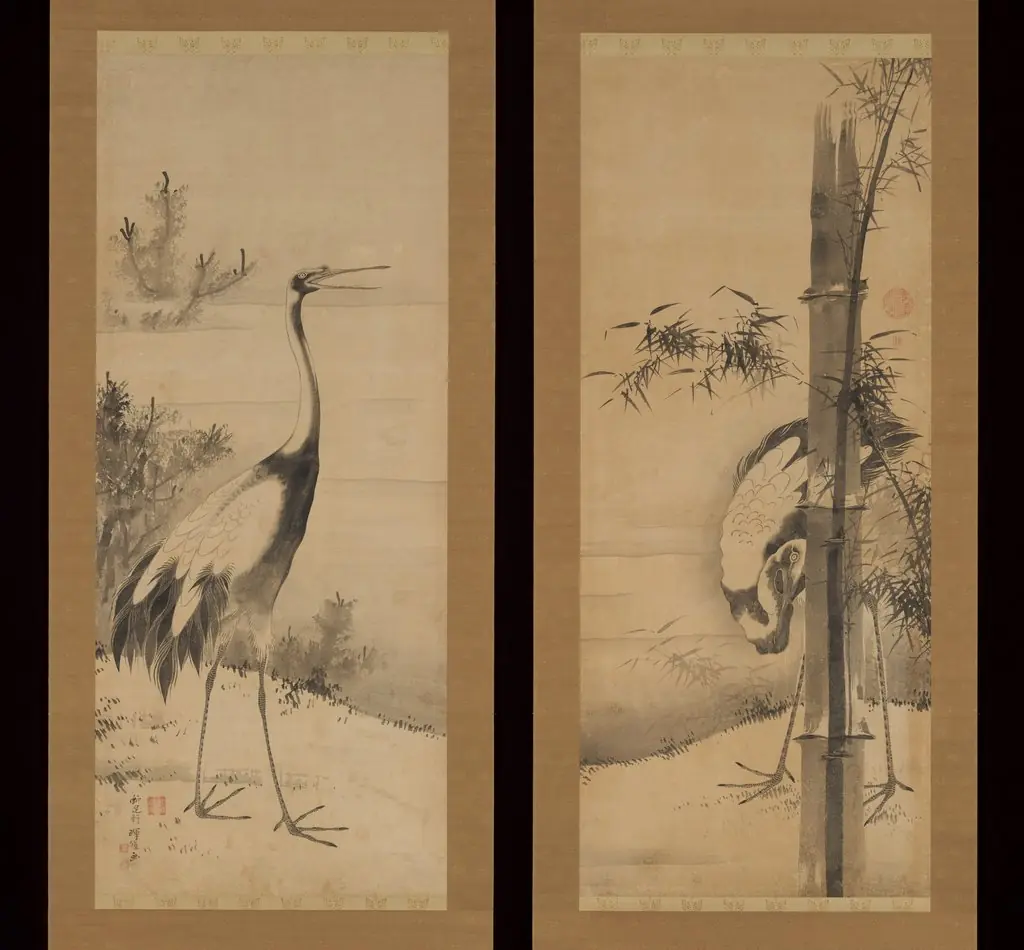
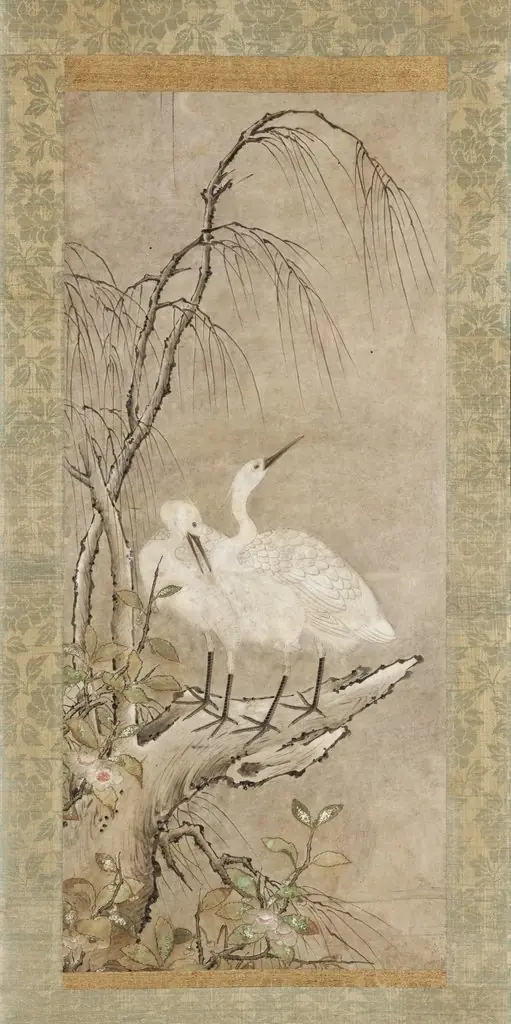
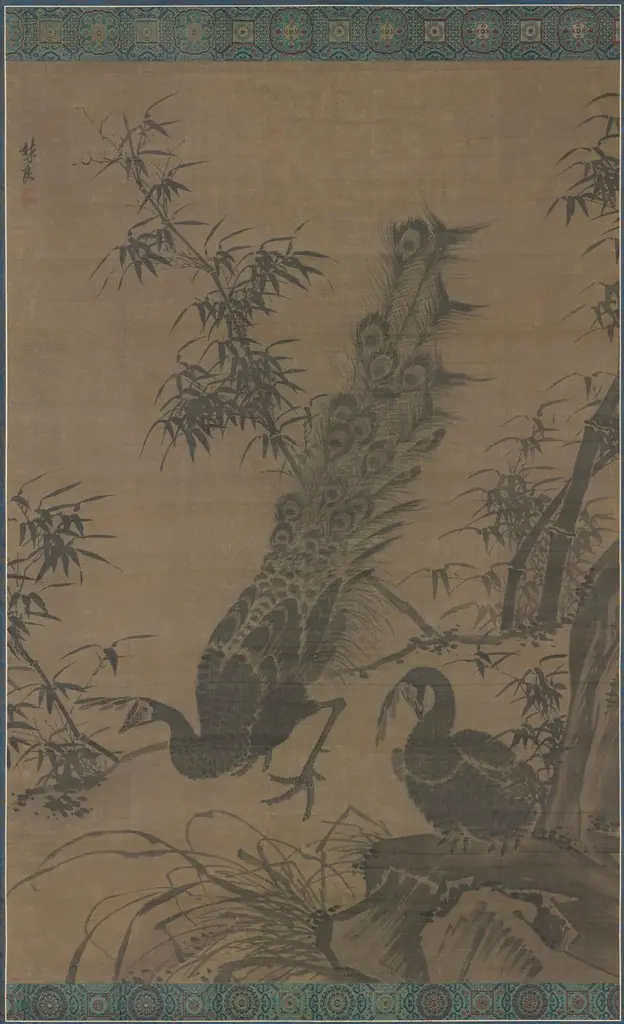
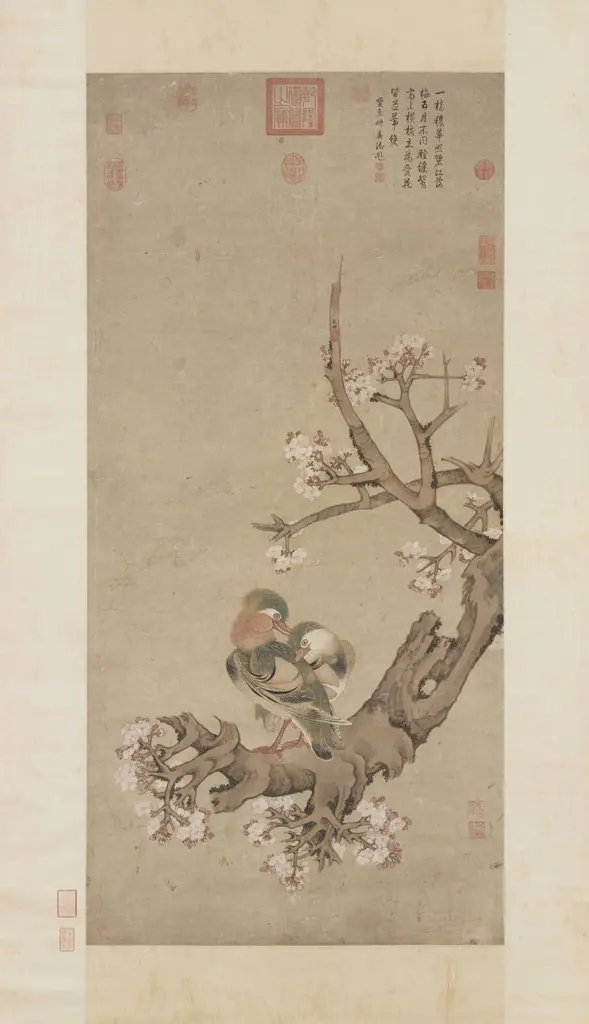
Pair of Cranes in the Shade of Flowers is an unspecified painting by Giuseppe Castiglione. It dates from 1737 and is held in the collection of the National Palace Museum.
About this work
Overview
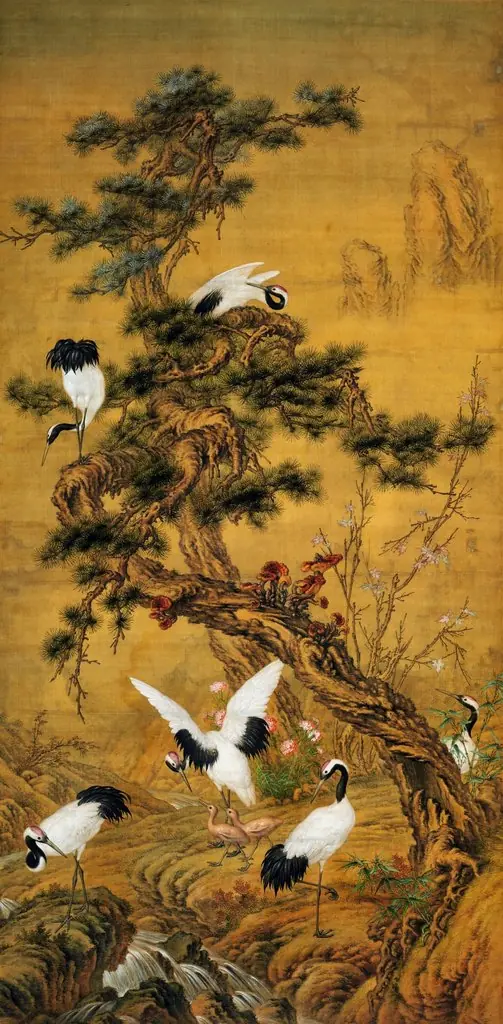
Painted around 1737 by Giuseppe Castiglione, this work features two cranes amid flowering vegetation. Executed in ink and color on silk, it belongs to the imperial collection now housed in the National Palace Museum. The composition balances naturalism with decorative elegance, reflecting Castiglione’s fusion of European and Chinese pictorial traditions under Qing court patronage.
Subject & Meaning
The two cranes, symbols of longevity and fidelity in East Asian culture, stand calmly amid blooming flora. Their stillness and precise positioning suggest harmony and quiet dignity. The surrounding blossoms and foliage reinforce themes of seasonal renewal and natural order, aligning with Confucian ideals of balance and serenity valued in Qing court aesthetics.
Technique & Style
Castiglione employed fine brushwork to render the cranes’ plumage with subtle gradations of white, black, and red, enhancing their three-dimensionality.
Castiglione employed fine brushwork to render the cranes’ plumage with subtle gradations of white, black, and red, enhancing their three-dimensionality. The flowers and foliage are painted with soft, layered pigments, creating depth without harsh outlines. The background integrates light washes and delicate ink lines, blending European shading techniques with Chinese ink traditions to achieve a refined, atmospheric effect.
History & Provenance
Commissioned during the reign of the Yongzheng Emperor, the painting was likely part of a decorative series for imperial palaces. It remained in the Qing court collection until the 20th century, when it was transferred to the National Palace Museum in Taipei following the relocation of imperial artifacts after 1949. Its survival in near-original condition reflects its continued esteem within the imperial archive.
Context
Castiglione, an Italian Jesuit missionary, adapted his Western training to meet Chinese aesthetic expectations at the Qing court. His animal and floral subjects often served symbolic or decorative functions in palace interiors. This painting exemplifies the cross-cultural exchange between European naturalism and Chinese literati conventions, shaped by imperial demand for visually harmonious, morally resonant imagery.
Legacy
The work stands as a testament to the successful synthesis of artistic traditions under Qing patronage. While Castiglione’s broader oeuvre influenced court painting styles, this pair of cranes remains a quiet example of his ability to convey spiritual calm through precise observation. It continues to inform scholarly understanding of Sino-European artistic dialogue in the 18th century.
Artist & collection