Artwork
Pine Tree and Crane
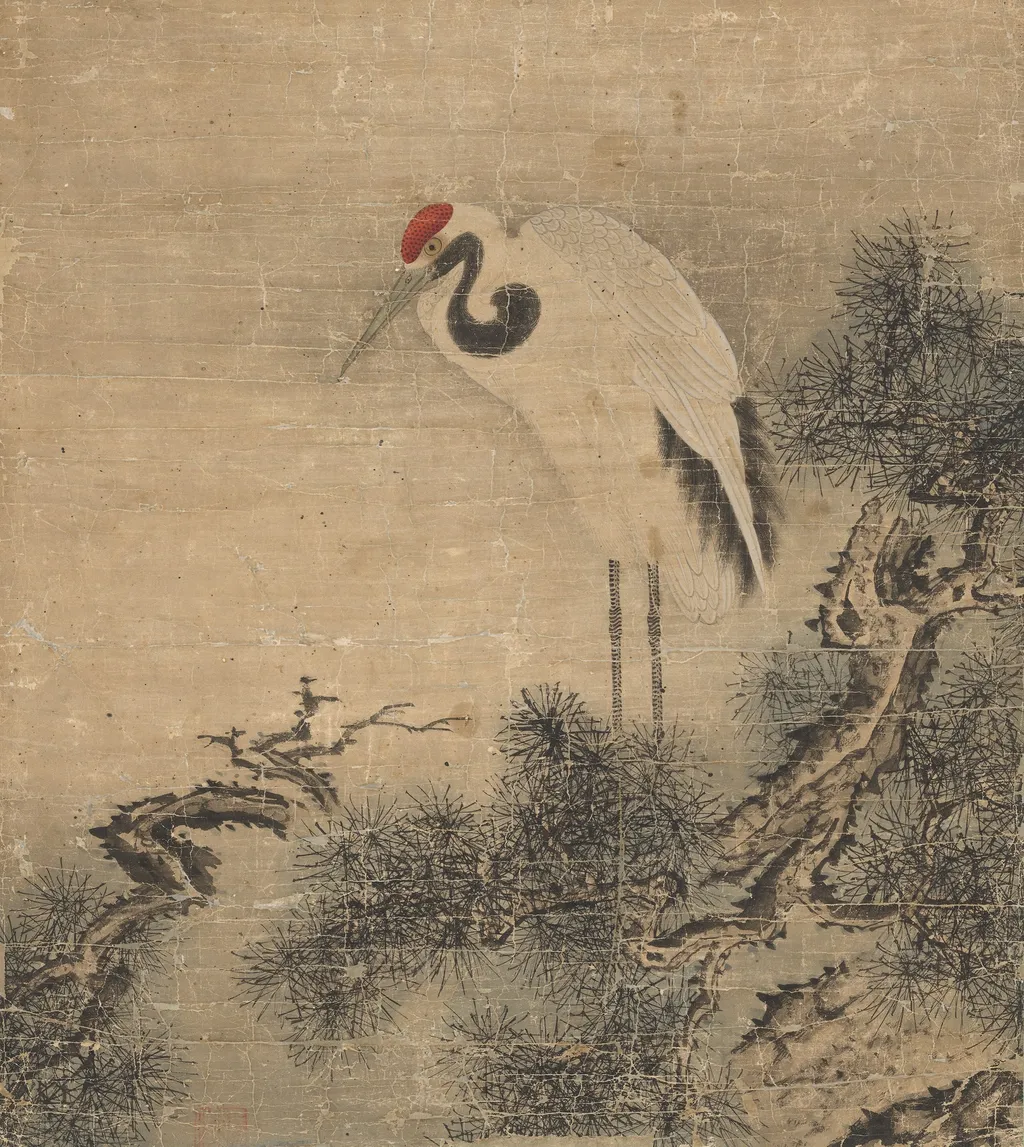
Pine Tree and Crane is an unspecified painting by the Joseon dynasty painting artist Jo Ji-un. It dates from 1650 and is held in the collection of the National Museum of Korea.
About this work
If you're interested in learning more about Korean art, you might want to explore the works of artist Jo Ji-un.
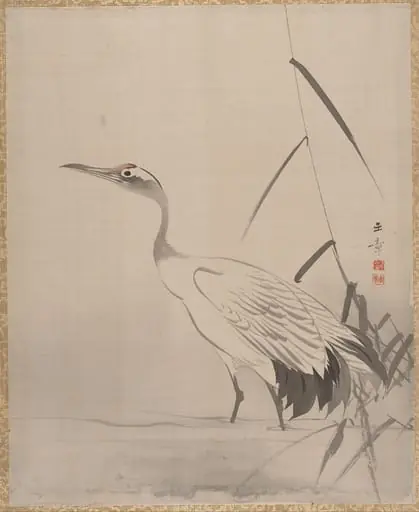
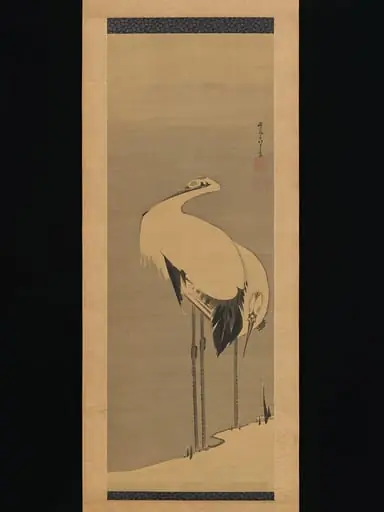
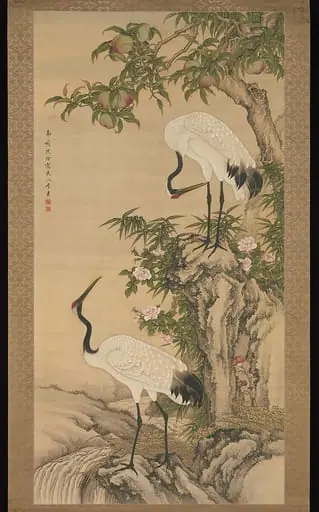
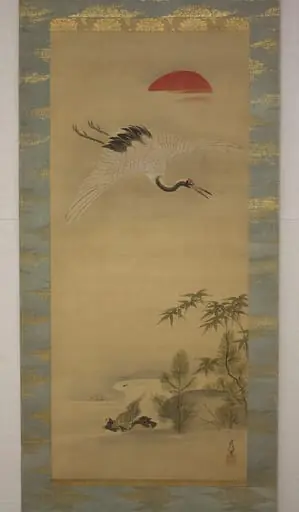
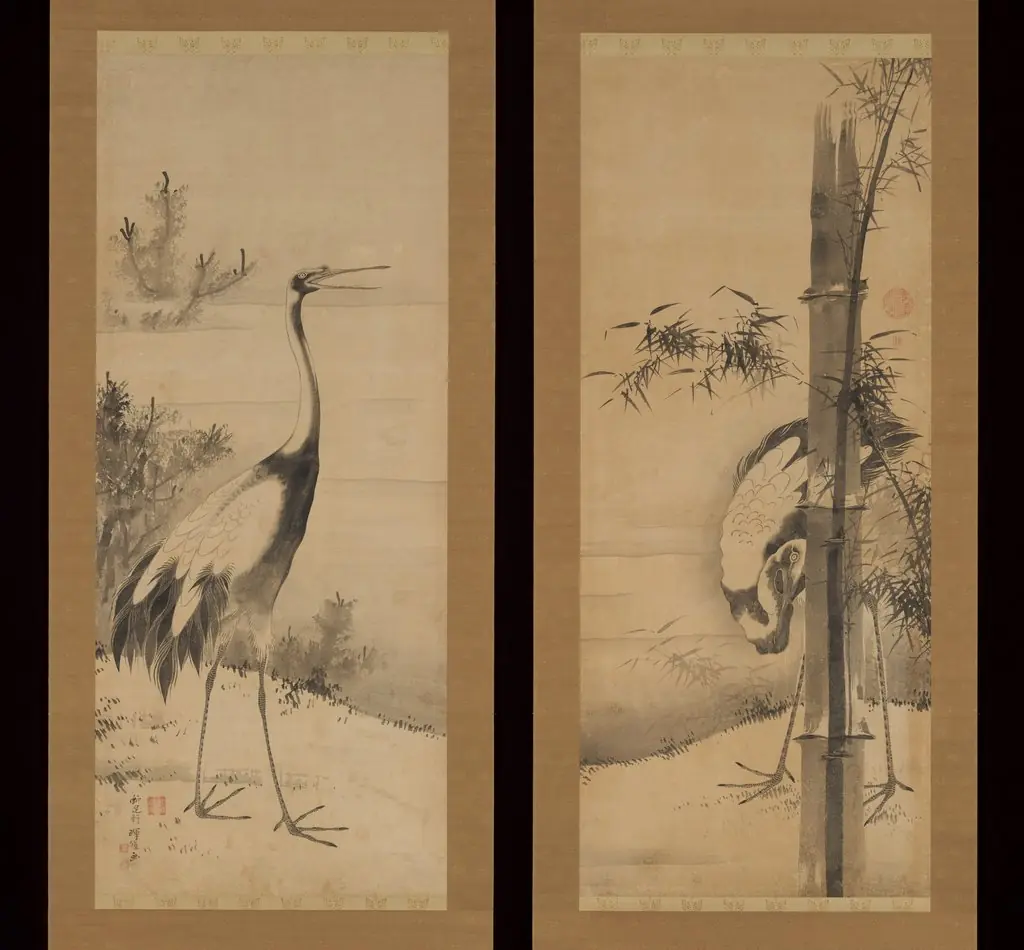
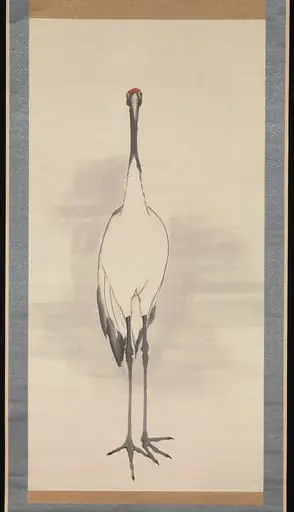
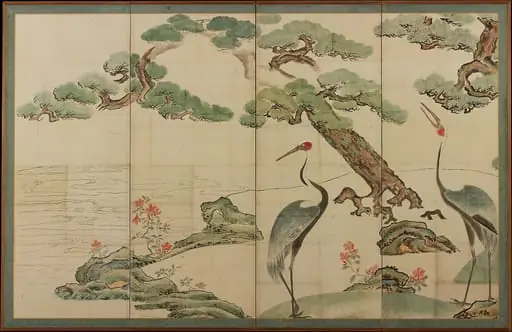
This painting shows a crane standing on a pine tree branch. The crane is white with a black neck and a red cap on its head. It has a long beak and is looking down at the branch. The pine tree is depicted in black ink, with many needles and a few branches. The background of the painting is a light brown color.
The crane is the main subject of the painting, and it is shown in a peaceful and serene environment. The use of black ink for the pine tree creates a sense of contrast with the white crane, making it stand out. The painting appears to be a traditional Korean art piece, possibly from the 17th century.
If you're interested in learning more about Korean art, you might want to explore the works of artist Jo Ji-un.
Overview
Pine Tree and Crane is a monochrome ink painting attributed to the Korean artist Jo Ji-un, dated around 1650. Executed on paper, it presents a solitary crane perched on a pine branch against a muted brown background. The composition emphasizes stillness and natural harmony, characteristic of Korean literati painting traditions. The work is part of the National Museum of Korea’s collection, where it is preserved as an example of 17th-century Korean artistic sensibility.
Subject & Meaning
The crane, a symbol of longevity and purity in East Asian culture, is depicted in quiet repose, its gaze lowered toward the branch. The pine tree, evergreen and resilient, complements the crane’s symbolism, together suggesting endurance and tranquility. The absence of human figures or narrative elements directs focus to the natural world, reflecting Confucian and Daoist ideals of harmony between beings and their environment.
Technique & Style
Rendered in ink on paper, the painting employs subtle tonal variations to define form without color. The crane’s white body is suggested by the paper’s reserve, while its black neck and red crown are delicately outlined. The pine’s needles and branches are drawn with controlled, expressive brushwork, contrasting the bird’s smooth contours. The background’s faint wash creates depth without distraction, emphasizing the subjects’ quiet presence.
History & Provenance
The painting has been held by the National Museum of Korea since at least the mid-20th century, though its earlier ownership remains undocumented. It is generally accepted as a work from the mid-Joseon period, likely produced by a scholar-artist practicing the ink-wash tradition. Its survival into modern times reflects its cultural value, though little is known of its commission or initial reception.
Context
Created during the Joseon dynasty, this painting aligns with the rise of literati painting among educated elites who favored nature themes over courtly subjects. Artists like Jo Ji-un drew from Chinese models but adapted them to Korean aesthetics, favoring restraint and spiritual resonance. Such works were often displayed in private studies, serving as meditative objects rather than public decorations.
Legacy
Pine Tree and Crane exemplifies the quiet elegance of Korean ink painting in the 17th century. While not widely reproduced or celebrated in popular culture, it remains a reference point for scholars studying the evolution of naturalism in Korean art. Its preservation underscores the enduring appreciation for understated, contemplative imagery within Korea’s artistic heritage.
Own this work as a print
Artist & collection