Artwork
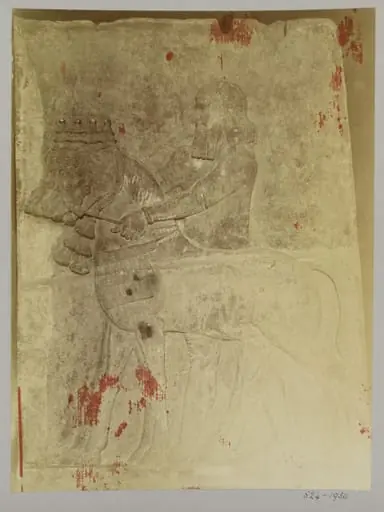
Relief showing Gilgamesh suffocating the lion from Palace of Khorsabad, period of Sargon II (722-795 B.C.)
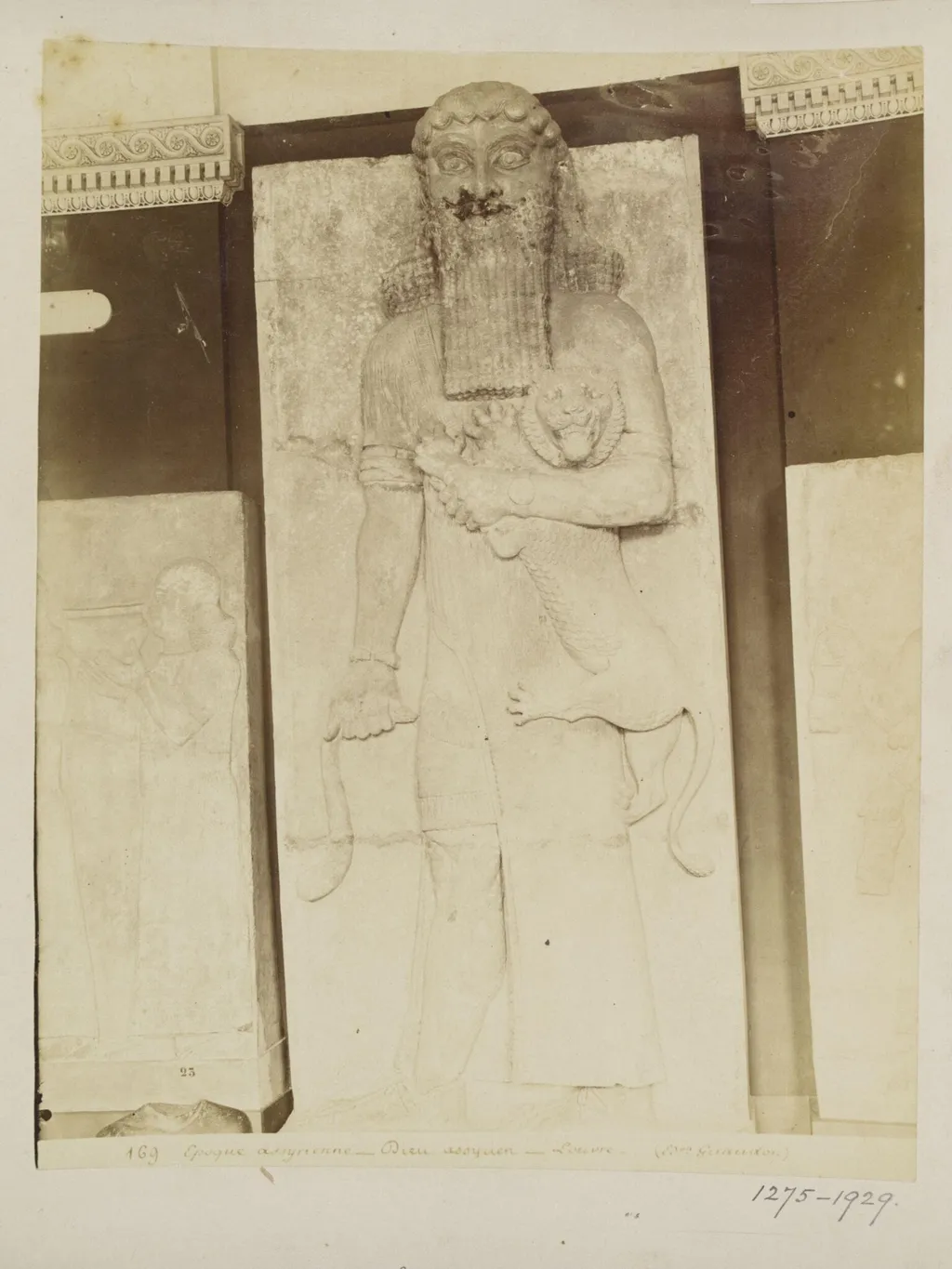
Relief showing Gilgamesh suffocating the lion from Palace of Khorsabad, period of Sargon II (722-795 B.C.) is a photographic photography by the Impressionist artist Unknown. It dates from 1884 and is held in the collection of the Victoria and Albert Museum.
About this work
Overview
The image is a black‑and‑white photograph of a stone relief that once adorned the walls of the palace at Khorsabad, the capital built by Sargon II in the late eighth century BCE. The relief captures a dramatic encounter between a human figure and a lion, rendered in the deep shadows and highlights characteristic of early archaeological photography.
Subject & Meaning
At the center of the composition a bearded man, possibly a royal or heroic figure, clutches a lion by its neck while the animal’s limbs hang limp. The man's stern expression and the aggressive pose convey dominance over chaos, a theme common in Assyrian royal propaganda that emphasized the king’s power to subdue dangerous forces.
Technique & Style
Carved in high relief from limestone, the scene employs deep incision to accentuate the muscular forms of both man and beast. The stylized anatomy, exaggerated gestures, and hierarchical scaling reflect the Assyrian artistic canon, where narrative clarity and symbolic force outweigh naturalistic detail.
History & Provenance
The relief originates from the palace complex of Khorsabad, constructed under Sargon II between 722 and 705 BCE. The surviving fragment was photographed in the 1880s by an unidentified photographer, likely during early excavations that brought Assyrian art to European collections. The print bears period markings and handwritten notes indicating its archival use.
Context
Assyrian palaces were richly decorated with narrative reliefs that celebrated military victories and divine favor. This particular scene would have been displayed in a public or ceremonial space, reinforcing the king’s role as protector and conqueror within the empire’s ideological framework.
Artist & collection

 Domestic Scene
 Giacomo and Cardinal Marco, investing Andrea, Abbot of San Zeno, with his Benefice
 The Nymph of Fontainebleau
 Portrait of a Woman
 Madonna and Child with Saints in the Enclosed Garden
 Venus and Minerva
 Family Group of Four on Sofa
 Wall painting from Room H of the Villa of P. Fannius Synistor at Boscoreale
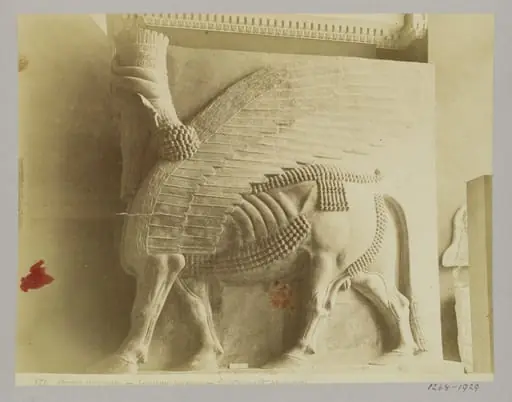 Winged bull from Khorsabad (Sargon, 722-705 B.C.). Paris: Louvre
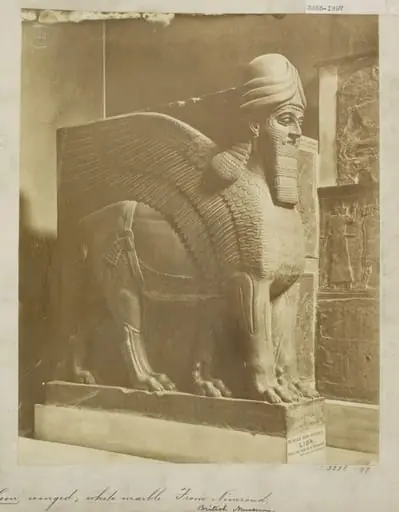 Neo-Assyrian colossal statue of a winged lion in white marble from the North-West palace of Ashurnasirpal II, Nimrud (ancient Kalhu), northern Iraq. London: British Museum
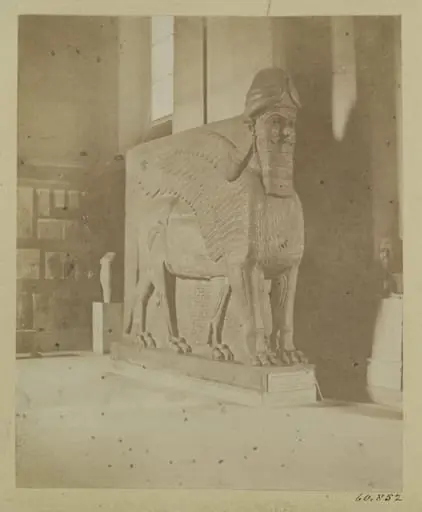 Assyrian sculpture of a lion winged. London: British Museum
 Relief of a groom and horses, from Khorsabad (Sargon, 722-705 B.C.). Paris: Louvre
 Assyrian slab of archers and spearmen, from the Palace of Shur-Bari-Pal (BC. 668-626), at Nineveh. ca. 660 B.C.