Artwork
Assyrian sculpture of a lion winged. London: British Museum
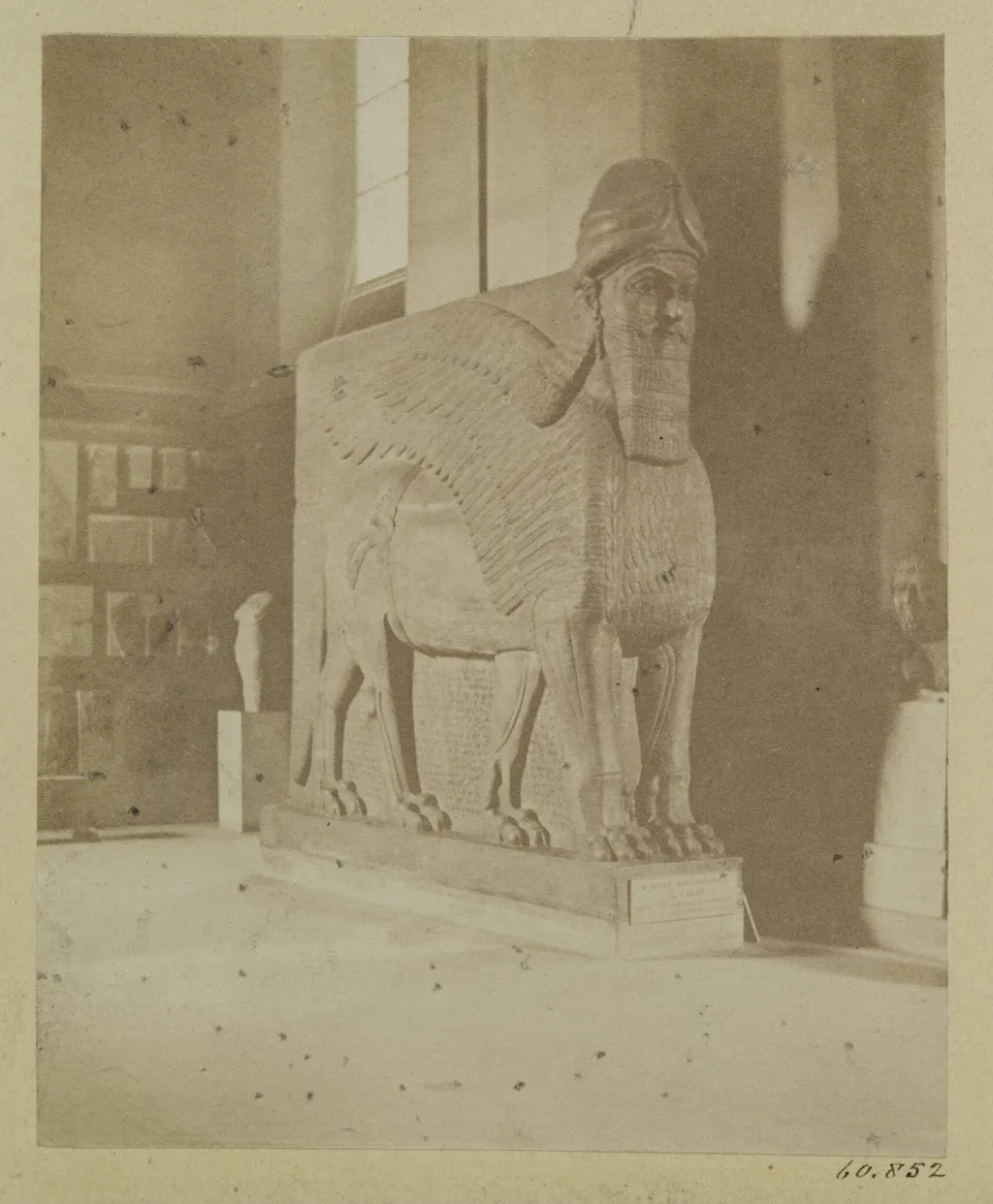
Assyrian sculpture of a lion winged. London: British Museum is a photographic photography by the Impressionist artist J. Davis Burton. It dates from 1860 and is held in the collection of the Victoria and Albert Museum.
About this work
It shows a creature with a lion’s body, eagle wings, and a human-like face wearing a pointed hat.
This is a black-and-white photo of a carved stone statue. It shows a creature with a lion’s body, eagle wings, and a human-like face wearing a pointed hat. The wings are spread wide, and the front paws rest on a block. The background looks like a museum room with other statues and shelves.
The photo was taken around 1860, showing how old artifacts were displayed back then. The lighting is flat, making the carving details stand out clearly.
Next, check out the Victoria and Albert Museum to see more photos like this.
Overview
A sepia-toned photograph from circa 1860 documents a monumental Assyrian stone sculpture of a winged lion-human hybrid, then on display at the British Museum. The image, taken with early photographic technology, presents the statue in a static, frontal view against a neutral backdrop. Its purpose was archival, capturing the artifact’s form and placement within the museum’s early exhibition space, where antiquities were arranged in dense, shelf-like displays.
Subject & Meaning
The sculpture depicts a lamassu, a protective deity from ancient Assyrian mythology, combining the body of a lion, the wings of an eagle, and the head of a bearded human. Wearing a horned headdress signifying divinity, it was traditionally placed at palace entrances to ward off evil. The figure’s calm, frontal stance and symmetrical form convey authority and eternal vigilance, reflecting its role as a guardian of sacred and royal spaces.
Technique & Style
Carved from alabaster or limestone, the lamassu exhibits precise, stylized detailing: the feathers of the wings are rendered in parallel grooves, the beard in tightly packed curls, and the headdress with concentric bands. The photograph’s flat lighting enhances the relief’s contours, emphasizing the craftsmanship of the original. The rigid posture and frontal orientation follow Assyrian conventions, prioritizing symbolic presence over naturalistic movement.
History & Provenance
The sculpture originated in the Assyrian capital of Nimrud, likely from the palace of Ashurnasirpal II (883–859 BCE). It was excavated in the mid-19th century by British archaeologists and transported to London. The 1860 photograph records its early display in the British Museum, shortly after its arrival, when such artifacts were among the first major Mesopotamian finds to enter a European public collection.
Context
In the 1860s, museums like the British Museum were redefining how ancient artifacts were presented. The lamassu was displayed among other Near Eastern relics in orderly rows, often under glass or on wooden shelves, reflecting a growing interest in systematic classification. This photograph captures a transitional moment—when archaeological finds shifted from private collections to public, scholarly institutions.
Legacy
This photograph serves as a key record of the lamassu’s early institutional life, documenting its condition and display before modern conservation practices. It also illustrates how 19th-century photography helped shape public and academic understanding of ancient Near Eastern art. The image remains a reference for scholars studying the reception and display of Assyrian sculpture in Western museums.
Artist & collection
Artist
J. Davis Burton lugged a tripod around London’s British Museum for weeks, hunting details tourists miss—like the way Assyrian winged bulls had five legs (two on each side, one hidden when standing). He wasn’t after…

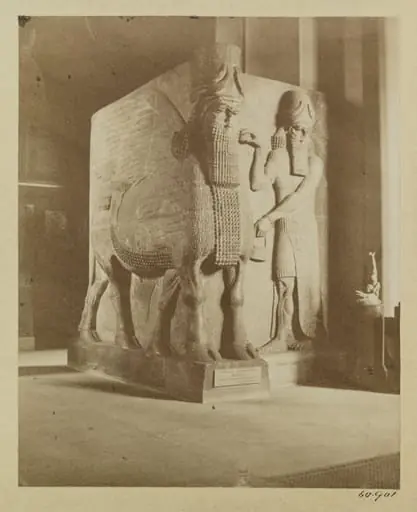 Assyrian sculpture of a winged bull, London, British Museum
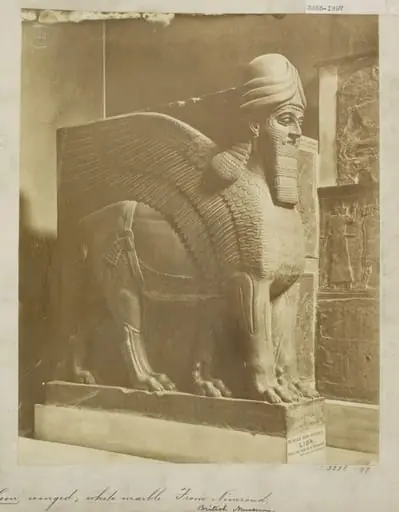 Neo-Assyrian colossal statue of a winged lion in white marble from the North-West palace of Ashurnasirpal II, Nimrud (ancient Kalhu), northern Iraq. London: British Museum
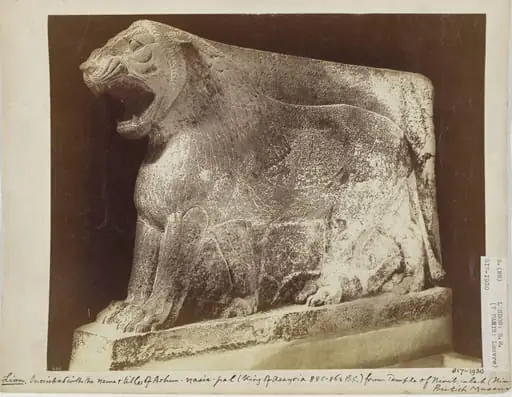 Assyrian sculpture of a lion inscribed with the name and titles of Ashur-nasir-pal (King of Assyria 885-860 B.C.) from the Temple of Nirib, Calah
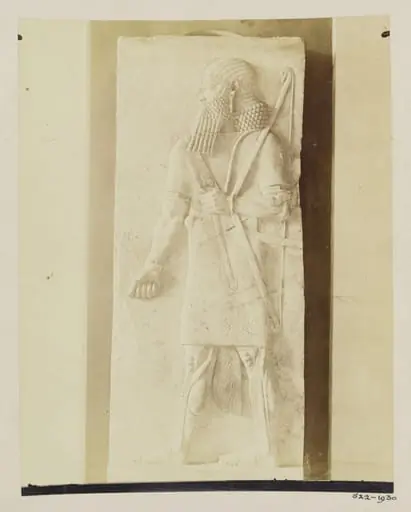 Sculpture of Assyrian archer, 9th century B.C., Louvre, Paris
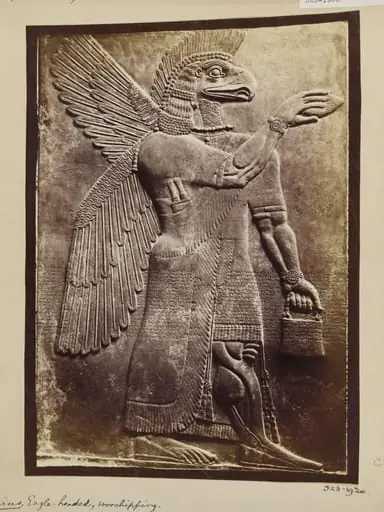 Assyrian sculpture of an eagle-headed genius, worshipping, Paris, Louvre
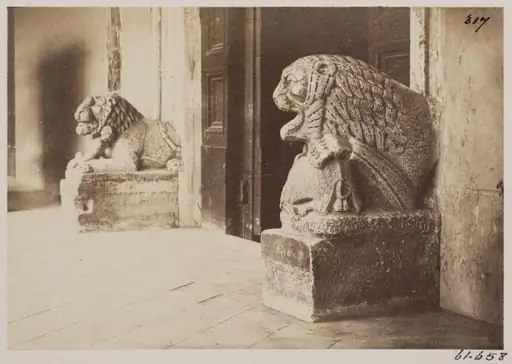 Sculptures - Lions at the Door of the Church of S. Lorenzo
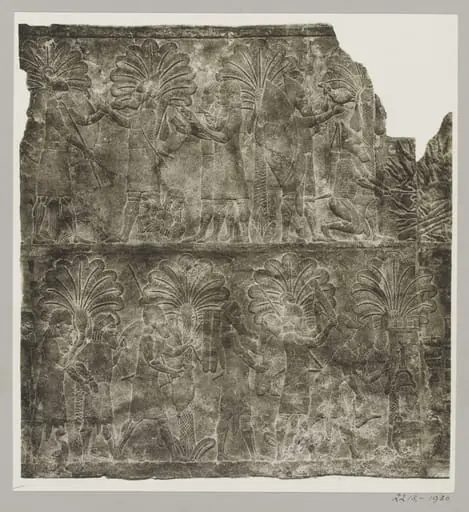 Assyrian reliefs depicting Ashurbanipal and warriors in their camp at Nineveh (Kuyuryick). London, British Museum
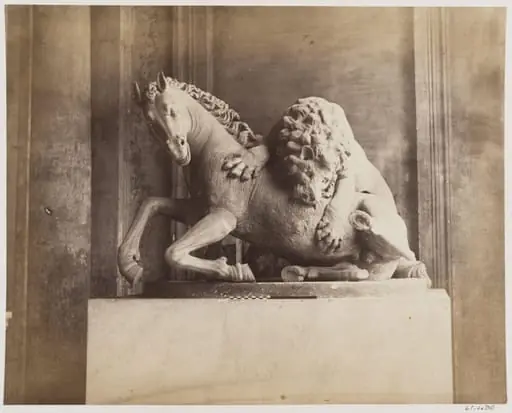 Sculpture - Of a Lion upon a Horse, now in the Palazzo de' Conservatori on the Capitol
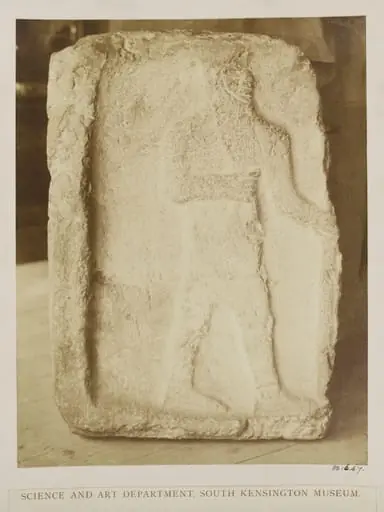 Assyrian sculpture relief of a bearded man
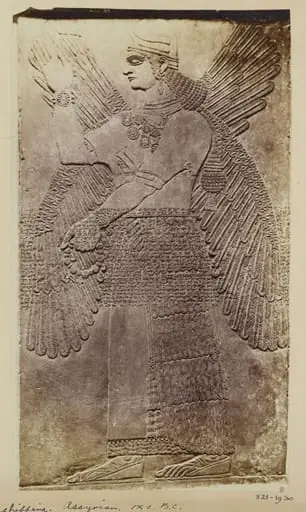 Assyrian sculpture of genius, worshipping, ninth century B.C., Louvre, Paris
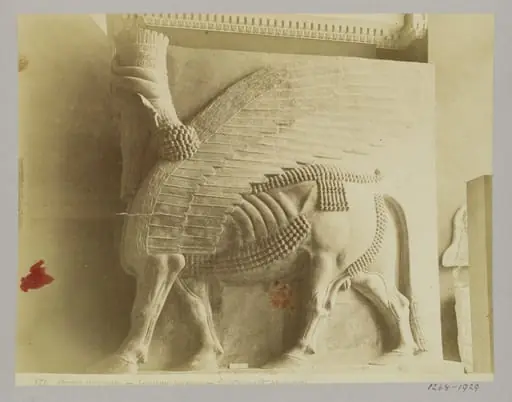 Winged bull from Khorsabad (Sargon, 722-705 B.C.). Paris: Louvre
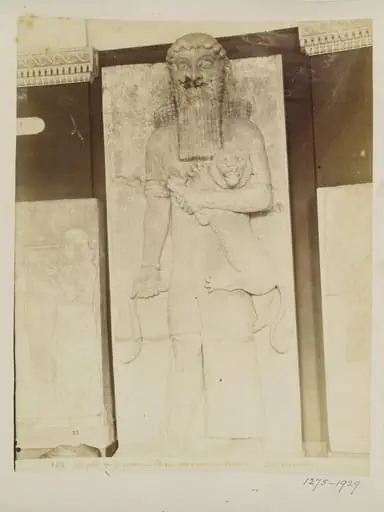 Relief showing Gilgamesh suffocating the lion from Palace of Khorsabad, period of Sargon II (722-795 B.C.)
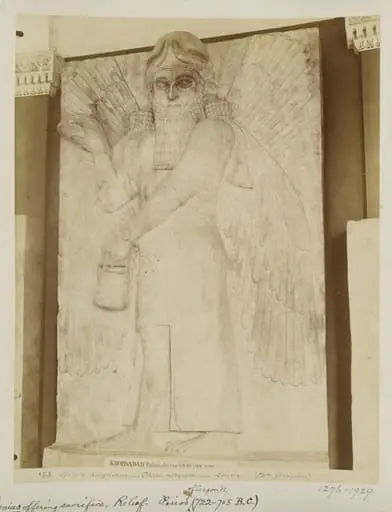 Relief of a genius offering sacrifice, period of Sargon II (722-705 B.C.) from Palace of Khorsabad. Paris: Louvre
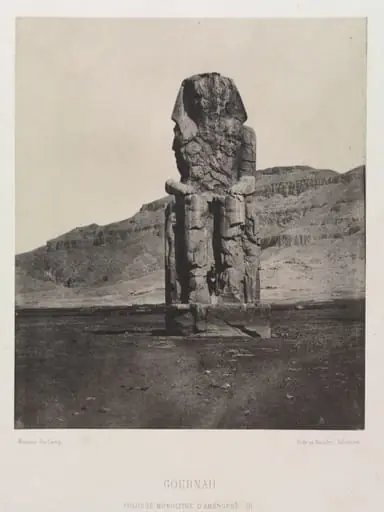 Colossol Monolith of Amenhotep III, Gournah
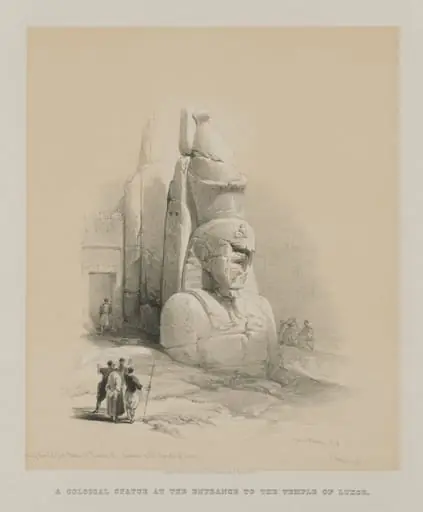 Egypt and Nubia, Volume I: One of Two Colossal Statues of Rameses II. Entrance to the Temple of Luxor
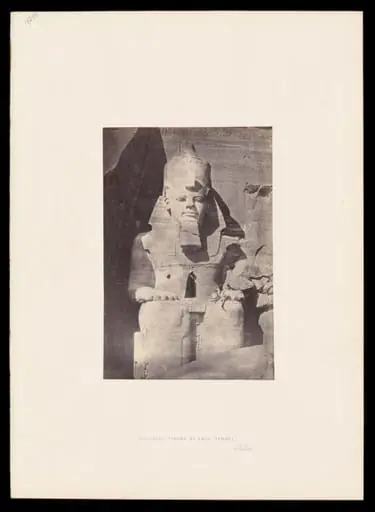 Colossal Figure at Abou Simbel, Nubia