Artwork
Neo-Assyrian colossal statue of a winged lion in white marble from the North-West palace of Ashurnasirpal II, Nimrud (ancient Kalhu), northern Iraq. London: British Museum
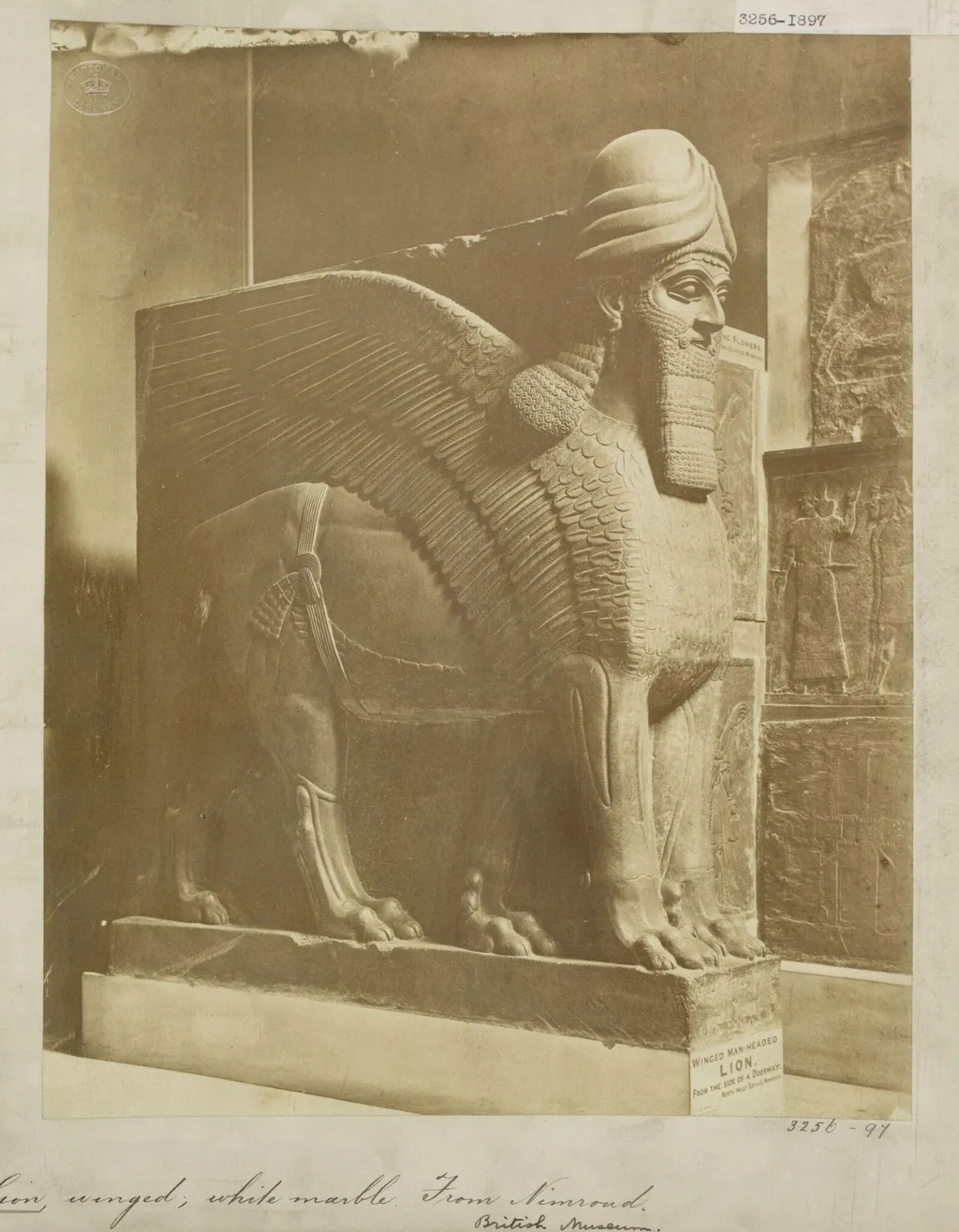
Neo-Assyrian colossal statue of a winged lion in white marble from the North-West palace of Ashurnasirpal II, Nimrud (ancient Kalhu), northern Iraq. London: British Museum is a photographic photography by the Impressionist artist Unknown. It dates from 1897 and is held in the collection of the Victoria and Albert Museum.
About this work
The statue looks like it was made to guard something important, based on its size and fierce look.
This is a black-and-white photo of a giant stone statue. It shows a creature with a lion’s body, human-like hands, and a man’s face wearing a pointed hat. The wings are wide and detailed, with feathers carved into the stone. The lion stands on a flat base, holding a small object in its front paws.
The photo itself is old, taken in 1897, and shows some wear on the edges. The statue looks like it was made to guard something important, based on its size and fierce look.
This photo is part of the Victoria and Albert Museum collection.
Overview
This photograph depicts a colossal Neo-Assyrian winged lion statue, a guardian figure characteristic of Assyrian art, featuring a combination of human, animal, and avian elements.
Subject & Meaning
The statue represents a mythical creature with a lion's body, human-like hands, and a man's face wearing a pointed hat, symbolizing protection and power.
Technique & Style
The statue is carved from white marble, showcasing intricate details such as feathers on its wings, and stands on a flat base, holding a small object in its front paws.
History & Provenance
Originally from the North-West Palace of Ashurnasirpal II at Nimrud, the statue was acquired by the British Museum in 1897. The photograph, also from 1897, is part of the Victoria and Albert Museum collection, having been previously owned by Dr. John Henry Middleton.
Artist & collection

 Domestic Scene
 Giacomo and Cardinal Marco, investing Andrea, Abbot of San Zeno, with his Benefice
 The Nymph of Fontainebleau
 Portrait of a Woman
 Madonna and Child with Saints in the Enclosed Garden
 Venus and Minerva
 Family Group of Four on Sofa
 Wall painting from Room H of the Villa of P. Fannius Synistor at Boscoreale
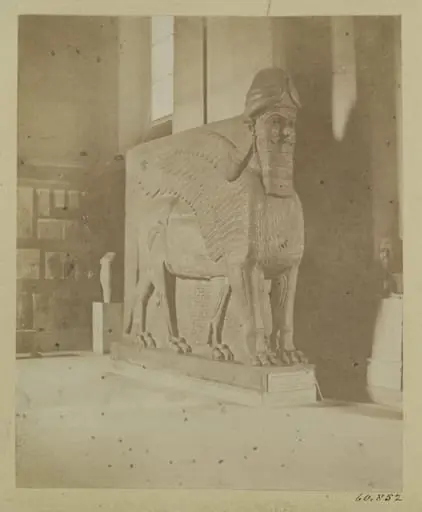 Assyrian sculpture of a lion winged. London: British Museum
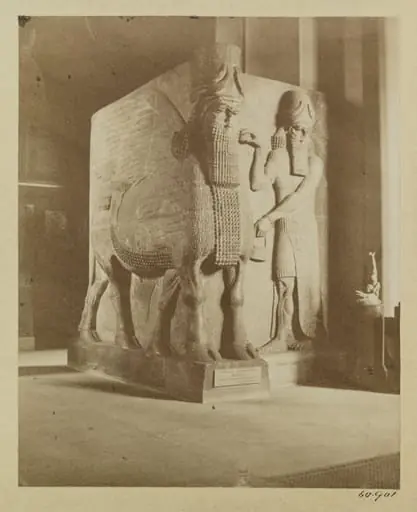 Assyrian sculpture of a winged bull, London, British Museum
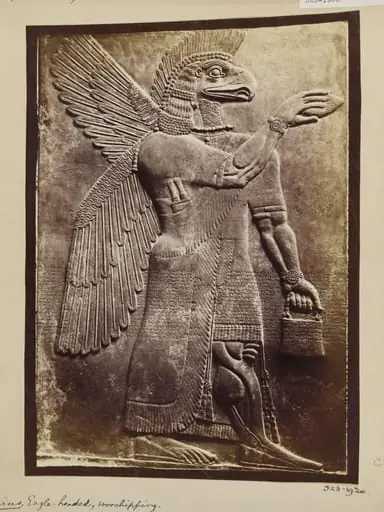 Assyrian sculpture of an eagle-headed genius, worshipping, Paris, Louvre
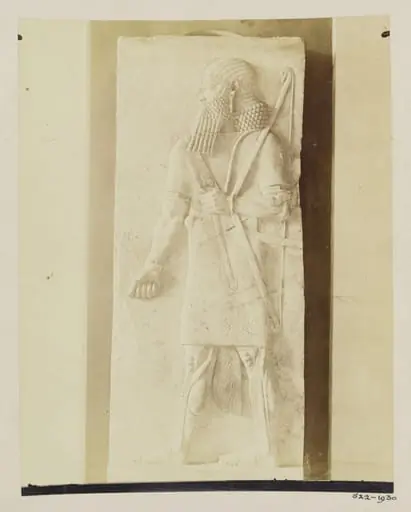 Sculpture of Assyrian archer, 9th century B.C., Louvre, Paris
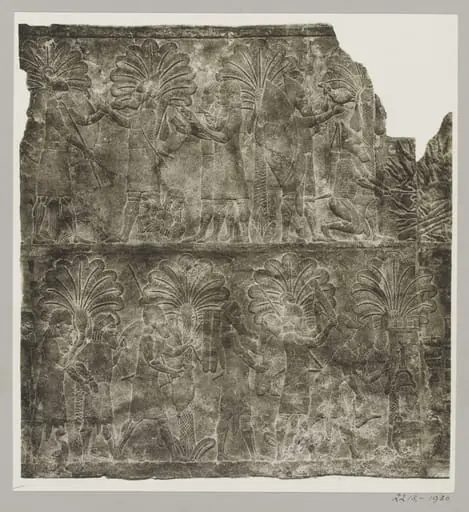 Assyrian reliefs depicting Ashurbanipal and warriors in their camp at Nineveh (Kuyuryick). London, British Museum
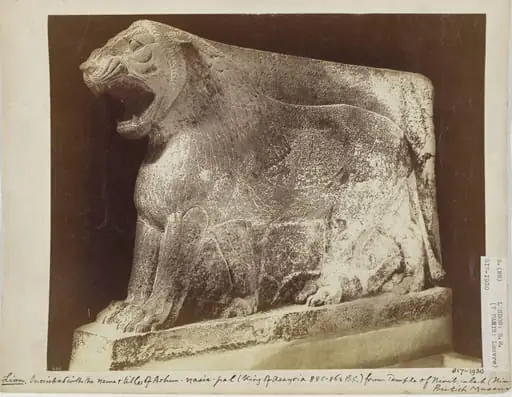 Assyrian sculpture of a lion inscribed with the name and titles of Ashur-nasir-pal (King of Assyria 885-860 B.C.) from the Temple of Nirib, Calah
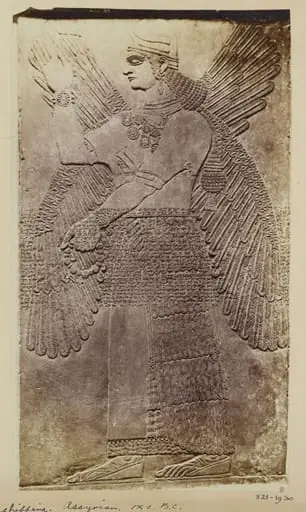 Assyrian sculpture of genius, worshipping, ninth century B.C., Louvre, Paris
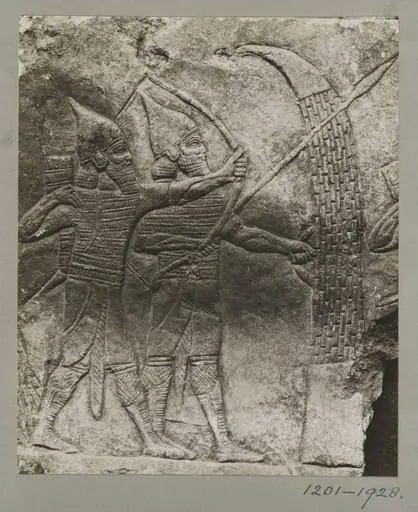 Assyrian slab of archers and spearmen, from the Palace of Shur-Bari-Pal (BC. 668-626), at Nineveh. ca. 660 B.C.
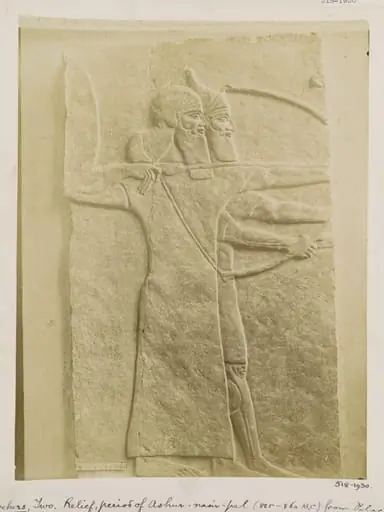 Relief depicting two Assyrian archers from the period of Ashur-Nasir-Pal II (885-860 B.C.) from the Palace of Nimrud. Louvre, Paris
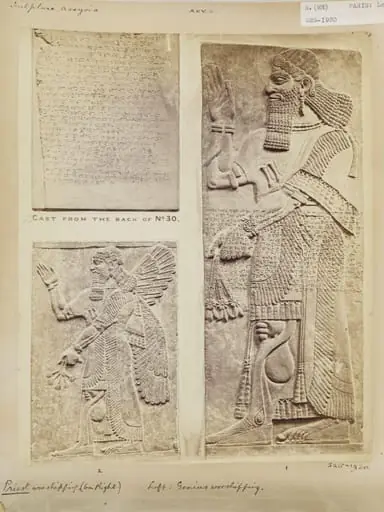 Assyrian sculpture, priest worshipping and genius worshipping, Paris: Louvre
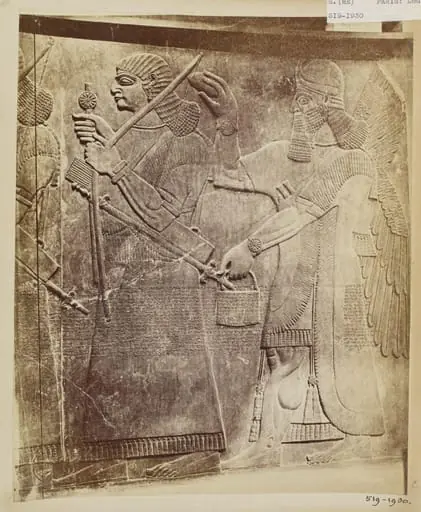 Sculpture depicting a royal Assyrian armsbearer with attendant genius from the period of Ashur-nasir-pal II (885-860 B.C.), Louvre, Paris
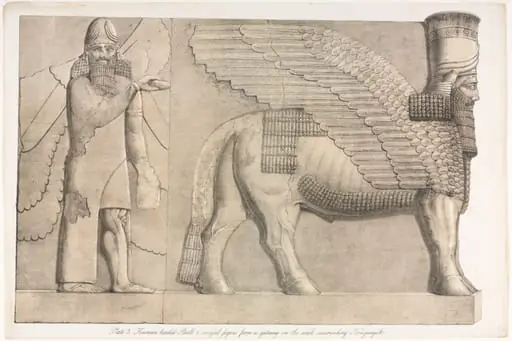 Monuments of Ninevah: Plate 3, Human-headed Bull and Winged Figure from a Gateway in the Wall Surrounding Kouyunjik (Quyunjik)