Artwork
'Removing the Rocks in the Head'
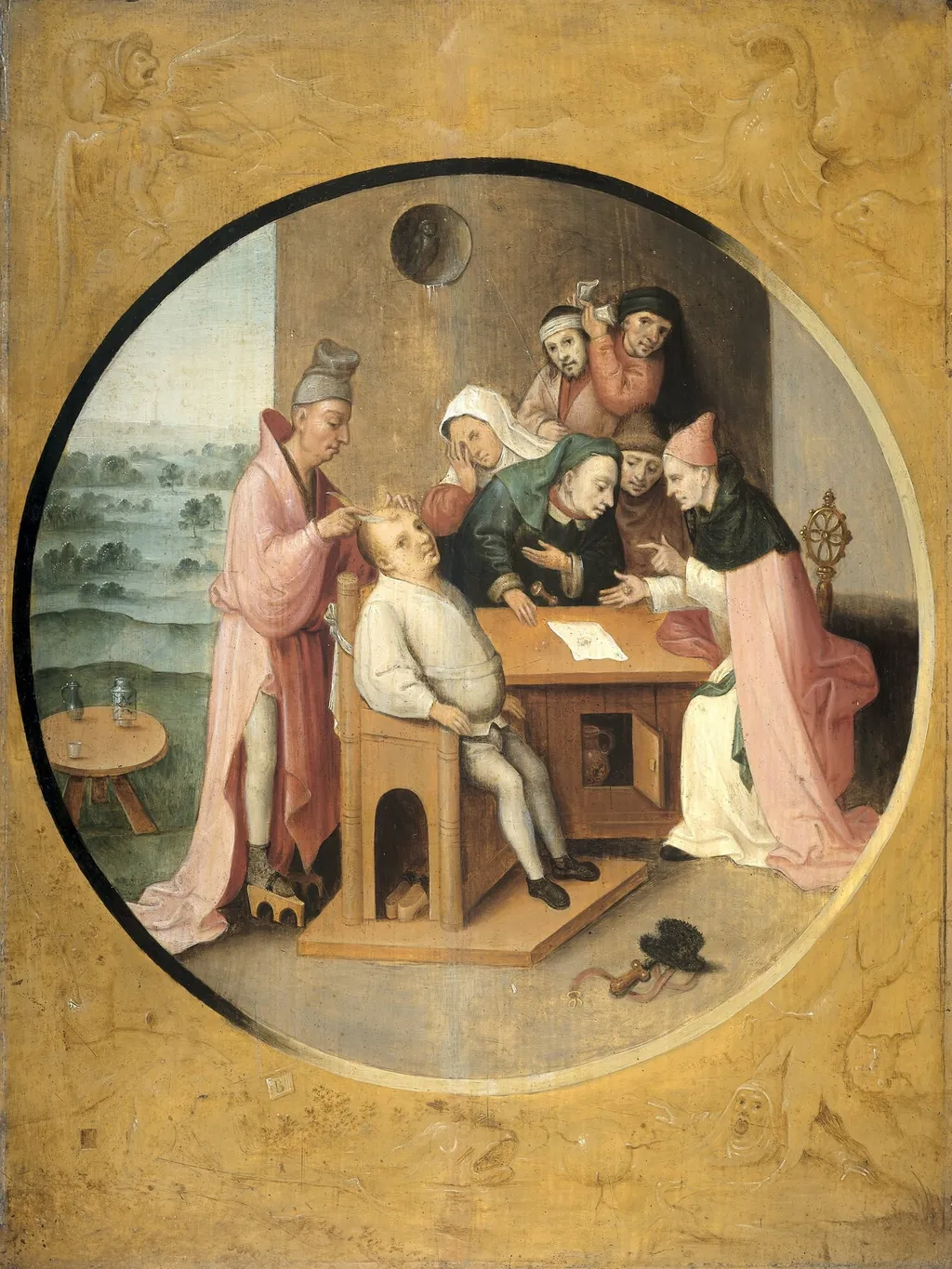
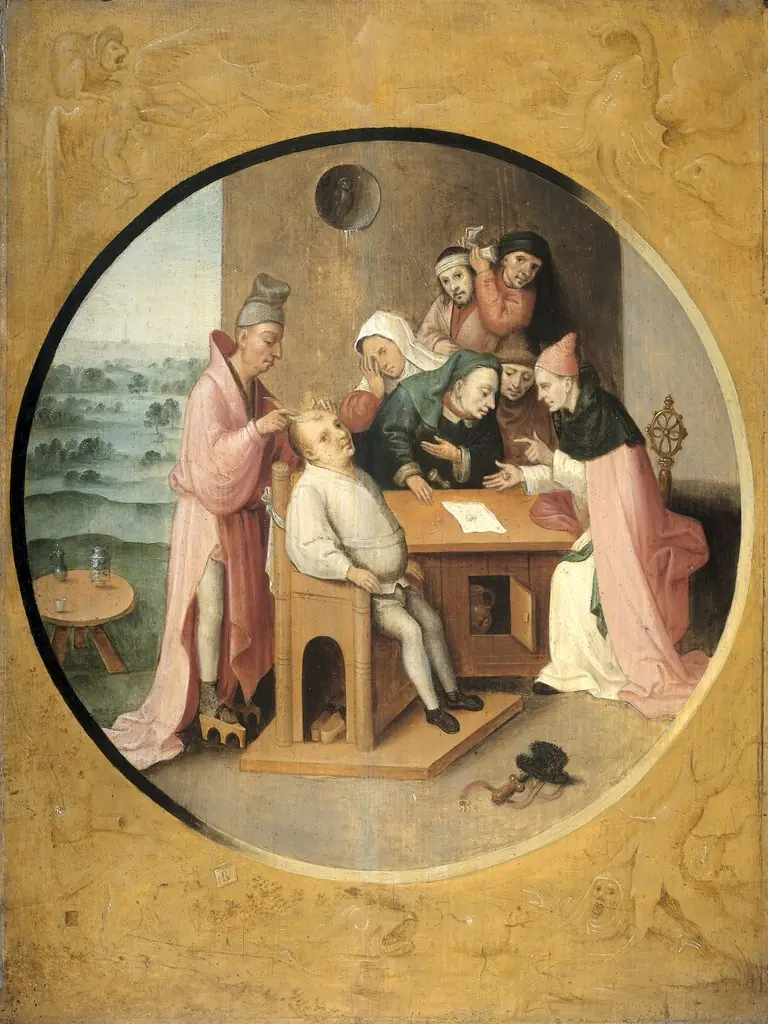
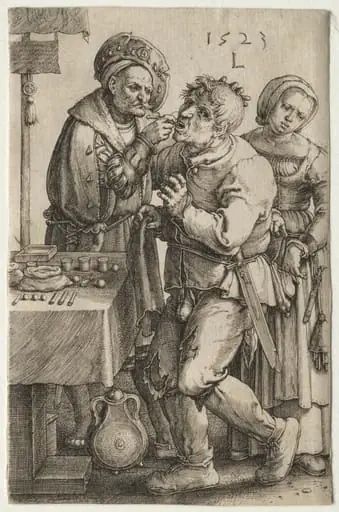
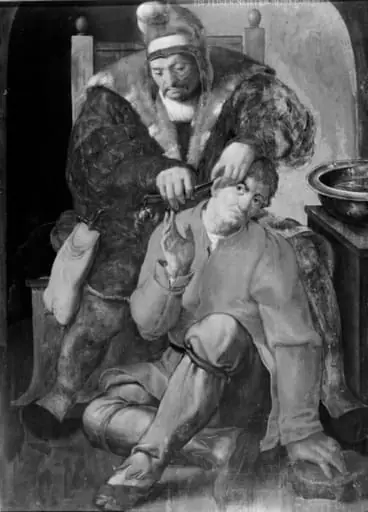
'Removing the Rocks in the Head' is an unspecified painting by the Mannerist artist Unknown. It dates from 1550 and is held in the collection of the Rijksmuseum. A painted scene depicts a man bound to a chair while another removes a stone from his skull.
About this work
Overview
Around the central action, loosely drawn, distorted figures swirl in sketchlike forms, suggesting a border of chaotic thought or idle invention.
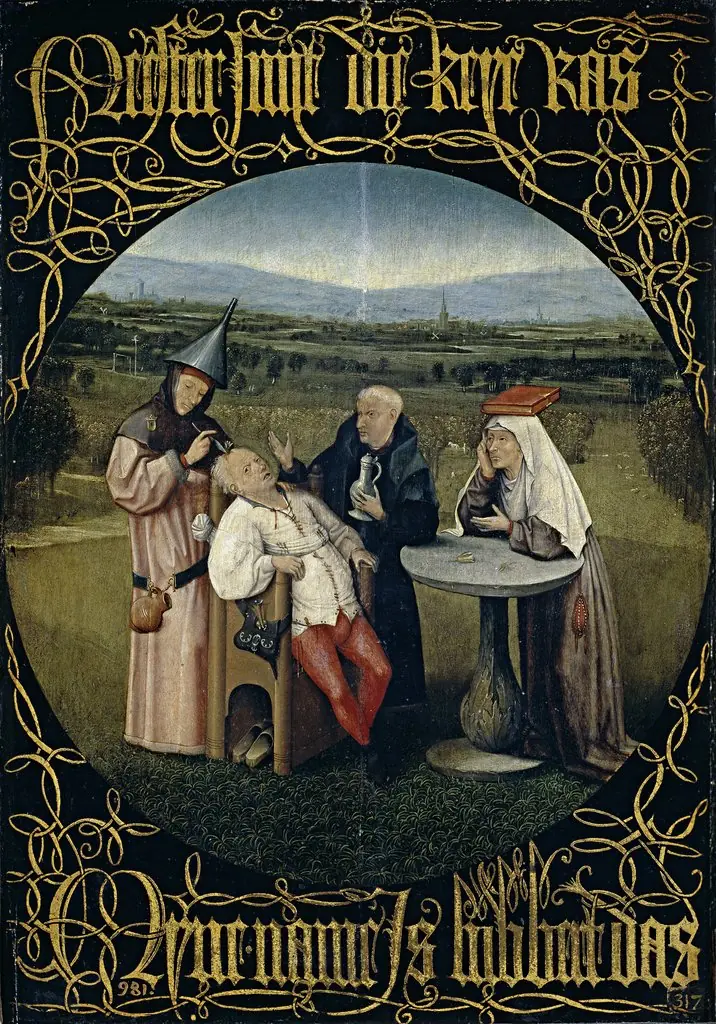
A painted scene depicts a man bound to a chair while another removes a stone from his skull. Onlookers sit at a nearby table, where the extracted rock rests as a curious object. Around the central action, loosely drawn, distorted figures swirl in sketchlike forms, suggesting a border of chaotic thought or idle invention. The composition blends clinical procedure with absurdity, evoking historical beliefs about mental illness.
Subject & Meaning
The image illustrates a discredited medical notion from pre-modern times: that madness resulted from a physical stone lodged in the head, removable by surgical means. The act of extraction is rendered with unsettling calm, contrasting the grotesque figures encircling it. These surrounding forms may symbolize the irrationality the procedure claims to cure, or reflect the artist’s skepticism toward such practices.
Technique & Style
The central scene is rendered with precise, almost illustrative detail, while the surrounding figures are sketched rapidly in ink-like lines, appearing spontaneous or unfinished. The contrast between the focused operation and the chaotic periphery creates visual tension. The palette is restrained, emphasizing form over color, and the scribbled borders suggest a draft-like quality, as if the artist was exploring ideas beyond the main subject.
History & Provenance
The painting originates from a period when folk medicine and early scientific thought coexisted uneasily. It likely stems from a tradition of satirical or didactic imagery, common in Northern European art of the 16th to 18th centuries. Its provenance traces to private collections in the Netherlands, where such grotesque medical scenes were collected as curiosities rather than serious medical records.
Context
During the early modern era, beliefs in physical causes for mental disorders persisted despite growing anatomical knowledge. Depictions of stone removal were both literal and metaphorical, appearing in prints and paintings as warnings, jokes, or critiques of quackery. This work aligns with a broader visual culture that used bodily absurdity to question authority, whether medical, religious, or social.
Legacy
The painting survives as a quiet artifact of outdated medical thought, preserved not for its technique but for its testimony to historical misunderstandings of the mind. Its sketchy margins invite interpretation as artistic improvisation or subconscious commentary. Today, it is studied less as art and more as a window into how societies once visualized mental illness.
Artist & collection

 Domestic Scene
 Giacomo and Cardinal Marco, investing Andrea, Abbot of San Zeno, with his Benefice
 The Nymph of Fontainebleau
 Portrait of a Woman
 Madonna and Child with Saints in the Enclosed Garden
 Venus and Minerva
 Family Group of Four on Sofa
 Wall painting from Room H of the Villa of P. Fannius Synistor at Boscoreale