Artwork
Salaga Raga
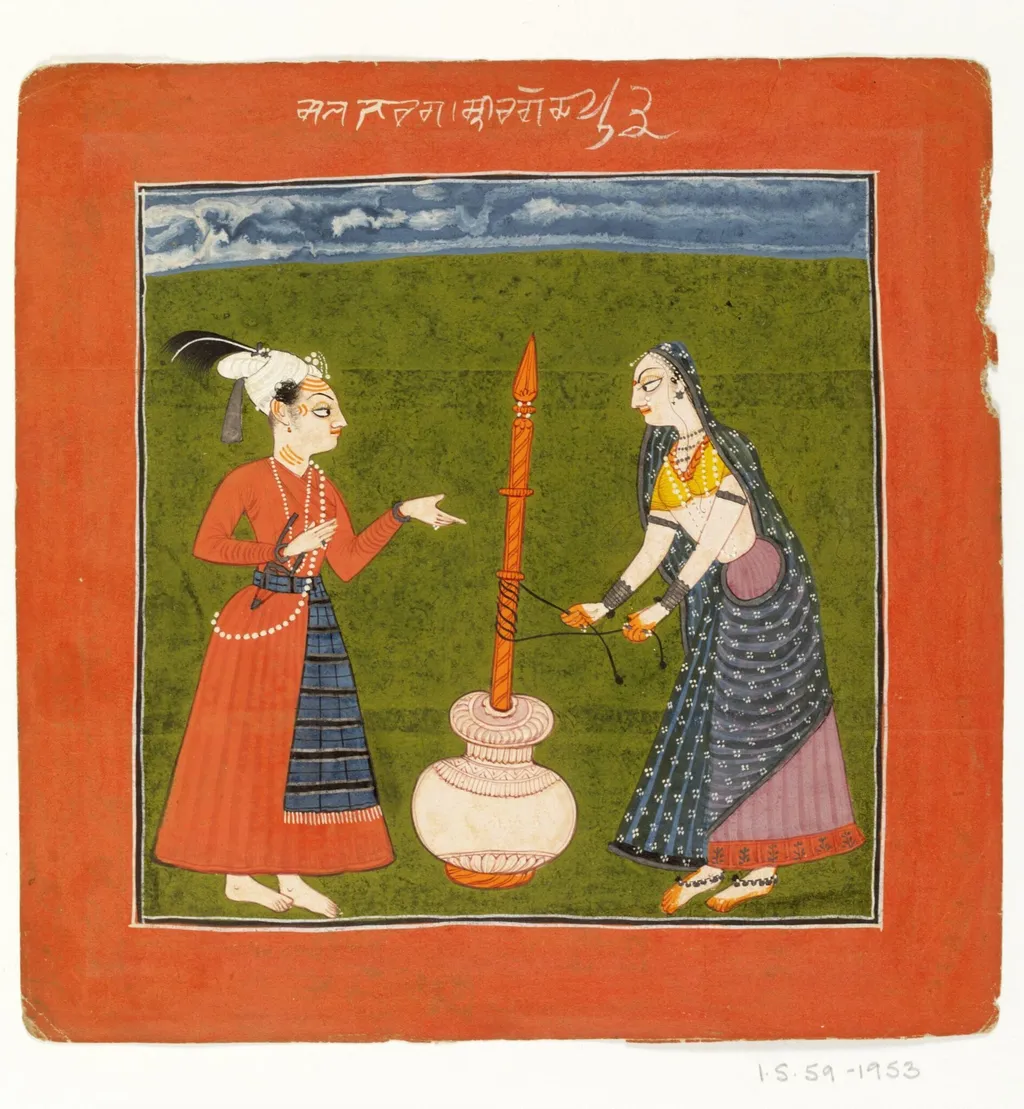
Salaga Raga is a paint painting by the Baroque artist Unknown. It dates from 1700 and is held in the collection of the Victoria and Albert Museum.
About this work
Overview
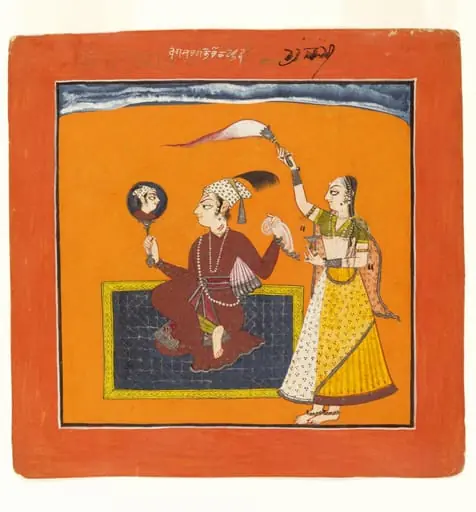
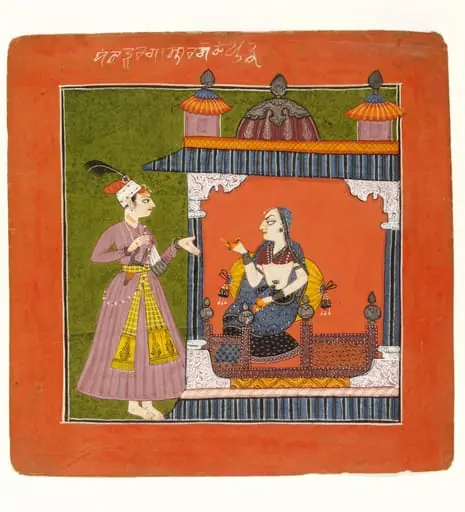
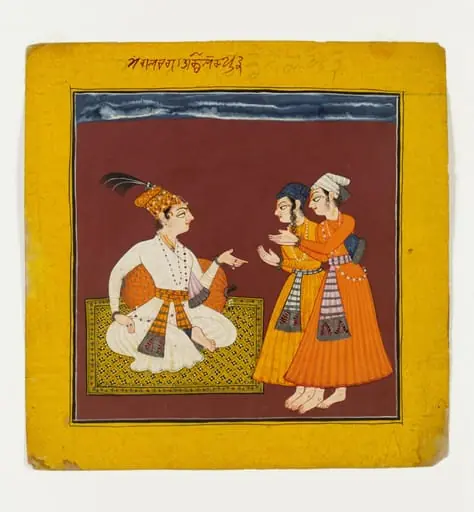
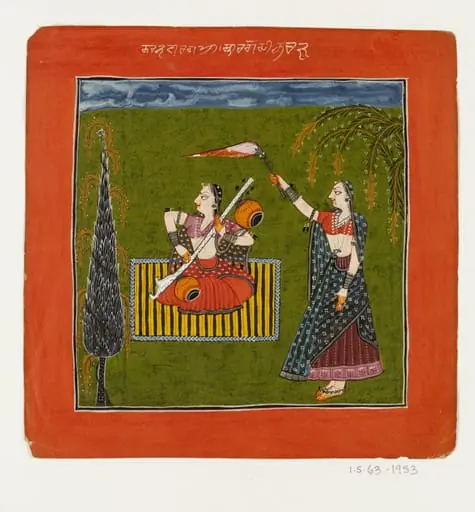
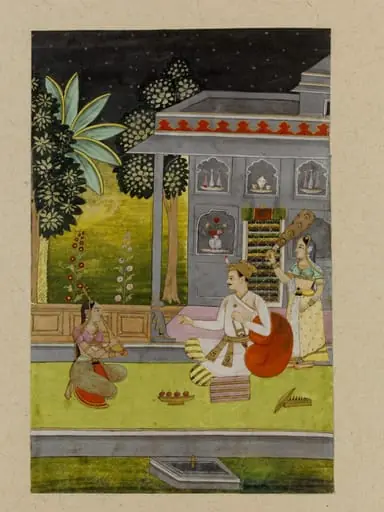
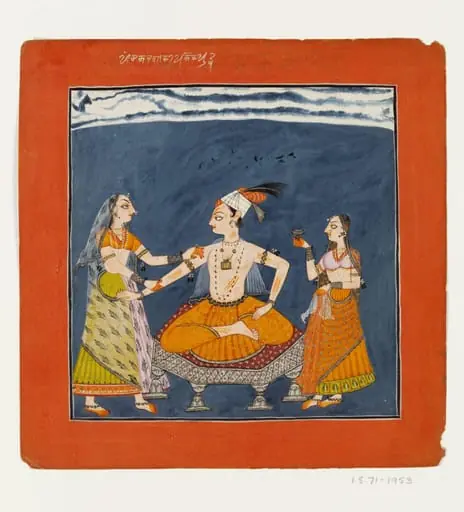
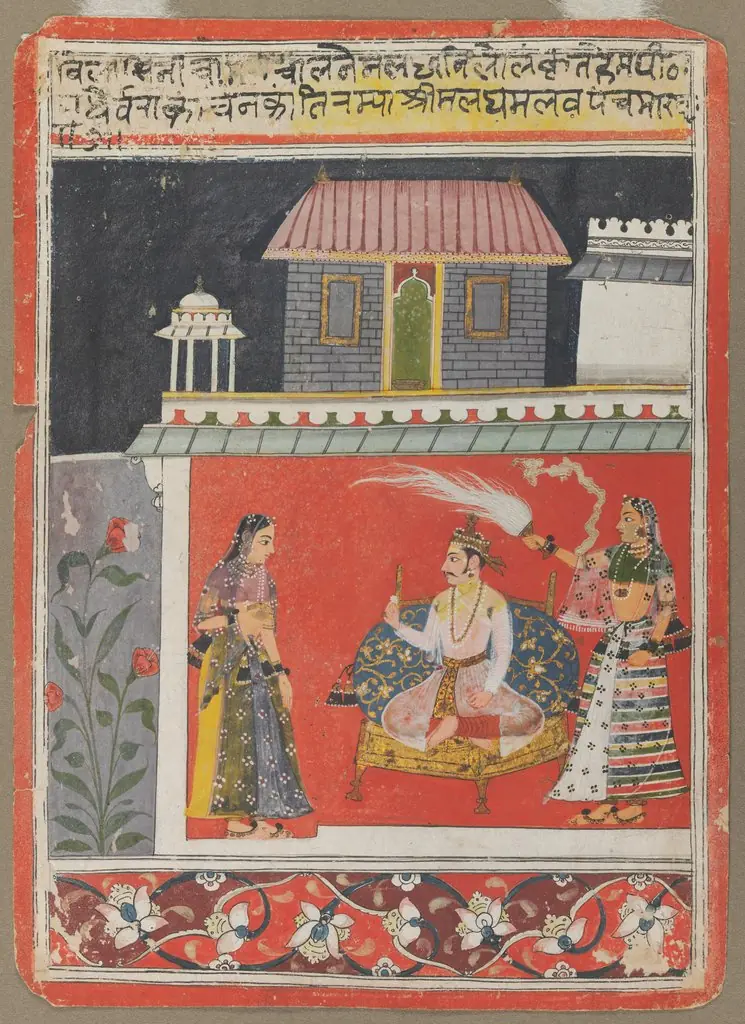
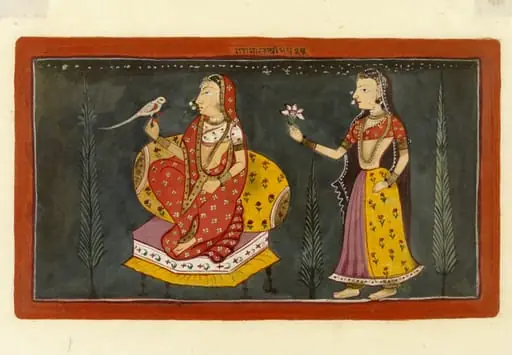
Salaga Raga is an opaque water‑colour painting on paper dated to the early eighteenth century. The work illustrates a scene from the Ragamala tradition, visualising the musical mode of the same name. Set in a grassy landscape, a princely figure in a red robe stands beside a woman in a blue sari, both positioned around a large white butter‑churning pot.
Subject & Meaning
The composition portrays a prince and a female attendant engaged in the ritual of butter‑churning, an activity associated with courtly leisure and symbolic fertility in South Asian culture. By linking this domestic scene to the Salaga Raga, the image suggests a synesthetic connection between visual narrative and the emotional character of the musical mode.
Technique & Style
Executed in opaque water‑colour, the artist employs vivid pigments that contrast sharply with the green field background. The red and blue garments are rendered with fine brushwork, while the white pot and decorative turban provide highlights. The use of a South‑Asian script title at the top reinforces the work’s textual and musical references.
History & Provenance
The painting entered the modern market as part of the collection of Michael Rothenstein, a noted British artist and collector. It was subsequently purchased by the institution catalogued as IS.46 to 73‑1953 for a sum of £300, marking its transition into a public holding.
Context
Ragamala paintings traditionally visualise musical modes as allegorical scenes, a practice that flourished in the Mughal and Rajput courts. Salaga Raga fits within this genre, reflecting the period’s interest in integrating music, poetry, and visual art to convey nuanced emotional states.
Artist & collection

 Domestic Scene
 Giacomo and Cardinal Marco, investing Andrea, Abbot of San Zeno, with his Benefice
 The Nymph of Fontainebleau
 Portrait of a Woman
 Madonna and Child with Saints in the Enclosed Garden
 Venus and Minerva
 Family Group of Four on Sofa
 Wall painting from Room H of the Villa of P. Fannius Synistor at Boscoreale