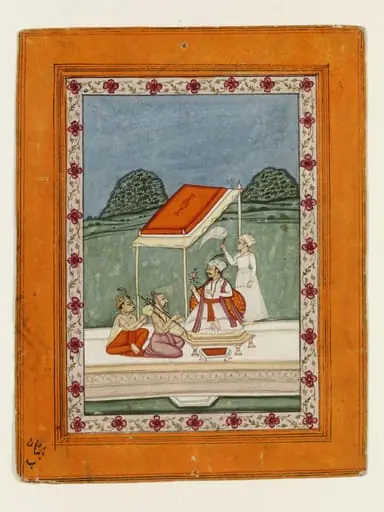
Artwork
Dipaka Raga
Dipaka Raga is a paint painting by the Baroque artist Unknown. It dates from 1690 and is held in the collection of the Victoria and Albert Museum.
About this work
Overview
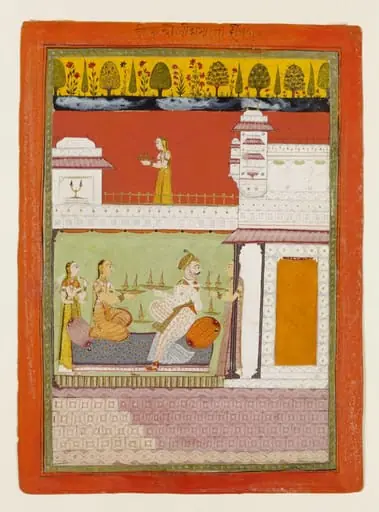
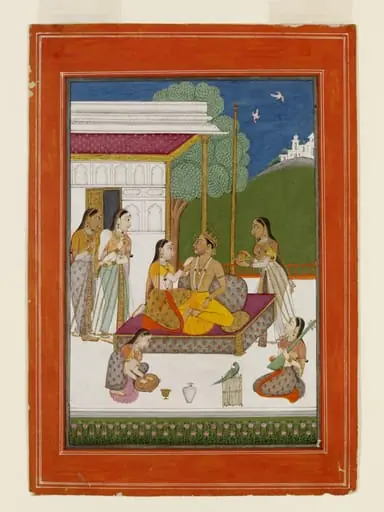
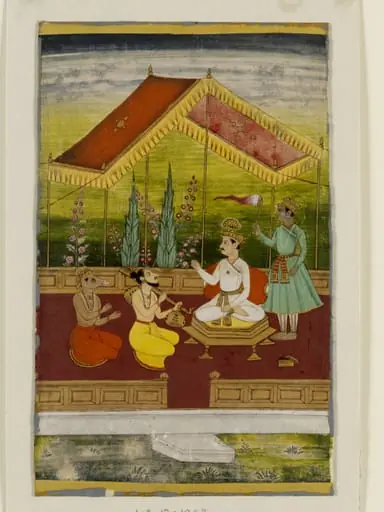
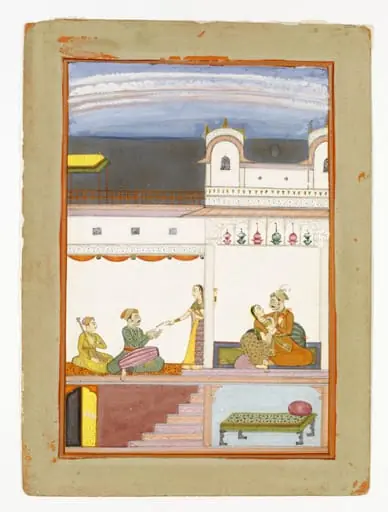
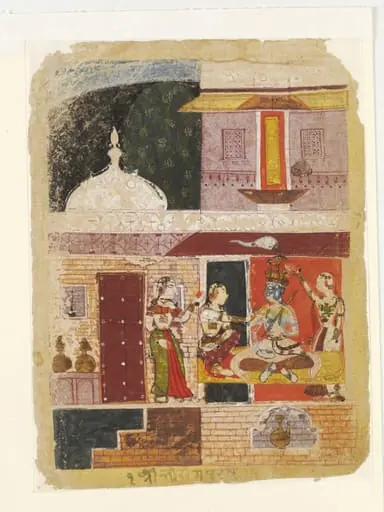
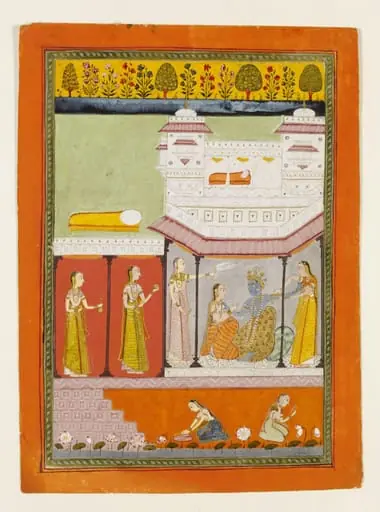
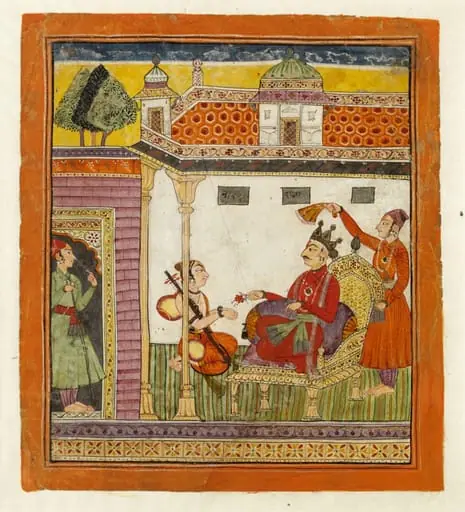
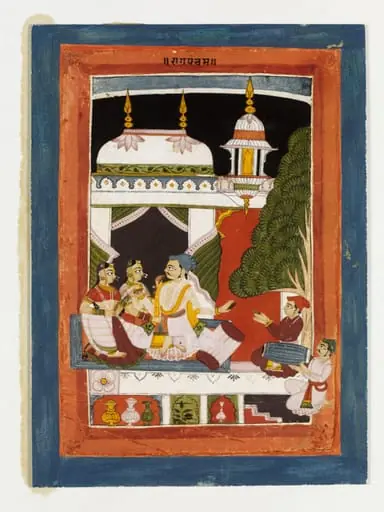
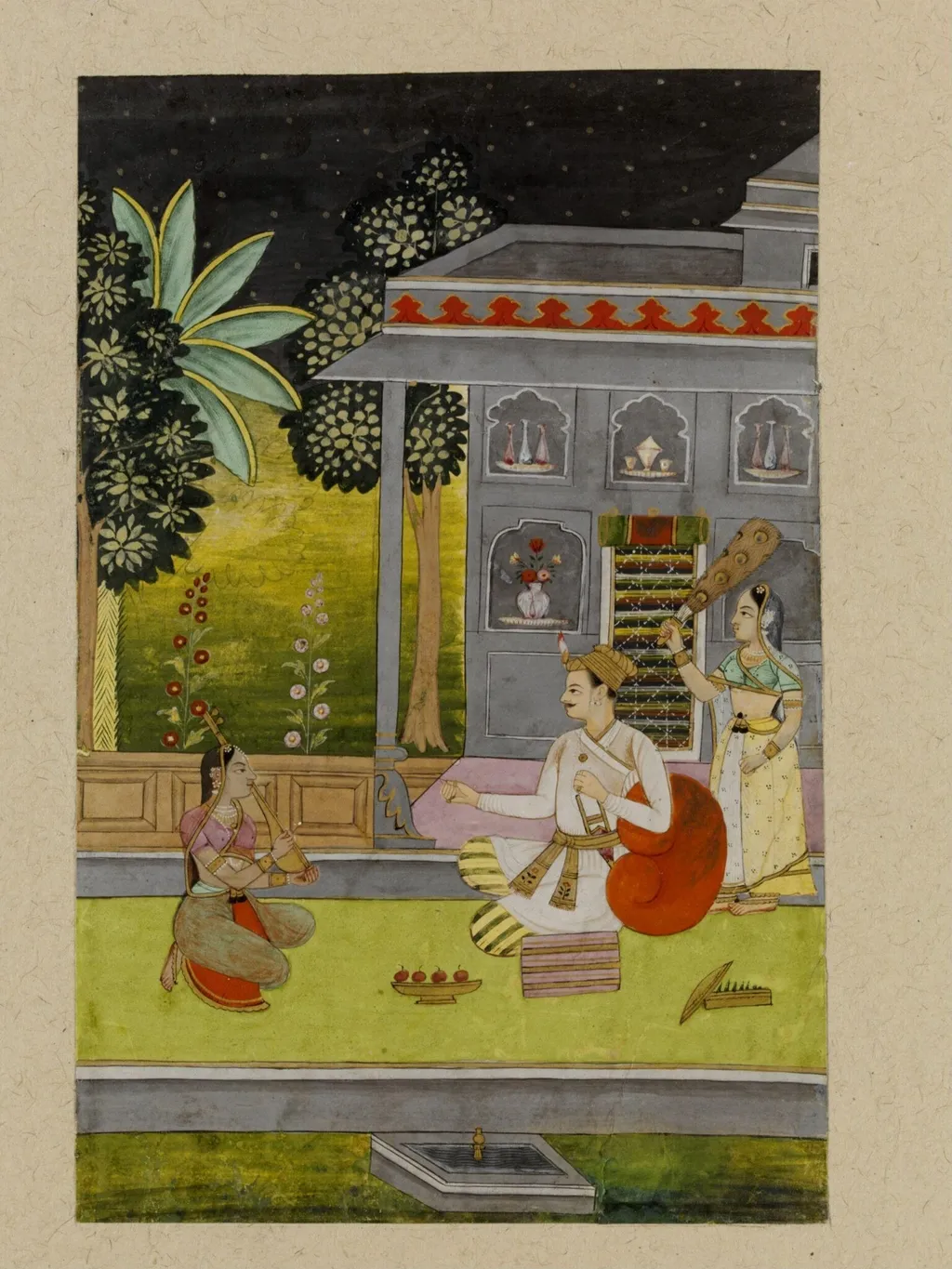
Created in 1690, this opaque water‑colour on paper belongs to the Ragamala tradition, a series of visual representations of Indian musical modes. The work is titled Dipaka Raga, a composition associated with the element of fire, and portrays a courtly scene that embodies the mood of the raga.
Subject & Meaning
At the centre sits a princely figure dressed in a white garment with a gold‑embellished turban that bears a lit candle, a symbolic reference to the fire element. To his right a female musician holds a long, rounded‑bodied instrument, while a second woman on his left plays a flute and fans the prince, together evoking the lyrical and rhythmic qualities of the Dipaka mode.
Technique & Style
The painting employs opaque water‑colour pigments applied to paper, allowing for vivid, saturated hues of green, yellow, red and gray. Fine detailing is evident in the gold patterns of the prince’s attire and the delicate rendering of foliage and blossoms that frame the scene, characteristic of late‑17th‑century Indian courtly art.
History & Provenance
Dating to the late 17th century, the piece reflects the flourishing of Ragamala iconography in northern India during the Mughal period. While its precise ownership trail is not recorded, the work aligns with contemporaneous court commissions that paired visual art with musical theory.
Context
Dipaka Raga belongs to a larger corpus of paintings that translate musical scales into visual narratives, a practice that linked auditory and visual aesthetics for aristocratic patrons. The inclusion of a candle‑lit turban and garden setting underscores the raga’s association with warmth, vitality, and the natural world.
Artist & collection

 Domestic Scene
 Giacomo and Cardinal Marco, investing Andrea, Abbot of San Zeno, with his Benefice
 The Nymph of Fontainebleau
 Portrait of a Woman
 Madonna and Child with Saints in the Enclosed Garden
 Venus and Minerva
 Family Group of Four on Sofa
 Wall painting from Room H of the Villa of P. Fannius Synistor at Boscoreale