Artwork
Sambara
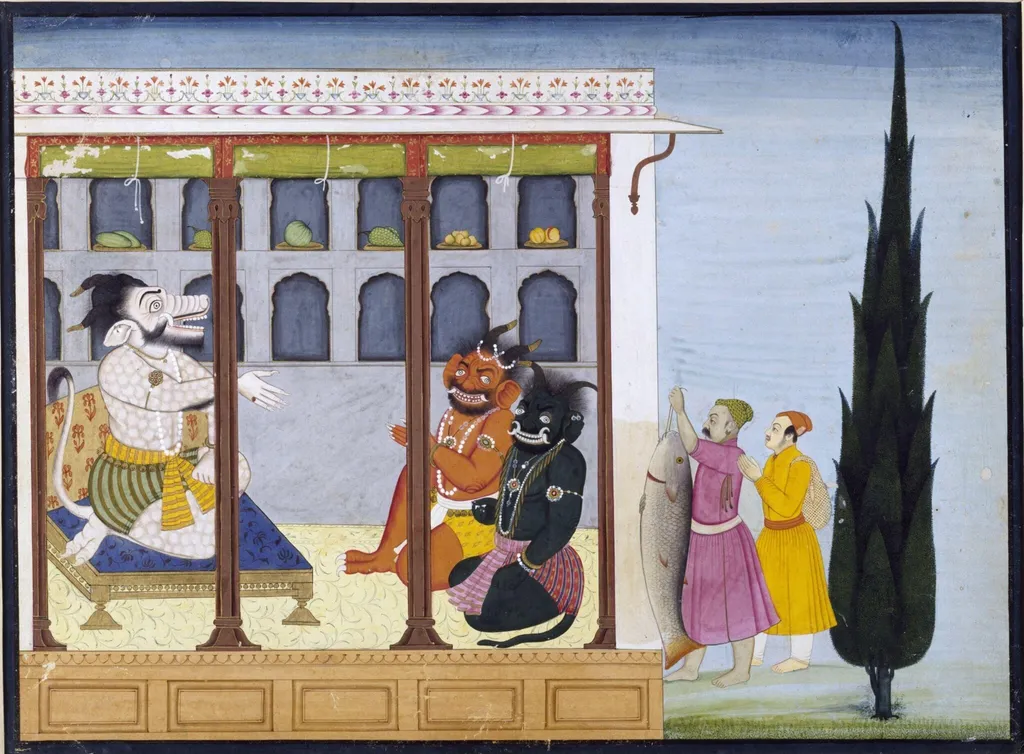
Sambara is a paint painting by the Rococo painting artist Unknown. It dates from 1760 and is held in the collection of the Victoria and Albert Museum.
About this work
Overview
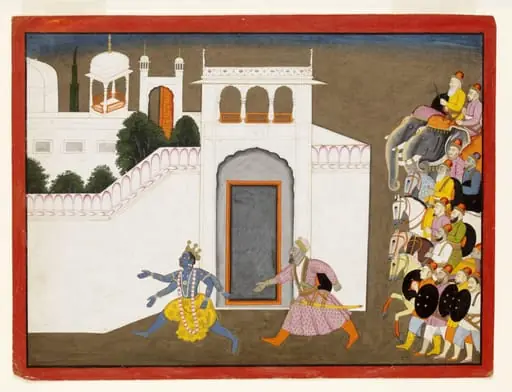
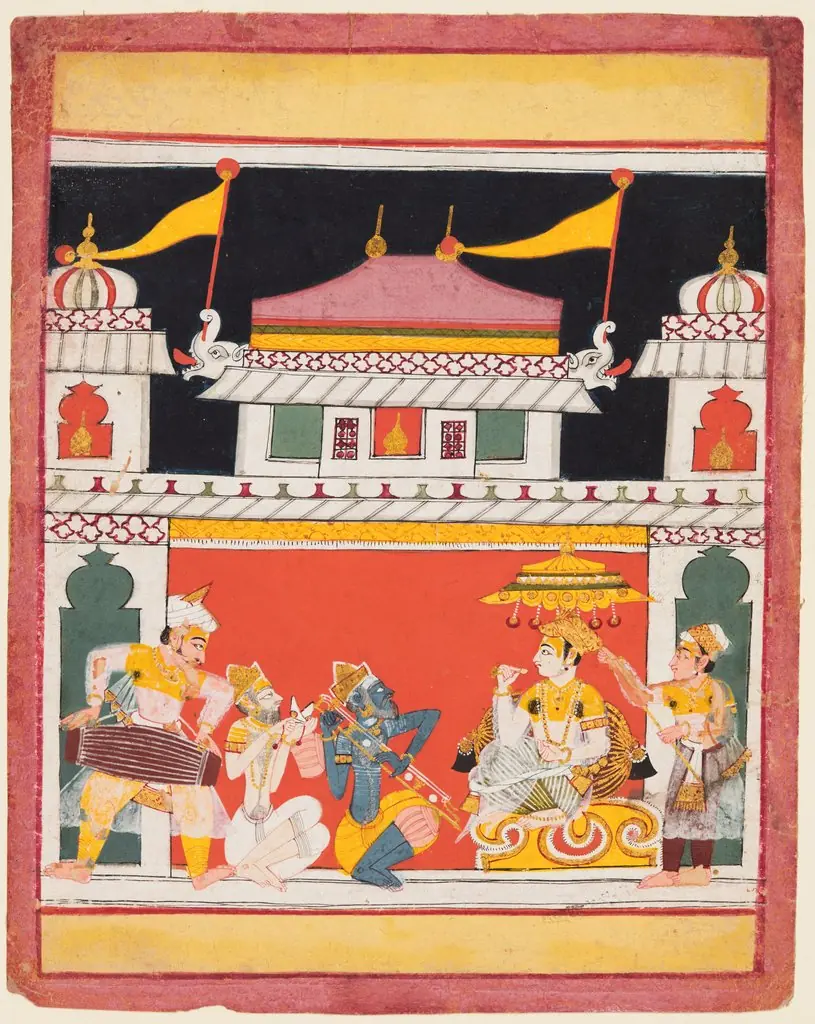
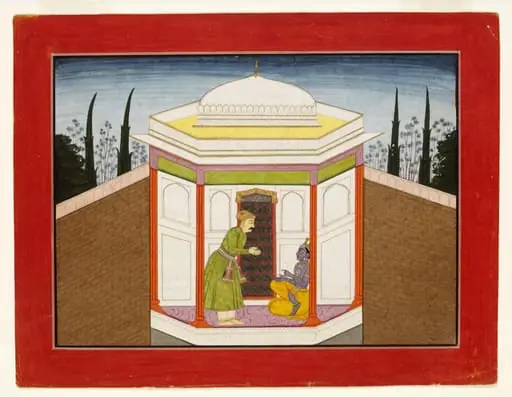
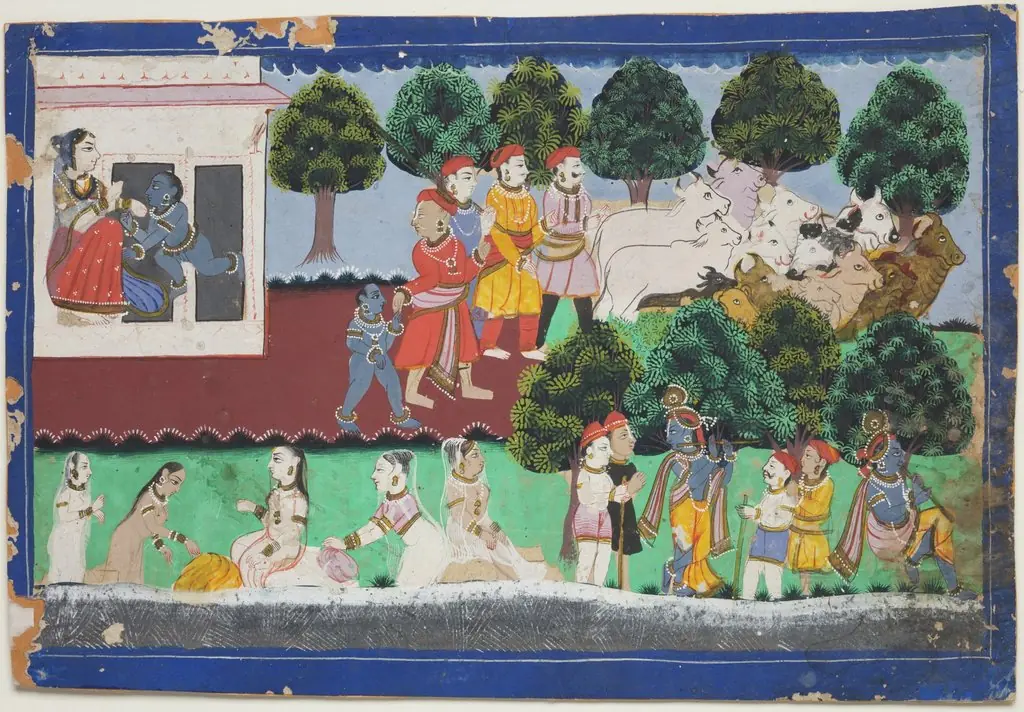
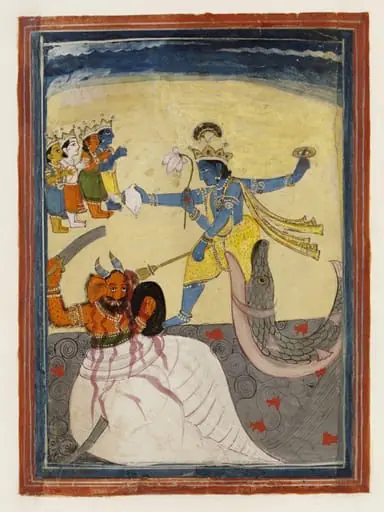
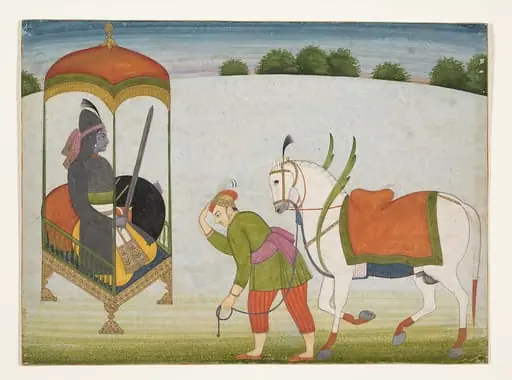
Sambara is a painting from a series illustrating the Bhagavata Purana, specifically depicting a narrative from the life of Krishna. The work focuses on a pivotal moment involving Shambara, a demon king, and Pradyumna, Krishna's son.
Subject & Meaning
The painting illustrates a dramatic episode where Shambara, attempting to thwart a prophecy, seizes Pradyumna and prepares to kill him. The scene captures Shambara's apprehension as he holds the infant over a bowl of water, reflecting the tension between fate and action.
Technique & Style
Executed against a plain background, the composition emphasizes Shambara, clad in a dark robe, highlighting his emotional state through facial expression. The simplicity of the setting contrasts with the intensity of the moment, characteristic of illustrations from Hindu texts.
History & Provenance
Originally part of a Bhagavata Purana illustration series, specific details on the painting's creation date, artist, and early ownership are not provided. Its style suggests adherence to traditional Indian manuscript illustration techniques.
Context
The Bhagavata Purana's tenth book, which this painting illustrates, is revered for its detailed narratives about Krishna. The story of Shambara and Pradyumna illustrates the inevitability of prophecy fulfillment in Hindu mythology.
Legacy
As part of a larger illustrative series of the Bhagavata Purana, Sambara contributes to the visual heritage of Hindu mythological storytelling. Similar works can be found in collections like the Victoria and Albert Museum, highlighting the enduring interest in such illustrations.
Artist & collection

 Domestic Scene
 Giacomo and Cardinal Marco, investing Andrea, Abbot of San Zeno, with his Benefice
 The Nymph of Fontainebleau
 Portrait of a Woman
 Madonna and Child with Saints in the Enclosed Garden
 Venus and Minerva
 Family Group of Four on Sofa
 Wall painting from Room H of the Villa of P. Fannius Synistor at Boscoreale