Artwork
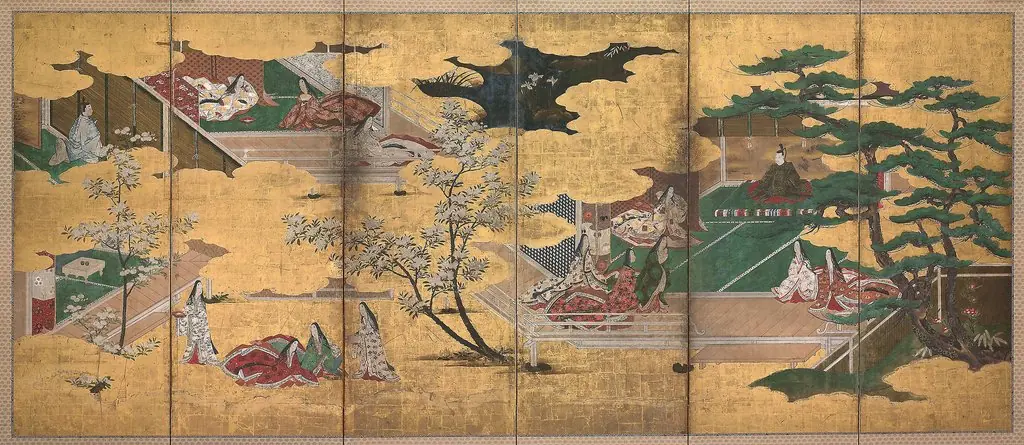
Scenes from the Tale of Genji
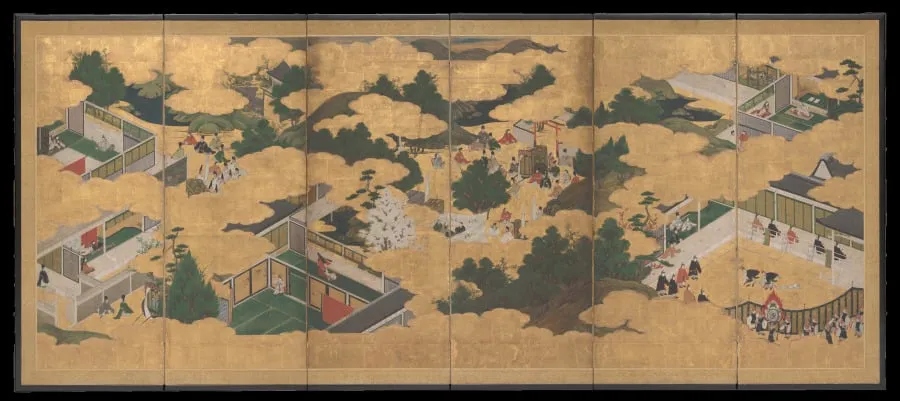
Scenes from the Tale of Genji is an unspecified painting by the Baroque artist Unknown. It dates from 1704 and is held in the collection of the Cleveland Museum of Art.
About this work
You see a gold folding screen with tiny figures in silk robes moving through gardens and palace halls.
You see a gold folding screen with tiny figures in silk robes moving through gardens and palace halls.
This screen was made in the 1700s to illustrate Japan’s oldest novel, written 700 years earlier. The book follows Prince Genji’s many love affairs and the quiet feelings of the women around him. The artist never signed the work—folding screens were often made to be moved, not kept forever.
To see more art from the same time, look up japan, edo period (1615–1868).
Overview
This six-panel folding screen, painted on gold‑leafed paper, depicts a series of miniature figures in silk attire moving through stylised gardens and palace interiors. The work dates from the eighteenth century and visually narrates episodes from the classic Japanese novel, The Tale of Genji.
Subject & Meaning
The scenes illustrate key moments from Murasaki Shikibu’s eleventh‑century narrative, focusing on the romantic exploits of the aristocratic protagonist, often called the Shining Prince, and the subtle emotional currents experienced by the women surrounding him. The imagery emphasizes the courtly elegance and transient nature of love in Heian society.
Technique & Style
Executed in the traditional byōbu format, the screen combines gold background with delicate brushwork and fine pigments to render the figures and architectural details. The use of silk‑patterned costumes and precise line work reflects Edo‑period aesthetic conventions for narrative screens, intended for both visual pleasure and functional partitioning.
History & Provenance
Created in the 1700s, the screen remains unsigned, a common practice for portable decorative objects meant to be rearranged rather than preserved as singular artworks. Its provenance traces back to Edo‑period workshops that produced similar literary-themed screens for aristocratic and merchant patrons.
Context
Folding screens served as temporary room dividers in the open‑plan interiors of Japanese homes and teahouses, allowing flexible spatial organization. During the Edo era, literary subjects such as The Tale of Genji were popular motifs, linking contemporary visual culture with the revered literary heritage of the Heian court.
Artist & collection

 Domestic Scene
 Giacomo and Cardinal Marco, investing Andrea, Abbot of San Zeno, with his Benefice
 The Nymph of Fontainebleau
 Portrait of a Woman
 Madonna and Child with Saints in the Enclosed Garden
 Venus and Minerva
 Family Group of Four on Sofa
 Wall painting from Room H of the Villa of P. Fannius Synistor at Boscoreale
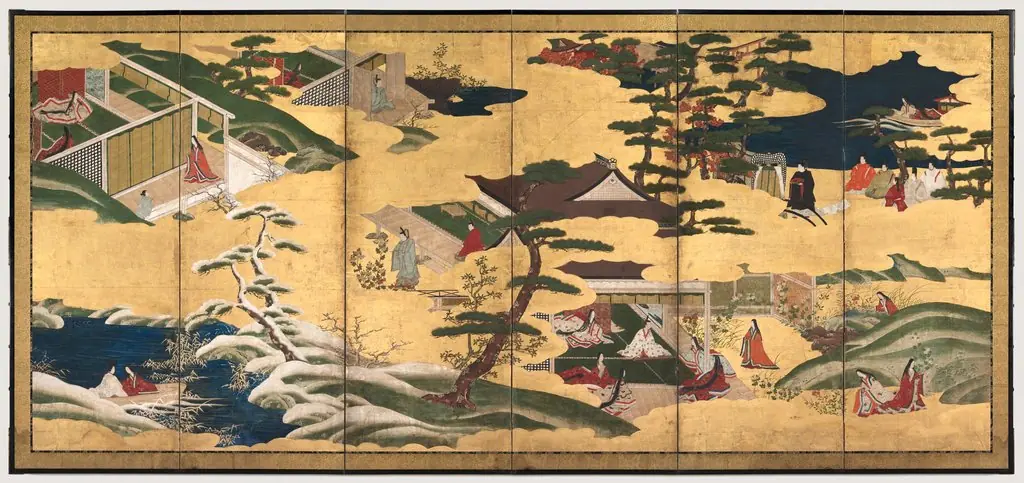 Scenes from the Tale of Genji
 Scenes from the Tale of Genji
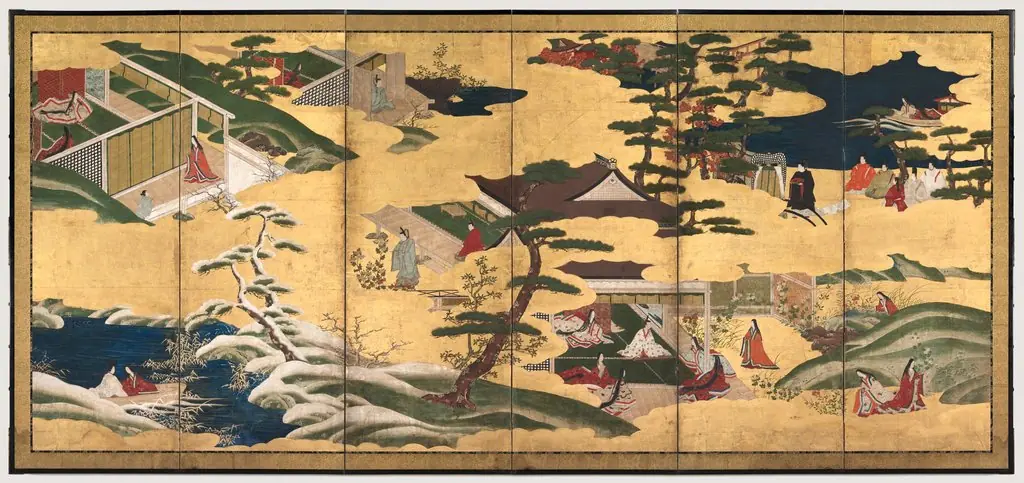 Scenes from the Tale of Genji
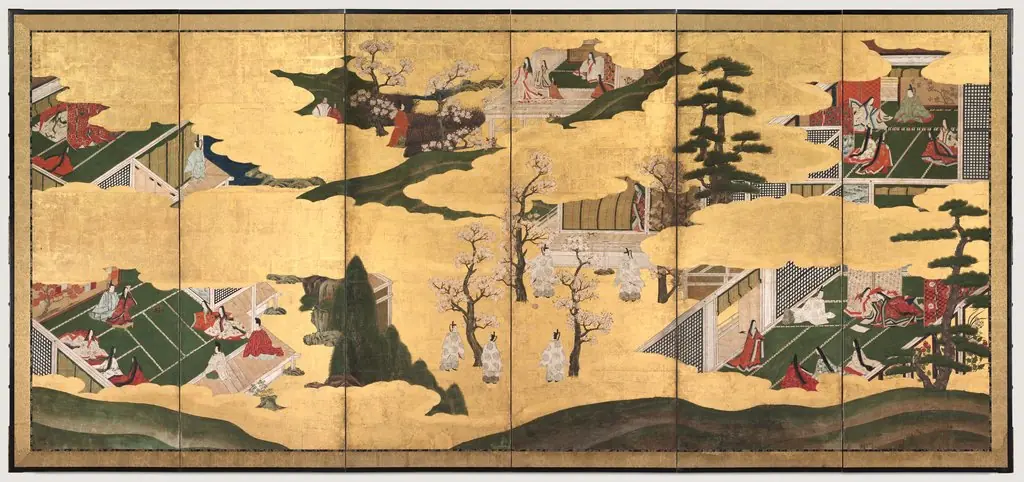 Scenes from the Tale of Genji
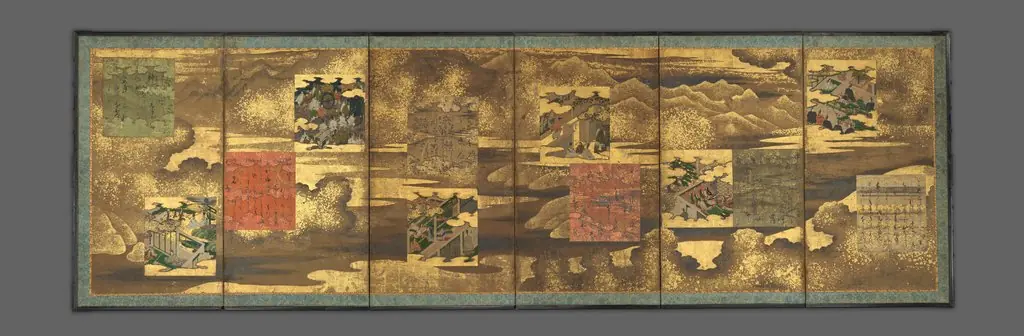 Tale of Genji Screen (Genji monogatari zu shikishi harimaze byōbu)
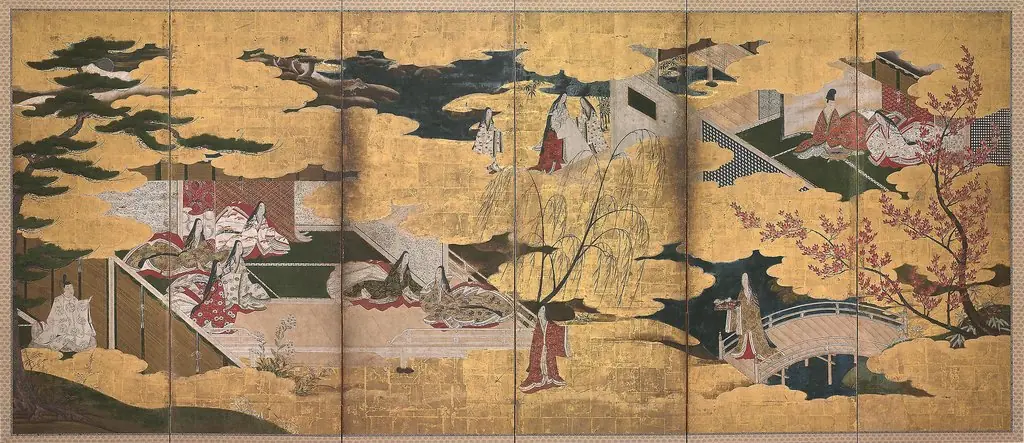 The Tale of Genji
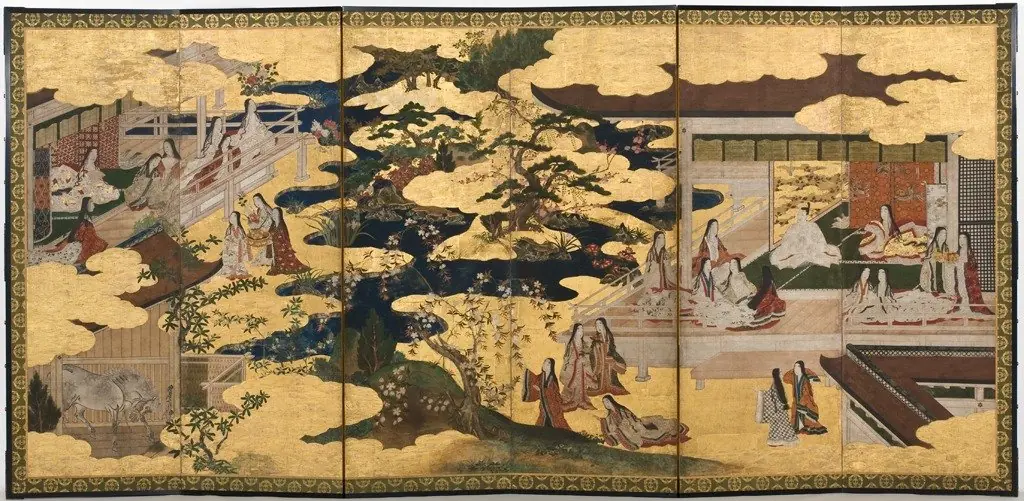 Scene from "The Tale of Genji": from the chapter "The Maiden"
 The Tale of Genji
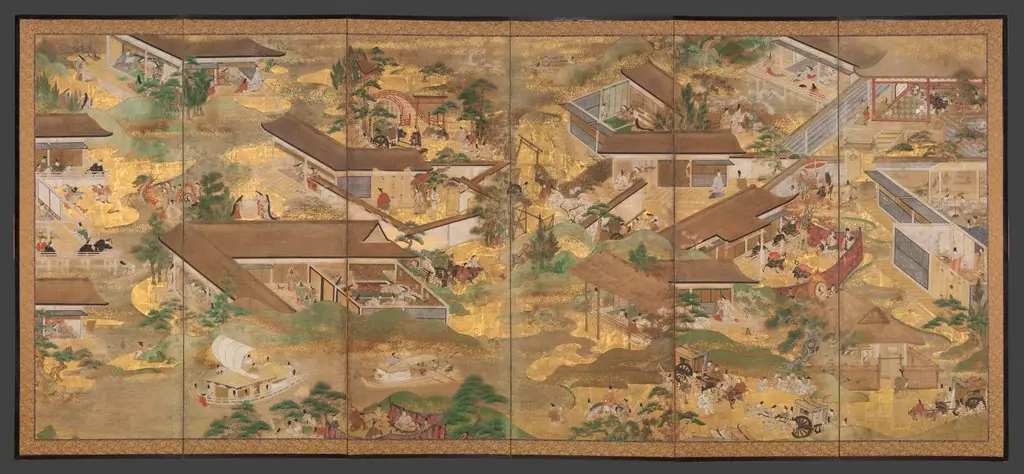 Fifty-Four Scenes from The Tale of Genji
 The Tale of Taishokan