Artwork
Scenic View of Suzhou
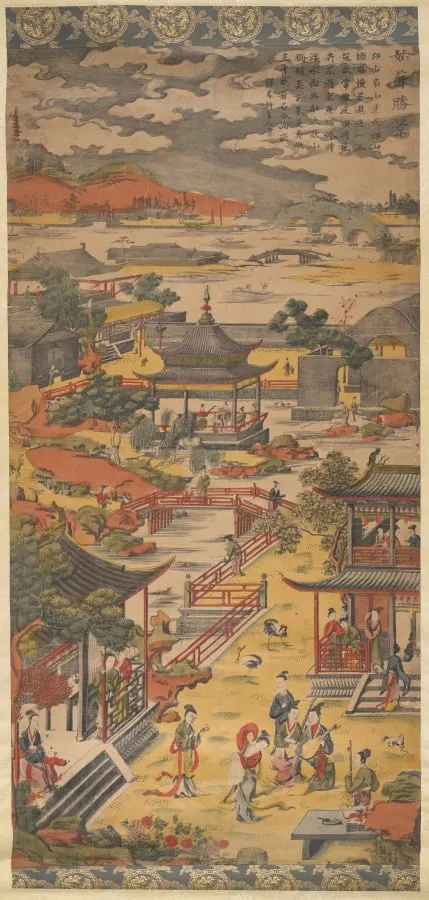
Scenic View of Suzhou is a print by the Baroque artist Unknown. It dates from 1766 and is held in the collection of the Cleveland Museum of Art.
About this work
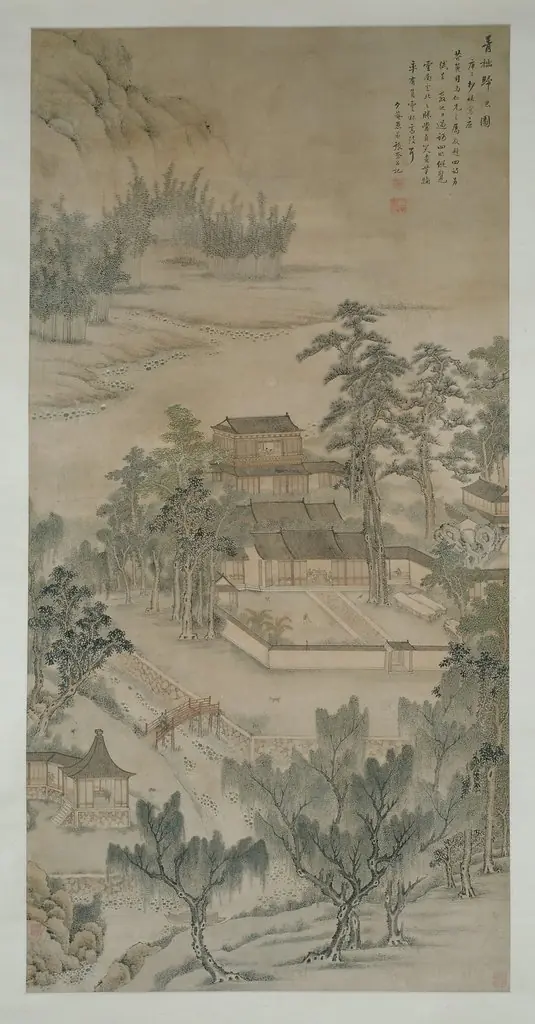
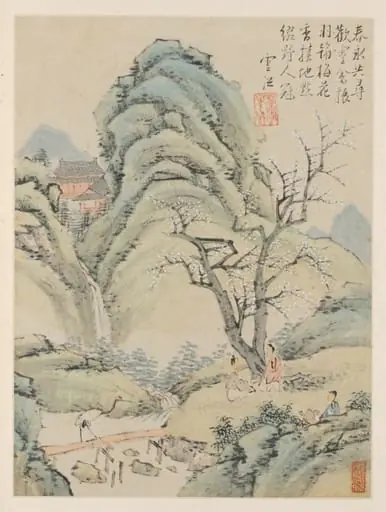
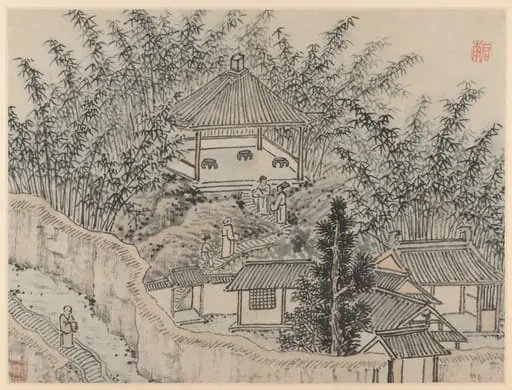
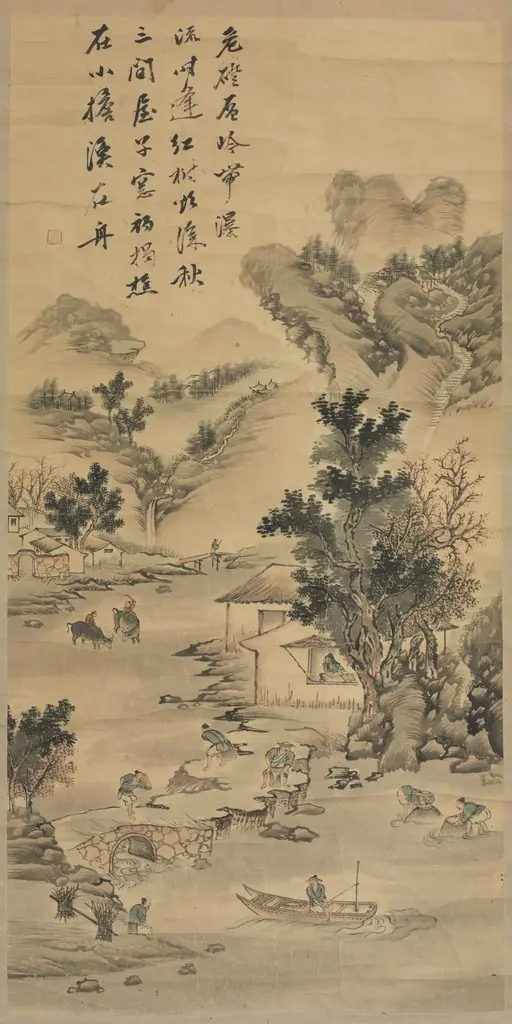
You see a busy street in Suzhou: canals, arched bridges, and tiny figures going about their day under willow trees.
You see a busy street in Suzhou: canals, arched bridges, and tiny figures going about their day under willow trees.
This painting is actually a woodblock print—carved, inked, and pressed like a giant stamp. In the 1700s, prints like this were sold cheaply and hung in homes, almost like posters today. The artist’s name is lost, but the scene feels alive because it was made for regular people, not just palaces.
Look up qing dynasty (1644–1911) to see more of these everyday Chinese scenes.
Overview
This woodblock print depicts a bustling urban scene in Suzhou during the Qing dynasty, capturing daily life along canals and under willow trees. Produced in the 17th or 18th century, it belongs to a growing tradition of affordable, single-sheet color prints that moved beyond elite illustrated books to become common household decorations. The artist remains anonymous, reflecting its origins in commercial printmaking rather than courtly patronage.
Subject & Meaning
The print portrays ordinary urban activity—figures crossing arched bridges, boats navigating narrow waterways, and pedestrians moving beneath trees. These elements convey a sense of routine vitality, not idealized landscapes. The scene was likely intended to evoke familiarity and local pride, offering viewers a mirror of their own environment rather than a distant fantasy. Its accessibility made it a part of everyday visual culture.
Technique & Style
Created using multi-block woodcut printing, the image combines hand-carved wooden plates with water-based inks to achieve subtle color gradations. Lines are crisp yet fluid, defining architecture and figures with economy. The composition is crowded but orderly, with perspective flattened to suit the medium’s constraints. This method allowed mass production, making the print both visually rich and economically viable for widespread distribution.
History & Provenance
Produced in the Jiangnan region—centered on Suzhou, Hangzhou, and Nanjing—these prints emerged as urban consumer goods during the late Ming and early Qing dynasties. Unlike earlier illustrated texts meant for scholars, these sheets were sold cheaply in markets and displayed in homes. Few early examples survive intact, but records and fragments confirm their popularity among merchants and artisans, not just the elite.
Context
Suzhou was a hub of textile production and literacy, fostering a thriving print industry. As urban populations grew, so did demand for affordable art that reflected local life. These prints coincided with rising literacy and commercial activity, forming part of a broader visual culture that included calendars, advertisements, and folk imagery. They represent a shift from aristocratic to civic aesthetics in Chinese art.
Legacy
Though largely overlooked in traditional art histories, these prints laid groundwork for later popular imagery in China and influenced Japanese ukiyo-e. Their emphasis on everyday scenes and mass production anticipated modern visual media. Today, surviving examples are valued not for artistic fame but as documents of urban life, offering insight into the visual habits of non-elite communities in early modern China.
Artist & collection

 Domestic Scene
 Giacomo and Cardinal Marco, investing Andrea, Abbot of San Zeno, with his Benefice
 The Nymph of Fontainebleau
 Portrait of a Woman
 Madonna and Child with Saints in the Enclosed Garden
 Venus and Minerva
 Family Group of Four on Sofa
 Wall painting from Room H of the Villa of P. Fannius Synistor at Boscoreale