Artwork
Watching Geese at Lan-t'ing Pavilion

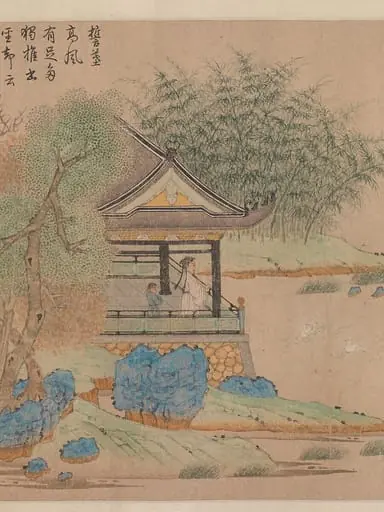
Watching Geese at Lan-t'ing Pavilion is an unspecified painting by the Song dynasty landscape artist Qian Xuan. It dates from 1280 and is held in the collection of the National Palace Museum.
About this work
Overview
Created around 1280 by Qian Xuan, a native of Huzhou in present‑day Zhejiang, this hanging scroll presents a quiet riverside tableau. The composition follows the Song‑era landscape idiom, arranging a modest pavilion, scattered foliage and a calm water surface to convey a moment of leisurely observation.
Subject & Meaning
Figures are positioned near the pavilion, their attention drawn to a flock of geese gliding over the water. The scene suggests a contemplative pastime, emphasizing harmony between humans and nature, a theme often explored in literati painting of the period.
Technique & Style
Qian Xuan employs delicate brushwork and subtle gradations of green, yellow and blue to model depth and atmosphere. Fine strokes render foliage and architectural details, while soft washes create a sense of misty distance, reflecting the refined aesthetic of late Song landscape practice.
History & Provenance
The work belongs to the collection of the National Palace Museum, where it is displayed as an example of the transitional art between the Song and Yuan dynasties. Qian Xuan, also known by the studio names Shun Ju and Yu Tan, produced this piece during a period of political change that influenced artistic expression.
Context
During the Song‑Yuan transition, many scholars turned to landscape painting as a vehicle for personal expression and moral reflection. This painting aligns with that tradition, using a serene natural setting to convey a quiet, introspective mood typical of literati culture.
Artist & collection

Artist
Qian Xuan (simplified Chinese: 钱选; traditional Chinese: 錢選; pinyin: Qián Xuǎn; Wade–Giles: Ch'ien Hsüan; 1235–1305), courtesy name Shun Ju (舜举), pseudonyms Yu Tan (玉潭, "Jade Pool"), Xi Lanweng (习嬾翁), and Zha Chuanweng…

 Autumn Boating on a Maple River
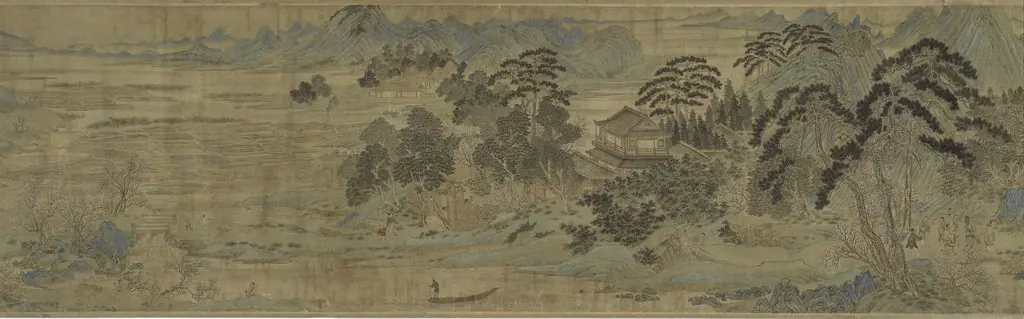 The Peach Blossom Spring
 The Peach Blossom Spring 桃花源圖
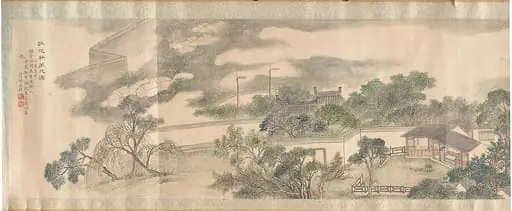 清 楊天壁 敬芝軒第貳圖 卷|Second View of the Studio for Respecting the Fungus of Longevity
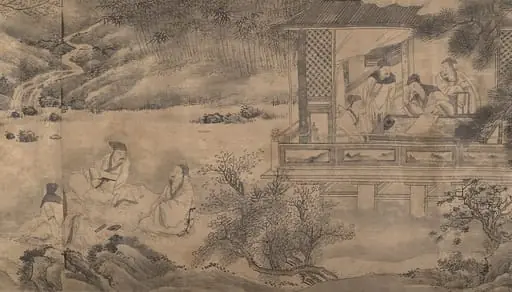 Untitled
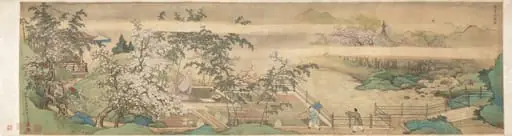 Cleansing Medicinal Herbs in the Stream on a Spring Day
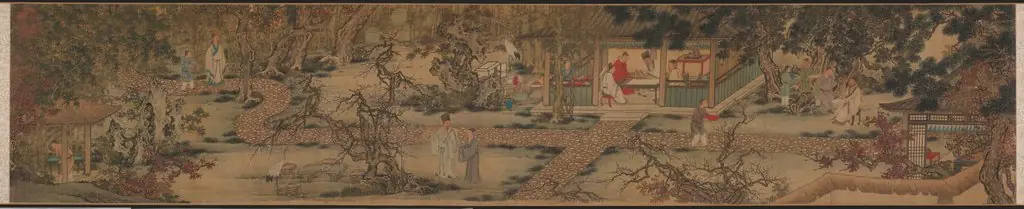 The Nine Elders of the Mountain of Fragrance
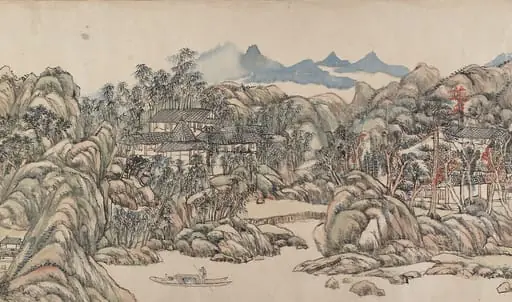 清 王原祁 輞川圖 卷|Wangchuan Villa
 Depiction of the Day of Spring Offering to the Gods