Artwork
Schiffbruch
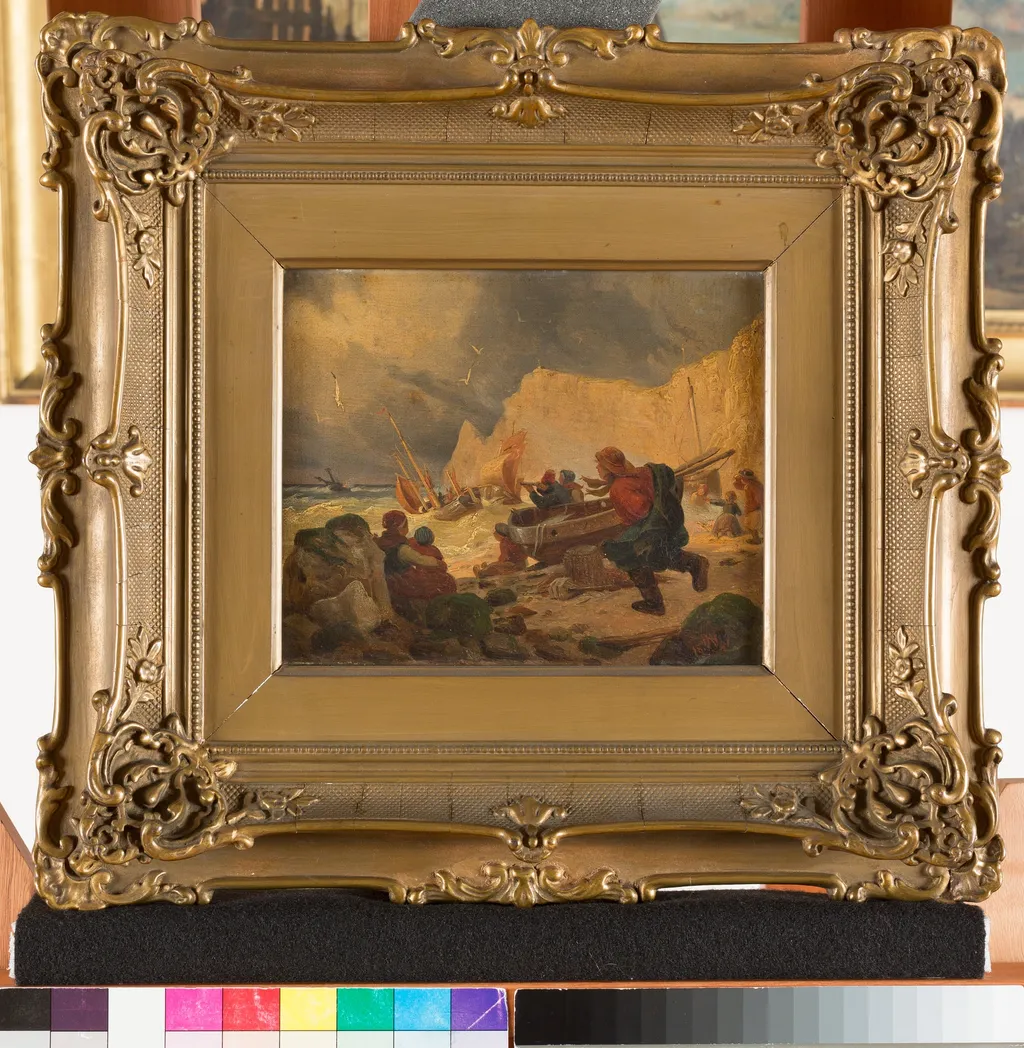
Schiffbruch is a drawing by Unknown. It dates from 1841 and is held in the collection of the Art Collection of the University Göttingen. This artwork presents a dramatic marine disaster through detailed graphic rendering.
About this work
A closer look reveals the intricate details of the drawing, including the textures of the rocks and the expressions on the faces of the people.
This painting depicts a dramatic scene of a shipwreck on a rocky coastline. In the foreground, people are shown struggling to save themselves and their belongings from the wreckage. The scene is set against a backdrop of a stormy sea and sky, with the ship's mast broken and debris scattered everywhere.
A closer look reveals the intricate details of the drawing, including the textures of the rocks and the expressions on the faces of the people. The use of cross-hatching and stippling techniques adds depth and shading to the image, creating a sense of drama and tension.
The painting is a powerful depiction of a marine disaster, and it invites the viewer to explore the world of marine art. To learn more about this style, explore the works of artists who specialize in marine art, such as the Dutch Masters of the 17th century.
Overview
This artwork presents a dramatic marine disaster through detailed graphic rendering. A ship lies shattered against a rugged shore, with figures engaged in desperate survival efforts. The composition emphasizes chaos and fragility, framed by turbulent skies and churning waters. The absence of color and reliance on line work heighten the emotional intensity, focusing attention on human struggle amid natural force.
Subject & Meaning
The scene captures individuals in the immediate aftermath of shipwreck, clinging to fragments of the vessel and salvaging possessions. Their postures convey exhaustion, fear, and determination. The work does not idealize heroism but instead portrays vulnerability, reflecting the perilous reality of sea travel. The absence of rescue or hope suggests an indifferent natural world, underscoring themes of human fragility.
Technique & Style
The image employs cross-hatching and stippling to model form and atmosphere, creating texture in rocks, fabric, and water without pigment. These techniques generate contrast and depth through tonal variation, enhancing the sense of movement and tension. Fine linework renders facial expressions and debris with precision, grounding the drama in tangible detail rather than theatrical exaggeration.
History & Provenance
The work’s origin and creator remain undocumented in available records. It appears to be a standalone graphic piece, possibly from the 18th or early 19th century, given its stylistic approach. No exhibition history or collector lineage is established, suggesting it may have been produced as a private study or illustrative print rather than a commissioned work.
Context
Marine disasters were common in an era of sail-powered trade and exploration, and such scenes often served as cautionary or documentary imagery. This piece aligns with a broader tradition of maritime illustration that prioritized realism over myth. Its focus on individual suffering reflects a shift toward human-centered narratives in visual culture during periods of expanding global navigation.
Legacy
Though not widely known or reproduced, the work contributes to a quiet archive of maritime visual records that document human encounters with the sea’s dangers. Its restrained aesthetic and technical discipline offer insight into pre-photographic methods of capturing crisis, preserving the emotional weight of everyday maritime tragedies without embellishment.
Artist & collection
Museum
Art Collection of the University Göttingen
Continue through works from the same source collection.
 Domestic Scene
 Giacomo and Cardinal Marco, investing Andrea, Abbot of San Zeno, with his Benefice
 The Nymph of Fontainebleau
 Portrait of a Woman
 Madonna and Child with Saints in the Enclosed Garden
 Venus and Minerva
 Family Group of Four on Sofa
 Wall painting from Room H of the Villa of P. Fannius Synistor at Boscoreale
 Hjemvendende fiskere modtages på Hornbæk Strand
 The Shipwreck
 Kustlandschap bij storm
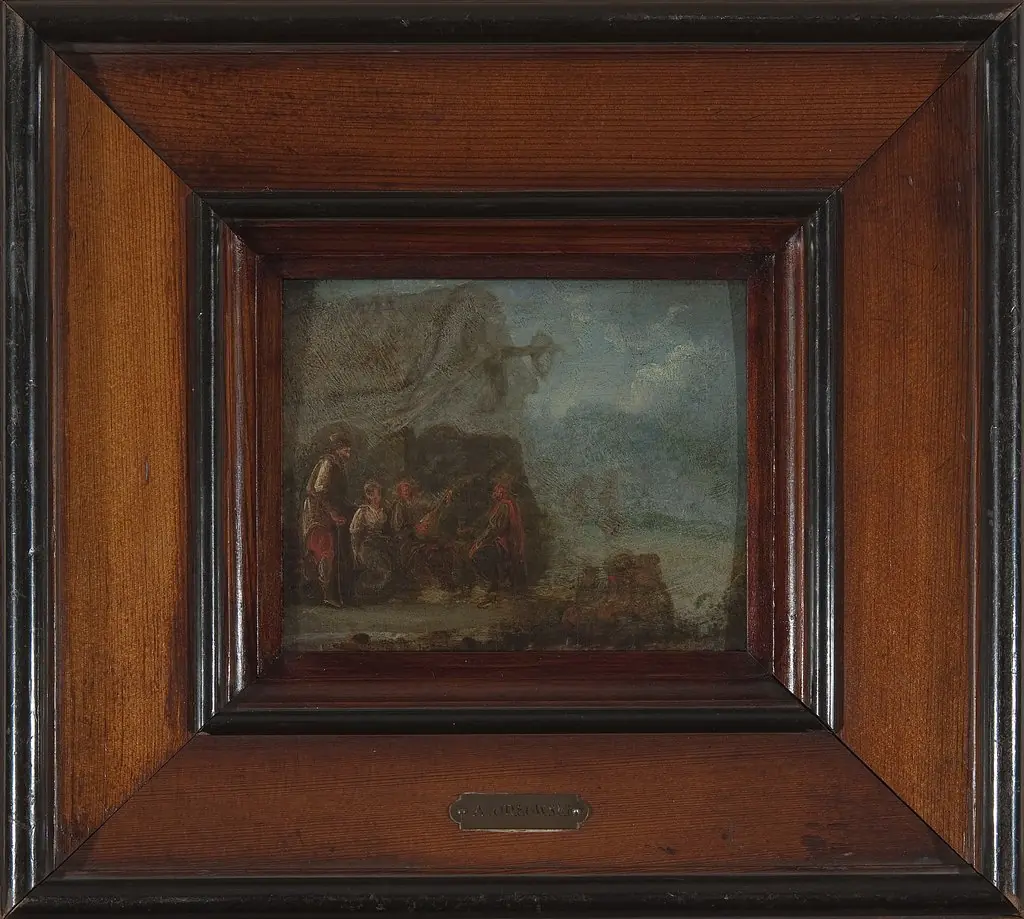 In front of a tent
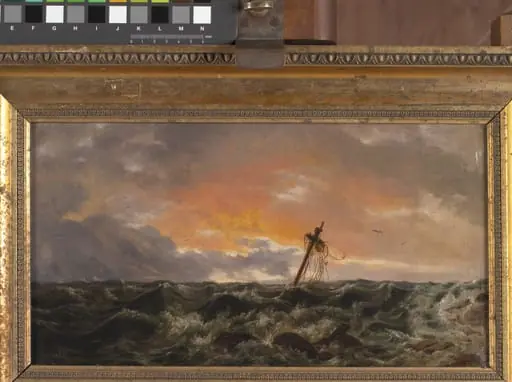 Seascape with a Wreck
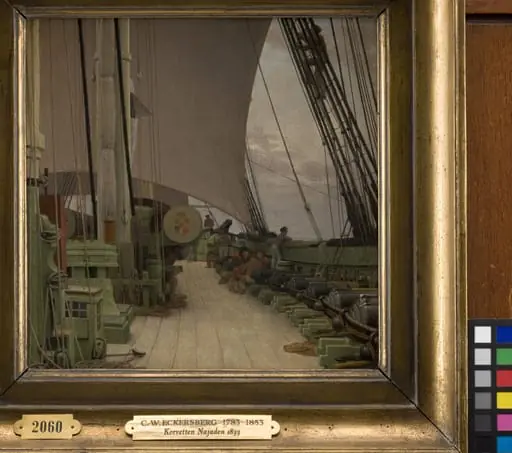 The Starboard Battery and the Deck of the Corvette "Najaden"
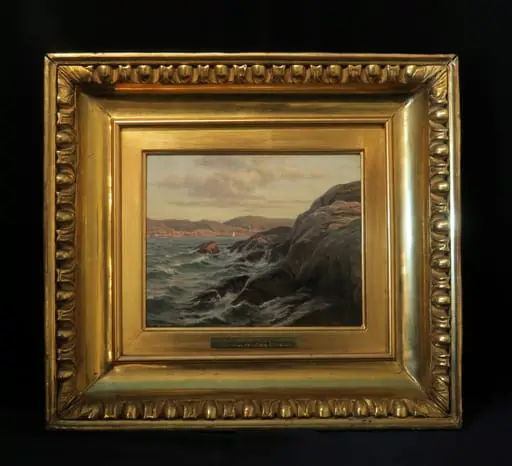 Rantakallioita, merenrantamaisema
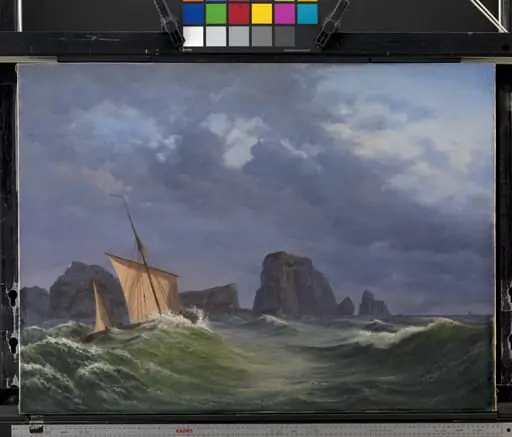 En shetlandsk fiskerbåd i stormfuldt vejr nord for Orkneyøerne
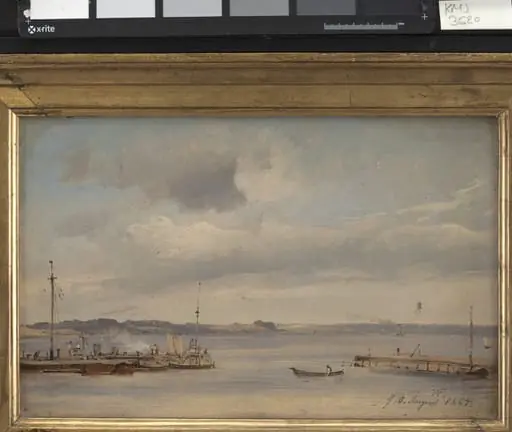 A Boat Harbour. Humlebæk, Zealand
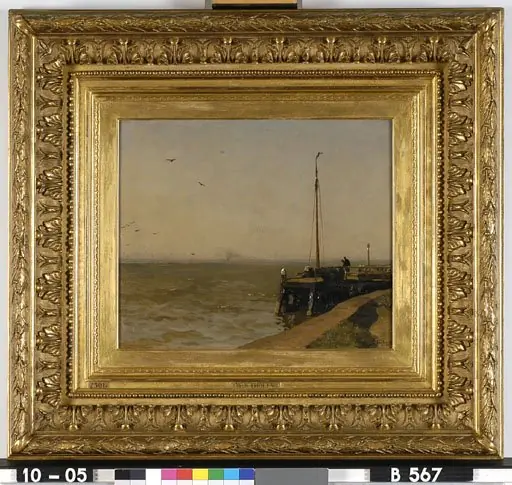 Landingsplaats
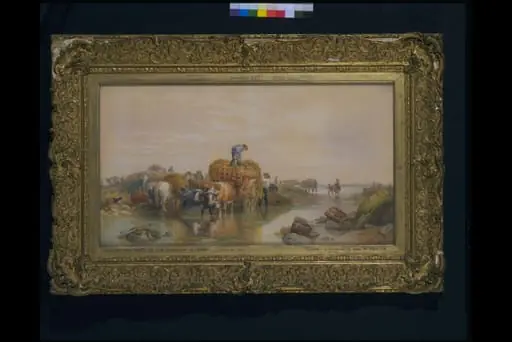 Carting seaweed on the coast of Guernsey
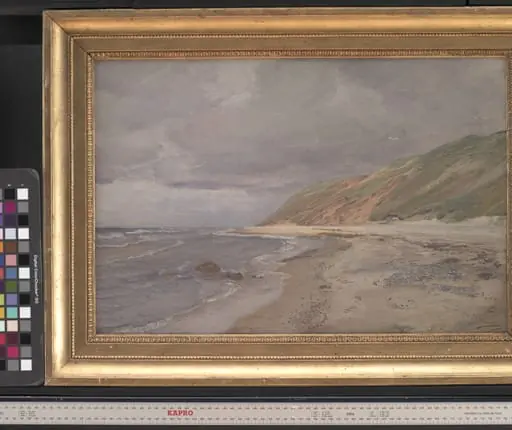 Tisvilde Strand. Gråvejr