Artwork
Schloss und Park Putbus auf Rügen
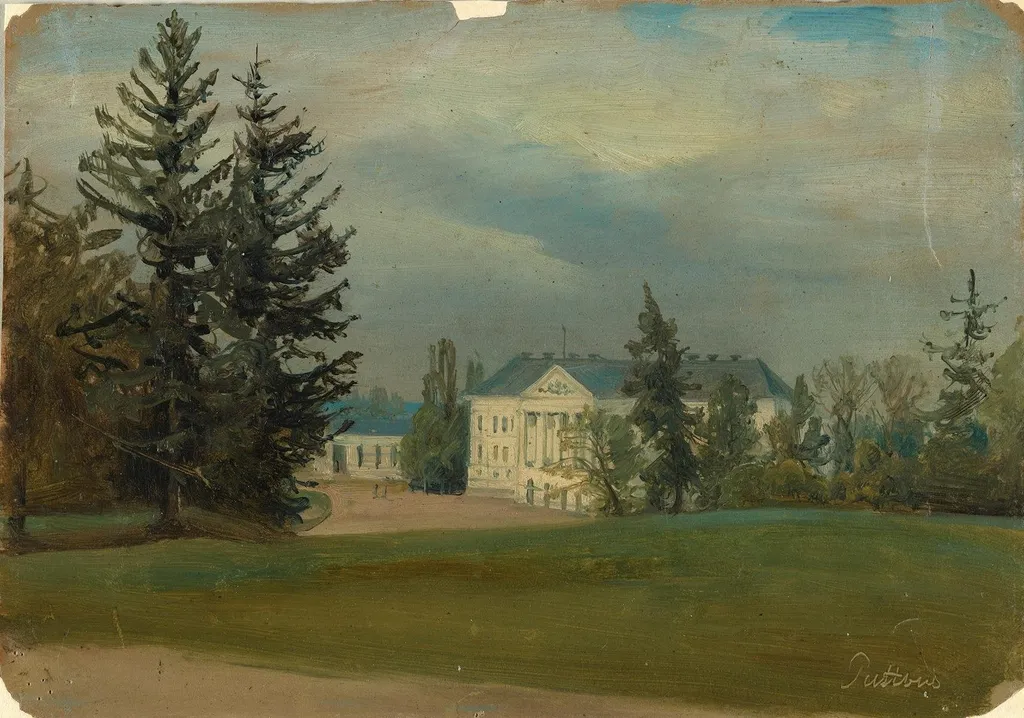
Schloss und Park Putbus auf Rügen is a print by Unknown. It dates from 1850 and is held in the collection of the Prince-Pückler-Museum Park and Palace Branitz Foundation. This image depicts Schloss und Park Putbus on the island of Rügen, rendered in a loose, atmospheric style.
About this work
Overview
This image depicts Schloss und Park Putbus on the island of Rügen, rendered in a loose, atmospheric style.
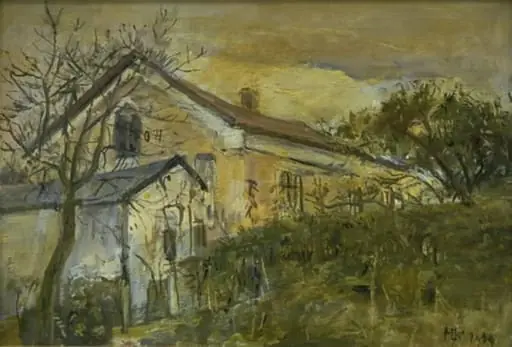
This image depicts Schloss und Park Putbus on the island of Rügen, rendered in a loose, atmospheric style. The white neoclassical palace stands centrally against a backdrop of pine trees and a softly graded sky. The brushwork is deliberately unrestrained, particularly in the foliage and heavens, while the architecture is rendered with simplified forms, creating a quiet contrast between structure and nature.
Subject & Meaning
The painting presents the palace and its surrounding park as a harmonious ensemble, reflecting 19th-century ideals of ordered nature and aristocratic leisure. The building, though central, is not idealized; its simplicity suggests a focus on presence rather than grandeur. The landscape implies a cultivated yet natural setting, typical of princely estates designed for contemplation and retreat.
Technique & Style
The artist employs rapid, visible brushstrokes to suggest movement and light, especially in the sky and tree canopies. Colors are subdued—muted greens, pale blues, and earthy grays—enhancing the tranquil mood. The palace, rendered with cleaner lines and less texture, emerges as a stable form amid the painterly ambiguity of its surroundings, emphasizing spatial depth through tonal contrast.
History & Provenance
Schloss Putbus was constructed in the early 1800s by Prince Wilhelm von Putbus as the centerpiece of a planned neo-classical park. This image likely dates from the mid-19th century, when such estates were popular subjects for landscape artists. The work may have originated as a study or private commission, capturing the estate during its peak as a cultural retreat for the nobility.
Context
The painting reflects broader European trends in landscape representation, where aristocratic parks were depicted not as wild scenery but as refined extensions of human design. Similar works by contemporaries in Germany and Scandinavia treated such estates as symbols of enlightened stewardship, blending architecture with nature in ways that mirrored Enlightenment ideals of balance and order.
Legacy
Though not widely exhibited, this image contributes to a visual record of Rügen’s aristocratic landscapes during a period of transition. Its sketch-like quality aligns with emerging preferences for immediacy over finish, foreshadowing later shifts toward impressionistic approaches. Today, it serves as a quiet document of a once-prestigious estate now preserved as a public cultural site.
Artist & collection
Museum
Prince-Pückler-Museum Park and Palace Branitz Foundation
Continue through works from the same source collection.
 Domestic Scene
 Giacomo and Cardinal Marco, investing Andrea, Abbot of San Zeno, with his Benefice
 The Nymph of Fontainebleau
 Portrait of a Woman
 Madonna and Child with Saints in the Enclosed Garden
 Venus and Minerva
 Family Group of Four on Sofa
 Wall painting from Room H of the Villa of P. Fannius Synistor at Boscoreale
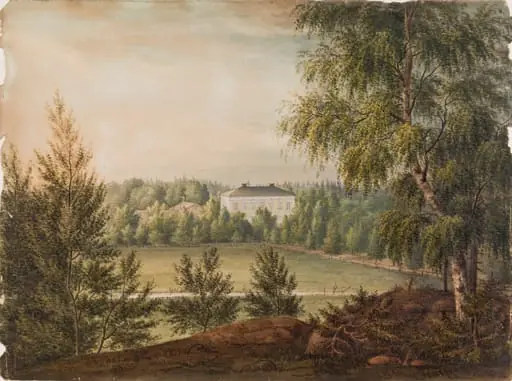 Huopalahden kartano, Hoplaks gård i Helsinge socken
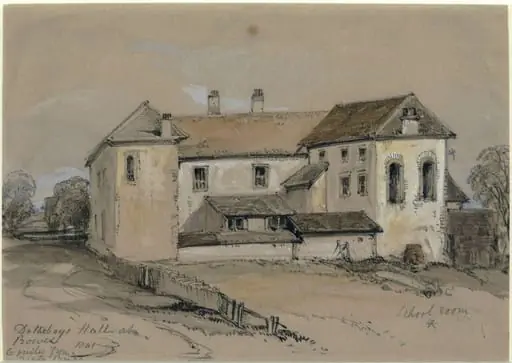 Dotheboy's Hall, near Bowes, six miles from Greta Bridge
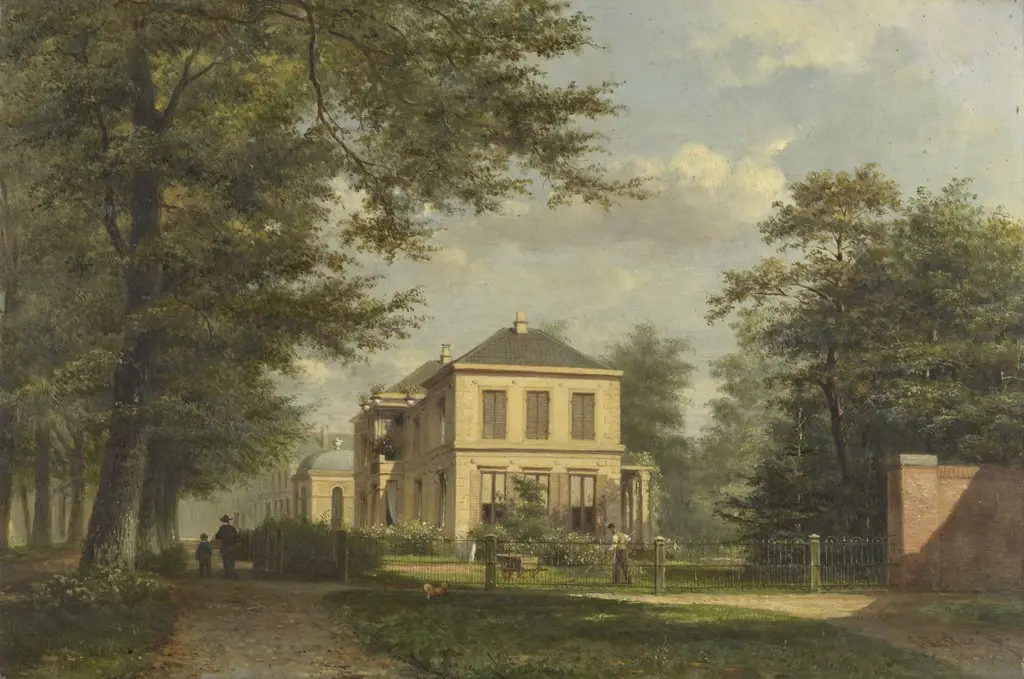 Het buiten Zorg Vrij aan de Kleine Houtweg te Haarlem
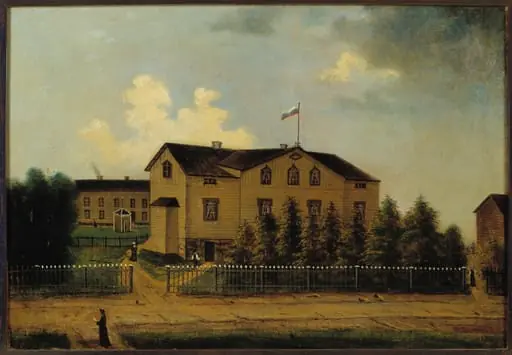 Vaasankatu 15
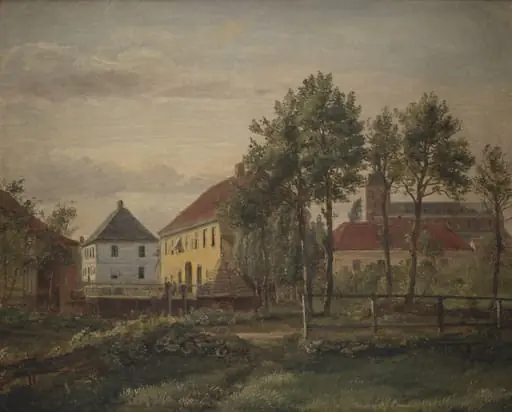 A Mill in Odense
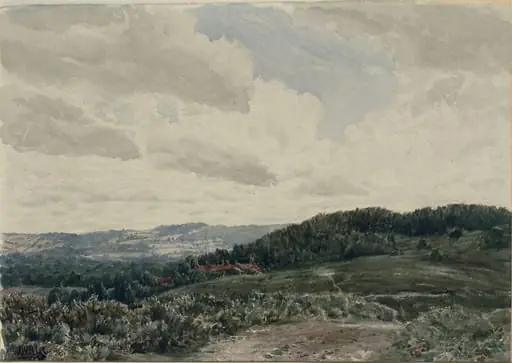 Landscape
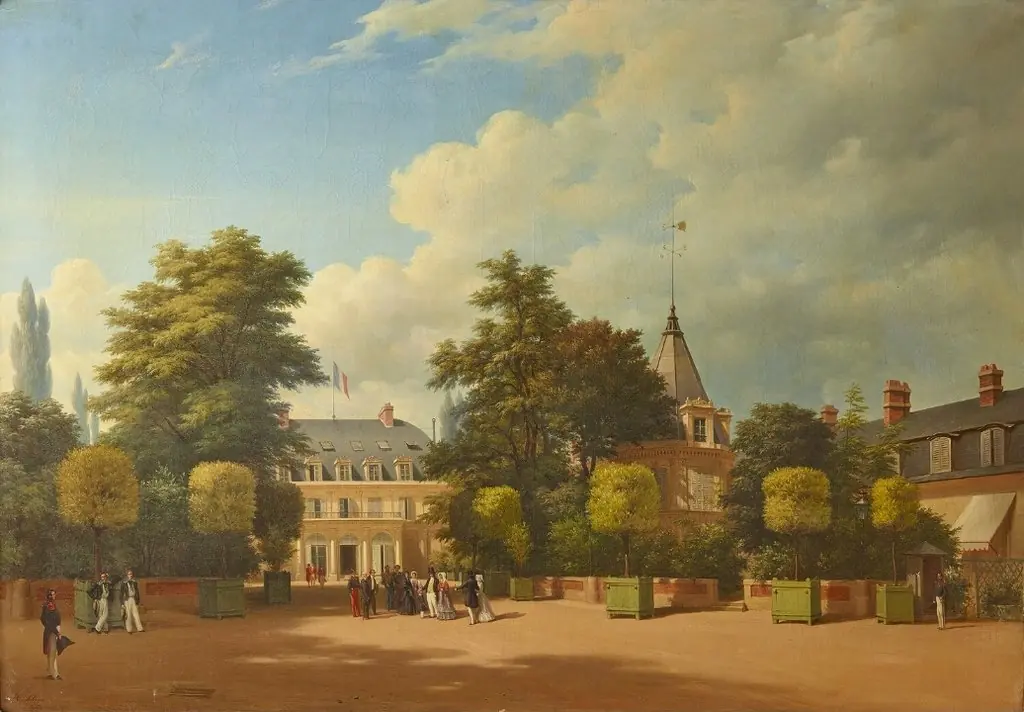 Vue du château de Neuilly
 Finnbyn täysihoitolan keltainen paviljonki
 View of Falkonerallé outside Copenhagen
 View of the castle in Radziejowice
 Volhynian Village
 Forsamlingshuset i Slagslunde