Artwork
清滝権現像|Seiryū Gongen
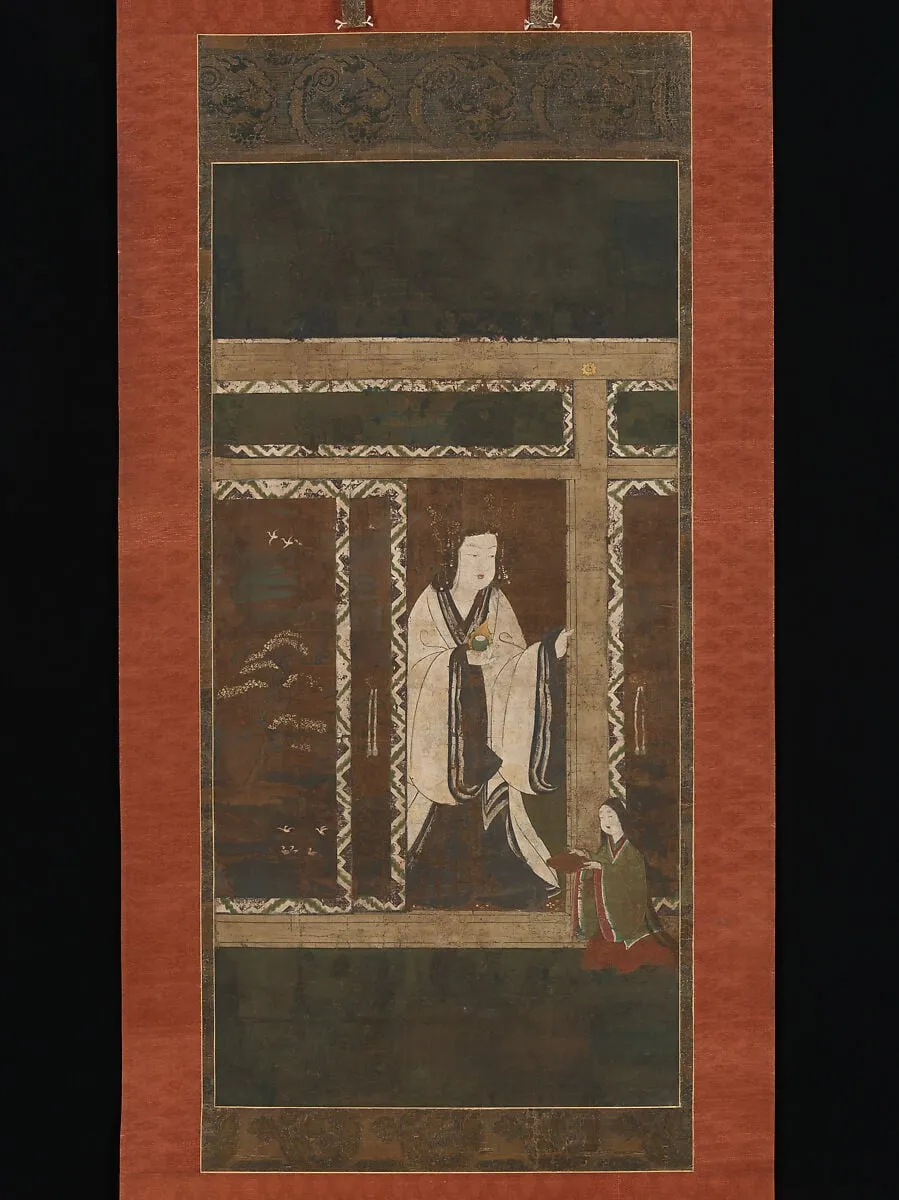
清滝権現像|Seiryū Gongen is an ink painting. It dates from 1300 and is held in the collection of the Metropolitan Museum of Art. This hanging scroll portrays Seiryū Gongen, a Shinto deity associated with the protection of travelers and the bringing of rain.
About this work
Overview
This hanging scroll portrays Seiryū Gongen, a Shinto deity associated with the protection of travelers and the bringing of rain. Executed with ink and vibrant colors on silk, the artwork features a serene female figure standing on a cloud, accompanied by a powerful dragon. The painting offers insight into the visual representation of revered spiritual figures within Japanese art traditions.
Subject & Meaning
The central figure represents Seiryū Gongen, a Shinto deity whose attributes include a scroll and a small jar.
The central figure represents Seiryū Gongen, a Shinto deity whose attributes include a scroll and a small jar. Her calm demeanor suggests a benevolent presence. The prominent dragon coiling through mist behind her is integral to the deity's iconography, symbolizing not merely decoration but an embodiment of divine power and control over natural elements, particularly water, which aligns with the deity's role in bringing rain.
Technique & Style
The artist utilized ink and a vibrant palette of colors on a silk ground, a choice that was notably rich for hanging scrolls of this period. This medium allowed for a luminous quality and fine detail, such as the gold accents on the dragon's scales. The flowing robes of the deity and the ethereal mist surrounding the dragon contribute to the overall visual elegance and spiritual atmosphere of the composition.
Artist & collection

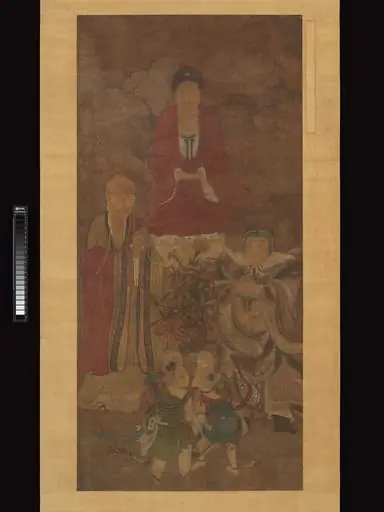 明 佚名 禮佛圖 軸|Shakyamuni with luohan, heavenly king, and boys
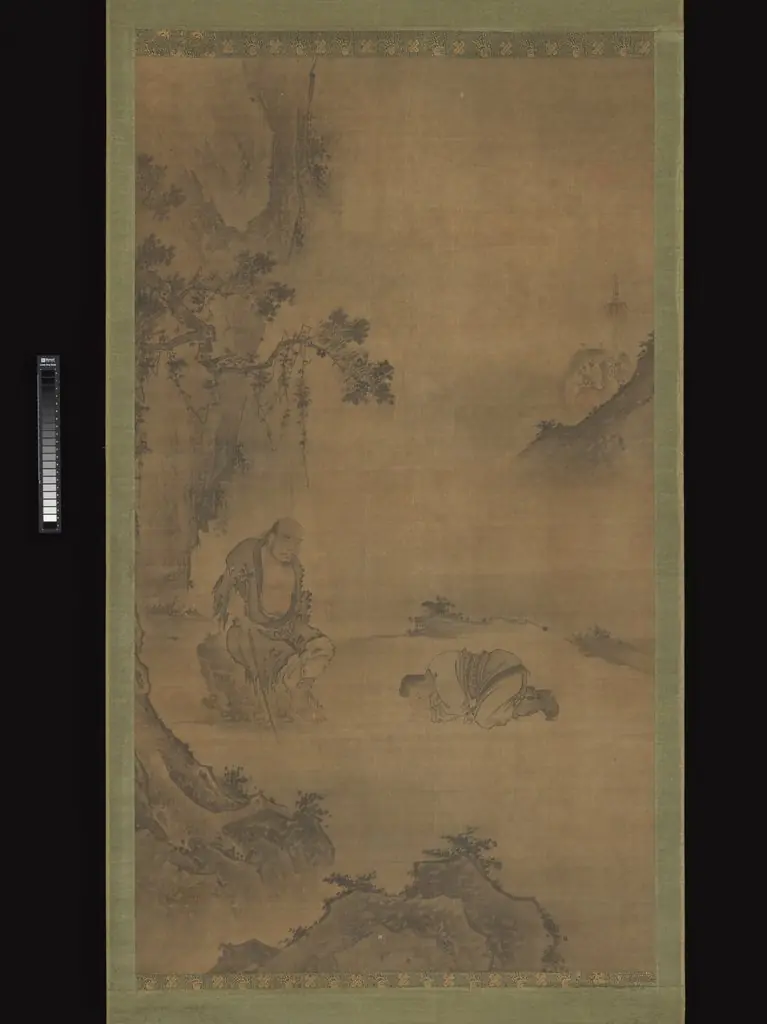 Daoist immortal Li Tieguai receiving a visitor
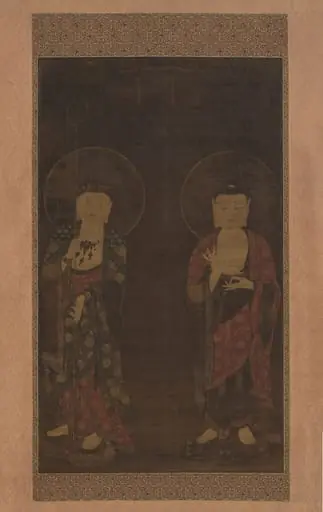 아미타불과 지장보살도 고려|阿彌陀佛・地藏菩薩圖 高麗|Amitabha and Kshitigarba
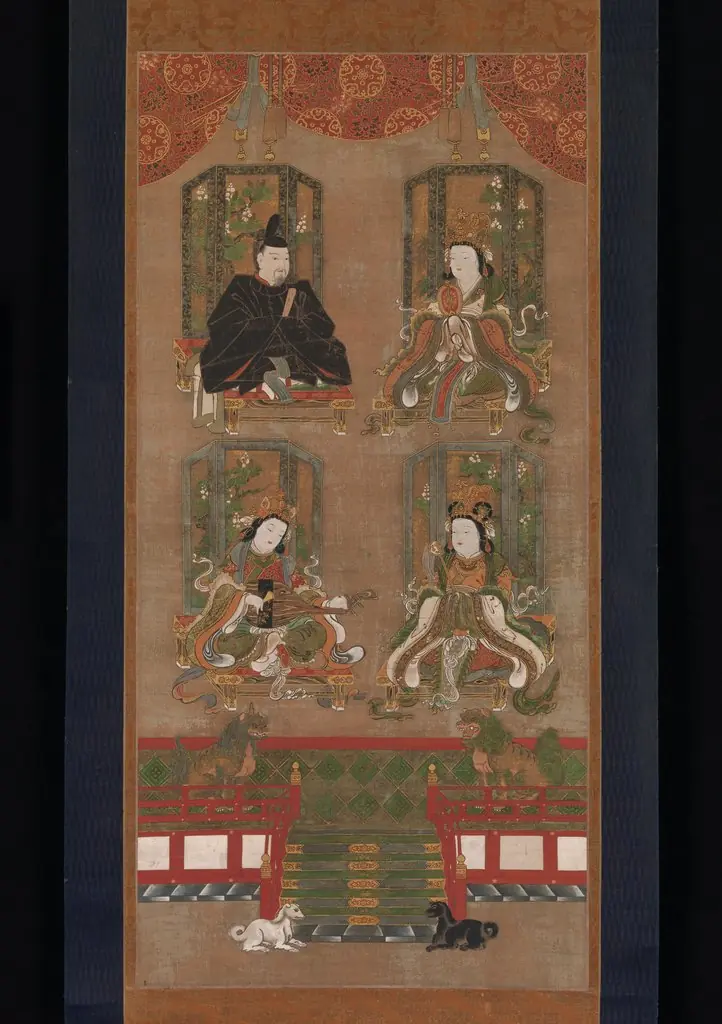 The Four Deities of Mount Kōya
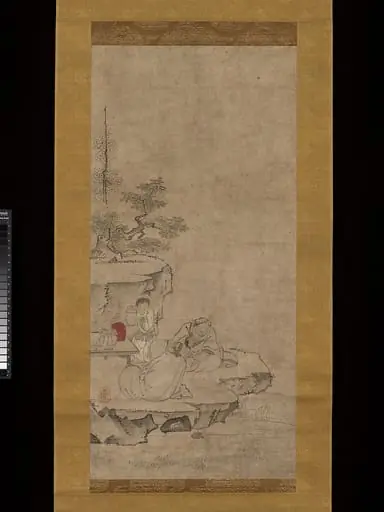 Untitled
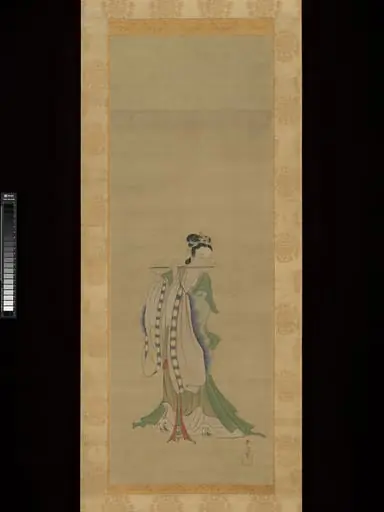 狩野常信筆 楊貴妃吹笛図|Yang Guifei Playing a Flute
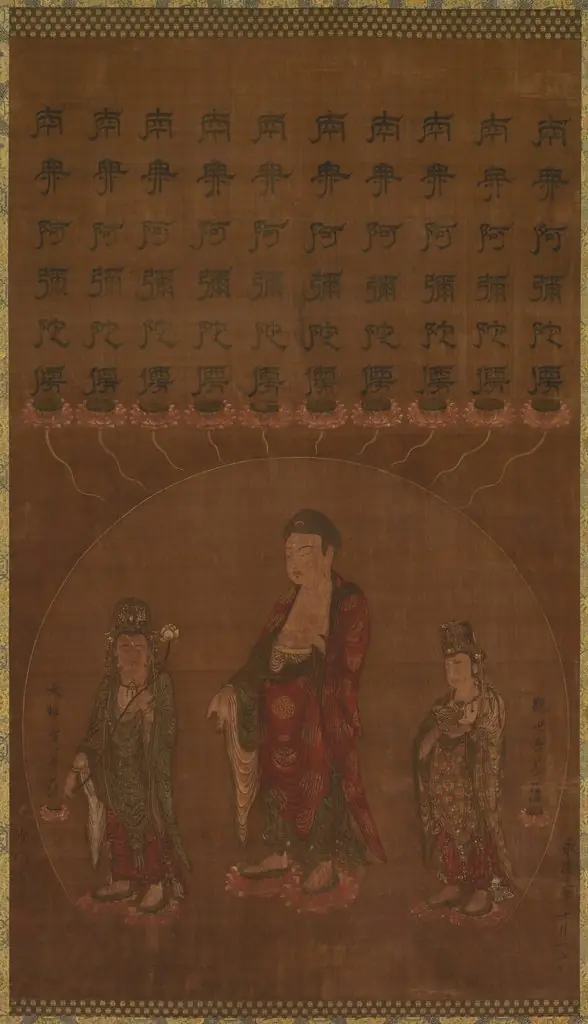 Buddha Amitābha with Two Attending Bodhisattvas
 Untitled
 Three scenes from festivals of the twelve months
 Kannon