Artwork
Sfânta Cuvioasă Paraschiva
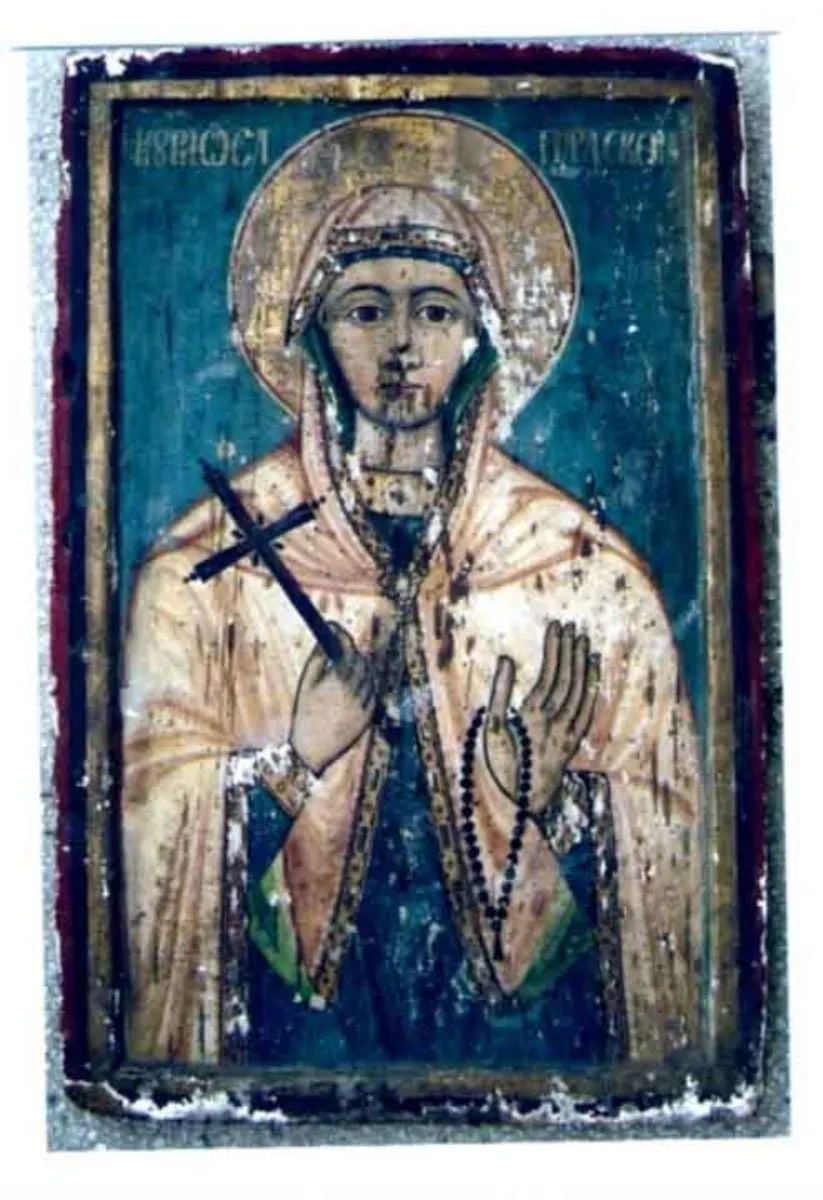
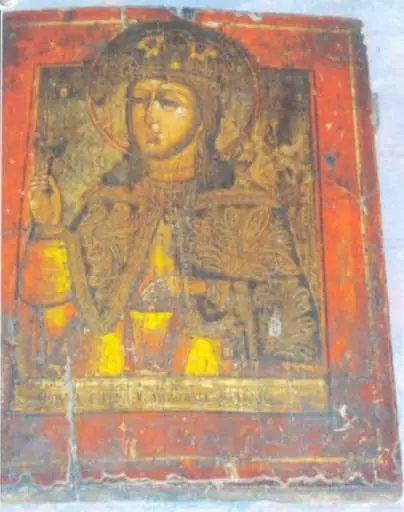
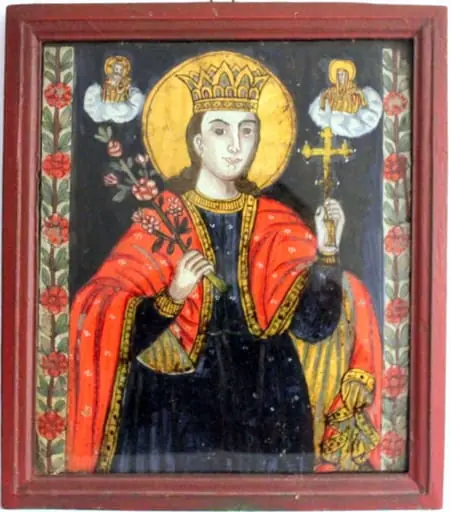
Sfânta Cuvioasă Paraschiva is a drawing by Unknown. It dates from 1850 and is held in the collection of the Golești Viticulture and Pomiculture Museum. This religious icon depicts Saint Paraschiva, a venerated Orthodox saint, rendered in a traditional Byzantine-influenced style.
About this work
Overview
This religious icon depicts Saint Paraschiva, a venerated Orthodox saint, rendered in a traditional Byzantine-influenced style. The figure is frontal and static, set against a flat blue background that emphasizes her spiritual presence. The painting’s surface shows signs of age, with pigment fading and edges worn, suggesting long-term veneration and environmental exposure.
Subject & Meaning
Saint Paraschiva is portrayed as a holy woman, identified by her golden halo and the cross she holds, symbols of divine favor and Christian martyrdom. Her solemn expression and modest attire reflect ascetic devotion. The cross pendant on her necklace reinforces her identity as a faithful servant of Christ, aligning her with the tradition of female saints who embodied piety and sacrifice.
Technique & Style
The face is rendered with simplified, bold outlines, characteristic of folk iconography that prioritizes spiritual clarity over naturalism. Colors, once vivid, have dulled over time, leaving a muted palette of light robes and dark trim. The flat background and lack of perspective follow Eastern Orthodox conventions, focusing attention on the saint’s sacred presence rather than spatial depth.
History & Provenance
The painting likely originated in a rural Orthodox community, possibly used in domestic worship or a small chapel. Its worn edges and faded pigments suggest decades, if not centuries, of handling and exposure to candle smoke and humidity. Exact origins are undocumented, but its style points to Balkan or Romanian artistic traditions of the 18th or early 19th century.
Context
In Orthodox Christian practice, icons like this served as objects of prayer and veneration, not mere decoration. Saint Paraschiva, revered for her miracles and humility, was especially popular among common believers. This painting reflects a local interpretation of sacred imagery, where artistic skill was secondary to devotional function and symbolic clarity.
Legacy
Though not the work of a named master, the icon preserves a vital strand of folk religious artistry. Its enduring presence in collections today underscores the continuity of Orthodox devotional practices. It stands as a quiet testament to the role of humble, hand-painted images in sustaining spiritual life across generations in Eastern Europe.
Artist & collection
Museum
Golești Viticulture and Pomiculture Museum
Continue through works from the same source collection.
 Domestic Scene
 Giacomo and Cardinal Marco, investing Andrea, Abbot of San Zeno, with his Benefice
 The Nymph of Fontainebleau
 Portrait of a Woman
 Madonna and Child with Saints in the Enclosed Garden
 Venus and Minerva
 Family Group of Four on Sofa
 Wall painting from Room H of the Villa of P. Fannius Synistor at Boscoreale
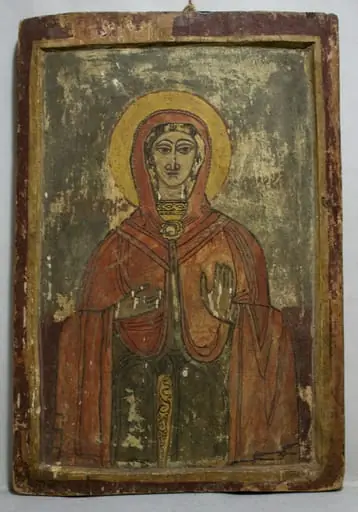 Sfânta Cuvioasă Paraschiva este redată 3/4, frontal, într.o manieră naivă, specific țărănească. Chip oval, trăsăturile feței accentuate, ochii conturați cu negru, privirea îndreptată lateral, scrâncenele mult arcuite, nările mari, gura mică. Mâna stângă o ține la piept, dreapta ridicată în semnde binecuvântare. Înveșmântată cu un maforion roșu pal, cu decorațiuni vagi, albe, stola verde cu galben, porțiune decorată cu motive fitomorfe.Nimb galben cu linia de contur albă. Fond grena în partea de jos, gri în cea superioară. Chenar dublu, galben + grena.
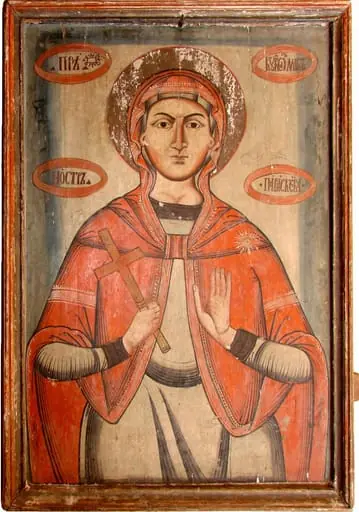 Sf. Paraschiva
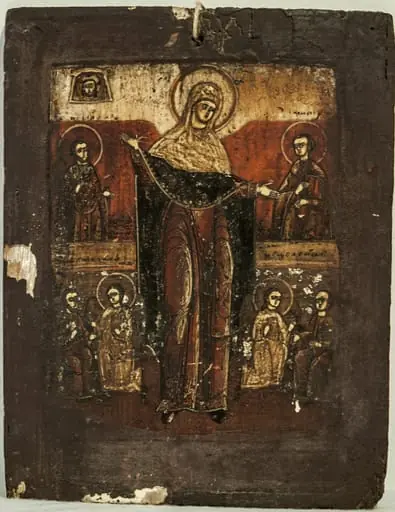 Central , Împărăteasa cerului, Preasfânta Fecioară Născătoare de Dumnezeu, în picioare, cu brațele desfăcute "acoperind pe popor", cu palmele spre privitor,flancată de sfinți. Dumnezeu Iisus Hristos este prezentat în unghiul din partea stângă pe Năframa Veronicăi sau sfântul Keramion, icoana nefăcută de mâna omului. În registrul de jos, arhangheli în fața unor sfinți.inscripțiile cu litere cursive, indescifrabile. Icoana a suferit intervenții, bordura roșiatică a fost acoperită cu o vopsea cafenie. Tema iconografică, se deduce dmai mult din atitudinea Fecioarei. Fond auriu(superior), brun roșcat median, brun închis inferior. Chenarul marginal - pictat mai recent, brun. Cromatica specifică, tonuri de pământ, roșu și brun, în combinație cu ocruri.
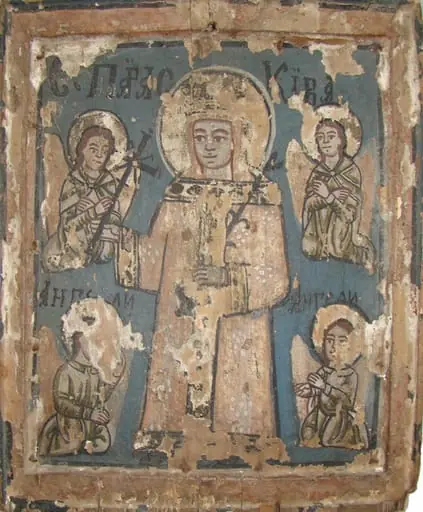 Sf. Paraschiva
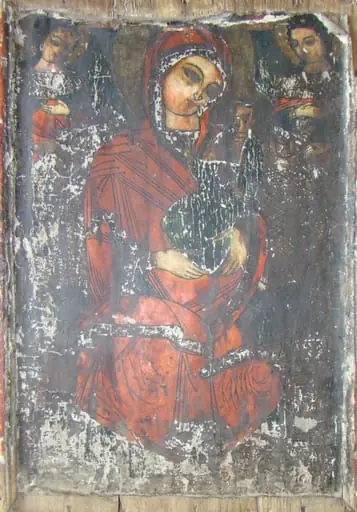 Maica Domnului cu Pruncul
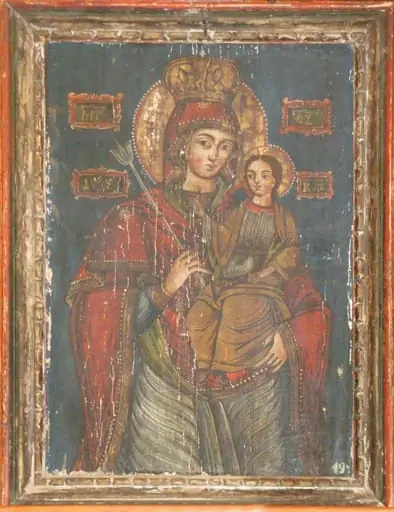 Maica Domnului cu Pruncul
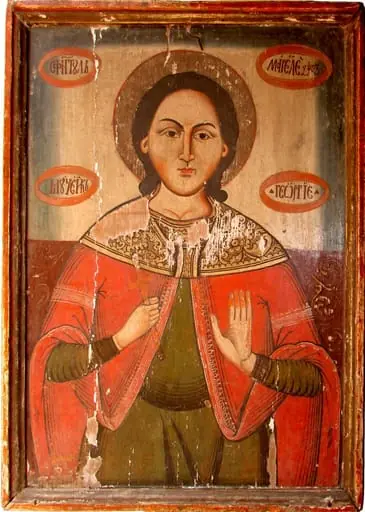 Sf. Gheorghe
 Iisus Hristos Împărat
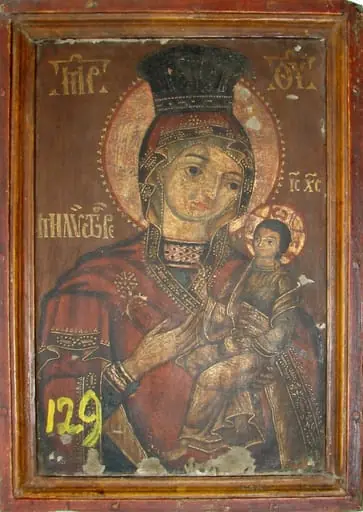 Maica Domnului cu Pruncul
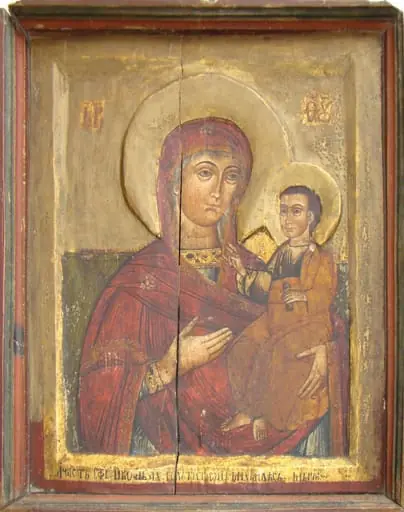 Maica Domnului cu Pruncul
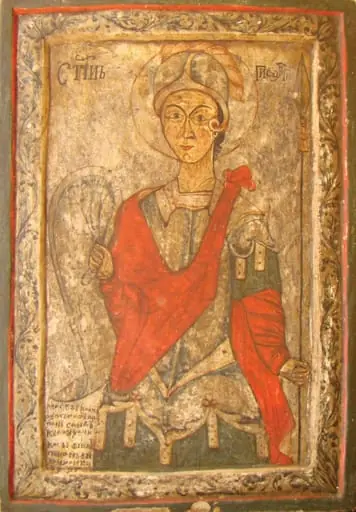 Sf. Gheorghe
 Sf. Paraschiva