Artwork
Iisus Hristos Împărat
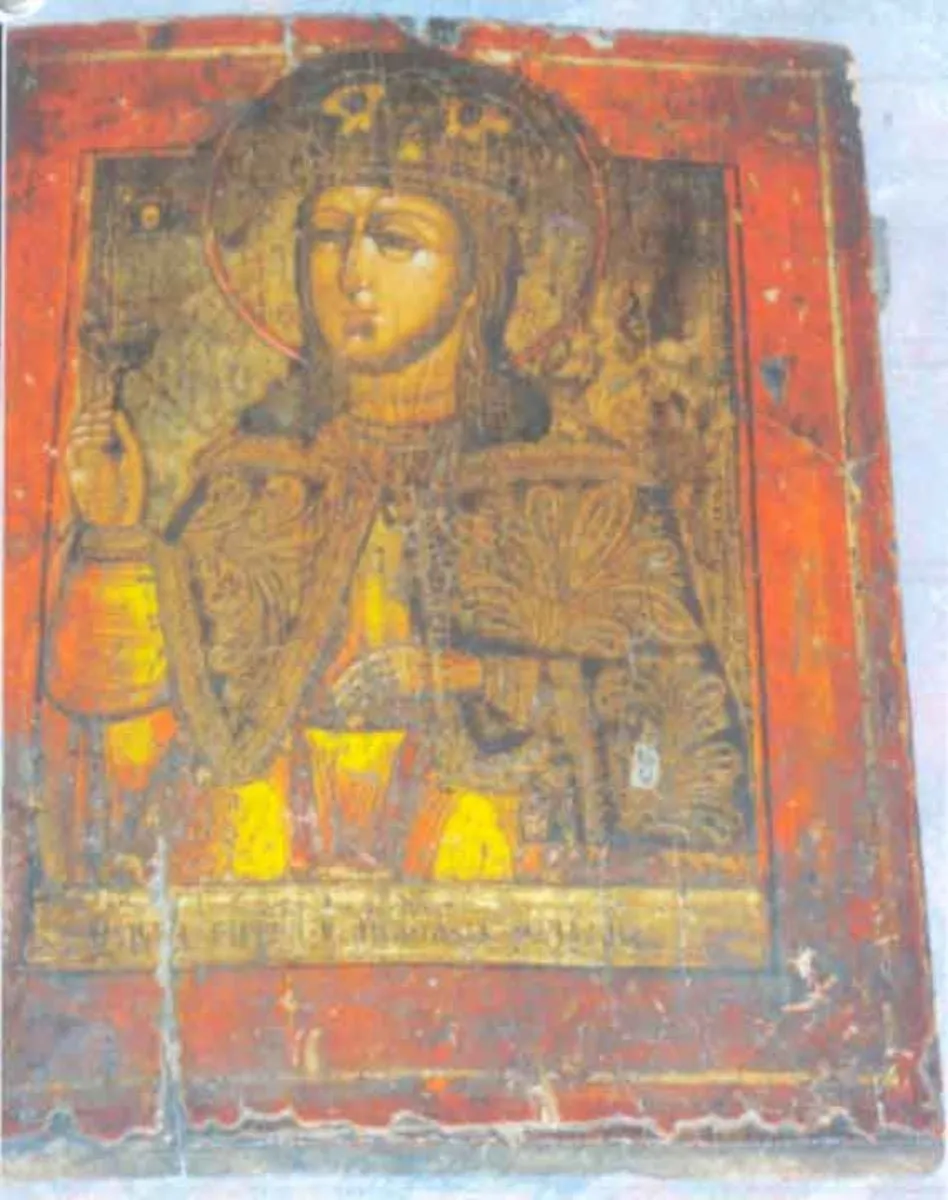
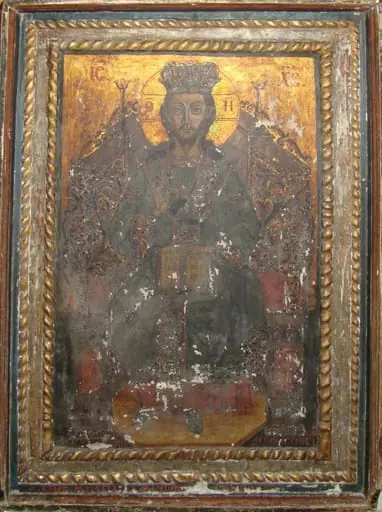
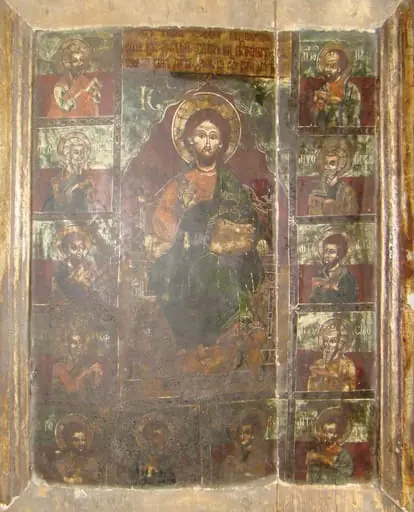
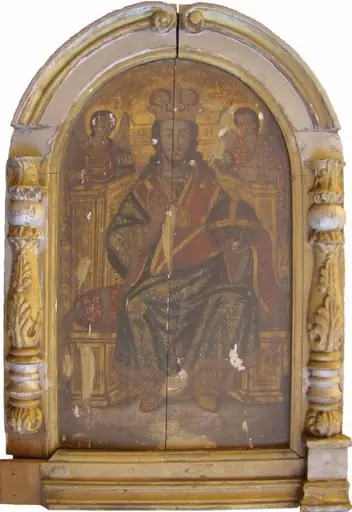
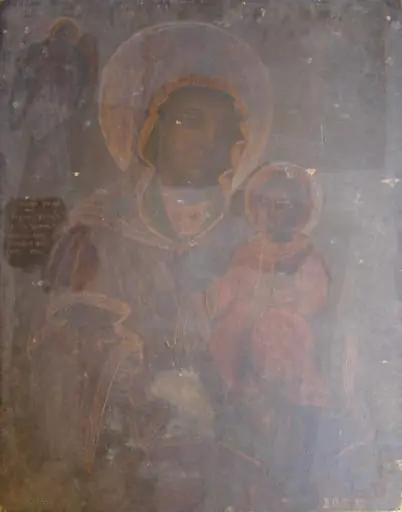
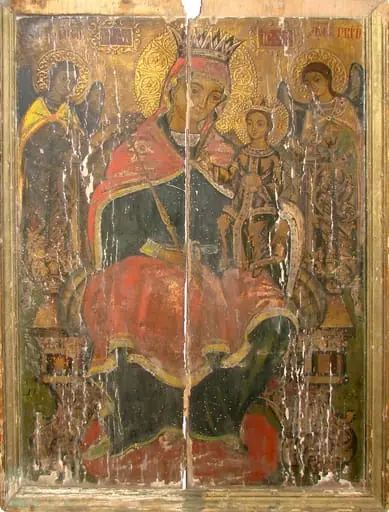
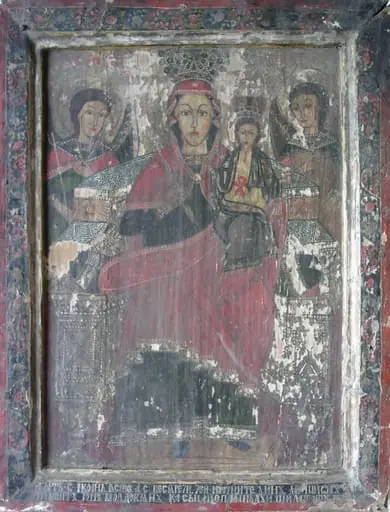
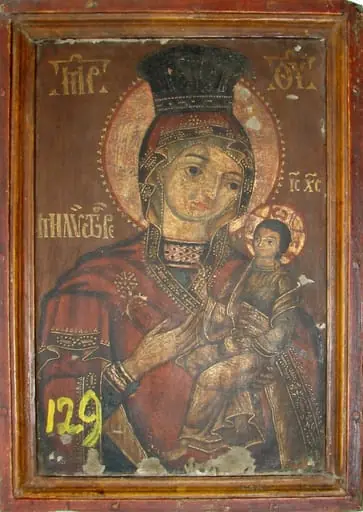
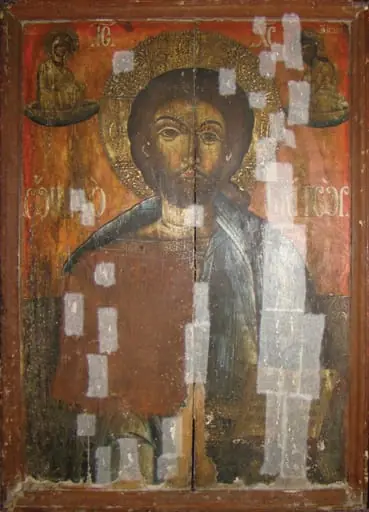
Iisus Hristos Împărat is a drawing by Unknown. It dates from 1850 and is held in the collection of the Lower Danube Museum. This is a faded, hand-drawn religious image depicting Christ as ruler, rendered in simple but vivid pigments.
About this work
Overview
The figure is shown frontally, wearing a robe and crowned with a golden halo, set against a red background with degraded gold detailing.
This is a faded, hand-drawn religious image depicting Christ as ruler, rendered in simple but vivid pigments. The figure is shown frontally, wearing a robe and crowned with a golden halo, set against a red background with degraded gold detailing. The paper shows signs of age—peeling edges, discoloration, and surface wear—suggesting prolonged use or exposure. The composition prioritizes symbolic presence over naturalism.
Subject & Meaning
The figure represents Christ Pantocrator, a traditional Byzantine depiction of Jesus as sovereign of heaven and earth. His solemn expression and hands resting on a golden cloth, likely an evocation of the Gospel or imperial mantle, reinforce his authority. The halo signifies divinity, while the red background may symbolize divine power or the blood of martyrdom, common in Eastern Christian iconography.
Technique & Style
The drawing employs minimal shading, likely through sparse cross-hatching or parallel lines to suggest volume in the robe and face. Colors are applied flatly—gold, red, and yellow—without gradation, consistent with devotional art focused on spiritual clarity rather than illusion. The worn surface and faded pigments indicate hand-applied tempera or watercolor on paper, typical of portable icons in Orthodox traditions.
History & Provenance
The object’s condition suggests it was once used in private or small-scale worship, possibly in a household or chapel. Its fragility and deterioration point to frequent handling or exposure to moisture and light over time. No documented origin is provided, but its style aligns with Balkan or Anatolian religious art from the late medieval or early modern period.
Context
This image belongs to a broader tradition of portable Christian icons produced for personal devotion, especially in regions under Ottoman rule where large-scale church art was restricted. Such works were often carried, hidden, or passed through generations. The use of gold and red, despite material limitations, reflects enduring symbolic values tied to sacred authority and celestial realms.
Legacy
Though modest in scale and condition, the work preserves a visual language that persisted for centuries across Orthodox communities. Its survival, despite decay, speaks to the endurance of devotional practices and the quiet persistence of religious imagery in everyday life, even amid material hardship and cultural change.
Artist & collection
 Domestic Scene
 Giacomo and Cardinal Marco, investing Andrea, Abbot of San Zeno, with his Benefice
 The Nymph of Fontainebleau
 Portrait of a Woman
 Madonna and Child with Saints in the Enclosed Garden
 Venus and Minerva
 Family Group of Four on Sofa
 Wall painting from Room H of the Villa of P. Fannius Synistor at Boscoreale