Artwork
Sfântul Alexandra, Nicolae, Vasile cel Mare și Haralambie
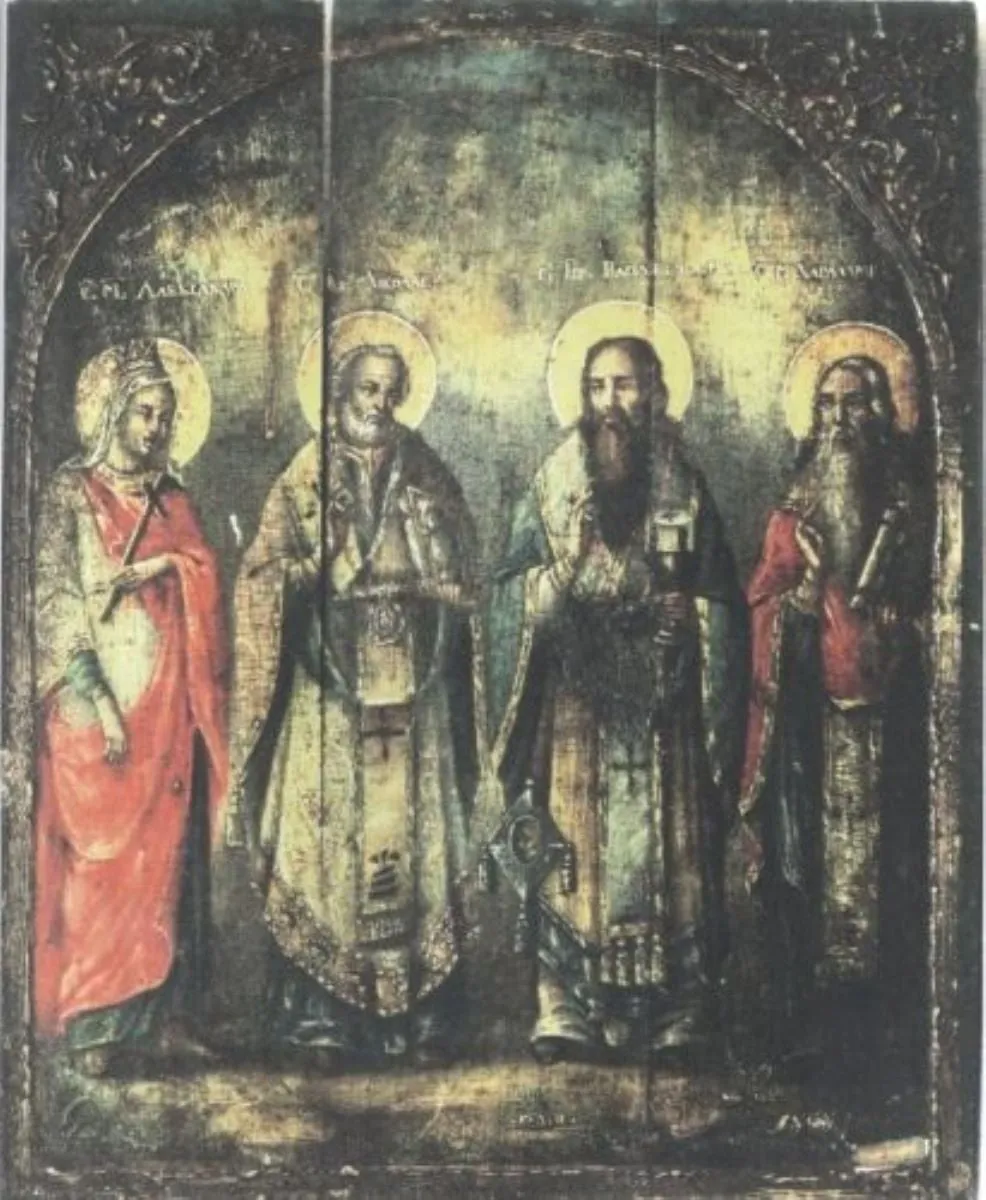
Sfântul Alexandra, Nicolae, Vasile cel Mare și Haralambie is a drawing by the Impressionist artist Unknown. It dates from 1868 and is held in the collection of the Romanian Peasant Museum. This painted panel depicts four Eastern Orthodox saints standing in a row, rendered with formal solemnity.
About this work
Overview
Their robes vary in color and trim, with the leftmost saint wearing vivid red and green, contrasting with the others’ darker tones.
This painted panel depicts four Eastern Orthodox saints standing in a row, rendered with formal solemnity. Each figure is identified by name and marked with a golden halo, signaling sanctity. Their robes vary in color and trim, with the leftmost saint wearing vivid red and green, contrasting with the others’ darker tones. The background is muted and worn, emphasizing the figures while suggesting age and devotional use.
Subject & Meaning
The four saints—Alexandru, Nicolae, Vasile cel Mare, and Haralambie—are venerated figures in Eastern Christian tradition, known for their spiritual leadership and martyrdom. Their unified posture and halos convey collective holiness, typical of iconographic traditions meant for prayer and veneration. The absence of narrative context focuses attention on their presence as intercessors rather than storytellers.
Technique & Style
The painting employs a flat, hierarchical composition common in Byzantine-influenced icons. Facial features are softened by a gentle luminosity, enhancing spiritual presence. Gold trim on garments suggests divine radiance, while the subdued background and minimal ground line reduce spatial depth, directing focus to the saints’ faces and halos. The wear on the surface indicates prolonged ritual use.
History & Provenance
The work likely originated in a religious setting in the Romanian principalities, possibly used in a home altar or church. Its faded condition and simple frame suggest it was handled regularly over generations. Though exact origins are undocumented, its style aligns with 18th- to 19th-century devotional panels produced in local workshops for private or communal worship.
Context
This image belongs to a broader tradition of Orthodox iconography that prioritized spiritual presence over naturalism. Similar panels were common in households and chapels across Eastern Europe, serving as focal points for prayer and remembrance. The choice of saints reflects regional devotional preferences, combining widely recognized figures like Saint Nicholas with locally venerated martyrs.
Legacy
The painting survives as a testament to enduring religious practices in rural and domestic settings. Though no longer in active liturgical use, it remains a material link to pre-modern piety. Institutions like the Museum of Ethnography preserve such works not for aesthetic value alone, but as cultural artifacts embodying centuries of communal faith.
Artist & collection

 Domestic Scene
 Giacomo and Cardinal Marco, investing Andrea, Abbot of San Zeno, with his Benefice
 The Nymph of Fontainebleau
 Portrait of a Woman
 Madonna and Child with Saints in the Enclosed Garden
 Venus and Minerva
 Family Group of Four on Sofa
 Wall painting from Room H of the Villa of P. Fannius Synistor at Boscoreale
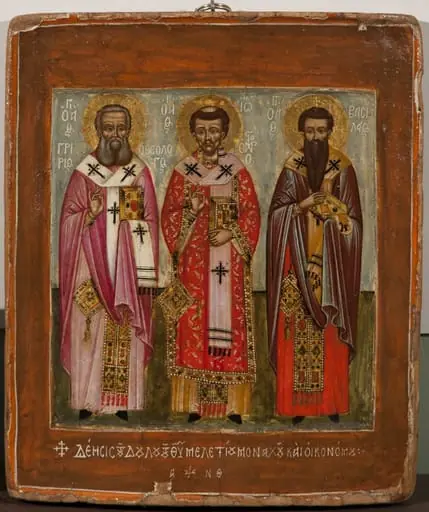 Sf. Trei Ierarhi
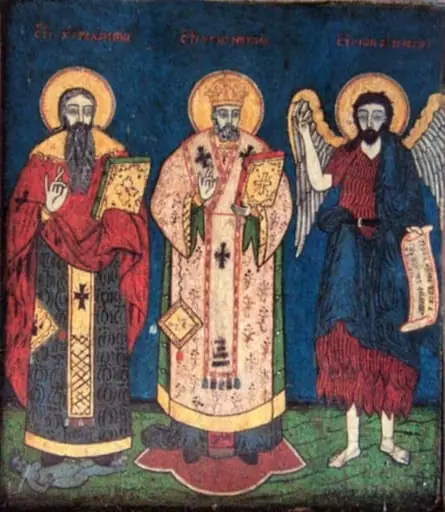 Sfinții Haralambie, Nicolae și Ioan Botezătorul
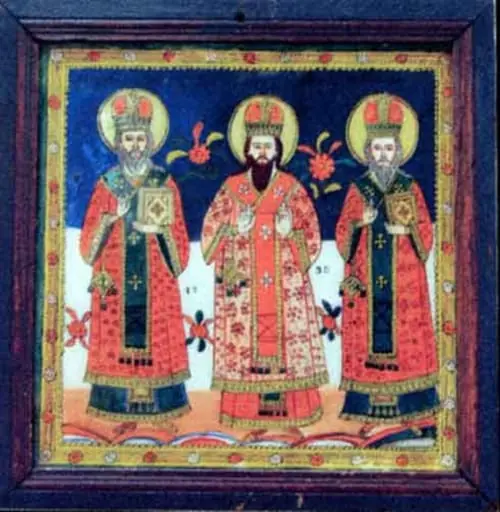 Sfinții Trei Ierarhi - Vasile, Grigore și Ioan
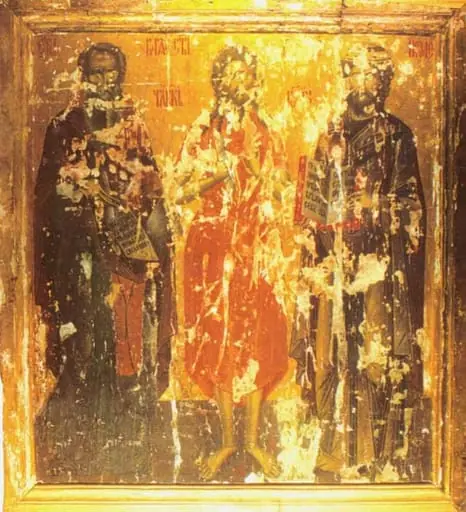 Sfântul Varlaam, Sfântul Alexie Omul lui D-zeu, Sfântul Ioasef; Sfântul militar călare - Dimitrie
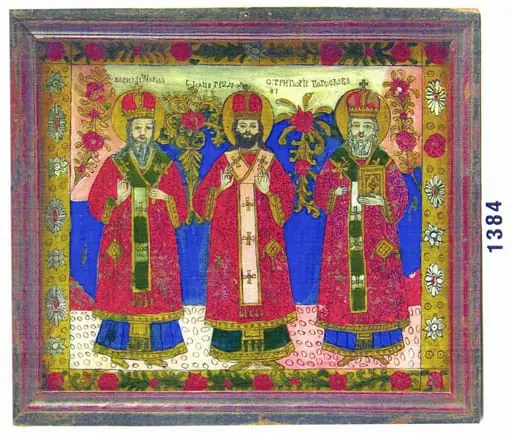 Sfinții trei ierarhi Vasile, Grigore și Ioan
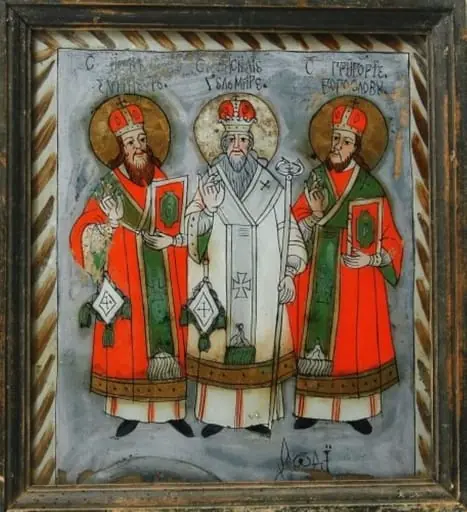 Sfinții Trei Ierarhi
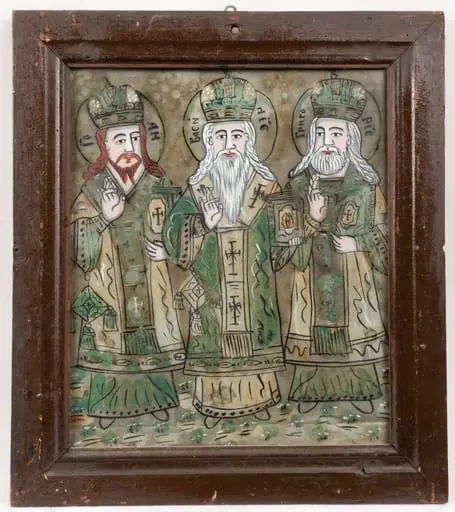 Sfinții Trei Ierarhi
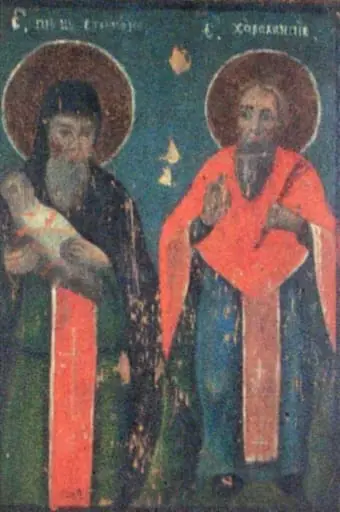 Sfinții Stelian și Haralambie
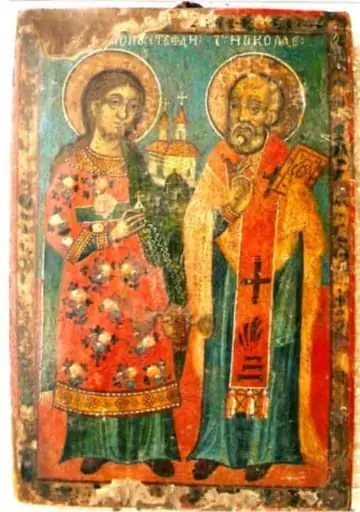 Sfântul Arhidiacon Ștefan și Sfântul Ierarh Nicolae
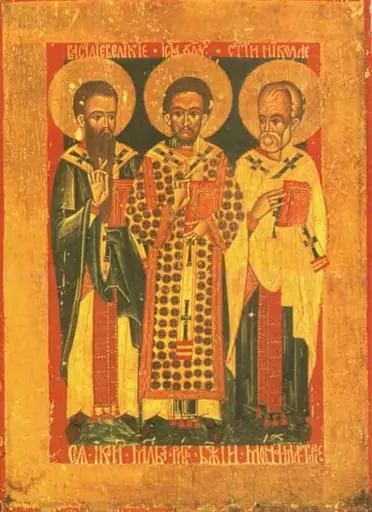 Sfinții Ierarhi Vasile, Ioan și Nicolae