Artwork
Sfântul Haralambie
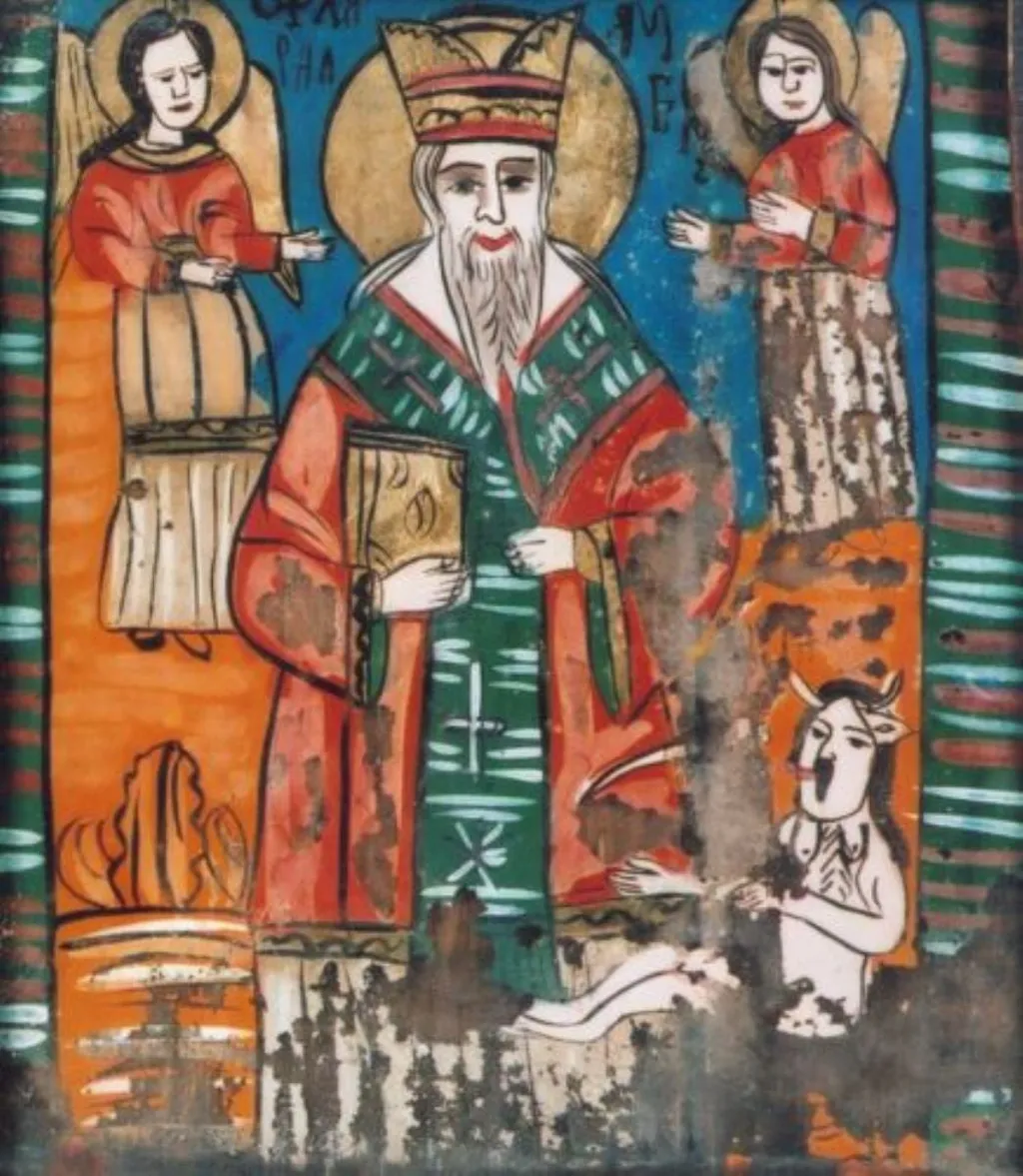
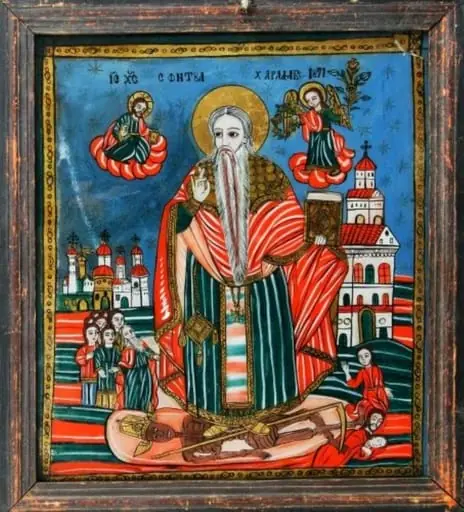
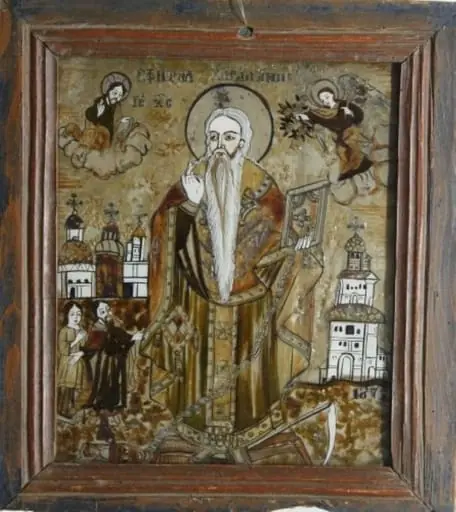
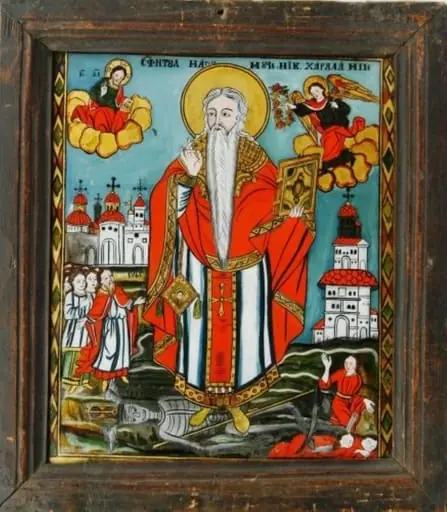
Sfântul Haralambie is a drawing by Unknown. It dates from 1850 and is held in the collection of the Bran National Museum. This devotional image depicts three celestial figures arranged symmetrically, with a central crowned figure flanked by two winged beings.
About this work
Overview
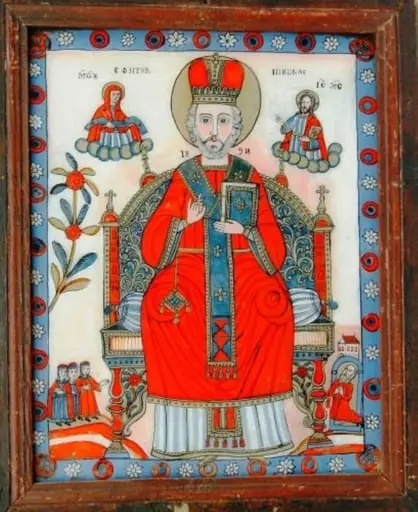
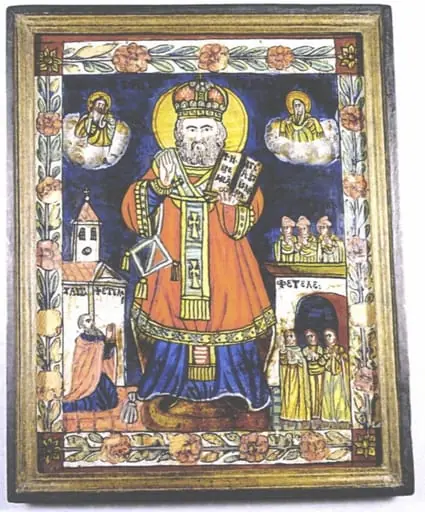
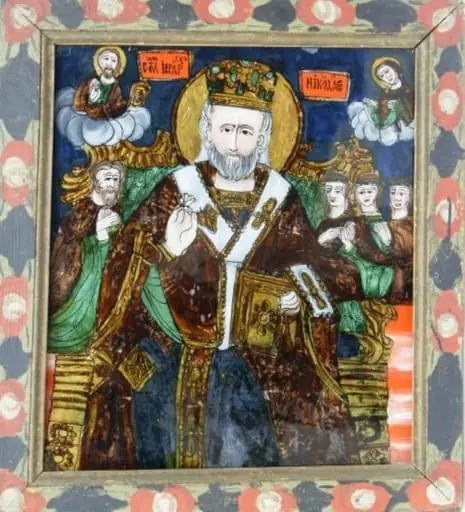
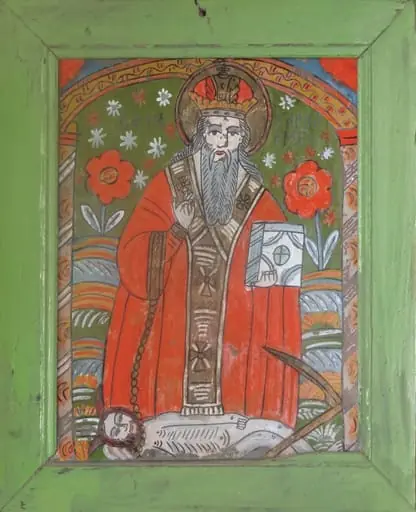
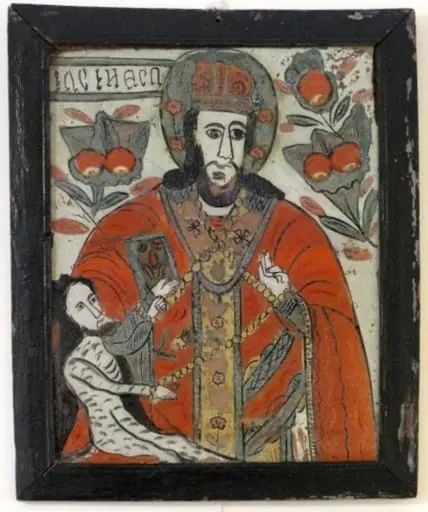
This devotional image depicts three celestial figures arranged symmetrically, with a central crowned figure flanked by two winged beings. A smaller figure kneels below, gesturing upward. The use of vivid, non-naturalistic colors and flattened spatial composition aligns with traditional Eastern Christian iconography, where visual clarity and symbolic meaning take precedence over realism.
Subject & Meaning
The central figure, crowned and haloed, likely represents a saint of high rank, possibly Saint Haralambie, known for martyrdom and healing.
The central figure, crowned and haloed, likely represents a saint of high rank, possibly Saint Haralambie, known for martyrdom and healing. The winged figures are angels, serving as divine attendants. The kneeling figure symbolizes a worshipper or supplicant, expressing humility and seeking intercession. Together, the composition reinforces the saint’s role as a mediator between the earthly and the divine.
Technique & Style
The painting employs a rigid, frontal perspective with minimal depth, typical of Byzantine-influenced icons. Colors are applied in flat, saturated planes—gold for divinity, red and green for authority, white and red for angelic purity. Details are simplified, emphasizing spiritual presence over physical detail. The glowing halo around the central figure marks sanctity, a standard convention in religious imagery.
History & Provenance
The work originates from a region with strong Orthodox Christian traditions, likely created in the 17th or 18th century for private or parish use. Its preservation suggests it was venerated in a home or chapel. While specific origins are undocumented, its stylistic features align with icon-painting schools in the Balkans or Moldavia, where such devotional images were commonly produced.
Context
In Orthodox Christian practice, icons served as focal points for prayer and remembrance of saints. This image would have been used in daily devotion, reinforcing the belief that saints intercede on behalf of the faithful. The hierarchical arrangement and symbolic colors reflect theological principles, where spiritual hierarchy is visually encoded for contemplative use rather than narrative storytelling.
Legacy
As a representative of regional iconography, this work contributes to the continuity of a visual language that has endured for centuries. Though not widely known outside local traditions, it exemplifies how religious art maintained doctrinal consistency through standardized forms. Its survival offers insight into the devotional habits and aesthetic values of pre-modern Orthodox communities.
Artist & collection
 Domestic Scene
 Giacomo and Cardinal Marco, investing Andrea, Abbot of San Zeno, with his Benefice
 The Nymph of Fontainebleau
 Portrait of a Woman
 Madonna and Child with Saints in the Enclosed Garden
 Venus and Minerva
 Family Group of Four on Sofa
 Wall painting from Room H of the Villa of P. Fannius Synistor at Boscoreale