Artwork
Sfântul Mare Mucenic Haralambie
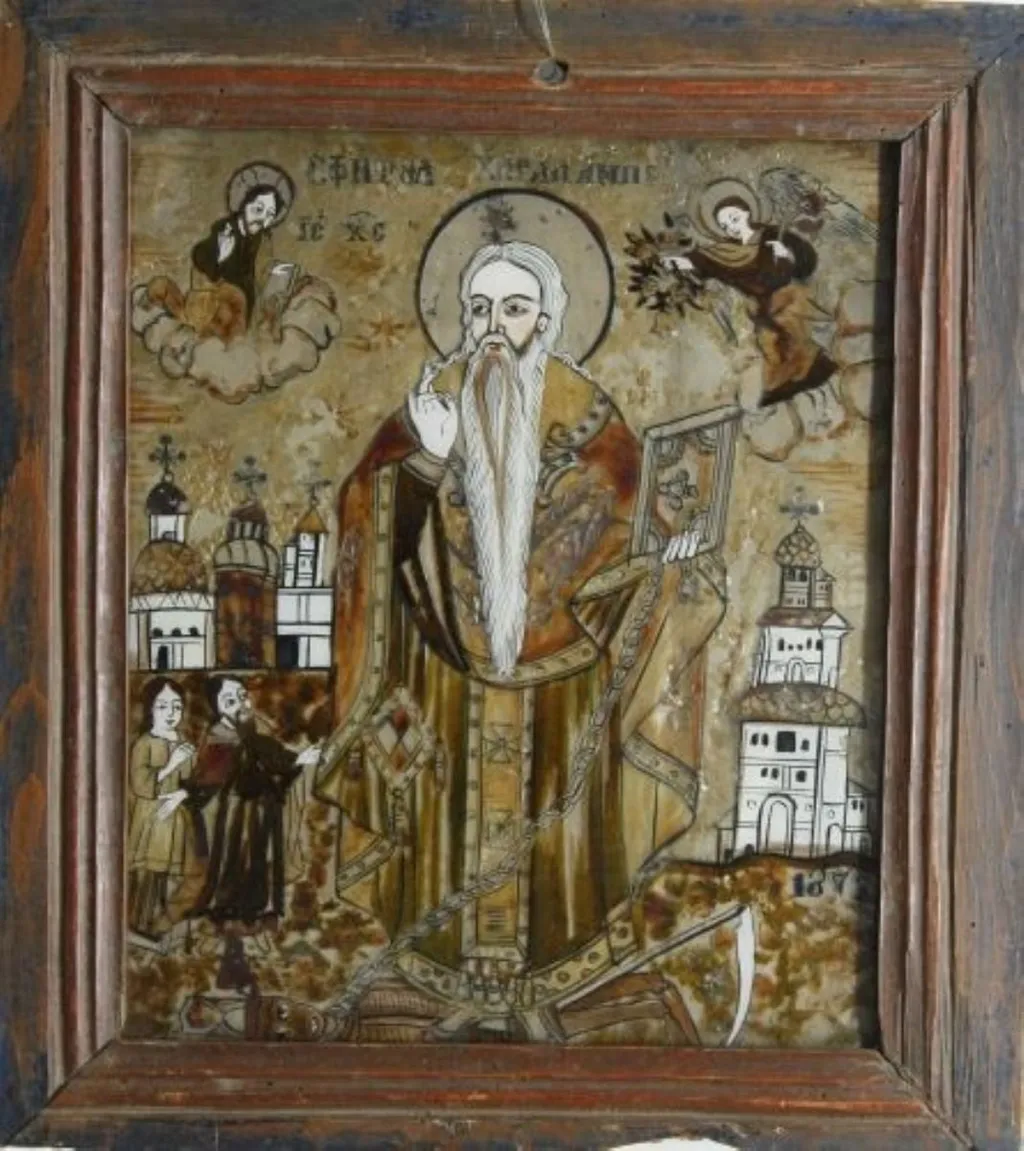
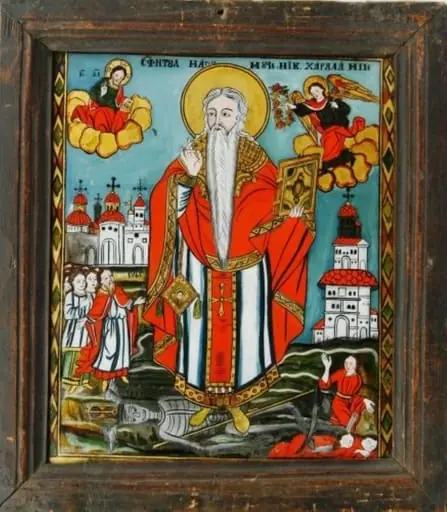
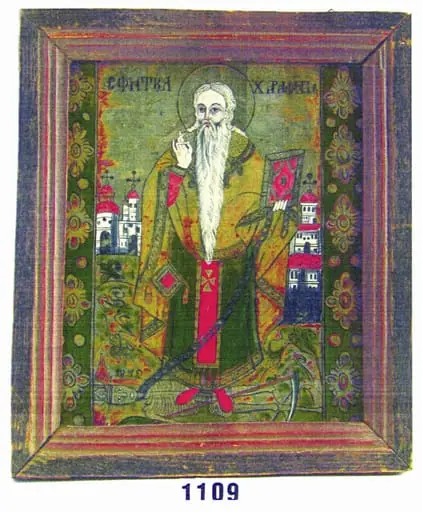
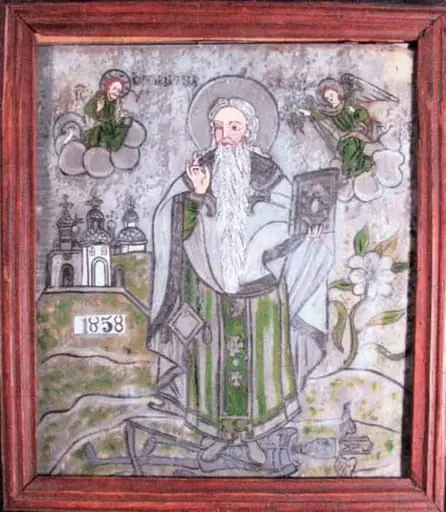
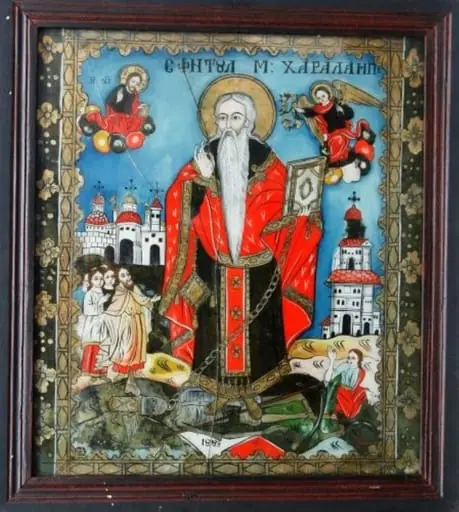
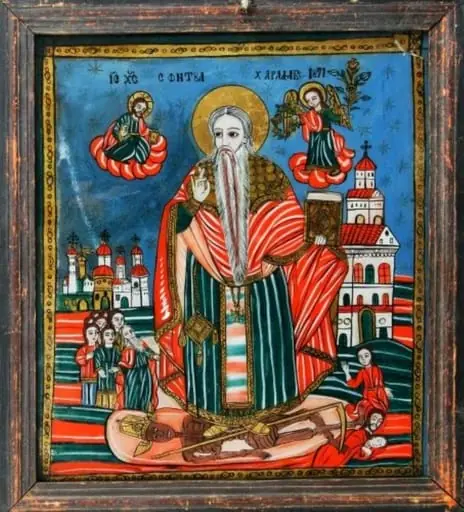
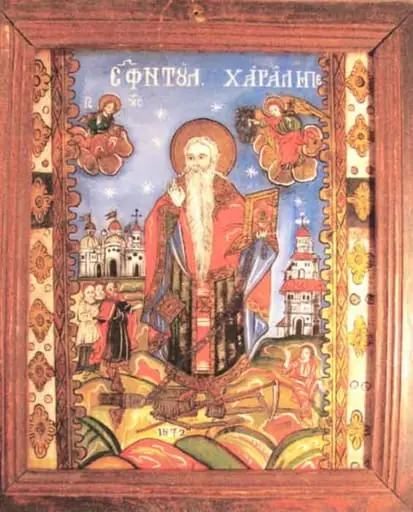
Sfântul Mare Mucenic Haralambie is a drawing by the Impressionist artist Unknown. It dates from 1873 and is held in the collection of the Romanian Peasant Museum. This painted image depicts Saint Haralambie, a Christian martyr venerated in Eastern Orthodox tradition.
About this work
Overview
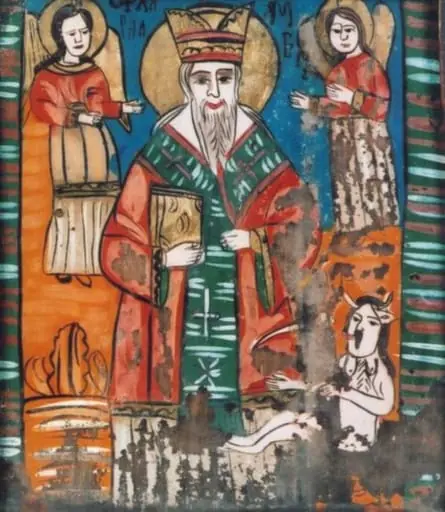
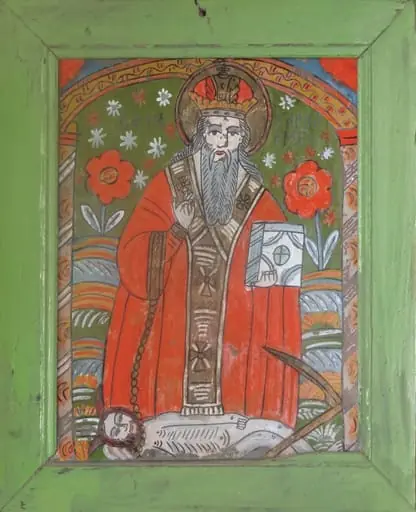
This painted image depicts Saint Haralambie, a Christian martyr venerated in Eastern Orthodox tradition.
This painted image depicts Saint Haralambie, a Christian martyr venerated in Eastern Orthodox tradition. He is shown as a central, towering figure in a golden robe, his posture calm and authoritative. Surrounding him are smaller figures in mid-air, suggesting divine presence or celestial witnesses. The background includes architectural elements typical of ecclesiastical settings, while the upper corners are filled with clouds and angelic forms, reinforcing the sacred nature of the scene.
Subject & Meaning
Saint Haralambie is portrayed as a martyr and confessor of the faith, his raised hand symbolizing blessing or divine authority. The halo around his head marks his sanctity, a standard visual cue in religious iconography. The kneeling and floating figures likely represent devotees, angels, or symbolic virtues, emphasizing his spiritual intercession. Books and tools held by surrounding figures may allude to his scholarly or artisanal life before martyrdom, grounding his holiness in earthly virtue.
Technique & Style
The painting employs a traditional Byzantine-inspired style, with flattened space and hierarchical scaling to emphasize spiritual importance over naturalism. Gold dominates the palette, used for robes and halos to signify divine light, while warm browns ground the composition. Colors have faded over time, softening contrasts but preserving the luminous quality of the sacred figures. Brushwork is deliberate, with minimal shading, focusing on symbolic clarity rather than three-dimensional depth.
History & Provenance
The work likely originated in a religious context, possibly an icon from a monastery or parish church in the Balkans or Romania, where devotion to Saint Haralambie was historically strong. Its condition suggests it was used in liturgical settings for centuries, exposed to smoke, humidity, and handling. No documented provenance is available, but its style and iconography align with 18th- to 19th-century Orthodox devotional art from the region.
Context
In Eastern Orthodox tradition, saints like Haralambie were depicted not merely as historical figures but as living intercessors between the faithful and the divine. Icons served as focal points for prayer and veneration, their standardized forms ensuring theological accuracy across communities. The inclusion of architectural elements and celestial beings reflects a cosmology where heaven and earth are intimately connected, and the saint occupies a bridge between them.
Legacy
This image continues to function as a devotional object within Orthodox communities, preserving centuries-old visual language. While its artistic execution may not be exceptional by technical standards, its endurance reflects the enduring role of iconography in sustaining religious identity. Similar depictions of Haralambie persist in churches and private homes, affirming the continuity of belief through visual tradition.
Artist & collection

 Domestic Scene
 Giacomo and Cardinal Marco, investing Andrea, Abbot of San Zeno, with his Benefice
 The Nymph of Fontainebleau
 Portrait of a Woman
 Madonna and Child with Saints in the Enclosed Garden
 Venus and Minerva
 Family Group of Four on Sofa
 Wall painting from Room H of the Villa of P. Fannius Synistor at Boscoreale