Artwork
Sfântul Inokentie; Prima găsire a capului Sf. Ioan Botezătorul
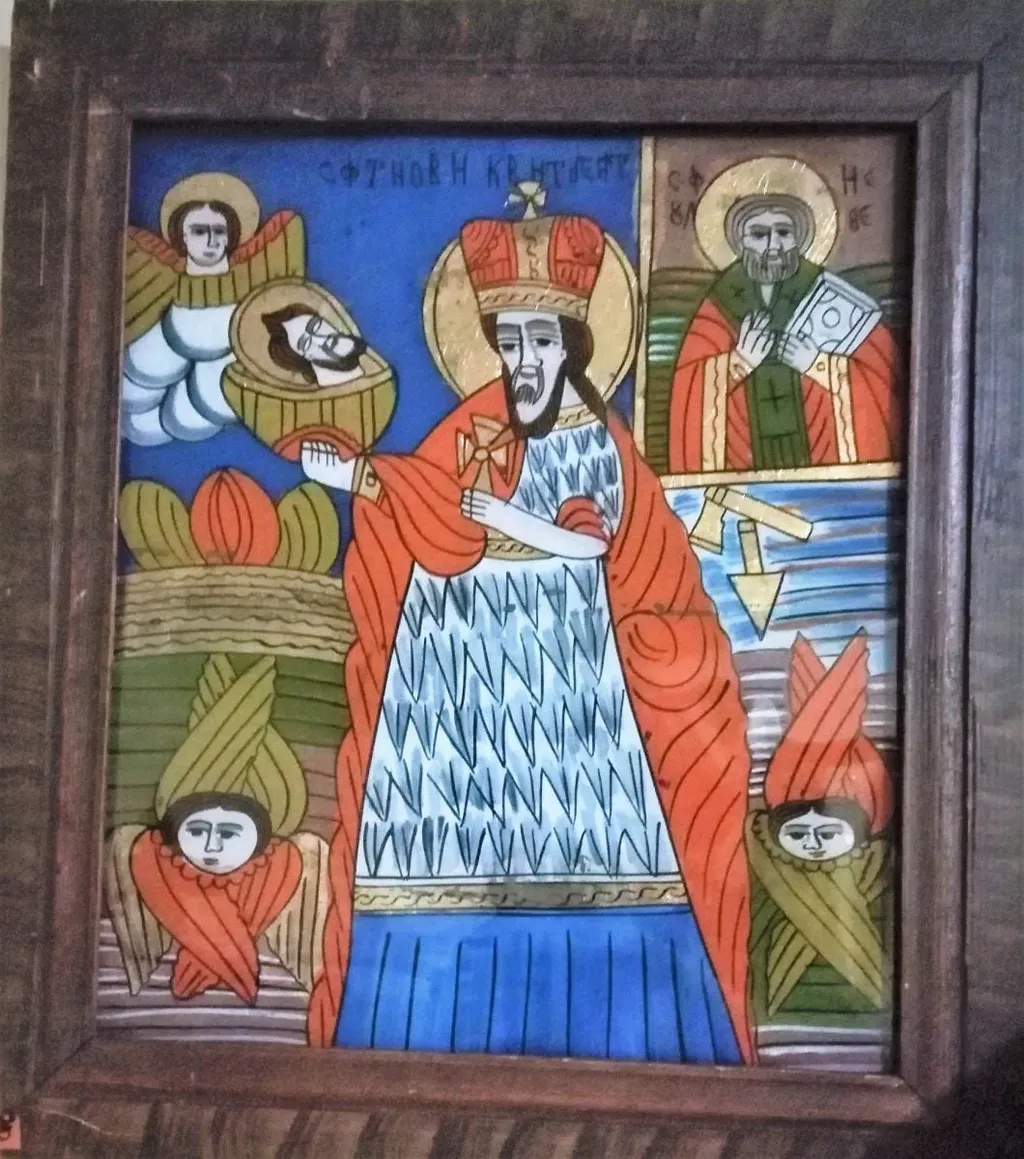
Sfântul Inokentie; Prima găsire a capului Sf. Ioan Botezătorul is a drawing by Unknown. It dates from 1850 and is held in the collection of the Maramureș Ethnography and Folk Art County Museum. This religious painting depicts a scene from Orthodox Christian tradition, centered on Saint Inokentie, a revered monastic figure.
About this work
Overview
The use of vivid colors and a luminous background suggests a sacred space, emphasizing spiritual presence over naturalistic setting.
This religious painting depicts a scene from Orthodox Christian tradition, centered on Saint Inokentie, a revered monastic figure. The composition includes additional holy persons and symbolic relics arranged with formal symmetry. The use of vivid colors and a luminous background suggests a sacred space, emphasizing spiritual presence over naturalistic setting. The figures are rendered with deliberate stillness, inviting contemplation rather than narrative action.
Subject & Meaning
The central figure, Saint Inokentie, is portrayed with regal attributes—crown and staff—signifying his spiritual authority. Surrounding him are other saints, including a figure likely representing John the Baptist, whose head is the subject of the title’s reference. The presence of halos and relics underscores themes of divine revelation and veneration. The scene commemorates the discovery of John the Baptist’s head, a moment of profound theological significance in Eastern Christian tradition.
Technique & Style
The painting employs flat, decorative planes of color with minimal shading, typical of Byzantine-influenced iconography. Figures are stylized, with elongated proportions and frontal poses that prioritize symbolic presence over physical realism. Backgrounds are rendered in solid hues, enhancing the otherworldly atmosphere. While cross-hatching is mentioned, the work relies more on outlined forms and color contrast to define volume and texture.
History & Provenance
The painting originates from a region with strong Orthodox Christian traditions, likely the Balkans or Romania, during the 18th or early 19th century. It was probably created for liturgical use in a monastery or private chapel. Its survival suggests it was carefully preserved, possibly due to its devotional importance. No documented ownership history is available, but its style aligns with regional ecclesiastical art of the period.
Context
This work reflects the enduring influence of Byzantine iconography in Eastern Orthodox communities, where religious imagery served as both worship aid and theological instruction. Depictions of saintly discoveries, like the finding of John the Baptist’s head, reinforced beliefs in the sanctity of relics. Such paintings were often commissioned during periods of spiritual renewal or in response to political upheaval, affirming communal identity through sacred narrative.
Legacy
Though not widely known outside regional collections, the painting exemplifies the continuity of Orthodox iconographic traditions into the modern era. It preserves a visual language that prioritizes spiritual meaning over individual expression. Its survival offers insight into how local communities maintained religious identity through art, even amid broader cultural and political changes in the Balkans.
Artist & collection
Museum
Maramureș Ethnography and Folk Art County Museum
Continue through works from the same source collection.
 Domestic Scene
 Giacomo and Cardinal Marco, investing Andrea, Abbot of San Zeno, with his Benefice
 The Nymph of Fontainebleau
 Portrait of a Woman
 Madonna and Child with Saints in the Enclosed Garden
 Venus and Minerva
 Family Group of Four on Sofa
 Wall painting from Room H of the Villa of P. Fannius Synistor at Boscoreale
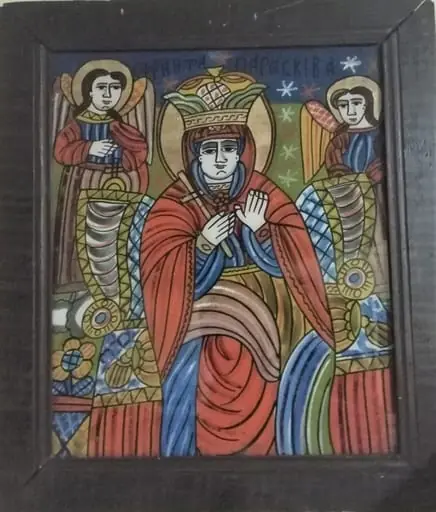 Sfânta Paraschiva (Sfânta Vineri)
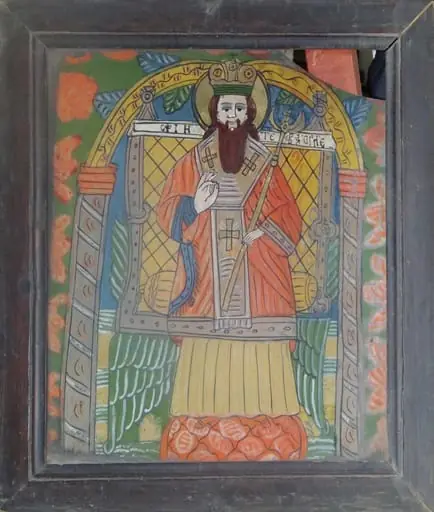 Sf. Vasile cel Mare
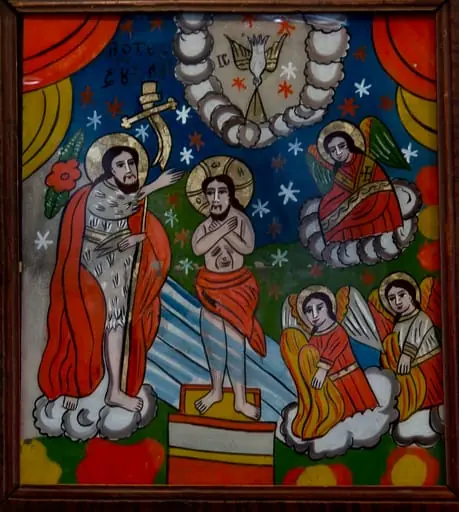 Botzezul lui IS HS
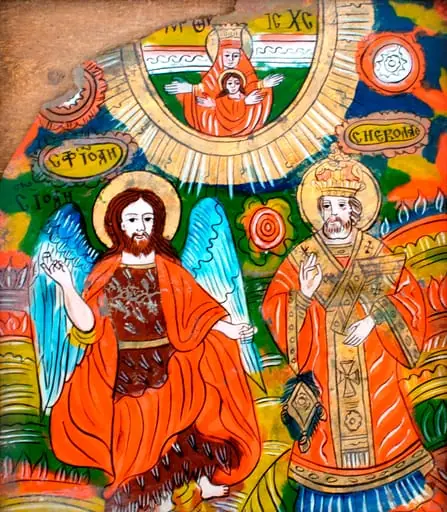 Asociere mai rar întâlnită, probabil comandată special. Icoana îi reprezintă pe în prim plan Sfinții Ioan Botezătorul și Sfântul Nicolae(1/1), deasupra lor Maica Domnului Platytera într-un medalion aurit,înconjurat de raze. Maica are coroană împărătească și îl ține pe Isus copil în poală, ambii avînd brațele desfăcute. Sfântul Ioan este în ipostaza îngerească, înaripat, desculț, binecuvântând cu dreapta, înveșmântat cu haina de păr de cămilă, deasupra mantie roșie. Sfântul Nicolae este prezentat în ipostaza de mare ierarh, cu însemnele episcopale(mitră pe cap, sacos, epitrahil decorat cu cruci și motive florale, bedernița cu franjuri și motive geometrice) Relief stilizat, alternanță de benzi ondulate multicolore, și registre cu elemente fitomorfe. Inscripțiile în chenare, numele sfântului Ioan dublat în afara chenarului. Câmp albastru ultramarin, decorat cu pete de culoare și motive astrale stilizate. Medalionul este împărțit în două zone de culoare(galben și verde) printr-o bandă albă cu motiv spiralat(funia răsucită). Cromatica este foarte variată:alb, albastru, verde, roșu, galben, ocru,culori intense. Icoana are colțul stâng lipsă.
 Prăznicar – Botezul lui IS HS
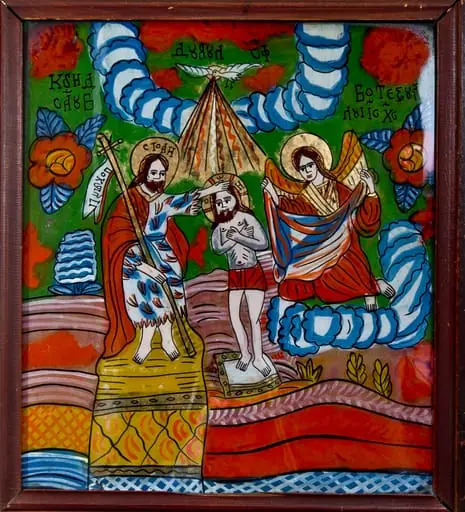 Botezul lui IS HS
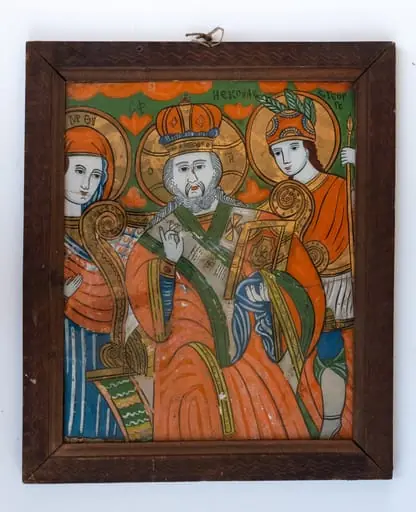 Sfântul Nicolae încadrat de Fecioara Maria și Sfântul Gheorghe
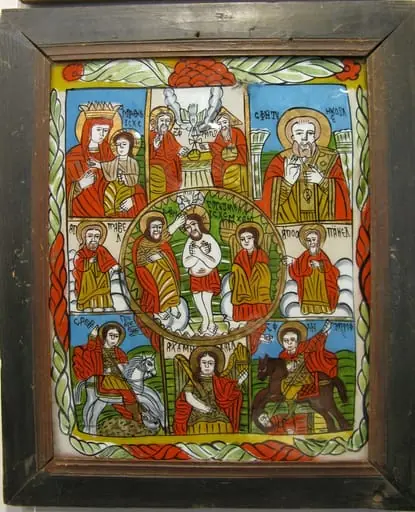
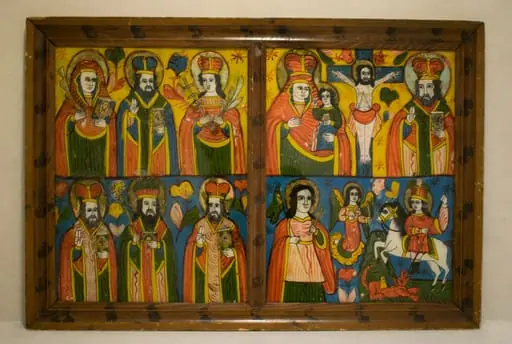 Icoana este pictată în oglindă, pe un suport de sticlă de formă dreptunghiulară în ax orizontal. Sunt reprezentate patru scene, despărțite orizontal printr-o linie neagră iar vertical printr-o stinghie îngustă de lemn, datorită lățimii mari a sticlei. În primul câmp apare un sfânt ierarh, tânăr(posibil sf. Nicolae, deși nu e reprezentarea canonică),, binecuvîntînd cu dreapta, în stânga ținînd Evanghelia, flancat de două sfinte. Cea din dreapta corespunde reprezentării sf. Paraschiva, cu o cruce în mâna dreaptă și o ramură în stânga. Cea din dreapta, cu o carte în stânga și o ramură în cealaltă, ar corespunde Maicii Domnului. A doua scenă îl are în centru pe Isus Hristos răstignit pe cruce, de o parte și de alta pe Maica Domnului Hodighitria cu Pruncul, iar de cealaltă pe Sfântul Ioan Evanghelistul în postura de ierarh.Registrele de jos: stânga. Sfinții trei ierarhi(Grigorie, Vasile și Ioan) în veșminte arhierești, cu mitră pe cap, dreapta: sfântul Gheorghe, în costum ostășesc, omorînd balaurul(de formă canină) Alături de acesta mai apare o sfântă cu o cruce în mână și un steag în cealaltă, probabil o confuzie(fata de împărat pe care o salvează sfântul asimilată unei sfinte. În fața calului, pe un nor, Arhanghelul Gavriil. Chipurile sunt expresive, contururile destul de precise, compoziția foarte încărcată, de la densitatea personajelor la abundența detaliilor(falduri dese, realizate prin linii drepte și ondulate, transversale și verticale, câmpul umplut cu motive florale și astrale). Câmp de culoare galbenă în registrele superioare și de culoare albastră în cele inferioare, împodobit cu stele albe și roșii și motive florale. Paleta cromatică este variată:alb, roșu, galben, verde, albastru La aureole, cărți, ramuri, etc, este folosită foița de aur. Rama lăcuită, de culoare brun roșcat, decorată cu puncte mari,negre. Dosul este alcătuit din două bucăți de placaj.
 lada de haine