Artwork
lada de haine
lada de haine is a drawing by Unknown. It dates from 1850 and is held in the collection of the Bistrita-Năsăud Museum Complex. The composition presents three standing figures arranged horizontally.
About this work
Overview
The composition presents three standing figures arranged horizontally. The central figure is affixed to a plain wooden cross, crowned with a halo, while the flanking figures are dressed in vivid, long robes of red, green, and blue, their expressions serene. A banner bearing text hovers above the cross, and birds are depicted near the upper edges of the image.
Subject & Meaning
The central crucified figure, identified by the halo, evokes a religious martyrdom, likely referencing a Christian savior. The calm demeanor of the surrounding figures and their bright garments may suggest reverence or witness, while the banner’s inscription could provide a textual clue to the narrative, and the birds might symbolize the soul’s ascent or spiritual presence.
Technique & Style
The work employs flat, unmodulated color fields and a simplified rendering of faces that resemble low-relief carving. Linear outlines define the forms, and the overall visual language is direct and archaic, recalling medieval panel painting or early iconography rather than modern illusionistic techniques.
Context
The visual elements—halo, crucifix, banner, and stylized figures—place the piece within a tradition of religious iconography. The use of bright, primary-colored robes and the straightforward composition align it with devotional art intended for clear narrative communication rather than decorative embellishment.
Artist & collection
 Domestic Scene
 Giacomo and Cardinal Marco, investing Andrea, Abbot of San Zeno, with his Benefice
 The Nymph of Fontainebleau
 Portrait of a Woman
 Madonna and Child with Saints in the Enclosed Garden
 Venus and Minerva
 Family Group of Four on Sofa
 Wall painting from Room H of the Villa of P. Fannius Synistor at Boscoreale
 Constantin și Elena
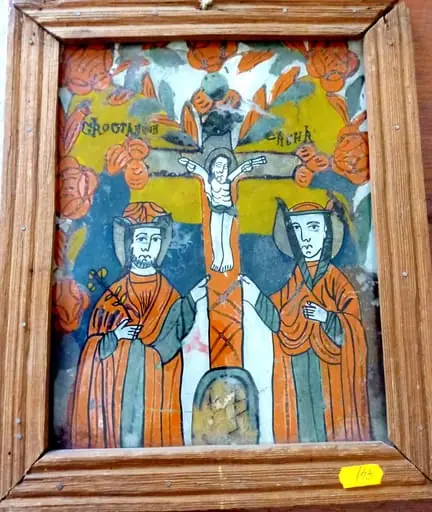
 În centrul icoanei este Crucea roșie vermillon, pe care este răstignit Mântuitorul Iisus Hristos. În stânga crucii este Sfânta Împărăteasă Elena, și în dreapta este Împăratul Constantin. Veșmintele sfinților împărați sunt pictate cu roșu vermillon și verde-smarald-gri. Poartă coroane împărătești și aureole de sfinți, mantiiile de împărați le au prinse la gât cu fibulă. Crucea are capetele brațelor cu elemente decorative trilobate roșii vermillon-verzi. Fondul este cerul albastru ceruleum-regal. Întreaga compoziție iconografică este încadrată de un chenar decorativ fitomorf, format dintr-o bogată ghirlandă de trandafiri-bujori, formată din 6 ruje roșii mari. În interiorul icoanei este un spațiu galben luminos cu umbre roșii paralele. Cromatica este armonioasă: roșu vermillon-cărămiziu, albastru ceruleum-regal, verde smarald, gri, bej, crem, bronziu, brun, ocru, alb, negru. Inscripția în româno-chirilică se traduce Constantin și Elena. Icoana este din Nordul Transilvaniei, Nicula.
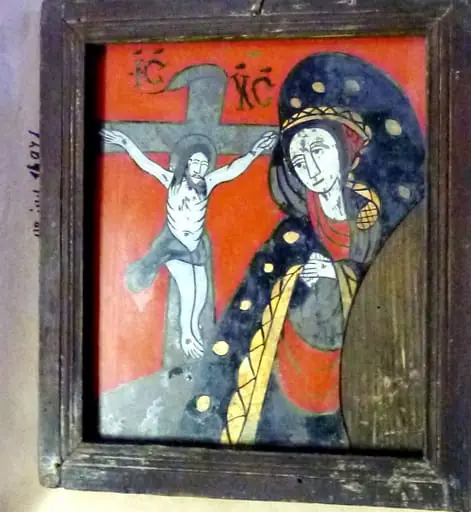 Maica Domnului Indurearata
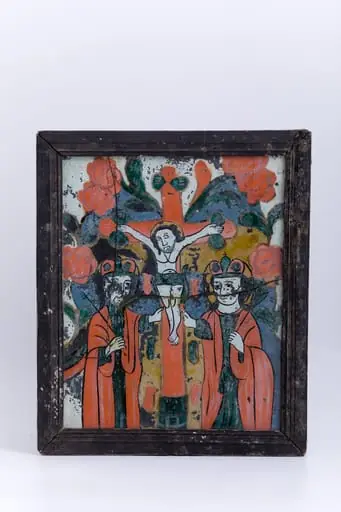
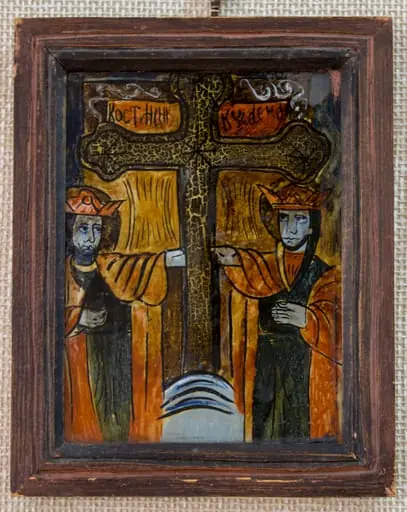 Icoana este pictată pe spatele unei bucăți de sticlă dreptunghiulară, în ax vertical. Compoziția îi reprezintă pe Sfinții Împărați Constantin și Elena, susținînd crucea pe care a fost răstignit Isus, cruce găsită de Împărăteasa Elena la Ierusalim. Crucea, aflată pe un postament semicircular, are brațele trilobate și brațele însemnate cu cruci. Chenarul crucii este trasat cu negru, din două linii subțiri. Cei doi sfinți sunt reprezentați cu coroane împărătești, în picioare, sub brațele crucii. Veșmintele sunt simple, mantii aurii și tunici verzi.Câmpul- aceeași nuanță de orange cu tonuri de brun, rezultate din distribuția neuniformă a culorii. În partea de sus, prelungit lateral până la brațele crucii, chenarul specific Niculei, zăluțe albe pe fond brun. Compoziția se remarcă prin simetrie și valorația cromatică. Rama este pictată în cafeniu la interior și roșu la exterior.
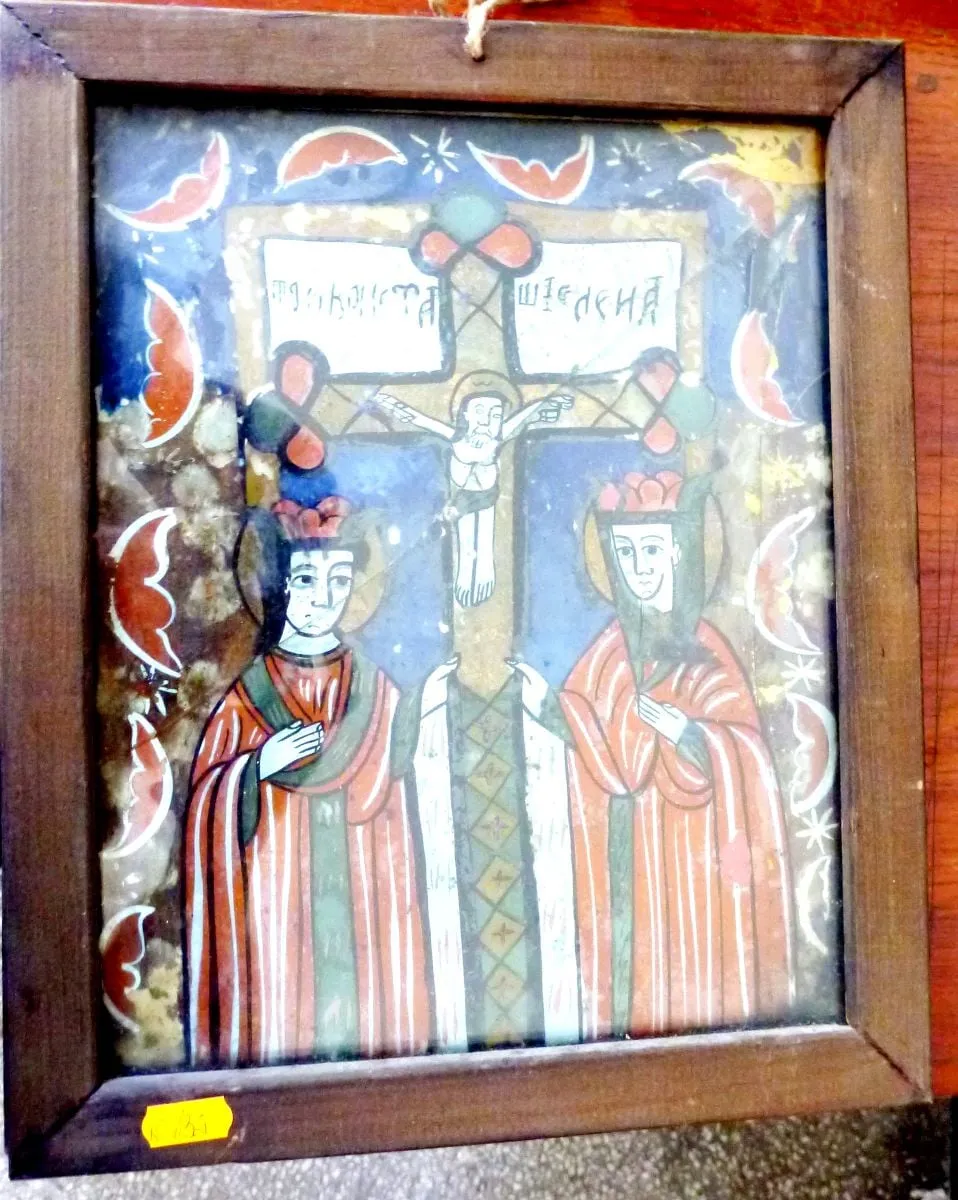
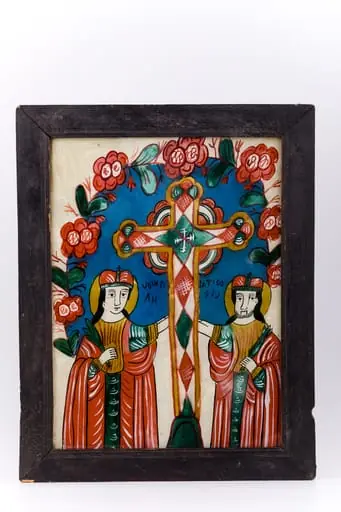 În centrul icoanei este Crucea, iar în dreapta crucii este Sfânta Împărăteasă Elena, și în stânga este Împăratul Constantin. Veșmintele sfinților împărați sunt pictate cu roșu vermillon și ocru-muștar și mânecile și epitrahile-patrafire vernil-gri. Poartă coroane împărătești și aureole de sfinți, mantiiile de împărați le au prinse la gât cu fibulă. Crucea este alb-crem cu elemente decorative geometrizante romboidale roșii-verzi și are capetele brațelor cu elemente decorative trilobate roșii vermillon-vernil. Fondul este cerul albastru ceruleum-regal foarte senin. Împrejurul Crucii este un spațiu luminos de alb-ivoriu Întreaga compoziție iconografică este încadrată de un chenar decorativ geometrizant alb-luminos și un chenar fitomorf, format dintr-o ghirlandă de 7 ruje - trandafiri și bujori roșii vermillon și 2 boboci de măceș - cu frunze gri-verzui. Cromatica este armonioasă: roșu vermillon-stacojiu-rose, albastru cobalt-regal, ocru-muștar, bronziu, brun, galben-chihlimbar, verde brad, vernil-gri, alb, negru. Inscripția în româno-chirilică se traduce Constantin și Elena. Icoana este din Nordul Transilvaniei, Nicula.
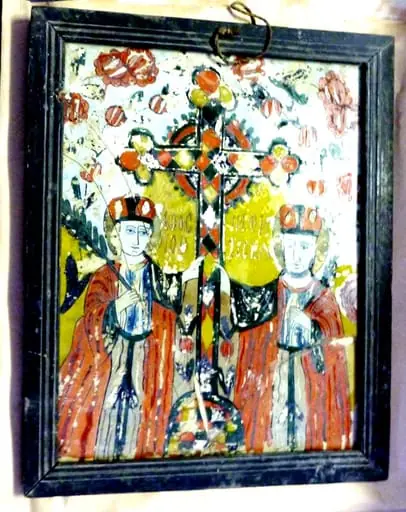 Constantin si Elena
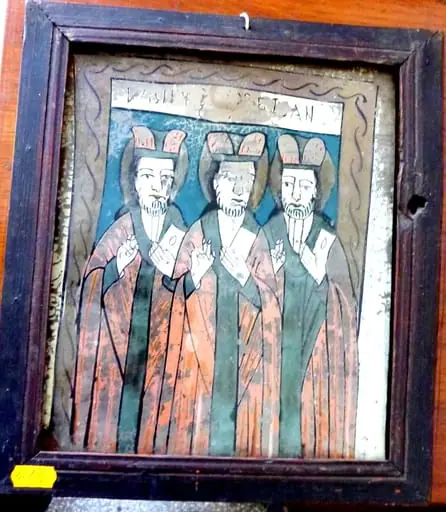 Sfinții Vasile, Grigore și Ioan
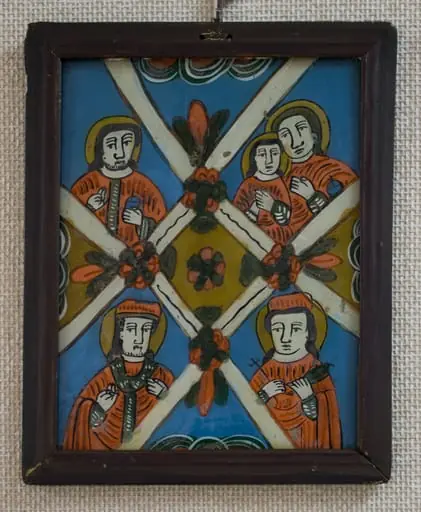 Icoai es
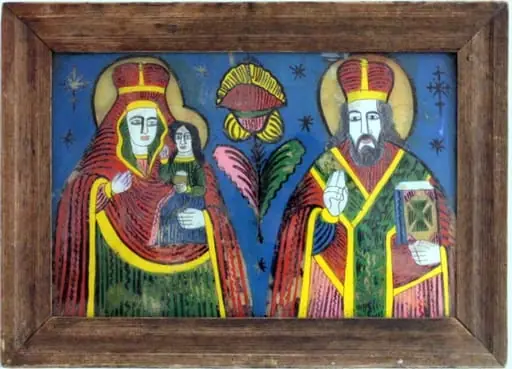 Maica Domnului cu Pruncul și Sf. Nicolae
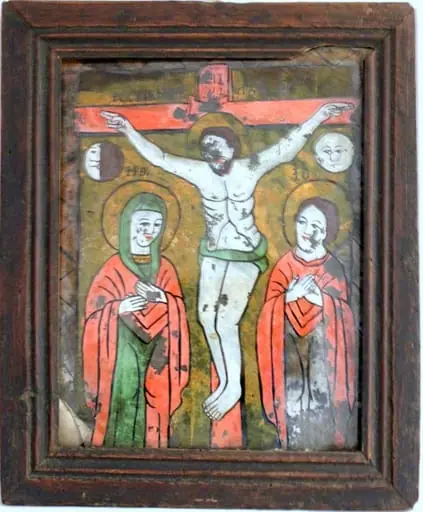 Răstignirea Domnului