Artwork
Sfinții Gheorghe și Teodor
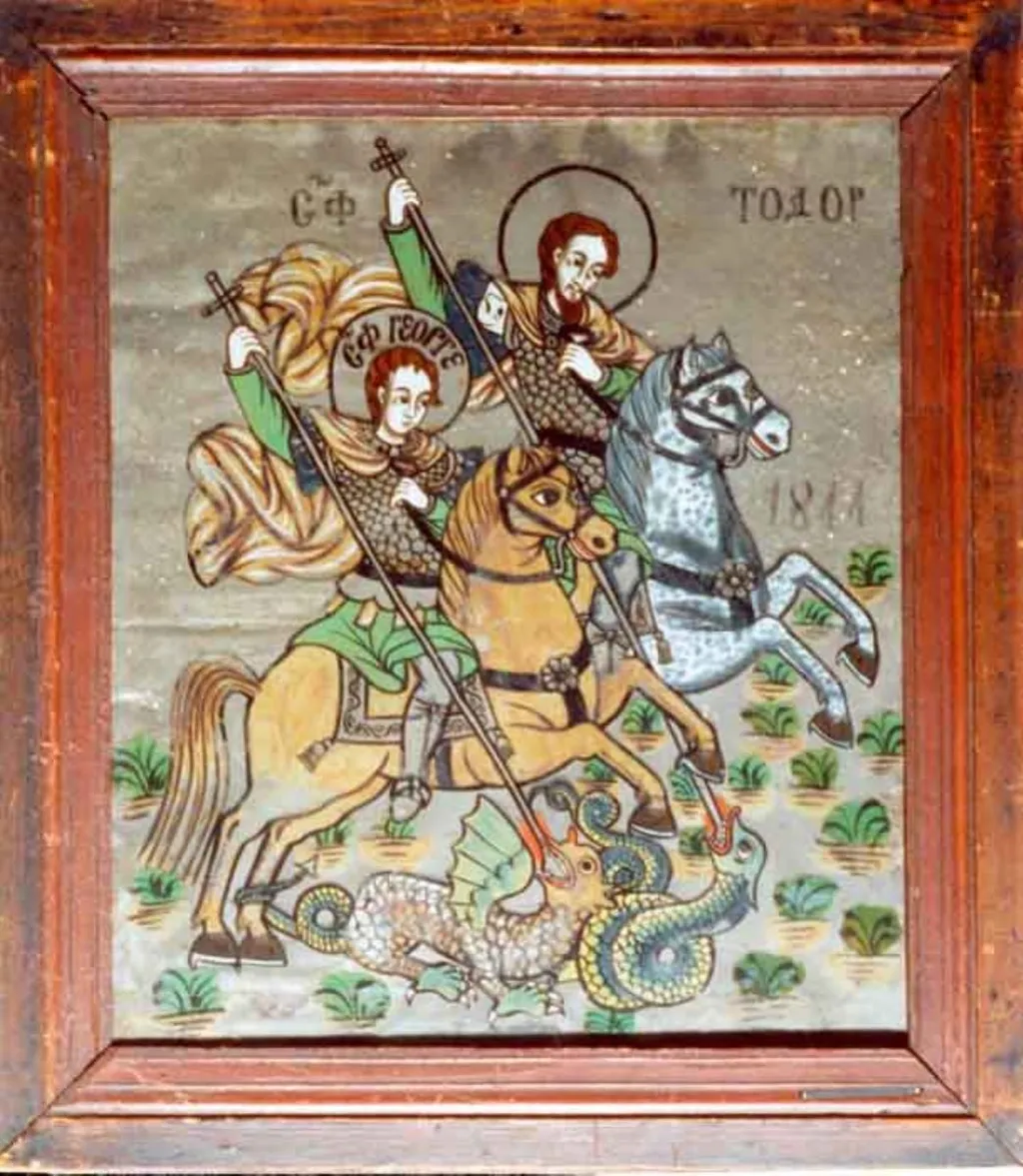
Sfinții Gheorghe și Teodor is a drawing by the Romanticist artist Unknown. It dates from 1844 and is held in the collection of the Romanian Peasant Museum. This painted panel portrays two mounted saints, George and Theodore, in a scene of symbolic combat.
About this work
Overview
The figures are rendered with fine detail, emphasizing their armor, horses, and the dragon they confront.
This painted panel portrays two mounted saints, George and Theodore, in a scene of symbolic combat. The figures are rendered with fine detail, emphasizing their armor, horses, and the dragon they confront. The background is muted gray, with sparse vegetation, directing focus to the central figures. The composition follows a traditional iconographic model common in Eastern Christian devotional art, though the color palette and handling suggest regional stylistic variation.
Subject & Meaning
Saint George, on the left in green, is shown spearing the dragon, a widely recognized symbol of evil overcome by divine strength. Saint Theodore, on the right in brown with a beard, stands as a companion warrior-saint. Together, they represent martial piety and spiritual protection. The dragon, rendered in vivid yellow and blue, is not a natural creature but a metaphor for chaos or heresy, reinforcing the saints’ role as defenders of faith.
Technique & Style
The painting employs meticulous brushwork to render textures of armor, horsehair, and fabric folds. Colors are applied with clarity but without dramatic chiaroscuro, suggesting a devotional rather than naturalistic intent. The flat, light-gray background and stylized flora reflect conventions of Byzantine-influenced icon painting, where spatial depth is secondary to symbolic clarity and sacred presence.
History & Provenance
The work likely originated in the Balkans or Romania during the late medieval or early modern period, where veneration of Saint George and Saint Theodore was widespread among Orthodox communities. Its survival suggests it was preserved in a church or private chapel. No documented provenance exists beyond its stylistic alignment with regional icon traditions of the 17th–18th centuries.
Context
This image belongs to a broader tradition of Orthodox hagiographic art, where saints are depicted in heroic poses to inspire devotion and moral emulation. Unlike Western Renaissance narratives, it avoids perspective and emotional expression, prioritizing spiritual authority. The pairing of George and Theodore reflects liturgical practices in Eastern Christianity, where these saints were often invoked jointly for protection.
Legacy
The painting exemplifies the endurance of medieval iconographic forms in Eastern Europe long after the rise of Western artistic movements. Its stylistic consistency with earlier Byzantine models, rather than Romantic or Baroque trends, underscores the continuity of religious visual language in Orthodox communities. It remains a testament to localized devotional practices rather than broader artistic innovation.
Artist & collection

 Domestic Scene
 Giacomo and Cardinal Marco, investing Andrea, Abbot of San Zeno, with his Benefice
 The Nymph of Fontainebleau
 Portrait of a Woman
 Madonna and Child with Saints in the Enclosed Garden
 Venus and Minerva
 Family Group of Four on Sofa
 Wall painting from Room H of the Villa of P. Fannius Synistor at Boscoreale
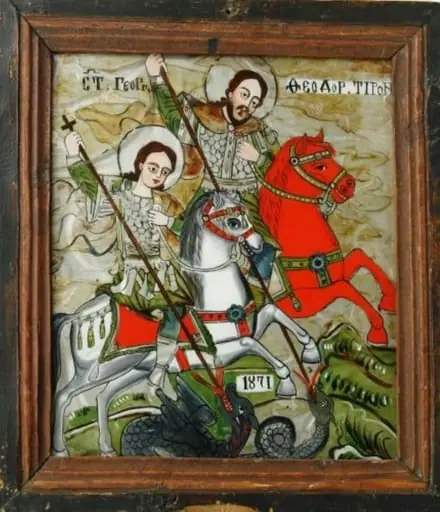 Sfinții militari Gheorghe și Teodor Tiron
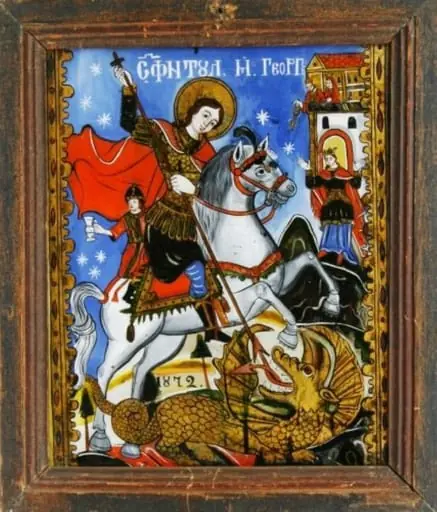 Sfântul Mare Mucenic Gheorghe
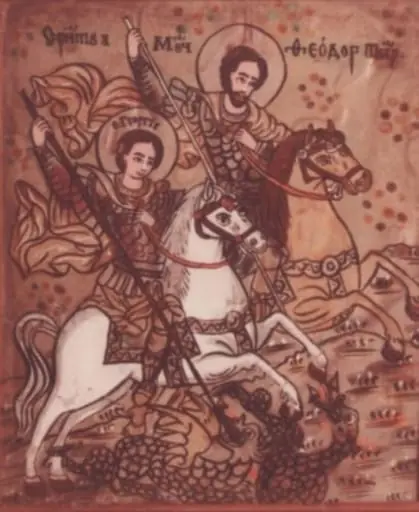 Sfinții Mucenici Gheorghe și Teodor
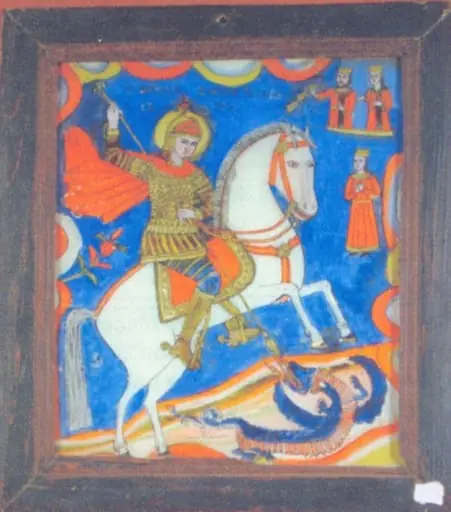 Sfântul Mare Mucenic Gheorghe
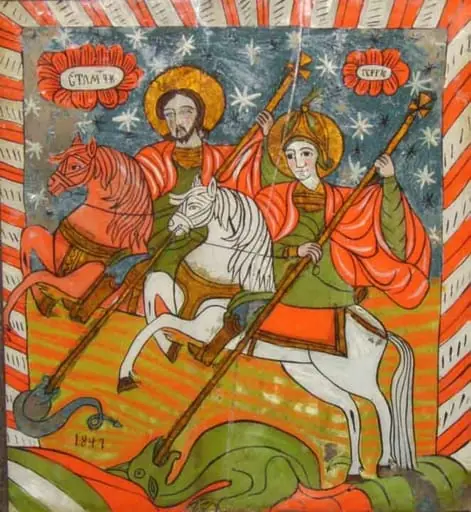 Sfântul Gheorghe și Sfântul Teodor Tiron
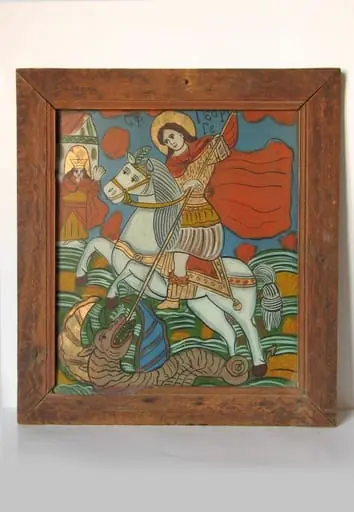 Sfântul Mare Mucenic Gheorghe Purtător de Biruință
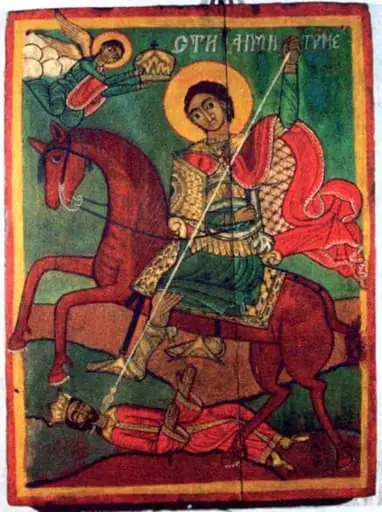 Sfântul Dimitrie
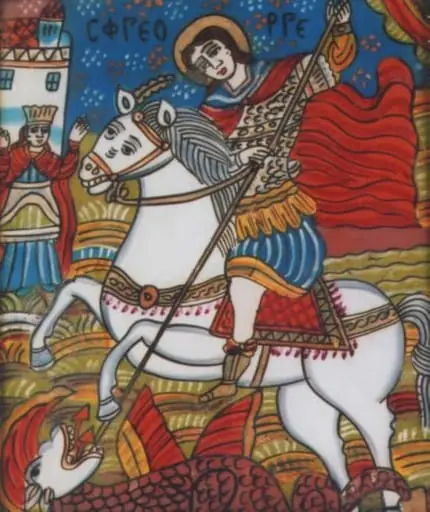 Sfântul Gheorghe
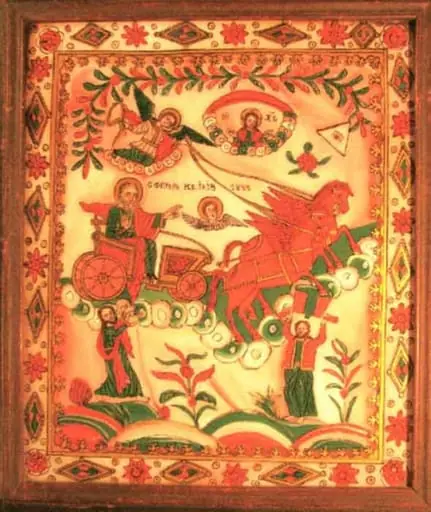 Sfântul Ilie
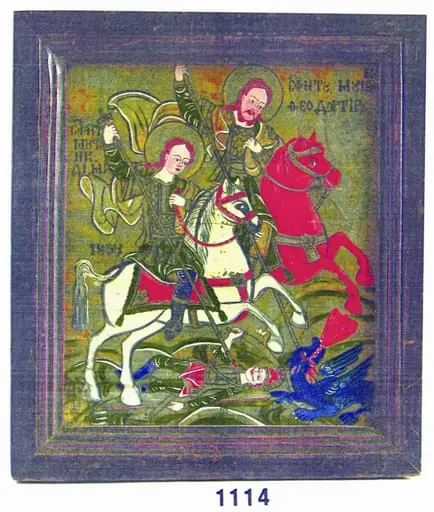 Sfinții Mucenici Dimitrie și Teodor Tiron
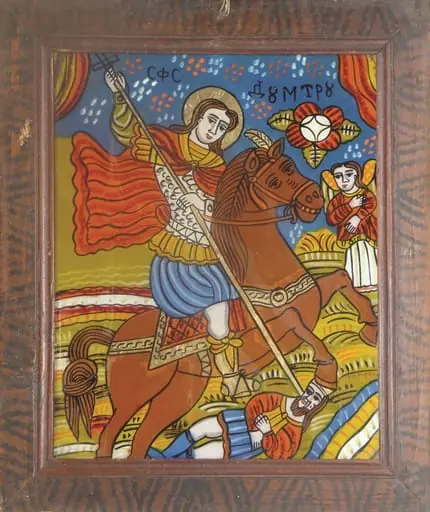 Sf. Mucenic Gheorghe, ucigând balaurul