Artwork
Shiva and Parvati on Nandi
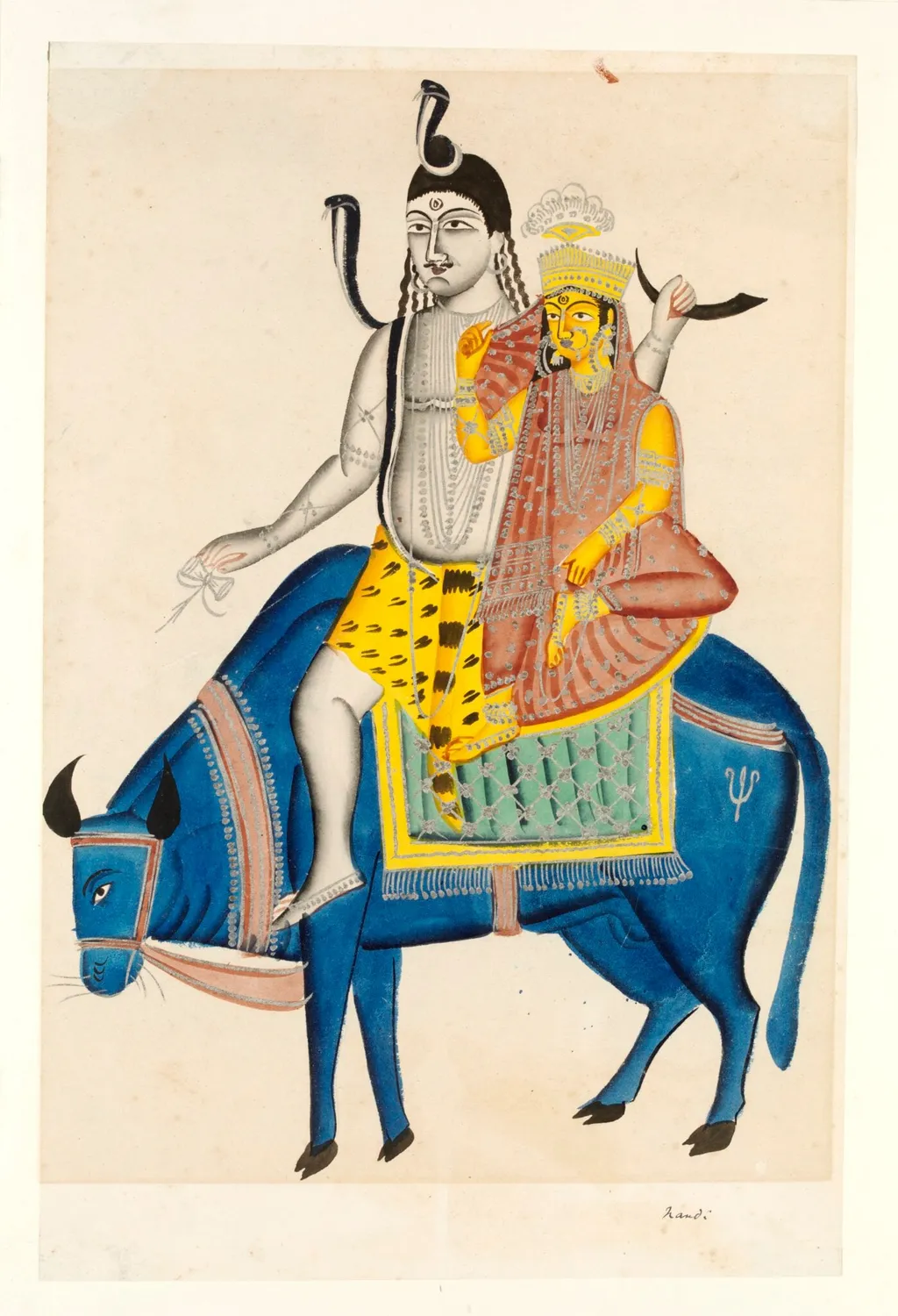
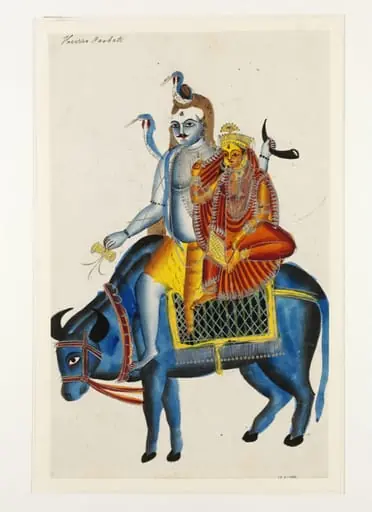
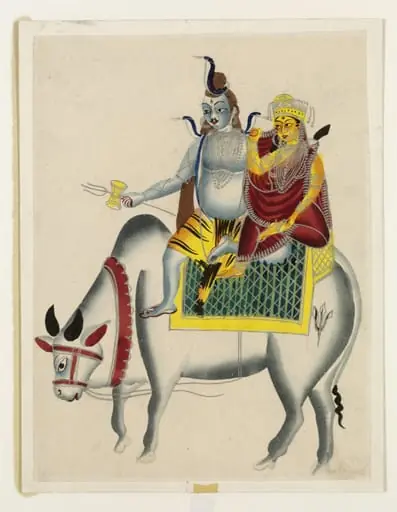
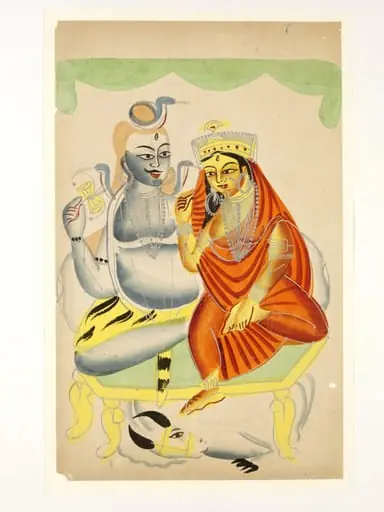
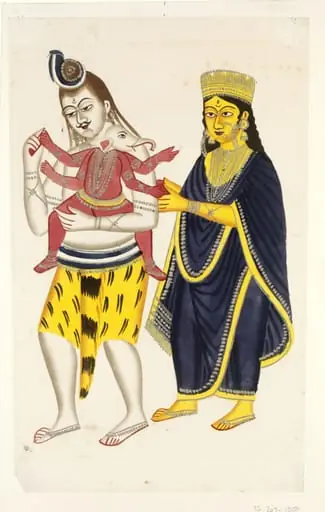
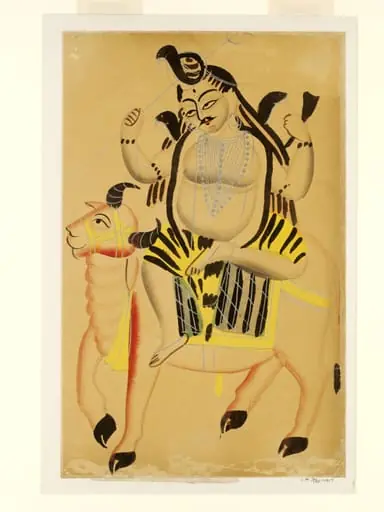
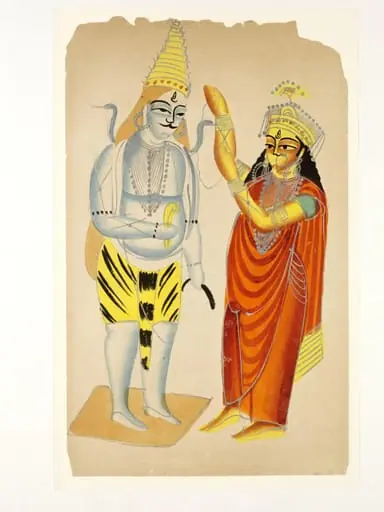
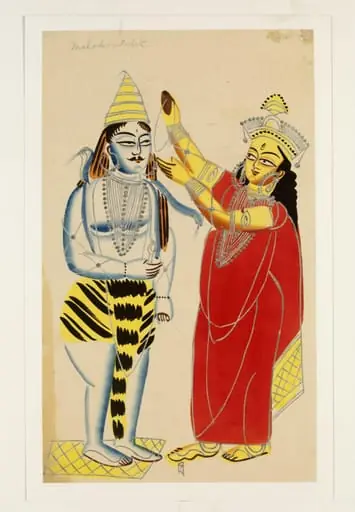
Shiva and Parvati on Nandi is a paint painting by the Romanticist artist Unknown. It dates from 1830 and is held in the collection of the Victoria and Albert Museum. This 1830 painting on paper employs opaque watercolour to depict the Hindu deities Shiva and Parvati seated upon Nandi, Shiva’s sacred bull.
About this work
Overview
Executed in a style characteristic of early nineteenth-century Indian miniature traditions, the composition relies on bold outlines and flat, vivid hues.
This 1830 painting on paper employs opaque watercolour to depict the Hindu deities Shiva and Parvati seated upon Nandi, Shiva’s sacred bull. Executed in a style characteristic of early nineteenth-century Indian miniature traditions, the composition relies on bold outlines and flat, vivid hues. The work balances symbolic detail with decorative clarity, positioning the figures against a sparse background to emphasize their divine presence.
Subject & Meaning
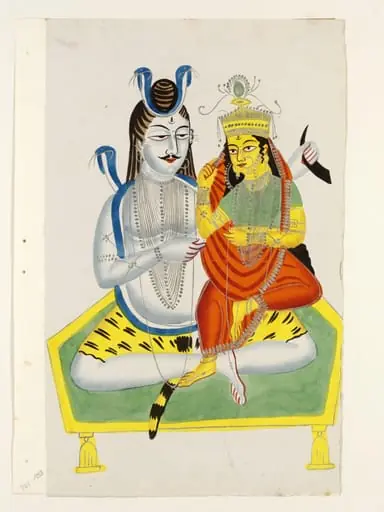
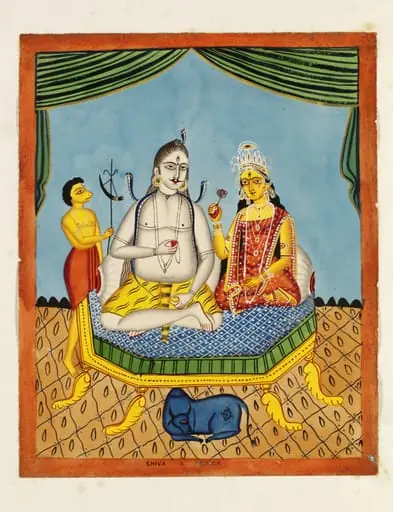
The scene portrays Shiva in his ascetic mountain-god aspect, distinguished by matted locks and a tiger-skin loincloth, alongside Parvati, his consort. Nandi, the bull, serves as both mount and devotee, underscoring the couple’s divine authority. Their union symbolizes the balance of cosmic forces—Shiva’s destructive power and Parvati’s regenerative energy—while the crescent moon on Shiva’s head alludes to his role as lord of time and renewal.
Technique & Style
The artist employs a restrained yet expressive palette, with Shiva rendered in off-white, Parvati in yellow, and Nandi in deep blue. Outlines remain crisp, and forms are filled with unmodulated colour, a hallmark of the period’s miniature conventions. Metallic pigments, likely tin alloy, accentuate jewelry and ornaments, adding luminosity without disrupting the painting’s planar composition. The green saddlecloth provides a grounding element amidst the figures’ ethereal presence.
History & Provenance
Created in 1830, the painting reflects the artistic practices of northern India during a period of sustained Mughal influence, though localized stylistic adaptations persist. Its precise origin remains unrecorded, but the materials and technique suggest production within a court atelier or a workshop catering to devotional patrons. The work’s survival indicates careful preservation, likely passing through private collections before entering institutional holdings.
Context
In the early 1800s, such devotional images circulated among Hindu communities as objects of worship and aesthetic appreciation. The painting’s iconography aligns with Shaivite traditions, where Shiva’s manifestations—here, the mountain-dwelling ascetic—are frequently paired with Parvati to convey divine harmony. The style’s clarity and accessibility reflect a broader trend toward didactic yet visually engaging depictions of sacred narratives.
Legacy
The work exemplifies the enduring appeal of miniature painting techniques in Indian art, where narrative and ornamentation merge to convey spiritual themes. Its straightforward composition and vibrant palette influenced later generations of artists, particularly those working within regional schools. Today, it serves as a document of devotional artistry, offering insight into the visual culture of nineteenth-century Hindu traditions.
Artist & collection

 Domestic Scene
 Giacomo and Cardinal Marco, investing Andrea, Abbot of San Zeno, with his Benefice
 The Nymph of Fontainebleau
 Portrait of a Woman
 Madonna and Child with Saints in the Enclosed Garden
 Venus and Minerva
 Family Group of Four on Sofa
 Wall painting from Room H of the Villa of P. Fannius Synistor at Boscoreale