Artwork
Shiva, Parvati and Nandi
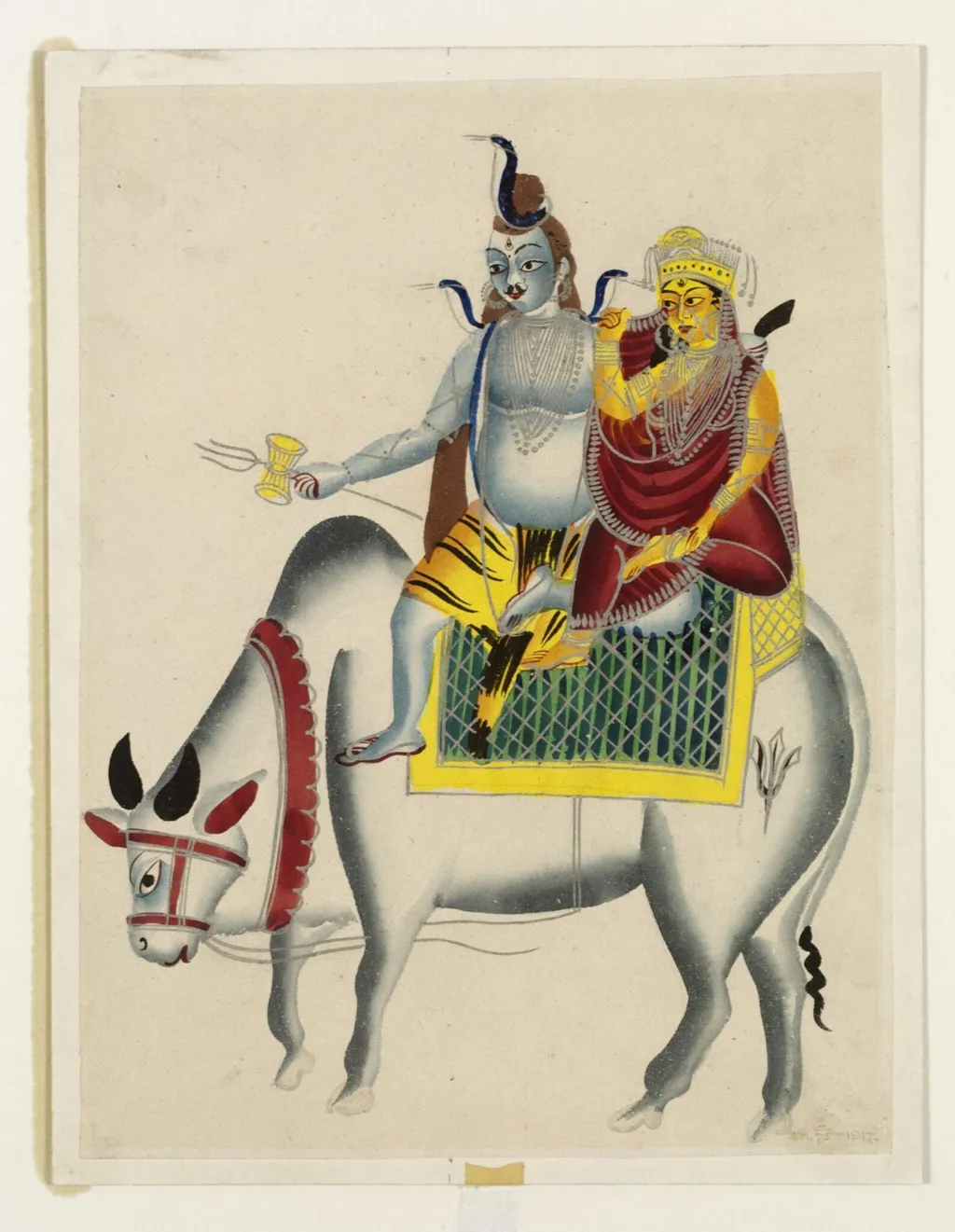
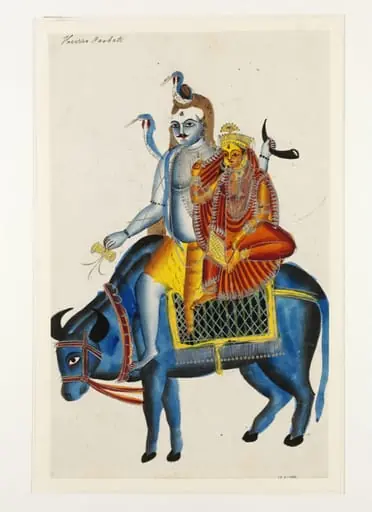
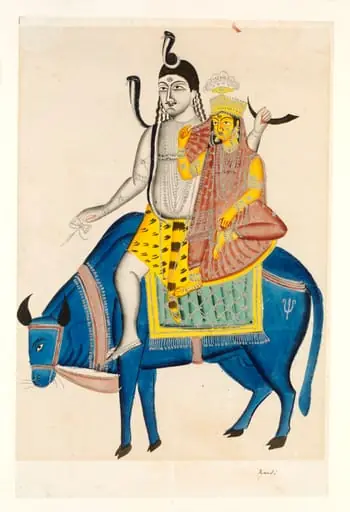
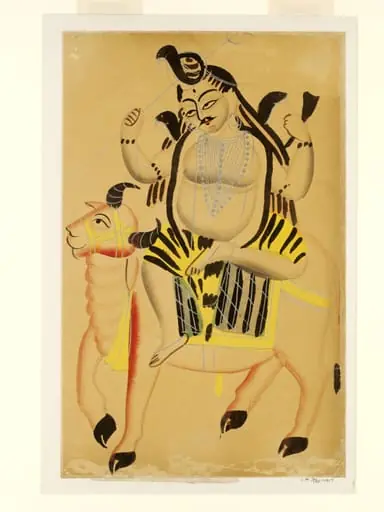
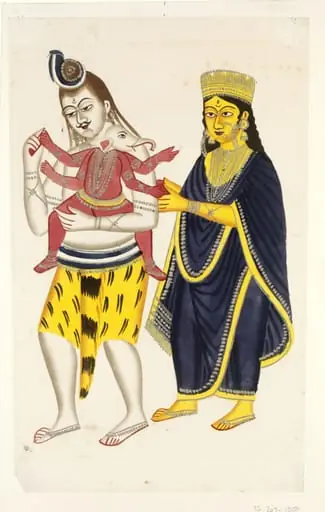
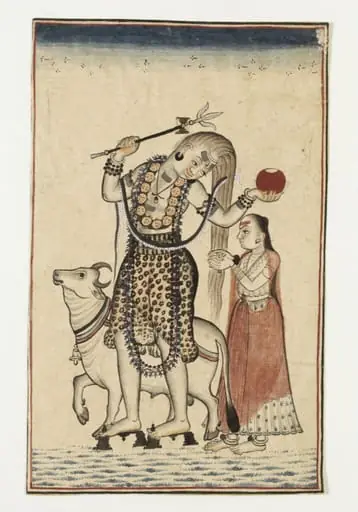
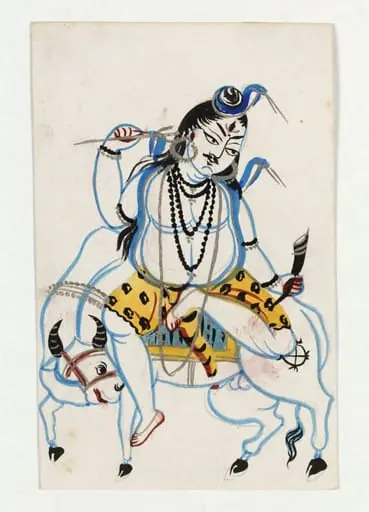
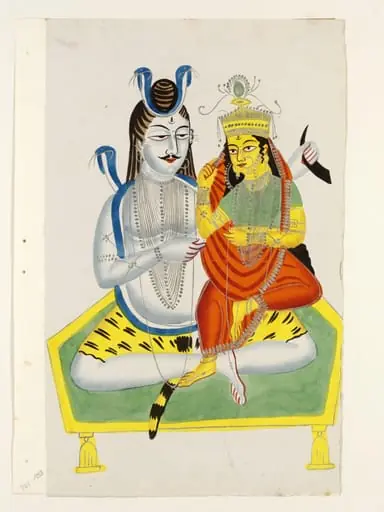
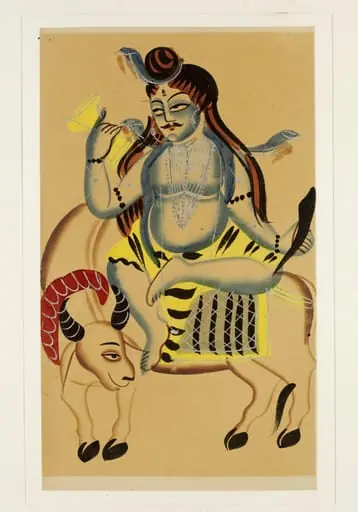
Shiva, Parvati and Nandi is a paint painting by the Impressionist artist Unknown. It dates from 1855 and is held in the collection of the Victoria and Albert Museum. This Indian painting depicts the Hindu deities Shiva and Parvati mounted on Nandi, the bull.
About this work
Overview
This Indian painting depicts the Hindu deities Shiva and Parvati mounted on Nandi, the bull. Executed in opaque watercolour and tin alloy on paper, the work features distinctive visual elements, including bold outlines, flat colors, and a vibrant palette.
Subject & Meaning
The painting represents a significant scene from Hindu mythology, with Shiva (recognizable by his blue skin and snake necklace) and his consort Parvati, adorned in a red and gold attire, riding Nandi, their traditional mount. The composition conveys the divine couple's dynamic presence.
Technique & Style
The artwork employs opaque watercolour and tin alloy on paper, resulting in bright, flat colors. The bold outlines and simple shapes give the figures a sense of motion. Notably, the work contrasts with techniques like chiaroscuro, instead relying on color and line for visual impact.
History & Provenance
Originally part of a 196-item collection assembled by J. Lockwood Kipling between 1865 and 1893, the painting was later donated to the museum by his son, Rudyard Kipling, in 1917, as part of an album predominantly containing Upper Indian and Bengali lithographs from bazaars and fairs.
Context
Created within the cultural and artistic traditions of Upper India or Bengal, the painting reflects the regional styles of the time, characterized by vivid colors and stylized forms, often found in bazaar and fair lithographs and paintings.
Legacy
As part of a notable collection, the painting contributes to the understanding of 19th-century Indian art, particularly the popular and religious art forms of the region, while its donation by Rudyard Kipling underscores its place within a broader cultural exchange.
Artist & collection

 Domestic Scene
 Giacomo and Cardinal Marco, investing Andrea, Abbot of San Zeno, with his Benefice
 The Nymph of Fontainebleau
 Portrait of a Woman
 Madonna and Child with Saints in the Enclosed Garden
 Venus and Minerva
 Family Group of Four on Sofa
 Wall painting from Room H of the Villa of P. Fannius Synistor at Boscoreale