Artwork
Shiva and Kama
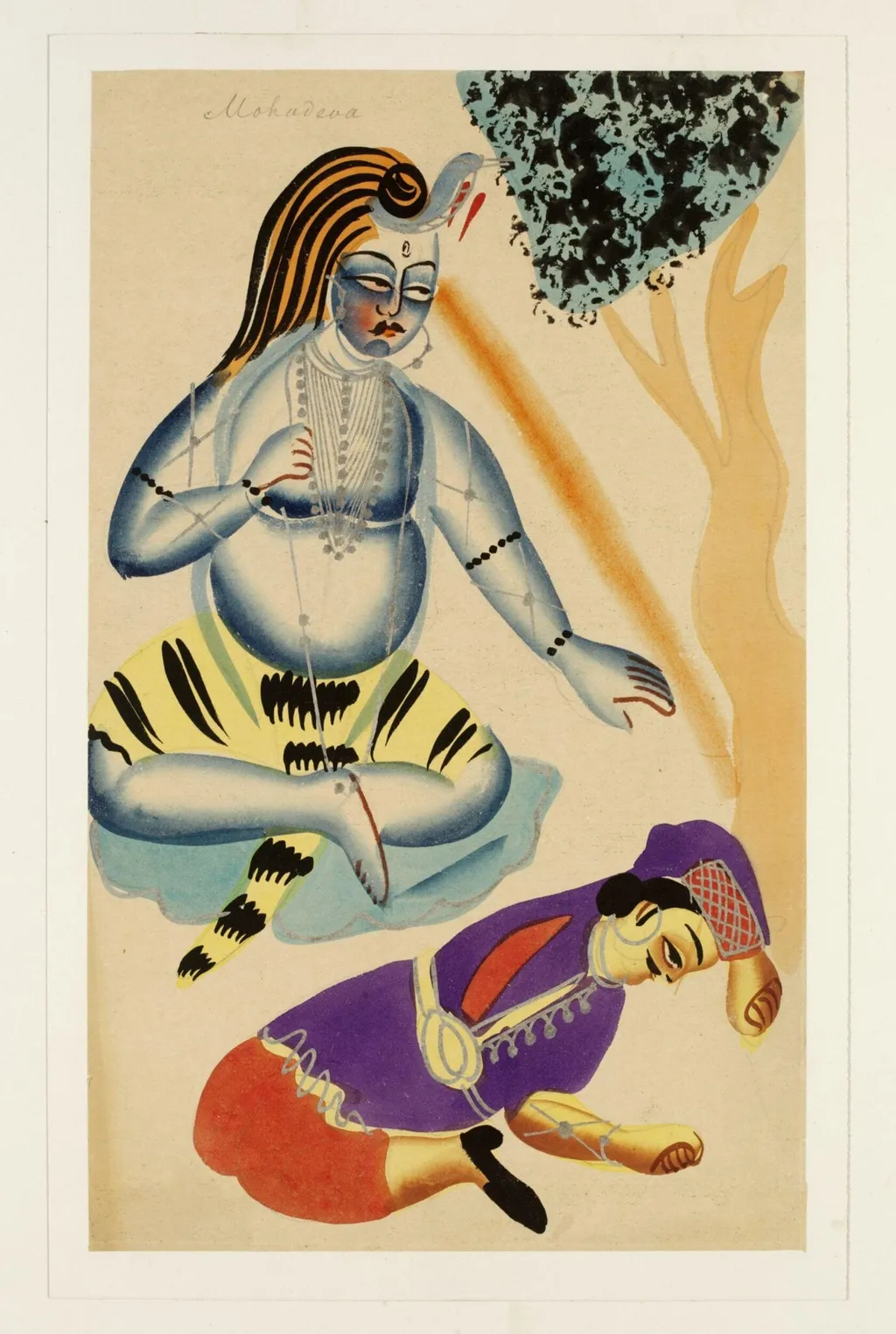
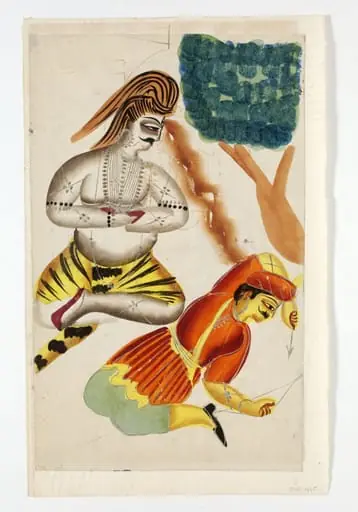
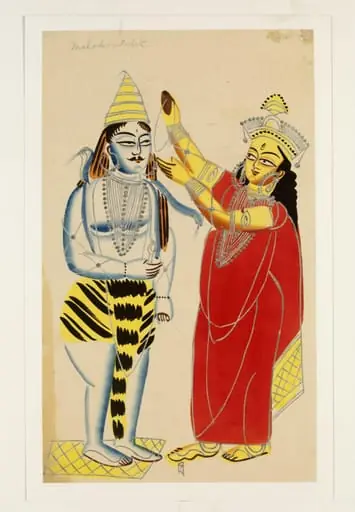
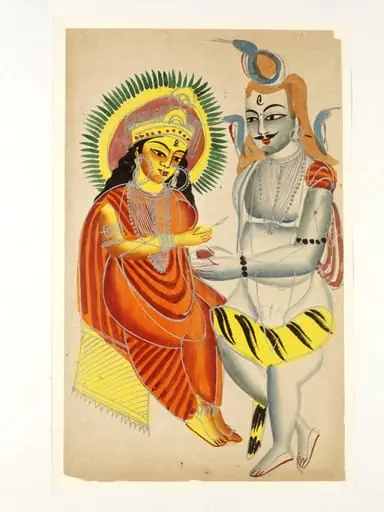
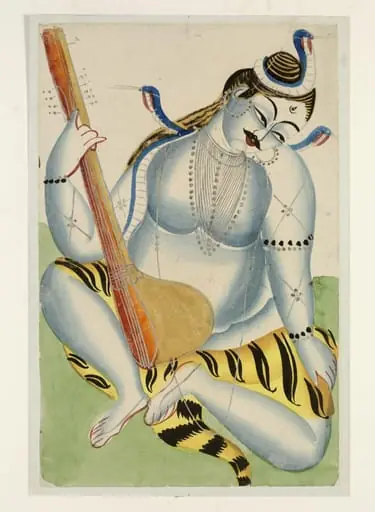
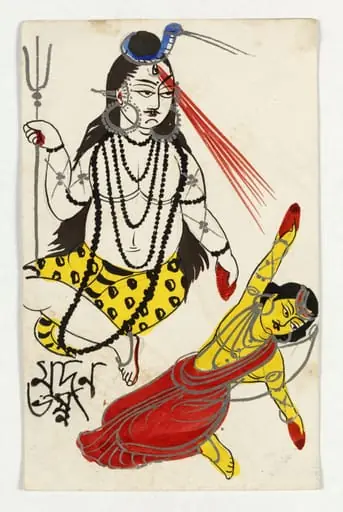
Shiva and Kama is a paint painting by the Impressionist artist Unknown. It dates from 1885 and is held in the collection of the Victoria and Albert Museum. A watercolor painting on paper, created in 1885, depicts a pivotal moment from Hindu mythology: Shiva destroying Kama, the god of love.
About this work
Overview
A watercolor painting on paper, created in 1885, depicts a pivotal moment from Hindu mythology: Shiva destroying Kama, the god of love. Executed in a simple yet vibrant style, the work features two central figures against a beige background accented with orange and blue shapes.
Subject & Meaning
The painting illustrates a mythological narrative where Shiva, recognizable by his blue skin, long hair, and serpent necklace, overpowers Kama, depicted in a purple shirt and red pants. This scene symbolizes the triumph of asceticism over desire, a common theme in Hindu mythology.
Technique & Style
Although initially described in relation to Impressionism due to its color emphasis, the painting's actual style is more characteristic of traditional Indian miniature painting, given its flat, two-dimensional representation and bold color palette. The medium of watercolor on paper further supports this classification.
History & Provenance
Part of a collection inherited by Miss M. Steele from her mother, a Cambridge Sanskrit scholar, the painting was later acquired by the museum in 1950. Its origins may trace back to Steele’s grandmother, who lived in India, indicating a familial link to South Asian art and scholarship.
Context
Created in 1885, the painting reflects the late 19th-century interest in Indian culture among British scholars and collectors, facilitated by colonial connections. It may have been produced for or acquired by the Steele family during their time in India.
Legacy
As part of a museum collection since 1950, the painting contributes to the understanding of Hindu mythology and the appreciation of Indian art forms in a Western context, highlighting the cross-cultural exchanges of the colonial era.
Artist & collection

 Domestic Scene
 Giacomo and Cardinal Marco, investing Andrea, Abbot of San Zeno, with his Benefice
 The Nymph of Fontainebleau
 Portrait of a Woman
 Madonna and Child with Saints in the Enclosed Garden
 Venus and Minerva
 Family Group of Four on Sofa
 Wall painting from Room H of the Villa of P. Fannius Synistor at Boscoreale