Artwork
Shiva
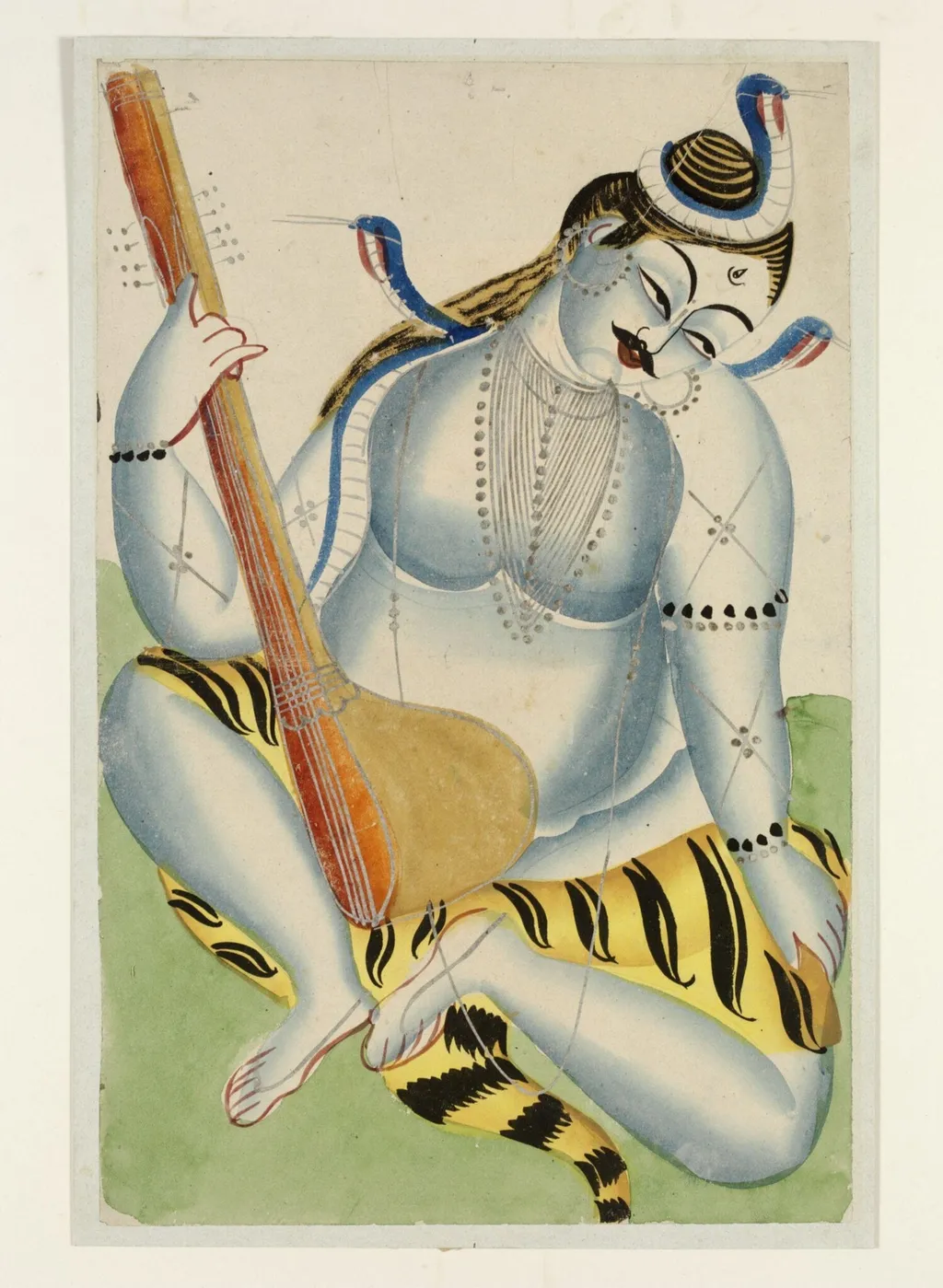
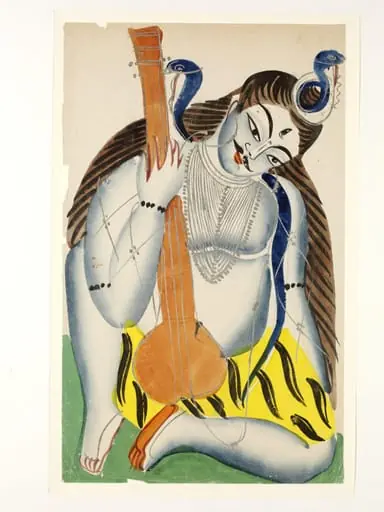
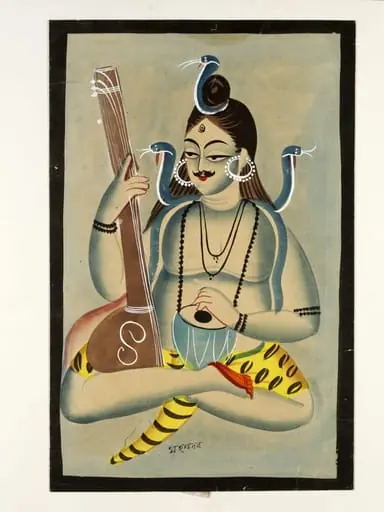
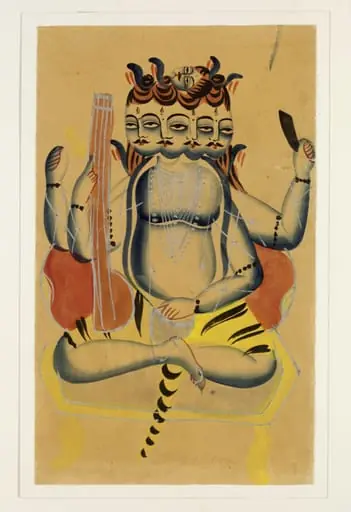
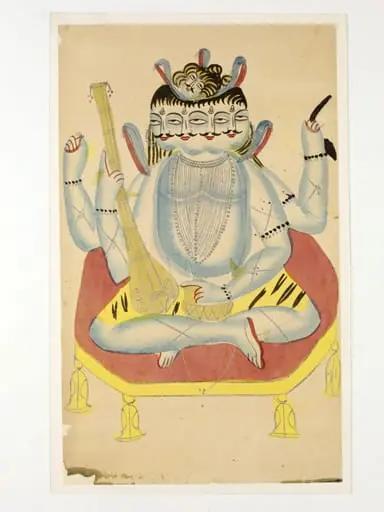
Shiva is a paint painting by the Impressionist artist Unknown. It dates from 1880 and is held in the collection of the Victoria and Albert Museum.
About this work
Overview
Rendered in the Kalighat style, it combines simplified forms with vivid contrasts, emphasizing spiritual calm through minimal detail.
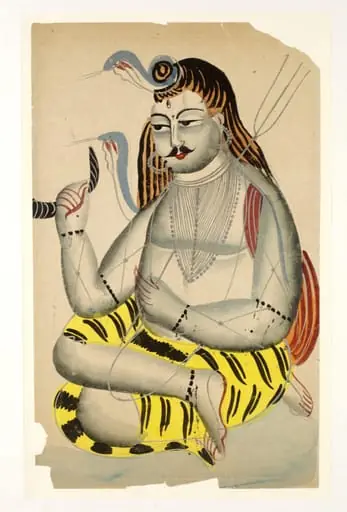
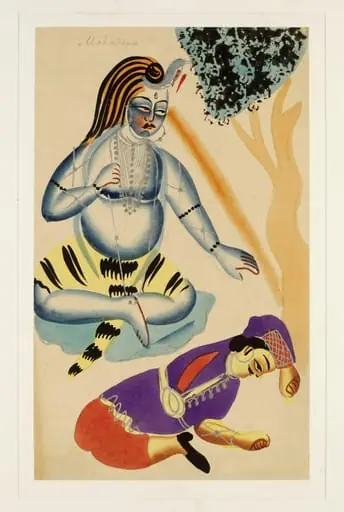
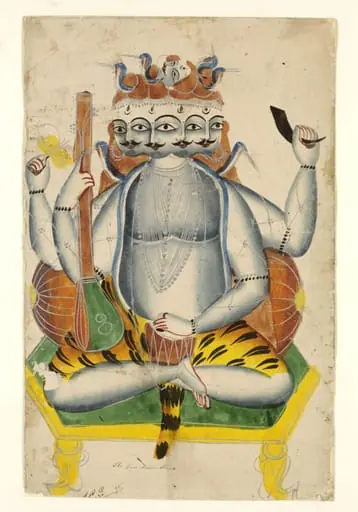
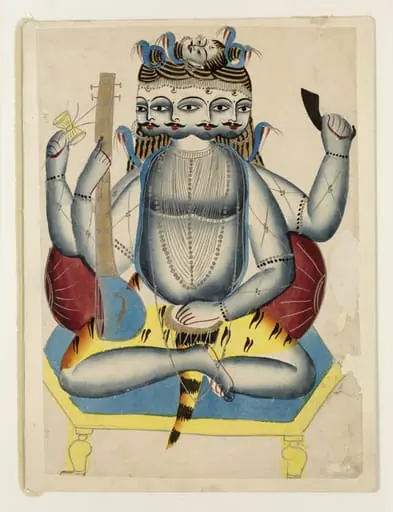
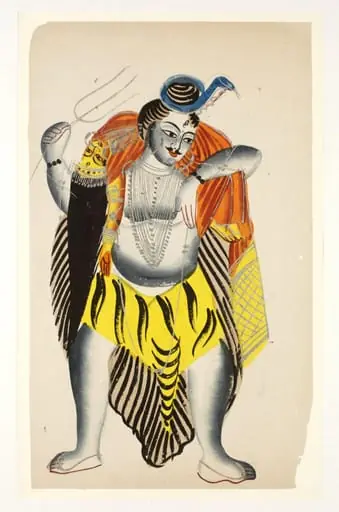
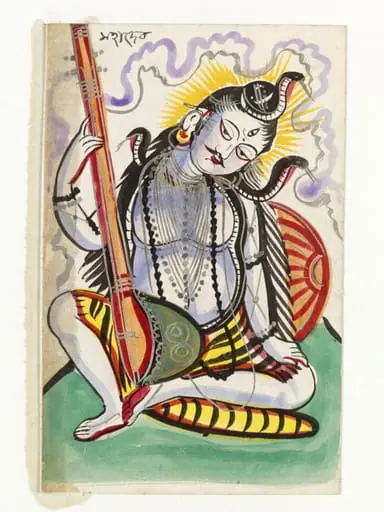
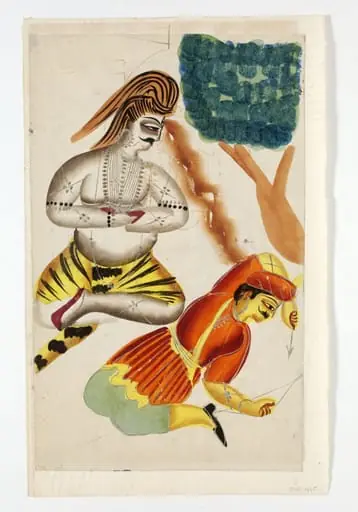
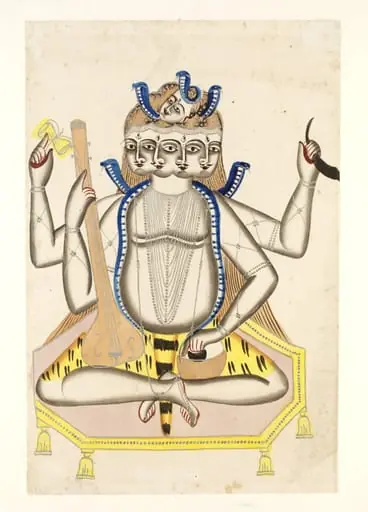
This painting portrays Shiva in a contemplative, musical form, seated atop a tiger with serene composure. Rendered in the Kalighat style, it combines simplified forms with vivid contrasts, emphasizing spiritual calm through minimal detail. The figure’s blue skin, bare torso, and ornamental adornments align with traditional iconography, while the peacock and tanpura introduce symbolic elements of nature and devotion.
Subject & Meaning
Shiva is depicted as both ascetic and musician, embodying the harmony of renunciation and creative energy. The tanpura signifies cosmic sound, while the peacock, perched on his shoulder, represents beauty and immortality. The three cobras in his matted hair and the third eye suggest transcendence and inner vision. His relaxed posture and closed eyes imply a meditative state, possibly induced by spiritual intoxication, a common theme in Shaivite lore.
Technique & Style
Executed in the Kalighat tradition, the painting uses bold outlines, flat planes of color, and minimal shading to define form. The tiger’s fur is rendered in stark black-and-white stripes, contrasting with the figure’s smooth, rounded limbs. Adornments like the necklace and earrings are made from tin alloy, mimicking silver, and the vest and headpiece feature rhythmic patterns. The style prioritizes symbolic clarity over naturalism, typical of 19th-century Bengali folk art.
History & Provenance
This work originates from the Kalighat region of Kolkata, where artists produced devotional paintings for pilgrims and collectors in the 19th century. The use of tin alloy for ornaments and the simplified composition reflect the commercial and devotional context of the time. While its exact provenance is undocumented, its stylistic features align with works produced near the Kalighat Temple, often sold as portable religious imagery.
Context
Kalighat paintings emerged alongside urbanization in colonial Bengal, blending Hindu iconography with emerging commercial art practices. Artists adapted traditional deities for a growing middle-class audience, using accessible materials and bold aesthetics. Shiva’s portrayal here as a musician reflects a devotional trend emphasizing personal connection over ritual, resonating with both temple-goers and urban patrons seeking spiritual solace.
Legacy
The painting exemplifies how folk traditions preserved religious imagery amid changing social landscapes. Its fusion of spiritual symbolism with everyday visual language influenced later Indian modernists and collectors of vernacular art. Though produced for mass consumption, such works continue to inform contemporary understandings of Hindu iconography and the role of art in devotional practice.
Artist & collection

 Domestic Scene
 Giacomo and Cardinal Marco, investing Andrea, Abbot of San Zeno, with his Benefice
 The Nymph of Fontainebleau
 Portrait of a Woman
 Madonna and Child with Saints in the Enclosed Garden
 Venus and Minerva
 Family Group of Four on Sofa
 Wall painting from Room H of the Villa of P. Fannius Synistor at Boscoreale