Artwork
Shiva, Parvati and Nandi
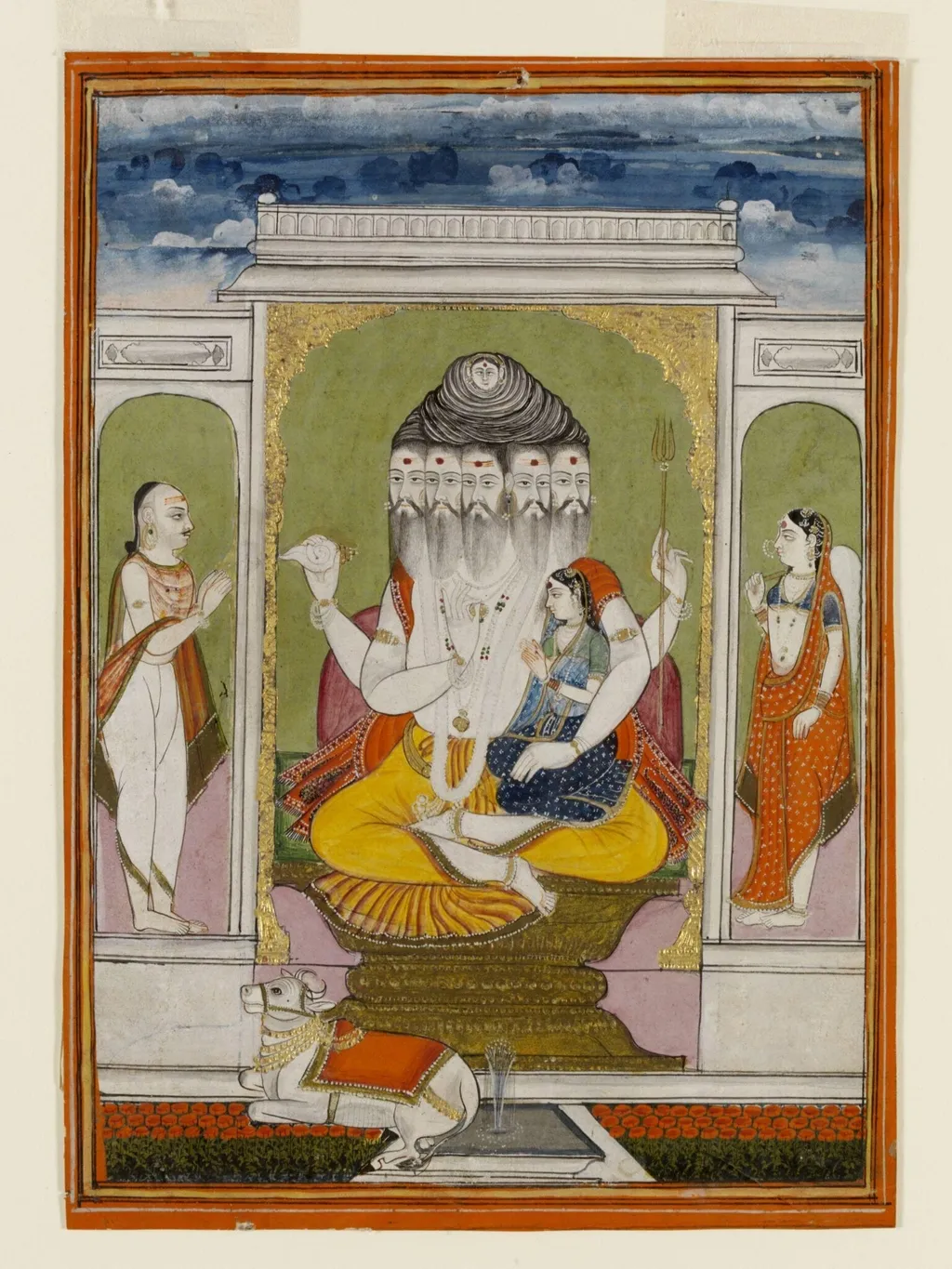
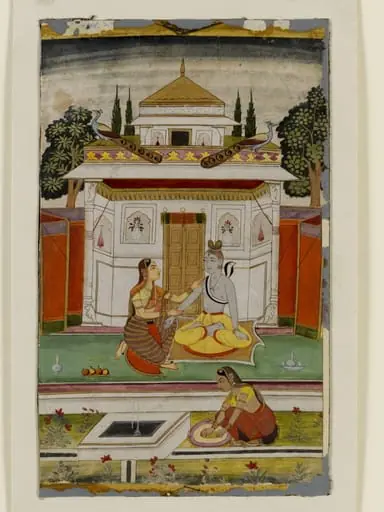
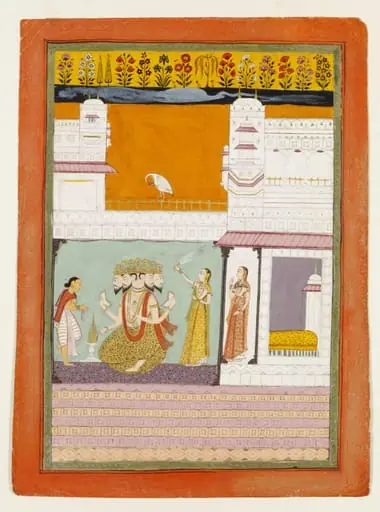
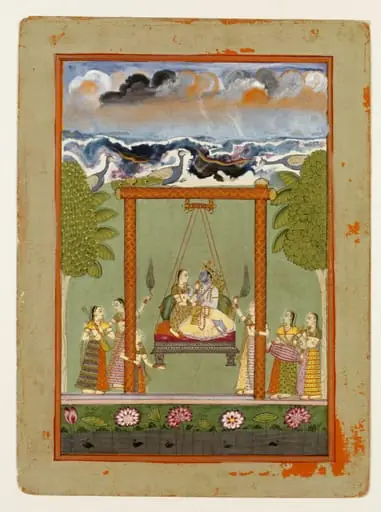
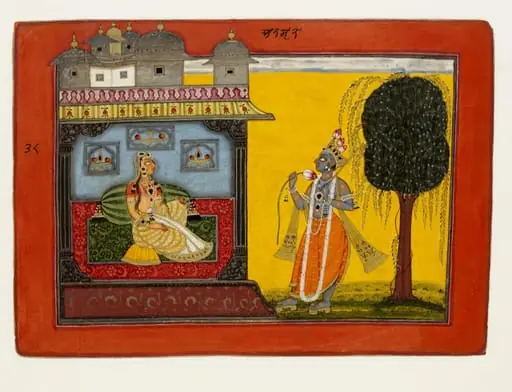
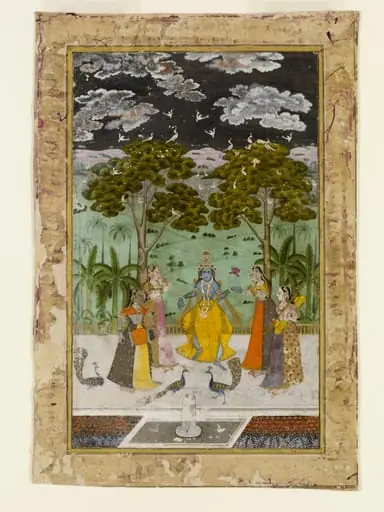
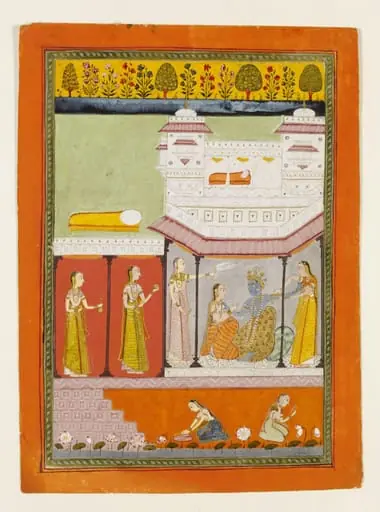
Shiva, Parvati and Nandi is a paint painting by the Romanticist artist Unknown. It dates from 1820 and is held in the collection of the Victoria and Albert Museum. This opaque watercolour on paper, dated to around 1820, portrays a devotional scene from Hindu tradition.
About this work
Overview
Its compact composition centers on divine figures arranged hierarchically, with attention to symbolic detail rather than spatial depth.
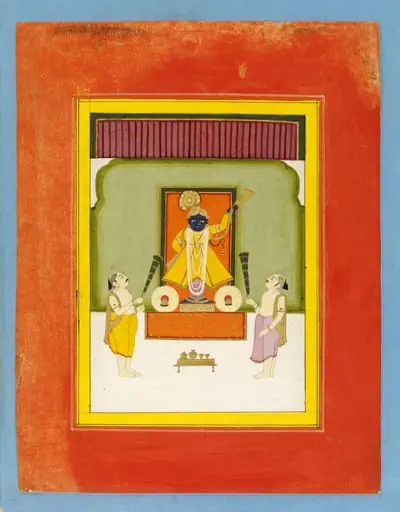
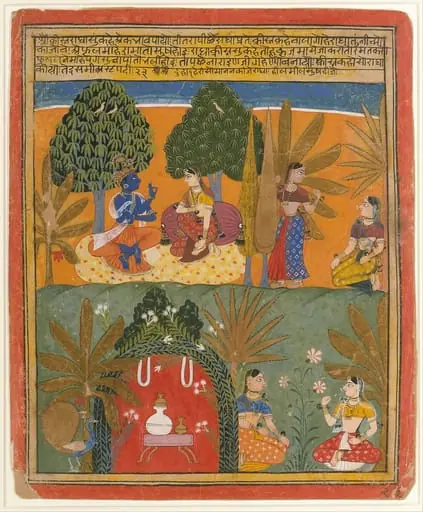
This opaque watercolour on paper, dated to around 1820, portrays a devotional scene from Hindu tradition. Executed with fine brushwork and subtle embossing, the painting reflects the Pahari school’s refined aesthetic. Its compact composition centers on divine figures arranged hierarchically, with attention to symbolic detail rather than spatial depth. The use of mineral pigments and delicate line work aligns with regional courtly painting practices of early 19th-century North India.
Subject & Meaning
The central figure is Shiva in his Panchanana form, depicted with four faces to signify his cosmic roles: creation, preservation, destruction, and concealment. He is accompanied by Parvati, his consort, symbolizing divine union and balance. Nandi, the bull, represents devotion and serves as his vehicle and guardian. The two attendants likely embody cosmic principles or temple functionaries, reinforcing the sacred hierarchy and the interdependence of divine forces in Hindu cosmology.
Technique & Style
The painting employs opaque watercolour on paper, with areas of gold leaf and embossing to highlight ornaments and garments. Figures are rendered with precise outlines and flat, saturated hues—yellow and white for Shiva, blue and red for Parvati—creating visual contrast without perspective. Background elements are minimal: a plain sky with cloud motifs and a stylized architectural ledge suggest a celestial realm. The lack of shading and emphasis on pattern reflect the conventions of devotional painting in the Pahari tradition.
History & Provenance
Created in the early 19th century, likely in a royal atelier of the Punjab Hills, this work was probably commissioned for private worship or courtly display. It entered the Victoria and Albert Museum’s collection through documented acquisitions of Indian art in the 19th century, part of a broader effort to preserve regional artistic traditions under colonial administration. Its survival in good condition suggests careful handling and preservation within institutional care.
Context
This painting emerged during a period when Hindu devotional imagery flourished in hill kingdoms like Kangra and Guler, where artists blended Mughal precision with local spiritual themes. Such works were often produced for royal patrons who supported temple culture and personal devotion. The emphasis on divine pairs and symbolic animals reflects broader trends in Bhakti-inspired art, where intimate, accessible representations of deities replaced monumental temple sculpture in private settings.
Legacy
Though not widely exhibited, this painting contributes to the understanding of regional Hindu art beyond major centers like Rajasthan or Bengal. It exemplifies how devotional iconography was adapted into portable formats for personal or courtly use. Its preservation in a major museum ensures continued scholarly access, offering insight into the visual language of faith in early modern North India and the transmission of religious symbolism through art.
Artist & collection

 Domestic Scene
 Giacomo and Cardinal Marco, investing Andrea, Abbot of San Zeno, with his Benefice
 The Nymph of Fontainebleau
 Portrait of a Woman
 Madonna and Child with Saints in the Enclosed Garden
 Venus and Minerva
 Family Group of Four on Sofa
 Wall painting from Room H of the Villa of P. Fannius Synistor at Boscoreale