Artwork
Skiff in Waves (recto) and Figures in Landscape (verso)
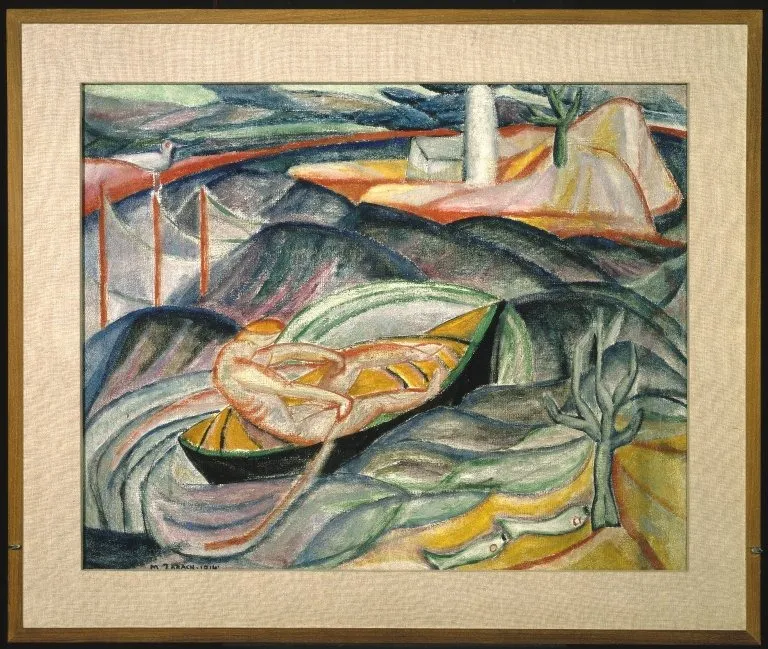
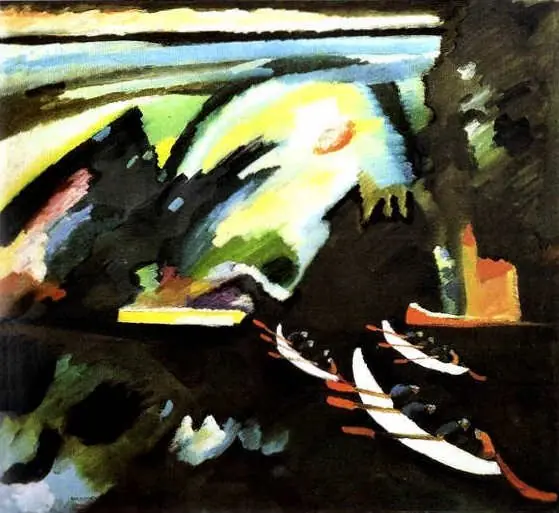
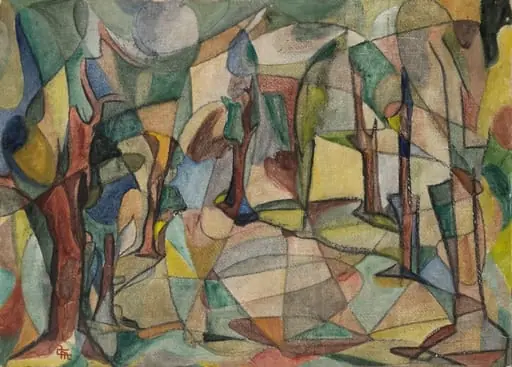
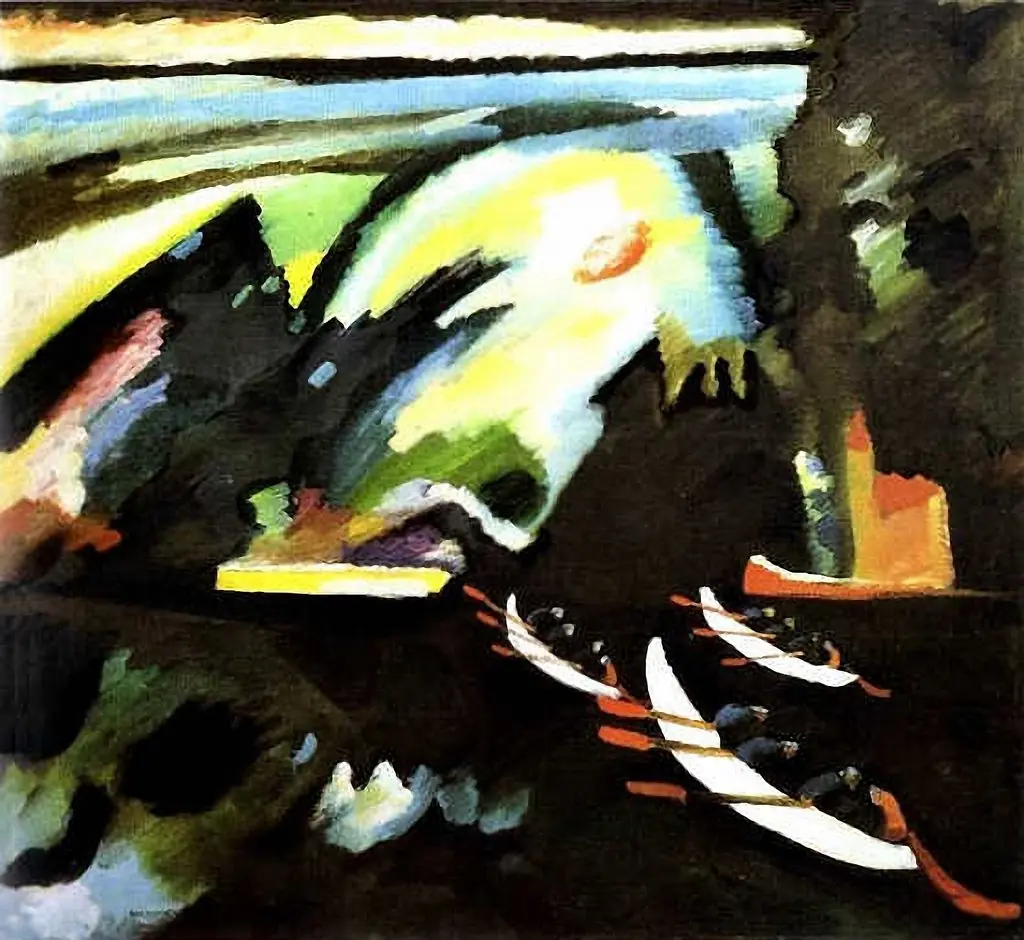
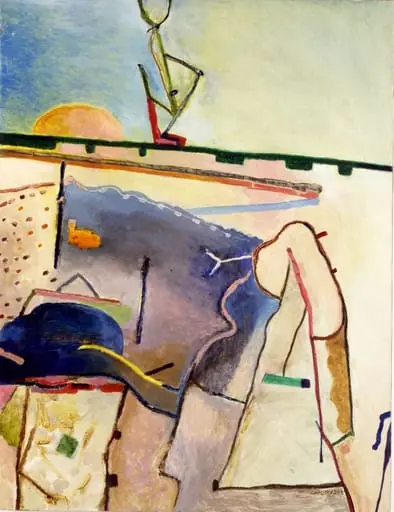
Skiff in Waves (recto) and Figures in Landscape (verso) is an oil painting by Unknown. It dates from 1913 and is held in the collection of the Brooklyn Museum.
About this work
Overview
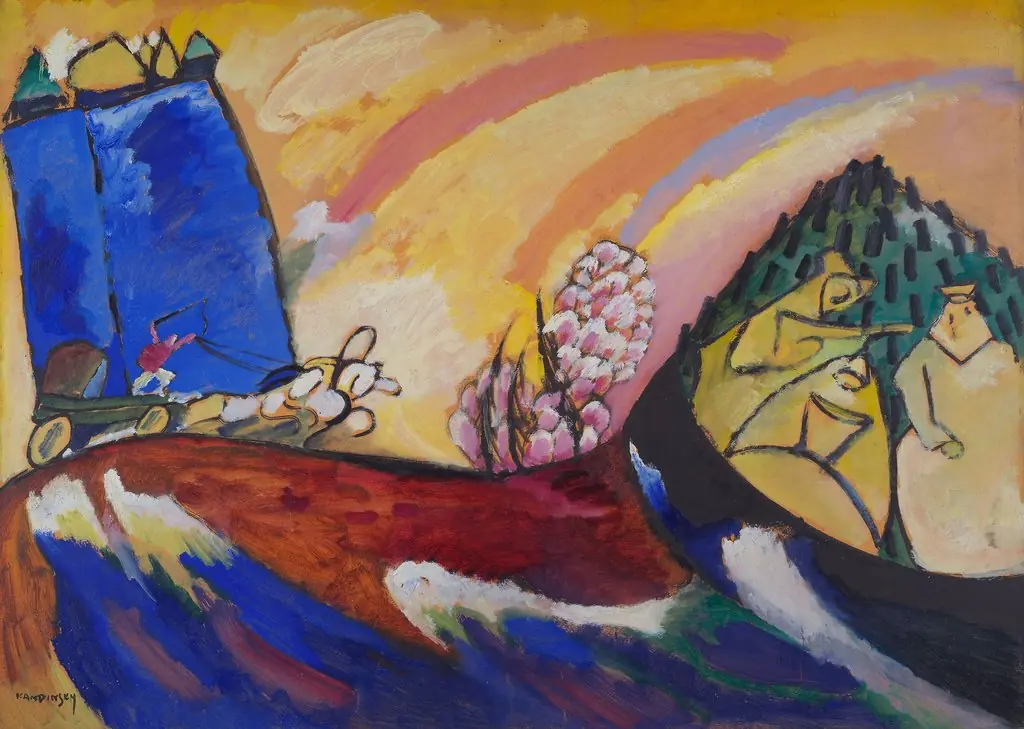
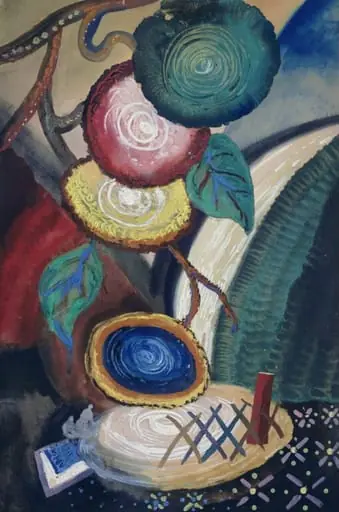
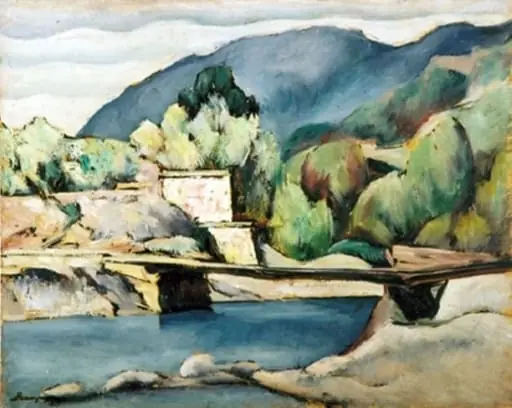
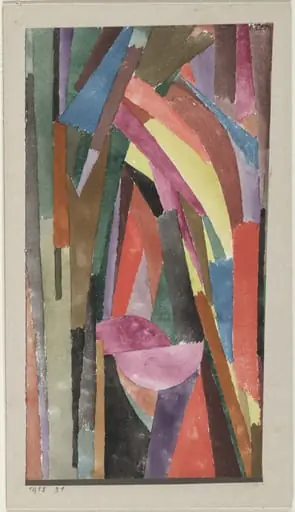
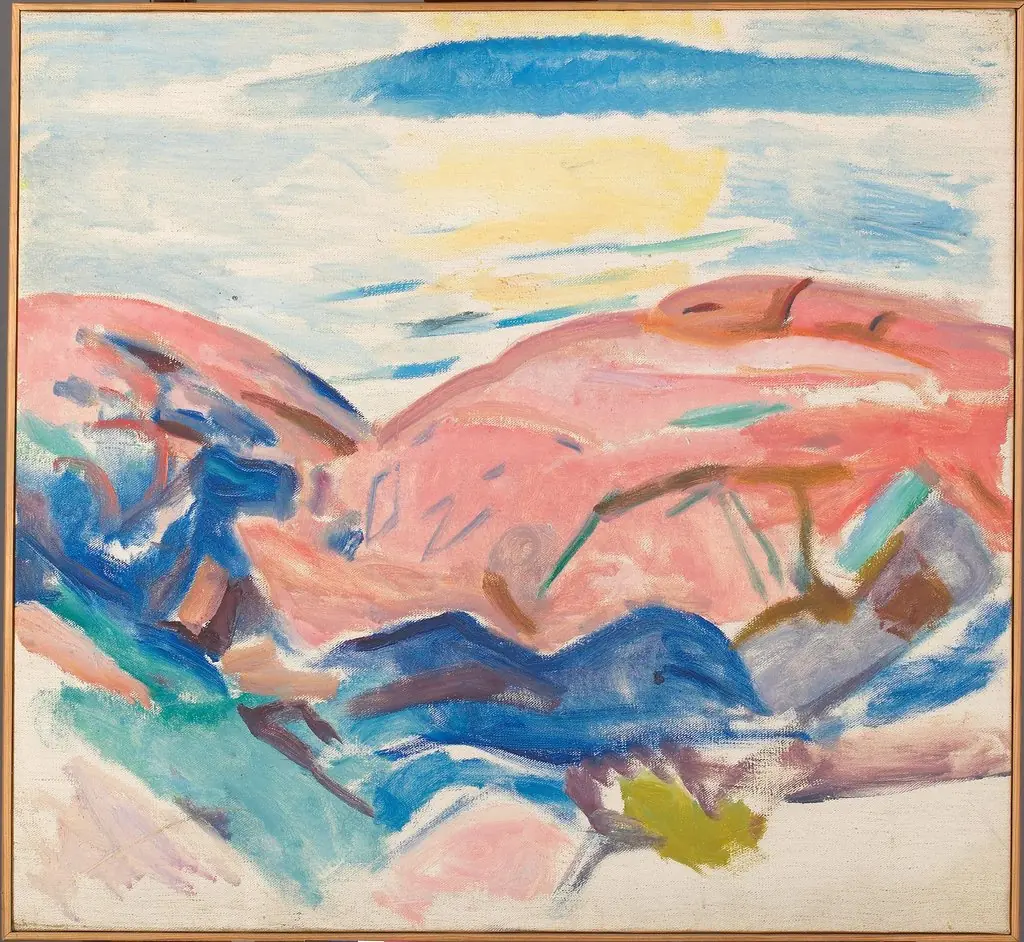
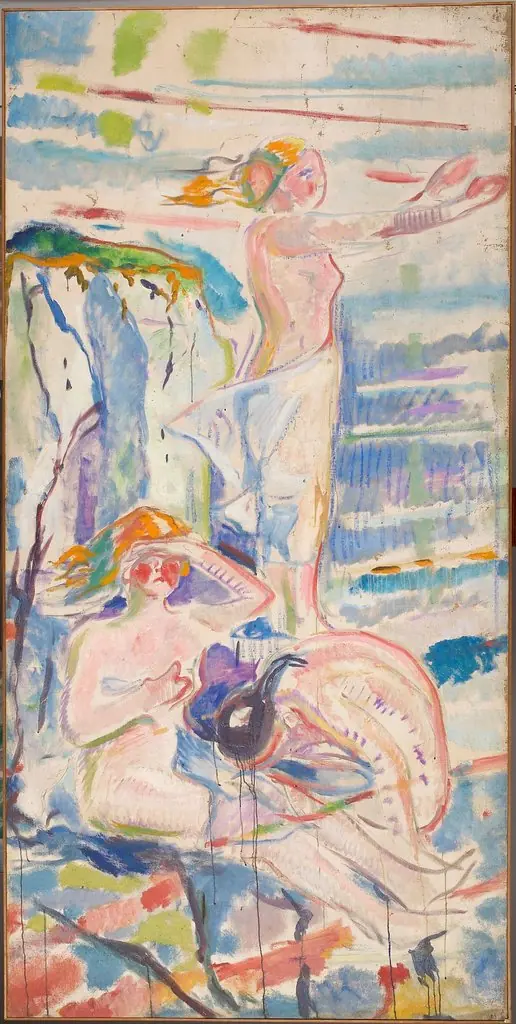
This double-sided oil painting features a skiff caught in turbulent waves on one side and a group of figures within a quiet landscape on the reverse.
This double-sided oil painting features a skiff caught in turbulent waves on one side and a group of figures within a quiet landscape on the reverse. The recto captures a moment of stillness amid motion: a lone figure lies prone in a small, color-blocked boat as swells rise around it. The muted palette of blues, greens, and earth tones conveys a subdued atmosphere, while the thick application of oil paint adds tactile depth to the churning water and rocky shoreline.
Subject & Meaning
The figure in the skiff appears undisturbed by the surrounding chaos, suggesting a contemplative detachment from nature’s force. The contrast between the violent sea and the calm posture of the occupant invites reflection on human resilience or indifference to environmental turbulence. On the verso, the figures in a landscape offer a quieter counterpoint, possibly indicating a shift in mood or thematic focus between the two sides of the panel.
Technique & Style
Oil paint is applied with visible brushwork, creating a textured surface that enhances the sense of movement in the water and the solidity of the rocks. The colors are restrained, avoiding bright contrasts in favor of atmospheric harmony. The composition emphasizes diagonal lines from the waves and the boat’s tilt, reinforcing dynamism. The figure’s stillness is rendered with minimal detail, drawing attention to the environment rather than individual identity.
History & Provenance
The painting’s origin and early ownership are not well documented. It is known to have entered the collection of the Brooklyn Museum, where it remains today. The dual-sided format suggests it may have been painted on a reused or portable panel, common among artists working in limited spaces or with constrained materials. Its survival in two parts indicates careful preservation over time.
Context
Created during a period when many artists were turning to intimate, observational scenes over grand narratives, this work reflects a broader interest in everyday encounters with nature. The subdued tones and focus on a solitary figure align with late 19th- to early 20th-century tendencies toward psychological quietude in landscape painting, even as the sea suggests underlying tension.
Legacy
Though not widely exhibited or reproduced, the painting contributes to a lesser-known strand of American and European art that values quiet observation over dramatic spectacle. Its dual composition invites comparative study, offering insight into how artists used both sides of a support to explore contrasting emotional or thematic states within a single object.
Artist & collection

 Domestic Scene
 Giacomo and Cardinal Marco, investing Andrea, Abbot of San Zeno, with his Benefice
 The Nymph of Fontainebleau
 Portrait of a Woman
 Madonna and Child with Saints in the Enclosed Garden
 Venus and Minerva
 Family Group of Four on Sofa
 Wall painting from Room H of the Villa of P. Fannius Synistor at Boscoreale