Artwork
Red Rocks
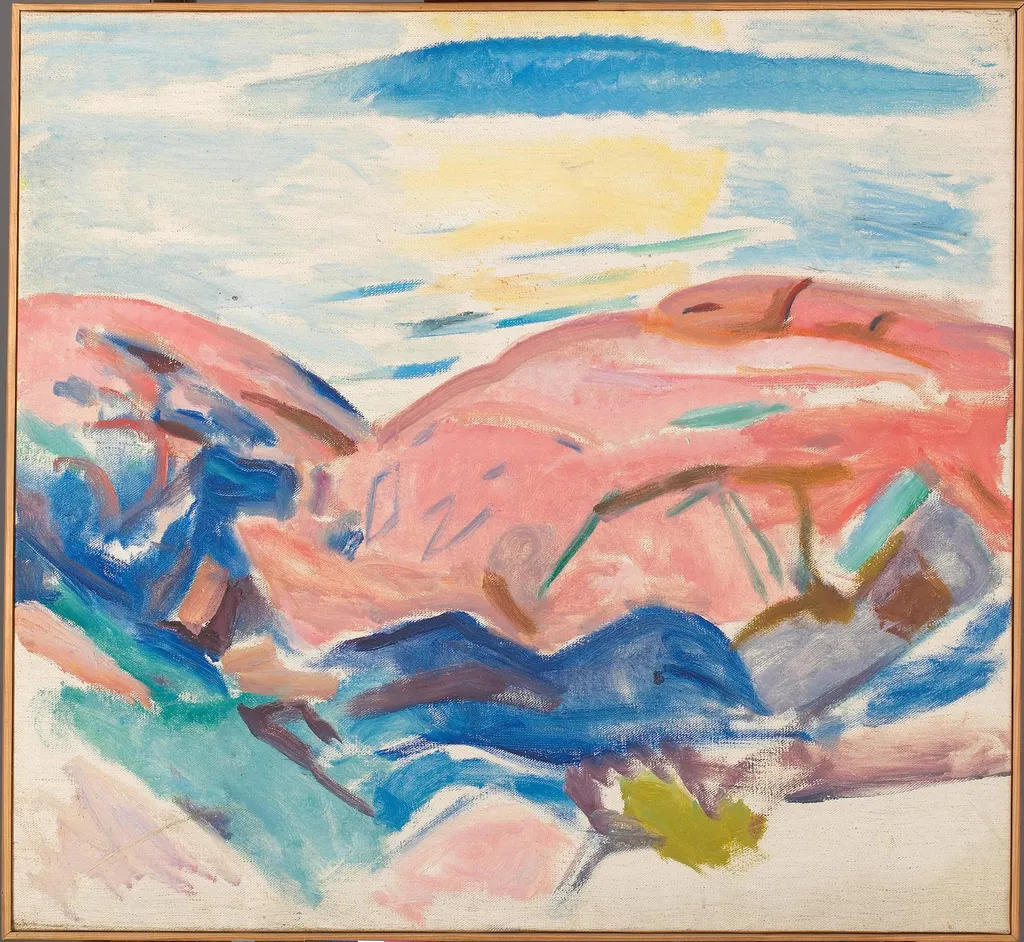
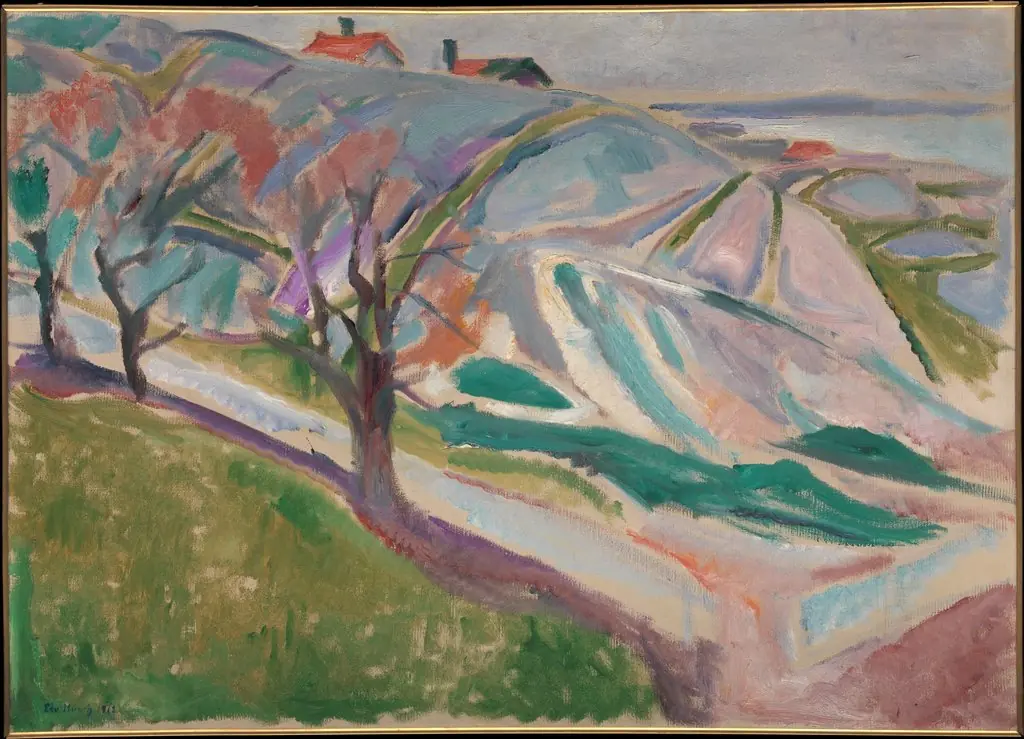
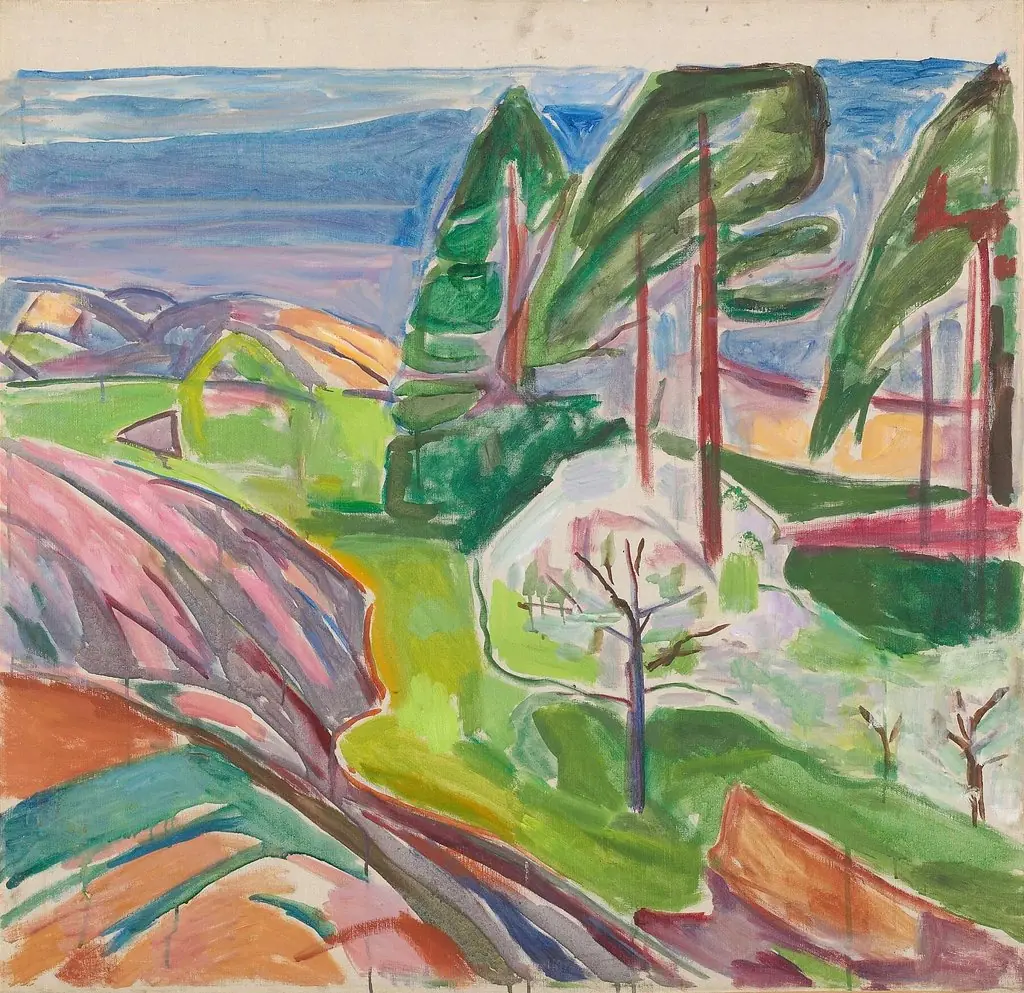
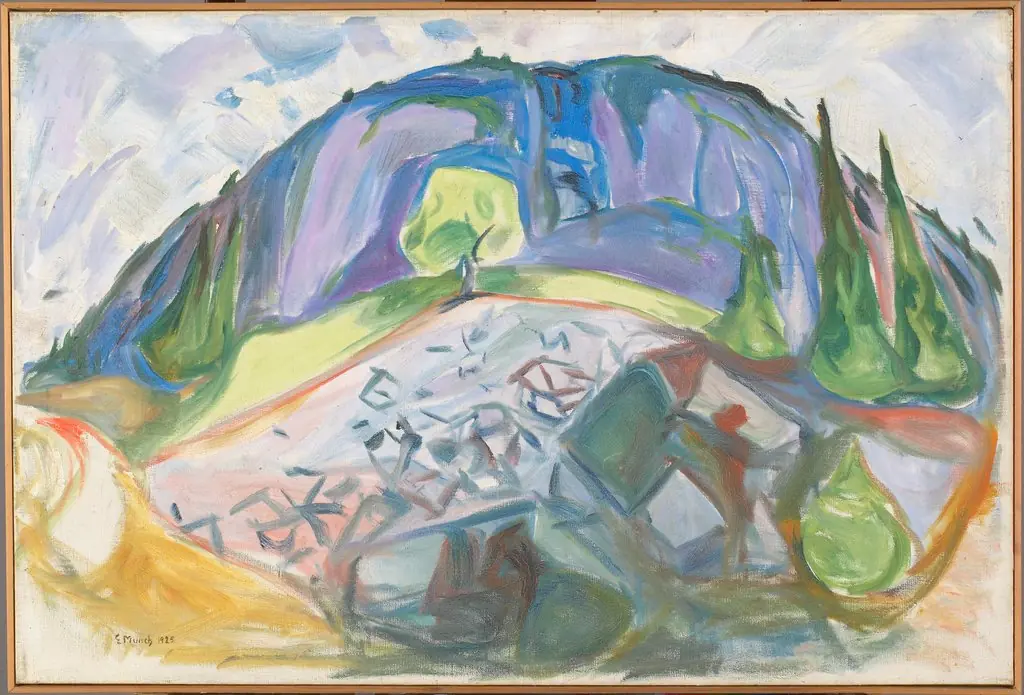
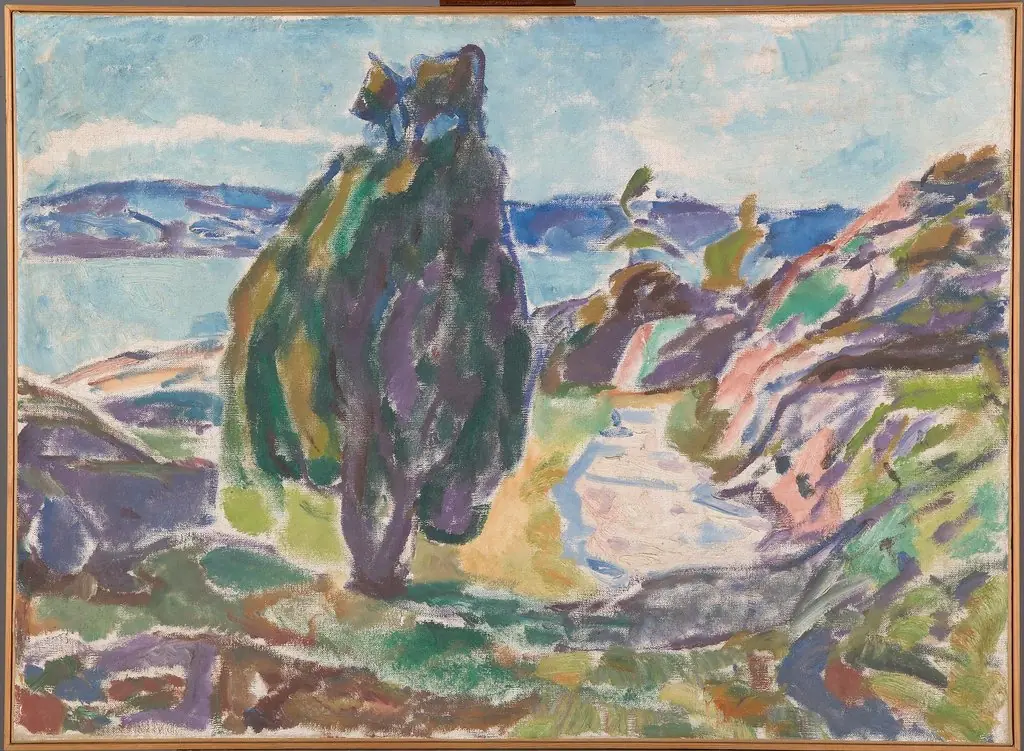
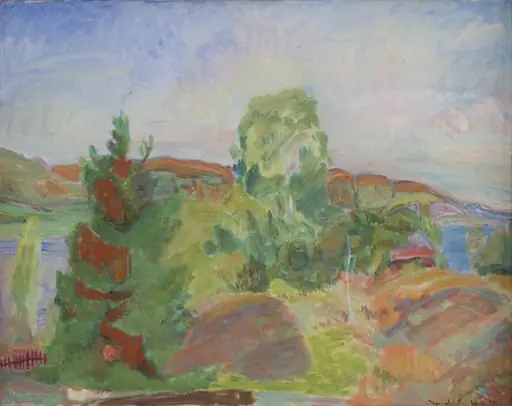
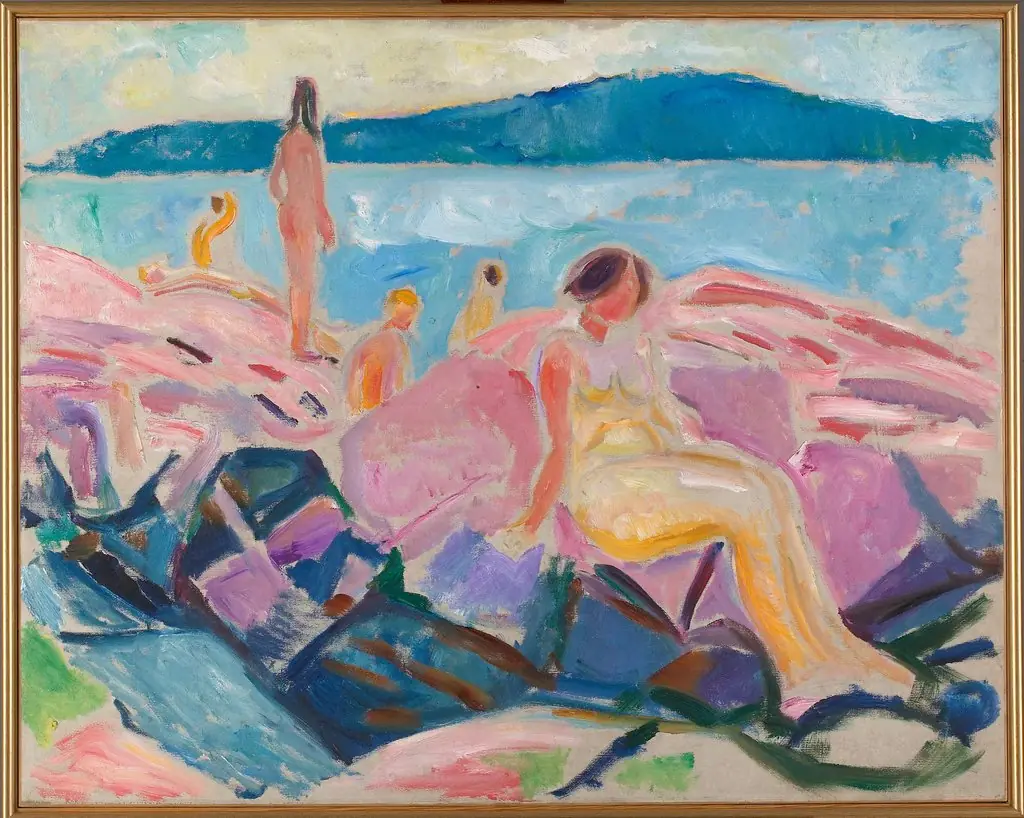
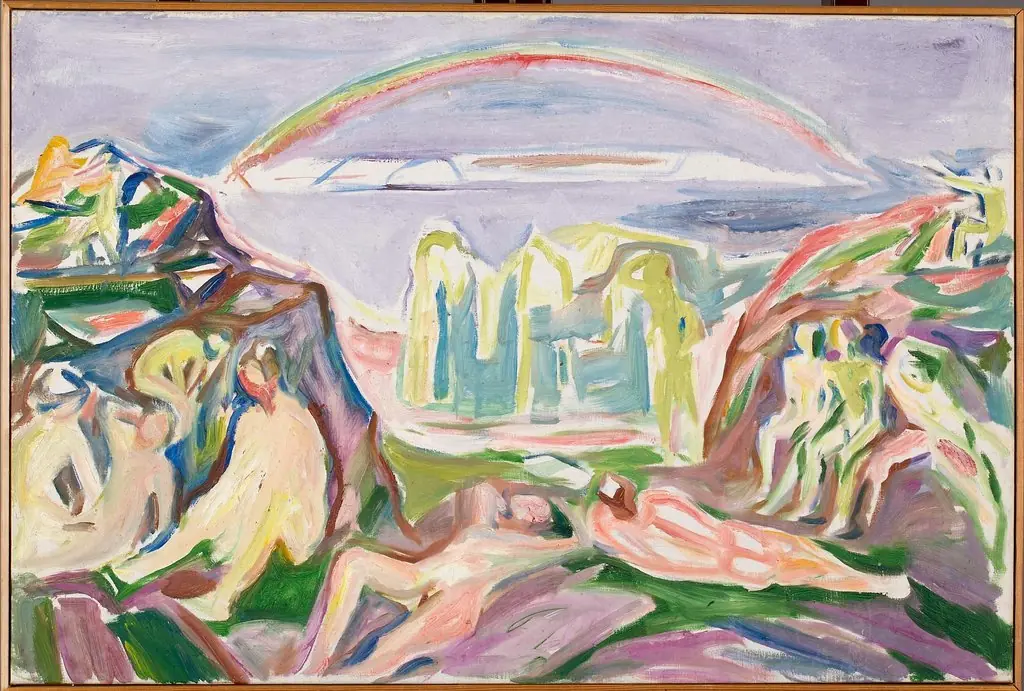
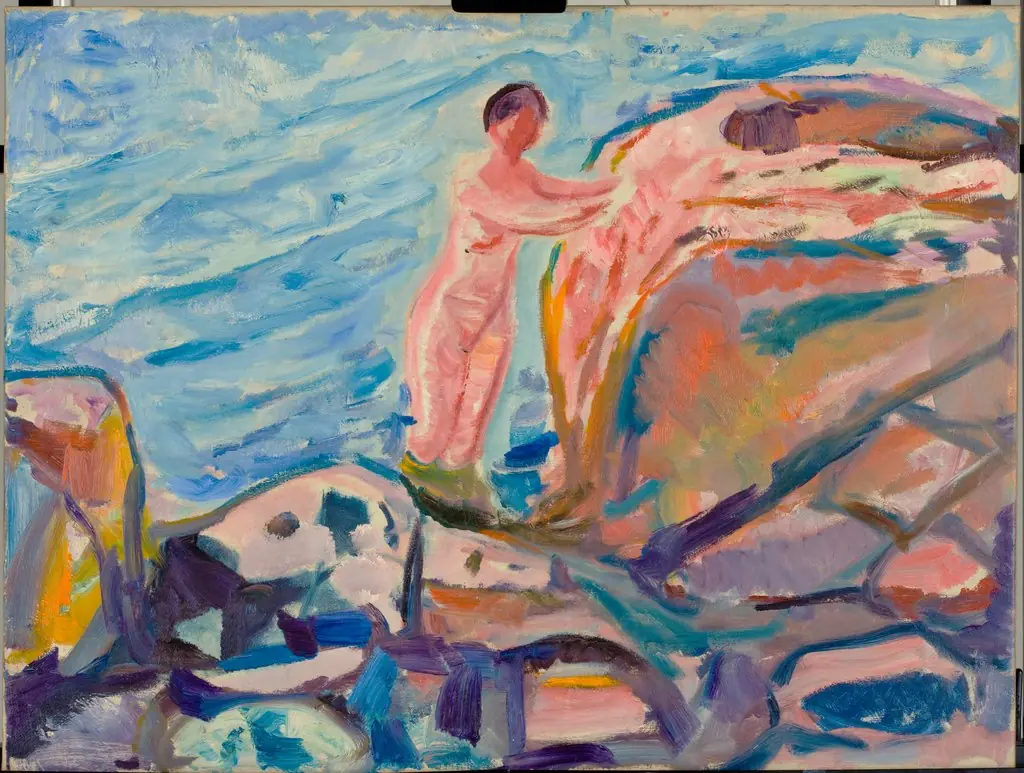
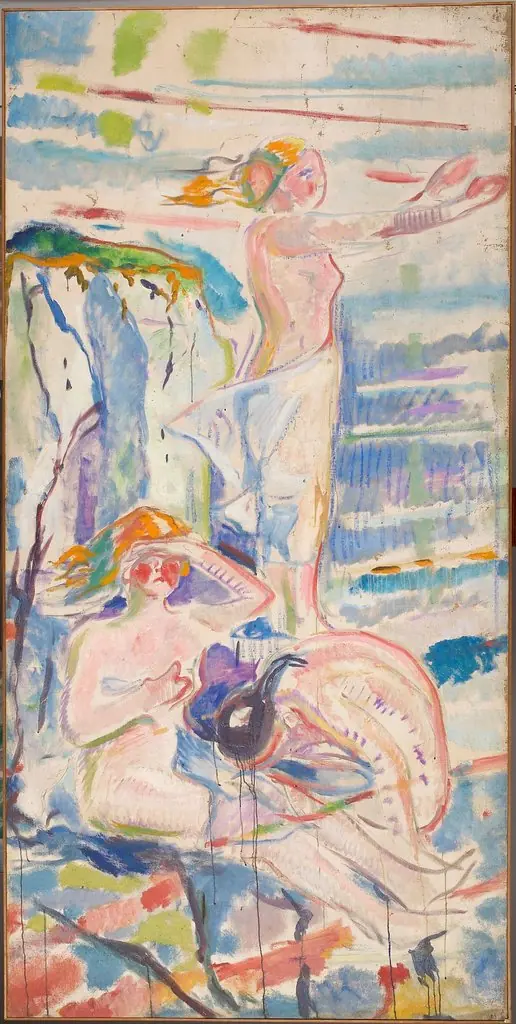
Red Rocks is an oil painting by the Post-Impressionist artist Edvard Munch. It dates from 1915 and is held in the collection of the Munch Museum.
About this work
Overview
The painting is held in the Munch Museum in Oslo, where it reflects his sustained engagement with the emotional resonance of the natural world.
Painted in 1915, *Red Rocks* is an oil-on-canvas landscape by Norwegian artist Edvard Munch. It belongs to a body of work produced during his later years, when he increasingly turned to nature as a subject. The painting is held in the Munch Museum in Oslo, where it reflects his sustained engagement with the emotional resonance of the natural world. Unlike his earlier symbolic works, this piece leans into atmospheric expression rather than narrative allegory.
Subject & Meaning
The painting presents a coastal terrain dominated by reddish rock formations in the foreground, receding into a sky washed with pale blue and amber tones. There is no human presence or clear narrative, yet the forms convey a sense of latent tension. The rocks, rendered with energetic brushwork, seem to pulse with internal motion, suggesting nature as a living, unstable force. Munch’s focus here is on mood rather than depiction, evoking unease and vitality through form and color alone.
Technique & Style
Munch applied oil paint with thick, gestural strokes, building texture that catches light and emphasizes physicality. The brushwork is deliberate yet unrefined, avoiding smooth blending in favor of visible, rhythmic marks. Color is used expressively: the reds of the rocks contrast sharply with the cool sky, creating visual vibration. The transition from blue to yellow in the distance suggests atmospheric depth without linear perspective, aligning with post-impressionist tendencies toward emotional rather than optical realism.
History & Provenance
Created during Munch’s time at his estate in Ekely, near Oslo, *Red Rocks* was painted after a period of personal reflection following years of illness and isolation. It entered the collection of the Munch Museum upon its founding in 1963, having remained in the artist’s possession until his death in 1944. The work was not exhibited widely during his lifetime, but its presence in the museum’s permanent holdings underscores its significance in his late oeuvre.
Context
In the early 20th century, Munch moved away from the psychological symbolism of *The Scream* toward more direct engagements with landscape. His later works, including *Red Rocks*, reflect a deepening interest in the Norwegian coast’s geology and light. While influenced by post-impressionism and emerging expressionism, his approach remained intensely personal, shaped by decades of observing nature as both refuge and mirror of inner states.
Legacy
Though less known than his iconic figures, *Red Rocks* exemplifies Munch’s enduring commitment to translating emotion through color and texture. It influenced later Scandinavian artists who sought to convey psychological depth through natural forms. The painting’s raw handling and emotional intensity continue to inform discussions of modern landscape painting as a vehicle for subjective experience rather than objective representation.
Artist & collection

Artist
Edvard Munch ( MUUNK; Norwegian: ; 12 December 1863 – 23 January 1944) was a Norwegian painter.